5.1.9 Meldungen
en News
fr Informations
Mit folgenden Links wird von anderen Webseiten auf diese Seite verwiesen:
| de | en | fr |
|---|---|---|
|
Neue Kälteperiode Meldungen |
New Cold Period News |
Nouvelle periode froide Actualités |
- Verzeichnis │ Welt-Info │ Allgemein │ Text
⇧ de Verzeichnis en Contents fr Sommaire
- 1 Sommer / Summer / Été 2007
- 2 Sommer / Summer / Été 2008
- 3 Winter / Winter / Hiver 2008/2009
- 4 Sommer / Summer / Été 2009
- 5 Winter / Winter / Hiver 2009/2010
- 6 UK Met Office ends season forecasts - no more "BBQ summers"
- 7 Sommer / Summer / Été 2010
- 8 2011
- a Falsche Voraussagen / Wrong Forecasts / Fausses prévisions
- b Realität - Zutreffende Prognosen / Reality / Réalité
- c Keine globale Erwärmung / No Global Warming / Pas de réchauffement climatique
- d Aus der Panik-Küche / From the panic laboratory / De la marmite des alarmistes
- e Winter extrem - "Neue kleine Eiszeit ist jetzt möglich"
- f Weitere Meldungen / Further News / Acualités
- 9 Meldungen 2012 / News 2012 / Informations 2012
- 10 2013 (inkl. Klimabulletin und Rückblick)
- 11 2014
- 12 2015
- 13 2016
- 14 2017
- 15 2018
- 16 2019
- 17 2020
- 18 2021
⇧ Welt-Info


⇧ de Allgemein en General fr Générale
|
|
|


| de | en | fr |
|---|---|---|
|
Neue Kälteperiode Kaltzeit |
New Cold Period Cold Period |
Nouvelle periode froide Periode froide |
| Voraussagen | Predictions | Prédictions |
| Kälte: Warnungen | Cooling: Warnings | Refroidissement: Avertissements |
| Erwärmung: Entwarnung | Warming: All-Clear | Réchauffement: Fin de l'alerte |
| Eiszeiten | Ice Ages | Glaciations |
| de | en | fr |
|---|---|---|
|
Klima Geschichte Klima in der Zukunft |
Climate History Climate in the future |
Histoire du climat Climat dans le futur |
⇧ de Text en Text fr Texte
⇧
1 Sommer 2007
en Summer 2007
fr Été 2007
Falsche Voraussagen
en Wrong Forecasts
fr Fausses prévisions
de Aus der Panik-Küche en From the panic laboratory fr De la marmite des alarmistes
-
UK Met Office
2007-01-04 en 2007 - forecast to be the warmest year yet
2007 is likely to be the warmest year on record globally, beating the current record set in 1998, say climate-change experts at the Met Office.
-
The Guardian/The Observer
2007-04-08 en Hot summer on the way, predicts Met
This week the Met Office is expected to reveal that there is a 70 per cent chance summer temperatures will be above the 30-year average of 14.1C.
Effektiv war das Jahr 2007 das kälteste Jahr seit 9 Jahren!
| de | en | fr |
|---|---|---|
| Klima Berichte | Climate Reports | Rapports sur le climat |
| Falsche Prognosen der Paniker 2007 | Wrong prognostics 2007 | Fausses prévisions 2007 |
⇧
2 Sommer 2008
en Summer 2008
fr Été 2008
Falsche Voraussagen
en Wrong Forecasts
fr Fausses prévisions
de Aus der Panik-Küche en From the panic laboratory fr De la marmite des alarmistes
-
UK Met Office
2008-04-03 en A typical British summer
The coming summer is expected to be a 'typical British summer', according to long-range forecasts issued today. Summer temperatures across the UK are more likely to be warmer than average and rainfall near or above average for the three months of summer.
Resultat
en Result
fr Résulat
-
EIKE Europäisches Institut für Klima und Energie
2008-12-22 de Klimawandel: Die 10 dümmsten Vorhersagen
2008-12-22 de Die 10 dümmsten Vorhersagen
- Hudson Institute en The Worst Climate Predictions of 2008?
-
Herald Sun (Australia) / Andrew Bolt
2008-12-19 en GLOBAL warming preachers have had a shocking 2008. So many of their predictions this year went splat.
| de | en | fr |
|---|---|---|
| Klima Berichte | Climate Reports | Rapports sur le climat |
| Falsche Prognosen der Paniker 2008 | Wrong prognostics 2008 | Fausses prévisions 2008 |
⇧
3 Winter 2008/2009
en Winter 2008/2009
fr Hiver 2008/2009
Falsche Voraussagen
en Wrong Forecasts
fr Fausses prévisions
de Aus der Panik-Küche en From the panic laboratory fr De la marmite des alarmistes
-
UK Met Office
2008-09-25 en Trend of mild winters continues
The Met Office forecast for the coming winter suggests it is, once again, likely to be milder than average. It is also likely that the coming winter will be drier than last year.
Realität
en Reality
fr Réalité
-
Klimaskeptiker Info
2009-03-03 de UK Met Office hat milden Winter prognostiziert - es wurde der kälteste seit 13 Jahren
Noch am 25. September 2008 hat das CO2-Klimawandel-hörige UK Met Office einen (weiteren) milden Winter für Großbritannien prognostiziert. Was ist aus der Prognose geworden?.
Das Vereinigte Königreich hat den kältesten Winter seit 13 Jahren erlebt, meldete das Met Office jetzt.
Und setzt hinzu: "Die globale Erwärmung hat den Winter davor bewahrt, noch kälter zu werden."
Auf dieser Argumentationsebene kann man natürlich noch eine globale Erwärmung proklamieren, wenn die Nordsee schon zugefroren ist.
2008 war insgesamt kälter als 2007 und das bisher kälteste Jahr des 21. Jahrhunderts.
Welche "globale Erwärmung" hat jetzt einen noch strengeren Winter verhindert?
Meldungen
en News
fr Informations
-
UK Met Office
2009-01-30 en Wintry start to February
This coming weekend will see the return of colder weather across the UK with the increasing chance of snow in some areas.
At this stage, eastern parts of the country are expected to see the heaviest of any snow with some disruption possible.
So far, the UK winter has been the coldest for over a decade.
The last time winter temperatures were lower was in 1996/97.
-
Telegraph
2009-02-01 en Snow and freezing weather threaten to shut down Britain
Arctic blizzards are set to cause a national shutdown on Monday as forecasters warn of the most widespread snowfall for almost 20 years.
-
20 Minutes
2009-02-02 fr Comment la neige a semé la pagaille à Paris
-
Watts Up With That? (Antony Watts)
2009-02-17 en Britain's Lessons From The Winter of 2008-2009
-
Guardian
2009-01-07 en Coldest night for 20 years in parts of southern England
-
BBC News
2009-02-03 en Roads worry as temperatures fall
-
spiegel
2009-08-01 en Temperature in Germany Falls to Minus 34.6 Degrees
⇧
4 Sommer 2009
en Summer 2009
fr Été 2009
Falsche Voraussagen
en Wrong Forecasts
fr Fausses prévisions
de Aus der Panik-Küche en From the panic laboratory fr De la marmite des alarmistes
-
UK Met Office
2009-04-30 en Summer forecast 2009
The coming summer is 'odds on for a barbecue summer', according to long-range forecasts. Summer temperatures across the UK are likely to be warmer than average and rainfall near or below average for the three months of summer.
Realität
en Reality
fr Réalité
-
Klimaskeptiker Info
2009-04-30 de UK Met Office prognostiziert warmen Sommer
2009-06-08 de Versagt die Vorhersage des UK Met Office schon wieder?
-
Watts Up With That? (Antony Watts)
2009-04-30 en The Met Office UK summer forecast - Mad Dogs and Englishmen
2009-06-08 en AccuWeather's Joe Bastardi: "the 'science is in' crowd does not want them to see facts" and parts of US to have "year without a summer"
2009-06-08 en Met Office Summer Forecast Drowning Again?
For the third straight summer, the UK Met Office has forecast hot weather using their state of the art computer models. Summer 2007 and 2008 were complete washouts, ranking as two of the most miserable, rainy summers on record.
Met Office cools summer forecast
BBC News will raise questions about the Met Office's ability to make reliable seasonal forecasts.
-
Watts Up With That? (Antony Watts)
2009-07-28 en Met Office forecasting ability questioned by the Beeb.
Not only does the Met Office/Hadley Climate Center have trouble with pesky "moles" this week, they are now finding a staunch ally, the BBC, is questioning their forecasting ability.
One wonders if they will improve using "deep black", the 1.2 megawatt supercomputer they just purchased.
-
BBC News
2009-07-29 en Met Office cools summer forecast
Rain leaves holiday-makers running for shelter across the UK
You will need a brolly on holiday in the UK in August - the Met Office is issuing a revised forecast for more unsettled weather well into the month.
It is a far cry from the "barbecue summer" it predicted back in April.
The news will raise questions about the Met Office's ability to make reliable seasonal forecasts.
Meldungen
en News
fr Informations
-
Snow in Buenos Aires - first time in 89 years
Watts Up With That? (Antony Watts)
2009-05-18 en Flashback: Snow in Buenos Aires - first time in 89 years
2009-07-23 en Historic snow event in South America
-
Klimaskeptiker Info
2009-06-08 de Kältestes erstes Juniwochenende seit 30 Jahren
Das Wochenende vom 6. und 7. Juni 2009 war in Deutschland das kälteste erste Juniwochenende seit 30 Jahren.
2009-06-06 de Ungewöhnlicher Schneefall im Juni
Ein paar Schlaglichter aus dem Wettergeschehen
-
Watts Up With That? (Antony Watts)
2009-06-06 en Dickinson ND sees first June snowfall in 60 years
-
KX Net
2009-06-06 en Snow falls in western ND, in June
Snow has fallen in Dickinson, North Dakota in June, the first time in nearly 60 years the city has seen snow past May.
-
Mail Online
2009-06-06 en It's June...so it must be snowing: Great British summer goes from sweltering to shivering in just a week
On June 2, 1975, sleet and snow showers were reported across many parts of the country.
Snow settled on hills just south of Birmingham, and was spotted further east and south, notably in Cambridge and London.
And going way, way back in the history books, there are reports of snow as far south as the Sussex Downs on June 12, 1791.
-
The Modesto Bee
2009-06-06 en Rain, snow and a rescue from cold
Unseasonably wet and cold weather Friday resulted in fender benders, heavy snow and a rescue effort for schoolchildren who got cold on a Tuolumne County hike.
Medics treated four children after they suffered hypothermic symptoms while on a camping trip with their Napa Valley charter school in the Pinecrest Reservoir area.
The California Highway Patrol is advising drivers to behave "as you would if you were driving in December."
Chains are required on Highway 108 east of Strawberry, and the California Department of Transportation closed Tioga Pass on Friday because of snow.
The unsettled conditions are expected to continue through the weekend and into next week, with snow in the higher elevations and a chance of showers in the valley.
-
Calgary Herald / Canada Com
2009-06-06 en Alberta, Saskatchewan get snow in June
Yes, snow has fallen in southern Alberta and Saskatchewan this weekend.
"We had a report from the park there was 15 centimetres on the gro and still snowing heavily," said Dan Fulton with Environment Canada.
"We will be expecting total snow there of about 20 or maybe even 25 centimetres (Saturday) in the park."
On June 6, 1951, Calgarians were digging out from under 24.9 cm, according to Environment Canada.
-
CFP Canada Free Press
2009-06-08 en Long winter marches into June as unseasonable cold and snow continues
The long winter of 2009 continues with unseasonable cold and snow continuing in many parts of the world. Below is a small sampling of articles on the June chill.
-
Telegraph.co.uk / Christopher Booker
2009-06-13 en Crops under stress as temperatures fall
Our politicians haven't noticed that the problem may be that the world is not warming but cooling.
⇧
5 Winter 2009/2010
en Winter 2009/2010
fr Hiver 2009/2010
Falsche Voraussagen
en Wrong Forecasts
fr Fausses prévisions
de Aus der Panik-Küche en From the panic laboratory fr De la marmite des alarmistes
UK Met Office's Hadley Centre
-
Nature 2007-08-09
fr Model approach to climate predictionBritish researchers have substantially improved the performance of a global climate model by adding observations about the actual state of the ocean and atmosphere.
The results are of seminal importance for those trying to produce reliable short-term 'climate forecasts' on global and regional scales, experts say.
-
Skyfall / Changement climatique 2009-10-16
fr Un nouveau modèle climatique donne un réchauffement brutal dès 2009Cette prévision génère cependant une barre d'erreur non négligeable pour les températures prédites entre 2005 et 2014, mais
Doug Smith, climatologue au UK Met Office's Hadley Centre de Exeter (UK) et responsable de cette étude
se montre confiant, rappelant que le modèle gagne en précision sur la période 1982-2001.
De nombreux modélisateurs ont salué avec enthousiasme cette étude. "C'est une étude exceptionnelle, et conceptuellement un grand saut en avant"
déclare Jochem Marotzke, Directeur au Max Planck Institute for Meteorology de Hambourg (Allemagne).
"Le point principal (de cette étude) est que nous avons maintenant un concept convainquant pour combiner des observations et des modèles.
Ce ne peut pas être le dernier mot, mais il montre que des prévisions décades concrètes sont possibles."
de Aus der Panik-Küche en From the panic laboratory fr De la marmite des alarmistes
Météo France
-
Météo France 2009-09-03
fr Prévisions saisonnières pour l'automne 2009
(septembre - octobre - novembre)Les modèles de prévision saisonnière de Météo-France et ceux des autres services en Europe et aux Etats-Unis s'accordent
sur un scénario d'automne "chaud" pour la France métropolitaine,
avec des températures en moyenne plus élevées que les normales saisonnières.
Meldungen
en News
fr Informations
de
-
Klimaskeptiker Info
2009-10-14 de Früher Wintereinbruch Nicht nur in Österreich ist noch nie so früh in einem Winterhalbjahr Schnee gefallen , sondern auch in den USA ist der Winter früh gestartet.Etwa 20% der Fläche der zusammenhängenden 48 Staaten sind bereits von Schnee bedeckt (Quelle: NOAA). Zwar sind frühe Herbststürme nicht ungewöhnlich, aber normalerweise bleibt der Schnee um diese Jahreszeit meist noch nicht liegen.
Interessant ist auch der Trend der maximal gemessenen Schneehöhen in den USA am 13. Oktober während der letzten 6 Jahre. Bis auf einen leichten Rückgang im Jahr 2006 ist die gemessene maximale Schneehöhe seit 6 Jahren von Jahr zu Jahr gestiegen.
Auch in Kanada, Westchina, Tibet und Sibirien scheint beim Vergleich der Schneebedeckung am 12.10.2008 mit dem 12.10.2009 die Schneemenge deutlich angewachsen zu sein:
-
Welt Online
2010-02-10 de Jetzt kämpfen selbst Wildschweine ums Überleben
Einen solchen Winter hat es seit Jahrzehnten nicht gegeben: Seit Wochen liegen große Teile Deutschlands unter einer dichten Schneedecke - hart und kompakt durch den Wechsel von Tauwetter und Minusgraden.
Als Folge sind zahlreiche Wildtiere verhungert. Landkreise haben die so genannte Notzeit ausgerufen.
-
GMX
2010-04-18 en Spätester Wintereinbruch seit 40 Jahren in Tokio
Mitten in der Kirschblüte hat der späteste Wintereinbruch in Tokio seit 40 Jahren den Verkehr in der japanische Hauptstadt teilweise lahmgelegt.
en
-
Watts Up With That? (Antony Watts)
2009-10-14 en Early start to winter ≈20% of USA is covered in snow already
-
Guardian / The Observer
2010-01-03 en Peru's mountain people face fight for survival in a bitter winter
Climate change is bringing freezing temperatures to poor villages where families have long existed on the margins of survival. Now some must choose whether to save the animals that give them a living, or their children.
-
Seed Daily
2012-01-03 en Don't put all your eggs in one basketWinters in the Gobi desert are usually long and very cold but the winter of 2009/2010 was particularly severe, a condition Mongolians refer to as "dzud".
Millions of livestock died in Mongolia and the re-introduced wild Przewalski's horse population crashed dramatically.
-
2010-03-11
en
 Massive snowfalls in Spain
A state of emergency has been declared in Cataluna following historic snowfalls.
They have been the heaviest snowfalls in the region since 1986.
People trapped in trains or cars had to be rescued and sheltered for the night.
Bus services in Barcelona were stopped and Barcelona university evacuated.....
fr
-
Vosges Freeride
fr Enneigement Vosges 2010 | Suivi météo chutes de neige Vosges en direct, saison hiver 2009 2010
⇧ 6 UK Met Office ends season forecasts - no more "BBQ summers"
de Aus der Panik-Küche en From the panic laboratory fr De la marmite des alarmistes
-
Klimaskeptiker Info
2010-02-24 de Met Office läßt Winter-Vorhersage verschwindenDie vom UK Met Office am 23. Juli 2009 vorhergesagten milden Wintertemperaturen sind nicht eingetreten.
Das Met Office hat jetzt die seinerzeitige Presseerklärung aus seinem Internetangebot entfernt.
Auf Weatheraction wurde bereits damals die Prognose angegriffen, da die letzten 5 Prognosen davor auch komplett falsch waren:
2010-03-05 de UK Met Office stellt Saisonprognosen ein
In der Vergangenheit sind die Saisonprognosen der britischen Wetterbehörde UK Met Office bereits mehrfach dadurch aufgefallen, daß sie das Wetter als viel zu warm vorhergesagt haben.
Das Met Office will jetzt die Saisonprognosen einstellen und durch Monatsprognosen ersetzen.
-
Watts Up With That? (Antony Watts)
2010-03-05 en Met Office ends season forecasts - no more "BBQ summers"
2010-03-24 en The UK Met Office appears to have 'disappeared' their winter forecast
-
BBC News / Paul Hudson
2009-10-09 en Met Office seasonal forecasts to be scrappedThe Met Office is to stop publishing seasonal forecasts, after it came in for criticism for failing to predict extreme weather.
| de | en | fr |
|---|---|---|
|
IPCC Intergovernmental Panel on Climate Change Fundamental falsche Klima-Modelle |
IPCC Intergovernmental Panel on Climate Change Fundamentally wrong Climate Models |
GIEC Groupe d'experts intergouvernemental sur l'évolution du climat Modèles du climat erronés |
⇧
7 Sommer 2010
en Summer 2010
fr Été 2010
| de | en | fr |
|---|---|---|
| Klima Berichte | Climate Reports | Rapports sur le climat |
| 2010: Rekord-Hitzewelle in Ost- und Nordosteuropa - Menetekel für die Skeptiker? | 2010: NOAA on the Russian heat wave: blocking high, not global warming | 2010: Canicule en Russie - pas de réchauffement climatique |
⇧ 8 2011
- a Falsche Voraussagen / Wrong Forecasts / Fausses prévisions
- b Realität - Zutreffende Prognosen / Reality / Réalité
- c Keine globale Erwärmung / No Global Warming / Pas de réchauffement climatique
- d Aus der Panik-Küche / From the panic laboratory / De la marmite des alarmistes
- e Winter extrem - "Neue kleine Eiszeit ist jetzt möglich"
- f Weitere Meldungen / Further News / Acualités
Mit folgenden Links wird von anderen Webseiten auf diese Seite verwiesen:
| de | en | fr |
|---|---|---|
|
Neue Kälteperiode 2011 Meldungen |
New Cold Period 2011 News |
Nouvelle periode froide 2011 Informations |
↑
a Falsche Voraussagen
en Wrong Forecasts
fr Fausses prévisions
|
|
|

Met Office / NationalGrid, October 2010
-
NationalGrid, October 2010
2010-10 em Winter Outlook Report 2010/11
Summary: Winter 2010/11 Outlook - Gas
7. The Met Office have now ceased formal publication of their long term winter weather forecast, however their website continues to provide some long term analyses.
For the period of December through to February the data presented suggests a higher probability of above average temperatures rather than below average temperatures.
Met Office Weather Forecast
25. The Met Office have now ceased publication of their long term winter weather forecast however their website1 continues to provide long term analyses.
For the period of December through to February the data presented suggests:
- a 60 - 80% probability of above normal temperatures
- a 20 - 40% probability of near normal temperatures
- a 0 - 20% probability of below normal temperatures
26. In terms of UK precipitation their forecasts are weighted towards above average.
For Europe average temps are typically 0.5-1.5°C above average.
For North America average temps are up to 2° above average except for a cooler west coast
Quellen und Referenzen / Source and references:
-
Met Office
em Global long-range probability mapsSelect the issued date, period, region, element and category type
-
Mail Online
2011-01-03 em It has a gigantic supercomputer, 1,500 staff and a £170m-a-year budget. So why does the Met Office get it so wrong?Its supercomputer makes 1,000 billion calculations a second - then tells us to expect a mild winter.
But what would you expect from a 'scientific' organisation that for 20 years has been dominated by climate change zealots, and whose current chairman is the former boss of the World Wildlife Fund?
How The Met Office Misleads The British Public
-
Watts Up With That? (Anthoy Watts)
2010-12-20en Warm Bias: How The Met Office Misleads The British PublicMet Office, 25 September 2008:
The Met Office forecast for the coming winter suggests it is, once again, likely to be milder than average.It is also likely that the coming winter will be drier than last year.
Reality Check:
Winter of 2008/09 Coldest Winter For A DecadeMet Office 2009 Forecast: Trend To Milder Winters To Continue, Snow And Frost Becoming Less Of A Feature
Met Office, 25 February 2009:
Peter Stott, Climate Scientist at the Met Office, said: "Despite the cold winter this year, the trend to milder and wetter winters is expected to continue, with snow and frost becoming less of a feature in the future."The famously cold winter of 1962/63 is now expected to occur about once every 1,000 years or more, compared with approximately every 100 to 200 years before 1850."
Reality Check:
Winter Of 2009/10 Coldest Winter For Over 30 YearsMet Office, 1 March 2010:
Provisional figures from the Met Office show that the UK winter has been the coldest since 1978/79. The mean UK temperature was 1.5 °C, the lowest since 1978/79 when it was 1.2 °C.Met Office July 2010:
Climate Change Gradually But Steadily Reducing Probability Of Severe Winters In The UK
Ross Clark, Daily Express, 3 December 2010:
The Met Office assured them "the effect of climate change is to gradually but steadily reduce the probability of severe winters in the UK".Met Office 2010 Forecast:
Winter To Be Mild Predicts Met OfficeThe Met Office, using data generated by a £33million supercomputer, claims Britain can stop worrying about a big freeze this year because we could be in for a milder winter than in past years...
The new figures, which show a 60 per cent to 80 per cent chance of warmer-than-average temperatures this winter,
Reality Check:
December 2010 "Almost Certain" To Be Coldest Since Records BeganMet Office Predicted A Warm Winter. Cheers Guys
John Walsh, The Independent, 19 January 2010:
To the Met Office, the weather's always warmer than it really is, because it's expecting it to be, because it expects climate change to wreak its stealthy havoc.A Frozen Britain Turns The Heat Up On The Met Office
Paul Hudson, BBC Weather, 9 January 2010:
If global temperatures were to fall in years to come would the computer model be capable of forecasting this?
A Period Of Humility And Silence Would Be Best For Met Office
Dominic Lawson, The Sunday Times, 10 January 2010:
A period of humility and even silence would be particularly welcome from the Met Office, our leading institutional advocate of the perils of man-made global warming, which had promised a "barbecue summer" in 2009 and one of the "warmest winters on record".
In fact, the Met still asserts we are in the midst of an unusually warm winter - as one of its staffers sniffily protested in an internet posting to a newspaper last week: "This will be the warmest winter in living memory, the data has already been recorded.
For your information, we take the highest 15 readings between November and March and then produce an average.
As November was a very seasonally warm month, then all the data will come from those readings."
|
de Aus der Panik-Küche en From the panic laboratory fr De la marmite des alarmistes |
de Realität |


-
Klimaskeptiker Info
2010-11-28 de Met Office sagt milden Winter woraus - und steht damit alleinDas Met Office, die britische Wetterbehörde, hat mit Hilfe seines 33-Millionen-Pfund-Supercomputers berechnet, daß Großbritannien in diesem Jahr kein kalter Winter bevorsteht.
Mit derselben technischen Ausrüstung wurden aber auch schon die Vorhersagen des letzten Winters gemacht, die (wie beim Met Office schon so oft) völlig daneben lagen.
Der Winter 2009/2010 schlug gerade im eher an mildes Winterwetter gewöhnten Großbritannien hat zu und lähmte mit strengem Frost und riesigen Schneemengen das Land.
Im März hat das Met Office die Jahreszeit-Vorhersagen nach einer Serie von katastrophal falschen Prognosen offiziell eingestellt.
Ein Teil der falschen Prognosen wurde nachträglich aus dem Internet-Angebot entfernt.
-
Watts Up With That? (Anthoy Watts)
2010-11-28 en The UK Met Office "Winter Forecast" - fail or faux?
The Hudson Bay ships bringing fur to London were actually frozen in during this period, whilst 1817 was an "Enso- el nino year" with the late winter of 1816 and summer of 1817 being warm, matching reports from earlier years that the ice was periodically melting, with a great deal of open water, and as reported by the Hudson bay co, and by others, as having an 'unprecedented break up' in 1815 and 1816.
In 1817 Scoresby contacted Banks about the melting,
In 1820 Scoresby found the ice around Greenland was melting and in 1822 mapped much of what had previously been an inhospitable coast.
Quellen / Sources:
-
EXPRESS CO UK
2010-10-28 en WINTER TO BE MILD PREDICTS MET OFFICEThe Met Office, using data generated by a £33million supercomputer, claims Britain can stop worrying about a big freeze this year because we could be in for a milder winter than in past years.
The IBM supercomputer, unveiled in May 2009 and 90 per cent funded by Government, has 15 million megabytes of memory and can make 125 trillion calculations every second.
But this is the same equipment used to produce recent official seasonal forecasts - before those bulletins were axed in March after a string of much-criticised blunders.
These calamities included predicting a "BBQ summer" before the 2009 washout and then claiming there was only a one in seven chance of a chilly winter last year before the coldest few months for 31 years.
And the new figures, which show a 60 per cent to 80 per cent chance of warmer-than-average temperatures this winter, were ridiculed last night by independent forecasters.
The latest data comes in the form of a December to February temperature map on the Met Office's website.
But other experts maintain we are in for another big freeze.
Positive Weather Solutions senior forecaster Jonathan Powell said: "It baffles me how the Met Office can predict a milder-than-average winter when all the indicators show this winter will have parallels to the last one.
-
Mail Online
2010-11-28 en 'Stay indoors!' Police warn Britons to stay off the roads as temperatures fall to MINUS 10C and 15 inches of snow falls
⇒ Siehe/See/Voir: UK Met Office ends season forecasts - no more "BBQ summers"
|
de Aus der Panik-Küche en From the panic laboratory fr De la marmite des alarmistes |
de Realität |
|
|
|
de Aus der Panik-Küche en From the panic laboratory fr De la marmite des alarmistes |
de Realität |
|
|
|
|
↑
b Realität - Zutreffende Prognosen
en Reality - Real prognostics
fr Réalité - Prévisions réelles
Londoner Bürgermeister glaubt Skeptiker mehr als dem Met Office
en The man who repeatedly beats the Met Office at its own game
-
Klimaskeptiker Info
2010-12-19 de Londoner Bürgermeister glaubt Skeptiker mehr als dem Met OfficeDas britische Met Office, die meteorologische Behörde der britischen Regierung, ist seit Jahren durch falsche Prognosen von trockenen und warmen Sommern ("Grill-Sommer") und milden Wintern aufgefallen.
Der Londoner Bürgermeister Boris Johnson indessen orientiert sich an den Vorhersagen von Piers Corbyn, der weit genauere Vorhersagen geliefert hat und den gegenwärtigen Bedingungen bereits vor Monaten angekündigt hat.
London ist daher besser als andere auf diesen strengen Winter vorbereitet.
Piers Corbyn macht seine Prognosen auf der Grundlage von Astrophysik und Meteorologie - ganz ohne Supercomputer.
Er berücksichtigt den vom Klima-Establishment seit Jahrzehnten vernachlässigten Einfluß der Sonne und liegt mit seinen Prognosen sehr viel besser als das alarmstische Met Office, das immer noch in seinen Modellen von der vermeintliche Erwärmungswirkung des CO2 ausgeht.
Wir sehen, wer mehr Erfolg mit den Prognosen hat.
Was sagt uns das über die Richtigkeit der vom Met Office vertretenen AGW-Hypothese?
-
The Telegraph
2010-12-19 de The man who repeatedly beats the Met Office at its own gamePiers Corbyn not only predicted the current weather, but he believes things are going to get much worse, says Boris Johnson.
-
Allow me to introduce readers to Piers Corbyn, meteorologist and brother of my old chum, bearded leftie MP Jeremy. Piers Corbyn works in an undistinguished office in Borough High Street.
He has no telescope or supercomputer.
Armed only with a laptop, huge quantities of publicly available data and a first-class degree in astrophysics, he gets it right again and again.
-
Back in November, when the Met Office was still doing its "mild winter" schtick, Corbyn said it would be the coldest for 100 years.
Indeed, it was back in May that he first predicted a snowy December, and he put his own money on a white Christmas about a month before the Met Office made any such forecast.
He said that the Met Office would be wrong about last year's mythical "barbecue summer", and he was vindicated.
He was closer to the truth about last winter, too.
-
He seems to get it right about 85 per cent of the time and serious business people - notably in farming - are starting to invest in his forecasts.
In the eyes of many punters, he puts the taxpayer-funded Met Office to shame. How on earth does he do it?
-
He studies the Sun.
He looks at the flow of particles from the Sun, and how they interact with the upper atmosphere, especially air currents such as the jet stream, and he looks at how the Moon and other factors influence those streaming particles.
He takes a snapshot of what the Sun is doing at any given moment, and then he looks back at the record to see when it last did something similar.
Then he checks what the weather was like on Earth at the time - and he makes a prophecy.
I have not a clue whether his methods are sound or not.
But when so many of his forecasts seem to come true, and when he seems to be so consistently ahead of the Met Office,
I feel I want to know more.
-
Piers Corbyn believes that the last three winters could be the harbinger of a mini ice age that could be upon us by 2035, and that it could start to be colder than at any time in the last 200 years.
He goes on to speculate that a genuine ice age might then settle in, since an ice age is now cyclically overdue.
-
Is he barmy? Of course he may be just a fluke-artist.
It may be just luck that he has apparently predicted recent weather patterns more accurately than government-sponsored scientists.
Nothing he says, to my mind, disproves the view of the overwhelming majority of scientists, that our species is putting so much extra CO2 into the atmosphere that we must expect global warming.
-
The question is whether anthropogenic global warming is the exclusive or dominant fact that determines our climate, or whether Corbyn is also right to insist on the role of the Sun. Is it possible that everything we do is dwarfed by the moods of the star that gives life to the world?
The Sun is incomparably vaster and more powerful than any work of man.
We are forged from a few clods of solar dust. The Sun powers every plant and form of life, and one day the Sun will turn into a red giant and engulf us all. Then it will burn out.
Then it will get very nippy indeed.
Piers Corbyn
-
WeatherAction
en Home
en Latest News and Events
en Comments from Piers
en Forecasts
en Forecasts on YouTube Videos
2009
-
2009-10-07 en
Piers Corbyn's Comments on UK Met Office Documents - October 2009
Piers Corbyn has become a legend amongst us sceptics.He deals purely in science, and clearly has a very low threshold for BS and politics.
His predictions have been far far more accurate? than government funded (met office, etc) predictions, because governments rely on the same faulty models as discussed in the Climategate emails.
Corbyn looks at solar activity and recognises the obvious correlation between sun and temps that for political reasons governments will not acknowledge.
-
Watts Up With That?
2011-01-12 en Another guy with a laptop outforecasts the Met OfficePiers Corbyn, while seemingly a bit eccentric, has the distinction of being the only man to have this headline:
The man who repeatedly beats the Met Office at its own game
Armed only with a laptop, huge quantities of publicly available data and a first-class degree in astrophysics, he gets it right again and again.
| Piers Richard Corbyn |
Piers Richard Corbyn is the owner of the business WeatherAction which
claims to make accurate weather forecasts up to a year in advance. He studied astrophysics in 1979 at Queen Mary College, London, later examining the relationship between the Earth's weather and climate and solar activity. Following some years of weather prediction as an occupation, he formed the business 'Weather Action' in 1995. ▶Piers Richard Corbyn: Who is who (Skeptiker) ▶Piers Richard Corbyn: Video (Präsentationen) |
|
de Wetterprognose Winter 2010/2011 |
de Realität |
|
|

↑
c Keine globale Erwärmung durch CO2
en No Global Warming by CO2
fr Pas de réchauffement climatique par CO2
Meldungen aus Deutschland
en News from Germany
fr Actualités de l'Allemagne

-
EIKE Europäisches Institut für Klima und Energie
Raimund Leistenschneider
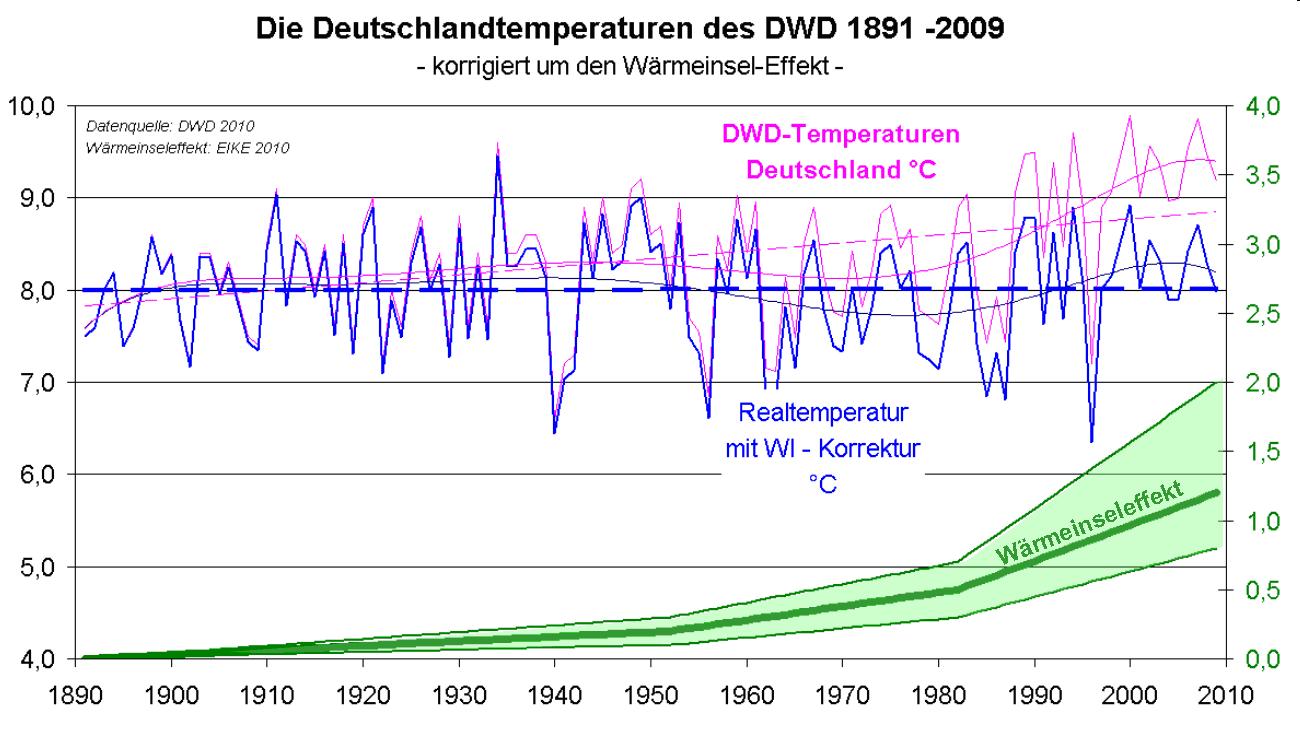
2010-12-05 de Klimaerwärmung in Deutschland nicht nachweisbar: Der DWD hantiert mit falschen Daten - Eine Bestandsaufnahme der DeutschlandtemperaturenIn unseren beiden Beiträgen am 04. und 14.10.2010 hatten wir Ihnen gezeigt, dass die DWD-Messstationen nicht annähernd das halten, was der DWD der Nation in Sachen Temperaturentwicklung glauben machen will - eine wissenschaftlich und somit korrekte Wiedergabe der Temperaturentwicklung in unserem Land und wie das ZDF einzelne Warmstationen (Frankfurter Flughafen) herauspickt und daraus sein eigenes Wetter macht, welches weder mit der Realität, nicht einmal mit den DWD-Messwerten übereinstimmt.
In diesem Artikel zeigen wir Ihnen erstmalig den tatsächlichen Temperaturverlauf für Deutschland auf, da es uns anhand einer Referenzstation des DWD gelungen ist, den Betrag des Wärmeinselseffekts (WI) für verschiedene Zeitepochen zu berechnen.
Die Datenquellen der Berechnungen stammen dabei vom Deutschen Wetterdienst.
Die tatsächliche Temperaturkurve für Deutschland für die letzten 130 Jahre wird auf EIKE erstmalig veröffentlicht.
Nicht nur die weltweit zunehmende Verlagerung der Temperaturmessstationen auf Flughäfen verfälscht die Messwerte deutlich nach oben und zwar bis um zu 2,5°C, wie wir in unseren beiden ersten Beiträgen zeigen konnten, sondern die schleichende Landschaftsveränderung und der Wärmeeintrag der Städte.
Meldungen aus Norwegen
en News from Norway
fr Actualités de la Norvège
 Temperaturanomalien in Norwegen seit 1900
Es ist ganz offenbar kein Zusammenhang mit dem CO2-Niveau der
Erdatmosphäre vorhanden
-
Klimaskeptiker Info
2010-12-03 de Kältester November in Norwegen seit 91 JahrenDer November 2010 war der in Norwegen der kälteste November seit 1919.
Im November wurden mehr als 100 neue Kälterekorde in Norwegen aufgestellt.
Es ist zwar für Norwegen im November nicht ungewöhnlich, daß Teile des Landes sehr kalt sind, der November 2010 aber zeichnet sich dadurch aus, daß ganz Norwegen sehr kalt war.
Der Temperaturverlauf der letzten 110 Jahre zeigt, daß es Erwärmungsepisoden zwischn 1930 und 1960 und um 2000 gab.
Dabei ist die Episode der letzten Jahre keineswegs wärmer gewesen als um die Mitte des 20. Jahrhunderts.
Ein augenfälliger Zusammenhang mit dem seit 50 Jahren konstant zunehmenden atmosphärischen CO2 existiert jedenfalls nicht.
Meldungen aus England
en News from the United Kingdom
fr Actualités du Royaume-Unis
-
The Global Warming Policy Foundation (Director: Dr. Benny Peiser)
2010-12-05 en 'Warmest Year On Record?' The Truth Is Global Warming Has HaltedAccording to the IPCC and its computer models, without enormous emission cuts the world is set to get between two and six degrees warmer during the 21st Century, with catastrophic consequences.
Last week at Cancun, in an attempt to influence richer countries to agree to give £20 billion immediately to poorer ones to offset the results of warming, the US-based International Food Policy Research Institute warned that global temperatures would be 6.5 degrees higher by 2100, leading to rocketing food prices and a decline in production.
The maths isn't complicated.
If the planet were going to be six degrees hotter by the century's end, it should be getting warmer by 0.6 degrees each decade; if two degrees, then by 0.2 degrees every ten years.
Fortunately, it isn't.Actually, with the exception of 1998 - a 'blip' year when temperatures spiked because of a strong 'El Nino' effect (the cyclical warming of the southern Pacific that affects weather around the world) - the data on the Met Office's and CRU's own websites show that global temperatures have been flat, not for ten, but for the past 15 years.
Dr. Phil Jones email - July, 2005
"The scientific community would come down on me in no uncertain terms
if I said the world had cooled from 1998.
OK it has but it is only 7 years of data and it isn't statistically
significant."
- e-mail 2005-07-15 en from Phil Jones to John Christy
| Phil Jones |
Director of the Climatic Research Unit (CRU) and a Professor in the
School of Environmental Sciences at the University of East Anglia in
Norwich
▶Phil Jones: Who is who (Aktivisten der anthropogenen Globalen Erwärmung) |
-
EIKE Europäisches Institut für Klima und Energie
2010-12-09 de Global Temperatur - CRU-Daten zeigen keine statististisch signifikante Erwärmung!Die Rohdaten der Temperaturen der CRU zeigen in den meisten Gebieten der Welt keine signifikante Erwärmung!
In 75% aller Gebiete der Welt gab es keine signifikante Änderung der Erwärmungs- bzw. Abkühlungsrate in der Periode vor 1960 und nach der Jahrtausendwende, der über einen Betrag von 0,5°C hinausgeht,
In 87% der Erde gab es keine solche signifikante Temperaturänderung zwischen der Periode vor 1960 und nach 2000.
-
The Strata-Spher
2010-11-29 en CRU Raw Temp Data Shows No Significant Warming Over Most Of The World75% of the globe has not seen significant peak warming or cooling changes between the period prior to 1960 and the 2000's which rise above a 0.5°C threshold,
87% the Earth has not experienced significant temperature changes between pre 1960 period and the 2000's
Wärmstes Jahr 2010 - Flugverkehr in Europa festgefroren! Lebt die UN-Organisation WMO auf einem anderen Planeten?
-
EIKE Europäisches Institut für Klima und Energie
Raimund Leistenschneider
2010-12-23 de Wärmstes Jahr 2010 - Flugverkehr in Europa festgefroren! Lebt die UN-Organisation WMO auf einem anderen Planeten?2010 soll das wärmste Jahr überhaupt sein! So die WMO (Meteorologische Weltorganisation) kürzlich.
Wie bitte, wo wir alle frieren, der Flugverkehr festgefroren ist, der Bahn- und Straßenverkehr vor lauter Schneemassen lahmt?
Die Räumfahrzeuge pausenlos im Einsatz sind und dies nicht erst seit gestern.
Zu Beginn 2010 sah es auf der ganzen Nordhalbkugel nicht anders aus wie in diesen Tagen und Wochen.
Der Mai war auch kein Wonnemonat.
Südamerika erlebte 2010 Kälte- und Schneerekorde. Da kommt diese verquere Meldung - passend zum Spektakel von Cancun und der weiteren EU-Belastungen und Abzocke im Transportverkehr - wie eine Meldung wie von einem anderen Stern.
Wo leben die Klimaforscher und ihnen hörige Politiker eigentlich, dass sie nicht mehr unterscheiden können, zwischen Fiktion und Realität.
Der folgende Beitrag will daher helfen die "Kontaktlinsen" unserer Politiker zu reinigen, damit sie das sehen und wahrnehmen, was die Bevölkerung schon lange merkt - es wird kälter! Leider!
↑
d Aus der Panik-Küche
en From the panic laboratory
fr De la marmite des alarmistes
Did Met Office or UK Government Keep Cold Winter Warning Secret In Run-Up To UN Climate Conference?
-
Mail Online
2011-01-04 en Met Office knew big freeze was coming but hushed it upThe Met Office warned ministers to expect an 'exceptionally cold winter' but then kept the prediction secret from the public.
-
GWPF The Global Warming Policy Foundation
2011-01-06 en Did UK Government Keep Cold Winter Warning Secret In Run-Up To UN Climate Conference? 2011-01-20 en Louise Ellman Asked To Probe Met Office's 'Conflicting' Winter Weather Advice 2011-01-22 en Met Office Did Not Issue 'Exceptionally Cold Winter' Warning, Says UK Government
Mojib Latif
de Aus der Panik-Küche en From the panic laboratory fr De la marmite des alarmistes
1990 - 2009
-
2012-12-09 de
Mojib Latif- Klimaprognosen 1990, 1997, 2006, 2008, 2009
Prof. Latif 1997
-
1997
de
Mojib Latif 1997 - Neue Eiszeit
Im Jahre 1997 hat der Klimaforscher Mojib Latif in den Sendungen ZDF Hallo Deutschland und DAS! (NDR) Prognosen zu den Wintern der kommenden Jahre abgegeben.
Die Prognosen lauteten folgendermaßen:
"Gemittelt über die nächsten 20 Jahre gehen wir davon aus, dass es eher kälter sein wird."
"Diese Situation (die Nordatlantische Oszillation) hat sich jetzt umgestellt, so dass das Russlandhoch die Überhand über unser Klima gewinnen wird. So das wir davon ausgehen, dass wir innerhalb der nächsten 10 bis 20 Jahre eher mit kühleren Wintern zu rechnen haben."
"Die Nordatlantische Oszillation hat sich in den letzten Jahren umgestellt und wir sind jetzt in einer Phase relativ schwacher Nordatlantischer Oszillation und wir erwarten ähnlich wie in den 60er Jahren relativ kalte Winter in der Zukunft."
Zur globalen Erwärmung sagte er im Jahre 1997
"Daher haben wir es zunächst einmal vor allem mit den natürlichen Klimaschwankungen zu tun, während wir erst in etwa 100 Jahren dann die globale Erwärmung zu spüren bekommen."
-
Die kalte Sonne (Fritz Vahrenholt & Sebastian Lüning)
2013-11-11 de Mojib Latif 1997: "Gemittelt über die nächsten 20 Jahre gehen wir davon aus, dass es eher kälter sein wird"
-
Readers Edition
2010-04-02 de
Mojib Latif 1997 - Neue Eiszeit
Prof. Latif 2000
-
"Winter mit starkem Frost und viel Schnee wie noch vor zwanzig Jahren wird es in unseren Breiten nicht mehr geben."
-
In Deutschland gehören klirrend kalte Winter der Vergangenheit an.
-
Spiegel Online 2004-04-01
de Winter ade - Nie wieder Schnee?
In Deutschland gehören klirrend kalte Winter der Vergangenheit an:
"Winter mit starkem Frost und viel Schnee wie noch vor zwanzig Jahren wird es in unseren Breiten nicht mehr geben",
sagt der Wissenschaftler Mojib Latif vom Hamburger Max-Planck-Institut für Meteorologie.
Prof. Latif 2003
-
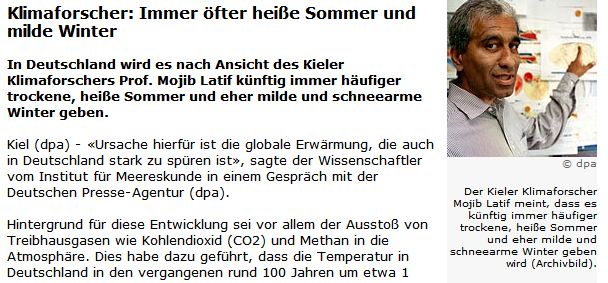
In Deutschland wird es nach Ansicht des Kieler Klimaforschers Prof. Mojib Latif künftig immer häufiger trockene, heisse Sommer und eher milde und schneearme Winter geben.
Prof. Latif 2004
-
Der Kieler Klimaexperte Mojib Latif warnt vor einer drohenden, unkalkulierbaren Erwärmung der Erdatmosphäre: "Der Welt droht eine Heißzeit", sagte der renommierte Meteorologe dem Magazin Readers Digest.
-
Die globale Erderwärmung wird laut Latif "zu Dreiviertel von den Menschen und zu einem Viertel von natürlichen Einflüssen" verursacht.
-
UmweltDialog
2004-08-02 de Klimawandel löst Völkerwanderung aus
Prof. Latif 2008
-
Der Klimawandel könnte erst mal eine kleine Pause einlegen, schreiben der Kieler Forscher Mojib Latif und seine Kollegen im Wissenschaftsmagazin "Nature" (Bd. 453, Seite 84-88).
-
Klimamodelle, die auch Ozeanströmungen berücksichtigten, ergaben einen um etwa 0,2 Grad geringeren Temperaturanstieg als bei früheren, gröberen Simulationen
-
Einen äußeren Grund für das langfristig schwankende Klima, etwa die Sonne, gibt es laut Latif nicht: "Das Klima der Erde schwankt von sich aus, ohne dass man einen speziellen Antrieb dafür braucht."
Prof. Latif 2009
-
Die Erde kühlt sich seit knapp einem Jahrzehnt wieder deutlich ab.
-
Es würde auch in den nächsten Jahrzehnten kälter statt wärmer werden.
-
Mojib Latif
2009-12-02 de
Apokalyptische Klimaprognosen: Wie Forscher Angst schüren
2009-03-13 de
Mojib Latif: Klimaprognosen 2009, 1990, 2008, 1997, 2006
Prof. Latif 2010
-
"... wir müssen weiterhin mit kalten Wintern rechnen, denn der
Einfluss der globalen Erwärmung auf das Wettergeschehen ist zum Glück
noch relativ gering.
Sie werden allerdings immer seltener werden."
Kommentar von Andreas Kreuzmann (Klimaskeptiker.info):
-
"Man kann sich kaum ein durchsichtigeres Rückzugsmanöver vorstellen:
Die angeblich so zuverlässigen Klimamodelle vom letzten Jahr [2007] haben komplett versagt, die aktuellen Messdaten beweisen eine Abkühlung, jetzt hat das natürlich Herr Latif alles schon immer gewusst und berechnet!Und in zehn Jahren (wenn er so langsam in Rente geht - er ist Jahrgang 1954 - und seine Schäfchen im Trockenen hat) kommt dann ganz bestimmt die oft herbeigeredete, aber immer wieder ausgefallene 'Klimakatastrophe', diesmal dann aber wirklich, ganz ehrlich, Ehrenwort!"
Prof. Latif 2012
-
ARD-Morgenmagazin
2012-02-13 de
Die kalte Sonne: Fritz Vahrenholt vs. Mojib Latif
Bei dem Klimaforscher Mojib Latif liegen augenscheinlich die Nerven blank, da er auf die Klimathesen von Vahrenholt keine wirklichen Antworten hat.
Seltsam ist auch: Die gleichen Thesen wie Vahrenholt hatte Latif selbst bereits im Dezember 2009 verbreitet, und nun kritisiert Latif diese Thesen an Fritz Vahrenholt.
-
Extremwetter-Kongress in Hamburg / Mojib Latif
2012-03-20/23 de
Das Klima bis 2022
Prof. Latif 2015
Man hat aus der Pleite gelernt
Nur noch 15 Jahre bleiben nach ihrer Ansicht, um den Klimawandel in den Griff zu bekommen. "Wenn der weltweite Kohlendioxidausstoß 2030 immer noch steigt, wird es zu spät sein", sagt der Klimaforscher Mojib Latif vom Kieler Helmholtz-Zentrum für Ozeanforschung.
Es ist das erste Mal, dass Latif sich öffentlich so konkret festlegt.
-
Die kalte Sonne (Fritz Vahrenholt & Sebastian Lüning)
2015-06-02 de IPCC im Jahr 2007: "Es bleiben vielleicht nur noch acht Jahre bis zur Klimakatastrophe"Im Jahr 2007 warnte der IPCC anlässlich der Herausgabe des 4. Klimazustandsberichts, dass die Zeit allmählich knapp werde, um die Klimakatastrophe noch zu vermeiden.
Man hätte vermutlich nur noch 8 Jahre, um der Apokalypse zu entkommen.
Man müsse umgehend handeln, sonst drohe die Hölle auf Erden.
Rechnen wir kurz nach:
2007 plus 8 ergibt 2015, unser heutiges Jahr. Von der Klimakatastrophe ist allerdings immer noch nichts zu sehen.
Die Temperatur liegt heute auf dem gleichen Niveau wie 2007 - und wie 1998.
Auch Wetterextreme haben nicht zugenommen.
Ganz offensichtlich hat man 2007 wohl etwas übertrieben.
Erinnern will sich daran heute niemand mehr.
Man blickt lieber in die Zukunft.
Was geht mich mein Geschätz von gestern an?Gelernt hat man aus der Pleite trotzdem: Mojib Latif
Kurzerhand verdoppelte Mojib Latif jetzt die Zeitspanne auf 15 Jahre und startet die Uhr 2015 einfach wieder neu bei Null.
Genial - Die Welt berichtete am 5. April 2015:
Es bleibt nicht mehr viel Zeit.
Das ist die Botschaft, die Klimaforscher den Politikern auf der ganzen Welt auf den Weg geben.
Nur noch 15 Jahre bleiben nach ihrer Ansicht, um den Klimawandel in den Griff zu bekommen. "Wenn der weltweite Kohlendioxidausstoß 2030 immer noch steigt, wird es zu spät sein", sagt der Klimaforscher Mojib Latif vom Kieler Helmholtz-Zentrum für Ozeanforschung.
Es ist das erste Mal, dass Latif sich öffentlich so konkret festlegt.
Im Jahr 2030 ist Latif dann in Rente und es kann ihm dann herzlich egal sein, ob er richtig oder falsch lag.
Ihm muss dabei bewusst sein, dass die Temperaturen auch in 15 Jahren noch auf dem heutigen Niveau liegen könnten, da die Ozeanzyklen bis dahin kühlend wirken werden.
Siehe "Judith Curry prognostiziert Erwärmungspause bis in die 2030er Jahre:
 Nordatlantik wird sich im kommenden Jahrzehnt leicht abkühlen
Hans von Storch fordert in einem solchen Fall Misstrauensvotum gegen CO2".
▶Hans von Storch fordert in einem solchen Fall Misstrauensvotum gegen CO2
Quellen / Sources:
-
Die Welt
2015-04-05 de 2030 schließt sich das Zeitfenster der ErderwärmungNur noch 15 Jahre bleiben nach ihrer Ansicht, um den Klimawandel in den Griff zu bekommen.
Der Klimawandel ist noch abwendbar.
Das zumindest sagt der Klimawissenschaftler Mojib Latif.
Der sinkende Kohle-Verbrauch in China erscheint ihm als leiser Hoffnungsschimmer.
USA: Kohle und Kohlekraftwerke
de
Die Vereinigten Staaten sind das "Saudi Arabien" der Kohle
en
America is the "Saudi Arabia" of Coal
fr
Les Étas Unis sont "l'Arabie Saoudite" du charbon
-
The Guardian
2007-05-02 en UN scientists warn time is running out to tackle global warmingGovernments are running out of time to address climate change and to avoid the worst effects of rising temperatures, an influential UN panel warned yesterday.
Greater energy efficiency, renewable electricity sources and new technology to dump carbon dioxide underground can all help to reduce greenhouse gas emissions, the experts said.
But there could be as little as eight years left to avoid a dangerous global average rise of 2C or more.
| Mojib Latif |
Dr. rer. nat.,
Professor für Meteorologie am Leibniz-Institut für
Meereswissenschaften (IFM-GEOMAR) an der Universität Kiel.
▶Mojib Latif: Who is who (Aktivisten der anthropogenen Erwärmung) |
| de | en | fr |
|---|---|---|
| Klima-Panik | Climate Change panic | La panique à cause du réchauffement climatique |
| Globale Erwärmung führt zur Abkühlung! | Colder winters possible due to Global Warming | Refroidissement par le réchauffement climatique |
↑
e Winter extrem - "Neue kleine Eiszeit ist jetzt möglich"
en Speculation Alert: "New Little Ice Age Cannot Be Ruled Out"
-
Klimaskeptiker Info
2010-12-13 de "Neue Kleine Eiszeit ist jetzt möglich" - "Einfluß der Sonnenaktivität wurde lange Zeit sträflich unterschätzt"
-
Watts Up With That? (Antony Watts)
2010-12-18 en How Germany's weather team views the "hottest year ever"with comments
Quelle / Source:
-
T Online / Rickmer Flor, wetter.info
2010-12-13 de Winter extrem - "Neue kleine Eiszeit ist jetzt möglich"Erwärmung - doch in Deutschland, aber auch in vielen anderen Ländern der Welt kämpfen die Menschen derzeit mit den Widrigkeiten extremer Kälte.
Und tatsächlich:
"Das ausgehende Jahr 2010 wird das kälteste seit zehn Jahren in Deutschland", erklärt Thomas Globig vom Wetterdienst Meteomedia im Gespräch mit wetter.info.Und es könnte noch dicker kommen:
"Durchaus möglich, dass wir am Beginn einer kleinen Eiszeit stehen", so der Meteorologe.Schon jetzt steht fest:
Die Temperaturen in Deutschland lagen dieses Jahr mit 8,1 Grad um 0,2 Grad unter dem langjährig gemessenen Mittel von 8,3 Grad. "Ich fürchte, wir werden bis zum Jahresende noch deutlich tiefer landen", sagt Globig.Das langjährige Mittel ist genau genommen das Mittel aller deutschen Messstationen aus den Jahren 1961 bis 1990.
So kalt wie seit 100 Jahren nicht
In Berlin gab es Anfang Dezember den absoluten Kälterekord, "seit 100 Jahren war es hier nicht so kalt wie in der ersten Dezember-Dekade", so Globig. Das gelte auch für andere Regionen Deutschlands.
"Unvorstellbare Schneemengen" in Berlin
Globig appelliert an unser Langzeitgedächtnis - und erinnert an eine längere Phase kalter und extrem schneereicher Winter in den sechziger und siebziger Jahren. So fiel Anfang März 1970 in Berlin ein halber Meter Schnee, in Potsdam sogar 70 Zentimeter. "Aus heutiger Sicht waren das unvorstellbare Mengen."
Dann folgte eine Periode milderer Jahre,
und "wahrscheinlich verbreitete sich der Eindruck: Richtigen Winter gibt's nicht mehr in Deutschland", meint Globig.
"Das war aber eine Fehleinschätzung."
Man wurde unvorsichtig, und in der Folge ging den Räumdiensten im letzten Winter in kürzester Zeit das Streusalz aus, und in diesem Jahr fehlten den Flughafenbetreibern die Enteisungsmittel für die Flugzeuge. In Berlin kam der S-Bahn-Verkehr im Dauerfrost zum Erliegen, und auch die Hochgeschwindigkeitszüge der Bahn streikten. "Unsere moderne, hochtechnisierte Welt ist mit der Wintersituation völlig überfordert", sagte Globig.
Schon der letzte Winter war extrem hart
Viele seien dem Irrglauben erlegen, die meist milden Winter der vergangenen zehn Jahre würden sich weiter fortsetzten. Doch schon der Winter 2009/2010 - mit seinen langen Frostperioden und viel Schnee bis weit ins Frühjahr hinein - habe bei vielen einen Aha-Effekt ausgelöst. "Diese Aha-Erlebnis könnte in diesem Jahr noch deutlicher ausfallen", prophezeit Globig.
Für die deutliche Abkühlung sieht Globig zwei Hauptursachen:
Zum einen die zyklischen Veränderungen bei den großen Luftströmungen über dem Atlantik, und zum anderen die Schwankungen der Sonnenaktivität.
Mit den niedrigen Temperaturen könnte es durchaus noch ein paar Jahre so weiter gehen, vielleicht Jahrzehnte.
Auch noch eisigere Kälte sei denkbar.
"Das hat's alles schon mal gegeben und mit natürlichen Klimaschwankungen zu tun", sagte Globig.
Wir könnten sogar an dem Beginn einer kleinen Eiszeit stehen, "die Wahrscheinlichkeit ist zumindest gegeben".
Dafür spreche auch die aktuelle Entwicklung bei der Sonnenaktivität.
Diese habe den Zenit einer fast 200 Jahre andauernden Hochphase überschritten und wird in den nächsten Jahrzehnten immer mehr abnehmen.
Um die Jahre 2040/2050 rechnen Wissenschaftler mit einem neuen sogenannten Solarminimum, also mit sehr wenig Zufuhr von Sonnenenergie in die Erdatmosphäre.
Ausbreitung des arktischen Eises?
"Ich halte es sogar für denkbar, dass sich das arktische Eis in den nächsten Jahren bedeutsam ausbreitet", so Globig.
Der Einfluss der Sonnenaktivität auf das Klima sei lange Zeit sträflich unterschätzt worden.
-
The Global Warming Policy Foundation (GWPF, Director: Dr. Benny Peiser)
2010-12-15 en Speculation Alert: "New Little Ice Age Cannot Be Ruled Out"Everybody is talking about global warming - but in Germany and also in many other countries around the world people are currently fighting with the adversities of extreme cold.
And indeed:
"The year 2010 will be the coldest for ten years in Germany," said Thomas Globig from the weather service Meteo Media talking to wetter.info .And it might even get worse:
"It is quite possible that we are at the beginning of a Little Ice Age," the meteorologist said.It is already clear: the average temperatures in Germany this year (8.1 degrees Celsius) were 0.2 degrees below the long term measured average of 8.3 degrees. "I fear we will end up still significantly lower by the end of the year", said Globig.
The long-term average is actually the average of all German stations from 1961 to 1990.
Coldest December in 100 years
In Berlin, there was an absolute cold record in early December, "For 100 years it had not been as cold as in the first decade of December," said Globig. This also applied to other regions.
"Unbelievable amounts of snow" in Berlin
Globig appeals to our long-term memory - and recalls a prolonged period of extremely cold and snowy winter in the 1960s and 1970s. Half a meter of snow fell in Berlin in early March 1970, in Potsdam even 70 centimetres. "From today's perspective, these amounts were unbelievable."
Then followed a period of milder years,
and "probably the impression spread that there will be no more real winters in Germany", said Globig.
"That was a misjudgment."
People became careless, and as a result the authorities run out of grit in a very short time last winter and this year the airport operators lacked de-icing fluid for airplanes. In the Berlin the S-Bahn traffic came to a halt because of the cold and the high-speed trains did not run either. "Our modern, high-tech world was completely overwhelmed with the winter situation" said Globig.
Even the last winter was extremely hard
Many had succumbed to the delusion that the usually mild winters of the past ten years would continue. But already the winter 2009/2010 - with its long periods of frost and snow well into spring - was an eye-opening event for many. "This eye-opening experience could be even bigger this year," predicts Globig.
Globig sees two main causes for the significant cooling:
First, the cyclical changes in the big air currents over the Atlantic, and second, the variations in solar activity.
The low temperatures could very well go on a few years, maybe decades.
Even more icy cold could be possible.
"It has happened before, and can be explained with natural climate variability," said Globig.
We could even be at the beginning of a Little Ice Age, "the probability is at least given."
This is also supported by the current development of solar activity.
Solar activity has passed the zenith of a nearly 200 years continuing phase of high activity and will decline in coming decades
Around the years 2040/2050, scientists expect a new so-called solar minimum, with very little supply of solar energy into the Earth's atmosphere.
Spread of the Arctic ice?
"I think it is even conceivable that the Arctic ice spreads significantly in the years to come," said Globig.
The impact of solar activity on climate has been criminally underestimated for a long time.
↑
f Weitere Meldungen 2011
en Further News 2011
fr Plus d'informations 2011
2010-12
-
IrishCentral
2010-12-24 de It's official, coldest winter in 130 years
-
Paris paralyzed by huge snowfall
Travelers in Paris and Frankfurt slept at the airport after snow and
ice caused travel chaos.
Pop singer Shakira canceled a concert in Germany, while the French
prime minister missed a gala at Moscow's Bolshoi Theater.
Many European commuters suffered through traffic jams on slushy streets
Thursday, and Scotland even called in the army to clear the snow.
Flights out of Paris and Frankfurt were still delayed after bad weather
forced the temporary closing of airports a day earlier.
Paris, a city of frequent rain, is unprepared for snow.
Paris under the snow! December 2010 (Montmartre)
snow in Paris today (19 december 2010)
Heavy snow and icy roads cause travel chaos in Paris
Gulfstream II Landing in snowy conditions at Paris
-
BBC News
2010-12-18 en
HEATHROW AIRPORT FROZEN
2011-01
de
-
Tages-Anzeiger
2010-12-03 de Bereits 30 Kältetote in Polen
2010-12-09 de Eingeschneites Edinburgh ruft Armee zu Hilfe
2010-12-17 de Dutzende verunfallten im Schneechaos
2010-12-18 de Sibirisches Wetter in der Schweiz
2011-01-11 de Kälte tötet in Indien über 100 Menschen
-
Klimaskeptiker Info
2011-02-21 de Moskau zittert im "kältesten Winter seit 100 Jahren"Einige wenige Medien in Europa haben den Mut, die Wahrheit zu berichten: "Tagelang Minus 30 °C - 13 Grad kälter als normal - Obdachlose sterben ... ".
Gleichzeitig versuchen alarmistische Medien immer wieder zu verbreiten, die außergewöhnliche Kälte sei ein Produkt der "globalen Erwärmung".
-
Klimaskeptiker Info
2011-02-26 de Ostsee friert immer weiter zu
-
n-tv.de
2011-02-25 de Ostsee friert immer weiter zu - Bis zu 20 Meter hohe EiswändeDas hat es seit Mitte der 1980er Jahre nicht mehr gegeben:
Von 450.000 Quadratkilometern sind zum Ende dieser Woche 300.000 Quadratkilometer Ostsee zugefroren.
Mancherorts türmen sich bizarre Eisberge auf.
en
-
NoTricksZone (P Gosselin)
2011-02-21 en Moscow Shivering In "Coldest Winter In 100 Years"That's what we are hearing from a few media outlets in Europe, those who have dared to mention the "cold-snap" word and to write about reality.
It's been cold in Scandinavia, much of Europe, North America and Russia too.
Where's all the warming? Heck, even the oceans are below normal.
-
Watts Up With That? (Antony Watts)
2010-12-13 de Hundreds of new cold and snow records set in the USA 2011-01-12 de UPDATED: Nearly 71% of the USA is covered in snow, 49 of 50 states have snow on the ground 2011-01-27 de Another Eastern Snow - Brutal Winter Assault Continues
fr
-
20 Minutes
2010-12-13 fr Etats-Unis: Tempête de neige à travers le Midwest
-
France 24
2010-12-20 en Australia swaps summer for Christmas snow
Snow and ice covering buildings and cars on December 19, 2010 at Mount Hotham,Victoria, as snow fell in Australia.
The usual hot and summery December weather was replaced in parts by icy gusts sweeping up from the Southern Ocean, giving the country a taste of a white Christmas.
Snow has fallen in parts of east coast states New South Wales and Victoria.
2011-03
-
Herald Scotland
2011-03-12 en Road chaos alert as winter sweeps back to Scotland
-
PlanetSKI
2011-03-09 en The snow is backThere has been some very welcome fresh snow across The Alps and some great conditions in The Pyrenees where there has been a huge snowfall.
North America continues to do well. Winter is back!
See the latest news, pictures and videos in our weekly snow report.
2011-06
|
|
|


-
Watts Up With That? (Antony Watts)
2011-06-12 en BBC snowed by the whims of nature
2011-07
-
NZZ Online
2011-07-27 de Sauwetter statt Sommer auch in ItalienIn den Dolomiten schneit es und sogar in Sizilien ist es ungewöhnlich kühl
2011-08
-
Klimaskeptiker Info (Andreas Kreuzmann)
2011-08-15 de Wintereinbruch in Neuseeland - Erster Schnee seit 36 JahrenNeuseeland wird momentan von einem Wintereinbruch getroffen.
Mancherorts hat es zum ersten Mal seit 36 Jahren geschneit.
Wenn es beispielsweise in Neuseeland zum ersten Mal seit 36 Jahren schneit, bedeutet dies logischerweise, daß es dort vor 36 Jahren bereits geschneit hat.
Schnee ist also an einigen Stellen auf Neuseeland zwar selten, aber nicht ausgeschlossen.
-
Watts Up With That? (Antony Watts)
2011-08-16 en Kiwis flummoxed by significant snow
2011-09
-
Tages-Anzeiger
2011-09-17 de Dauerregen und NeuschneeDas wars. Der Sommer ist vorbei.
Und schon klopft der Winter an die Tür.
Es schneit vereinzelt bis unter 1000 Höhenmeter.
-
NZZ Online
2011-09-19 de Früher Wintereinbruch in den AlpenMit erstem Schnee ist in den Bergen mitten im September der Winter eingezogen.
In Graubünden fiel die Schneefallgrenze auf 1200 Meter.
An einigen Orten türmt sich der Neuschnee bis zu einem halben Meter hoch.
Im Mittelland sanken am Wochenende die Temperaturen bei teilweise starkem Regen und Gewittern auf knapp über 10 Grad.
-
Watts Up With That? (Antony Watts)
2011-09-19 en Early Winter in SwitzerlandGlobal Warming alarmists have long claimed that snowfall would soon be a thing of the past in the Swiss Alps, that the glaciers would melt, tourists would leave, and the ski industry would die.
There CERTAINLY would not be any snowfall at lower altitudes, or any snowfall even before the official start of autumn.
Yet today there fell snow as low as 1200 meters, with heavy falls in St. Moritz, a very early time for a blizzard in the alps.
Note: There have been no Al Gore sightings in the region recently...
2011-10
-
NZZ Online
2011-10-08 de Wintereinbruch in den BergenNach dem Wintereinbruch in den Bergen wurden zahlreiche Hauptpässe wegen Schnees gesperrt.
Das wirkte sich auch auf den Verkehr am Gotthardtunnel aus:
Am Samstagmorgen bildete sich ein 11 Kilometer langer Stau Richtung Süden.Im Glarnerland schneite es vereinzelt bis auf 600 Meter hinunter.
2011-10-09 de Schnee in den Bergen beeinträchtigt den Verkehr
2011-10-11 de Bildstrecke: Hochwasser in der Schweiz
2011-10-29 de Wintereinbruch sorgt in den USA für Chaos
Ein überraschend früher und starker Wintereinbruch hat an der Ostküste der USA für zum Teil chaotische Zustände gesorgt.
Etwa 2,3 Millionen Haushalte und Geschäfte waren am Wochenende zeitweise ohne Strom.
Am stärksten betroffen waren Gebiete im Landesinnern, vor allem im Osten des Staates Pennsylvania, wie ein Sprecher des Wetterdienstes mitteilte.
In einigen Orten gab es 35 Zentimeter Schnee.
Auch New York wurde von einer weissen Schicht bedeckt.
Auf den New Yorker Flughäfen hatten Flüge am Samstag wetterbedingt bis zu 75 Minuten Verspätung. Es kam auch zu etlichen Zugausfällen in der Region.
An vielen Orten erwarteten die Meteorologen bis zum Sonntag weitere Schneefälle.
«Das ist sehr, sehr ungewöhnlich», sagte John LaCorte vom Nationalen Wetterdienst in State College, Pennsylvania.
Zuletzt sei in dem US-Staat 1972 ein grösserer Schneesturm so früh im Herbst verzeichnet worden.
-
Tages-Anzeiger
2011-10-09 de Schnee legt Bündner Bahnverkehr lahmIn den Nordbündner Tälern sowie im Glarnerland fiel bis Samstagabend bis auf 600 Meter Schnee.
In der Höhe gab es in Nordbünden, aber auch im Berner Oberland, laut dem Institut für Schnee- und Lawinenforschung (SLF) zwischen 30 und 50 Zentimeter Schnee, in den Glarner Alpen sogar 70 Zentimeter.
-
Watts Up With That? (Antony Watts)
2011-10-28 en Major Snow for Northeastern USA - NYC may get earliest 1? snowfall since the Civil WarNew York has received measurable snow before Halloween only 3 times since 1869.
These events were never more than one inch.
If the forecast holds, this would be the earliest 1? snowfall in New York City since the Civil War.
-
20 Minutes
2011-10-30 fr Tempête de neige aux Etats-Unis: 3 morts, 2 millions de personnes sans électricitéDes chutes de neige et des pluies verglaçantes, rarissimes en cette saison, ont fait trois morts et provoqué de fortes perturbations dans les transports sur la côte Est des Etats-Unis et privé d'électricité 2 millions de personnes, selon des sources concordantes.
Les services météorologiques prévoient que la tempête de neige «historiquement précoce» accompagnée de températures en-dessous de zéro celsius et de vents soufflant jusqu'à 100 km/h sévisse au moins jusqu'à 11h00, heure de Paris, ce dimanche.
⇧
9 Meldungen 2012
en News 2012
fr Informations 2012
Mit folgenden Links wird von anderen Webseiten auf diese Seite verwiesen:
| de | en | fr |
|---|---|---|
|
Neue Kälteperiode 2012 Meldungen |
New Cold Period 2012 News |
Nouvelle periode froide 2012 Informations |
- 2012-02
- 2012-03
- 2012-04
- 2012-05
- 2012-06
- Bemerkungen zum Sommer 2012
- 2012-07 Europa
- 2012-07/08 USA
- 2012-08
- 2012-10
- Nachtrag zum Sommer 2012
- 2012-12
|
|
|

↑ 2012-02
| ⇒ Google Web | ⇒ Google Video | ||
| de | kältetote 2012 | de |
kältetote 2012 |
Meldungen aus Deutschland
-
Spiegel Online
2012-02-07 de Eiswinter bis zum Wochenende
2012-02-07 de Fotostrecke
Meldungen aus der Schweiz
-
NZZ Online
2012-02-07 de
Bildstrecke: Sibirische Kälte in Europa
-
Weltwoche 06/12 - Hanspeter Born
2012-02-08 de Eiszeit*
* (Ganzer Inhalt nur registrierten Abonnenten der Weltwoche zugänglich)Die Auffassung, dass menschliches Verhalten an der «unnatürlich starken» (ETH-Klimablog) Erderwärmung schuld ist und dass Massnahmen zu ihrer Bekämpfung unerlässlich sind, ist in der Schweiz eine in Stein gemeisselte Wahrheit.
Die Wissenschaft, die Behörden, die Politiker, die Medien - alle teilen diese Ansicht.
Wer an der menschengemachten Erderwärmung zweifelt, ist ein Wissenschaftsfeind, ein «Klimaleugner».
-
Weltwoche 06/12 - Christoph Mörgeli
2012-02-08 de Klirrend kalte Klimaerwärmung*
* (Ganzer Inhalt nur registrierten Abonnenten der Weltwoche zugänglich)Hunderte von Kältetoten.
Sibirische Temperaturen.
Schneestürme in der Türkei und in Tunesien.
Vereiste Wasserleitungen.
Eingefrorene Stromnetze.
Eigentlich sollten wir Durchschnittsmenschen annehmen, auch unsere Durchschnittsjournalisten würden sich gelegentlich Gedanken machen.
Nämlich über ihre ständigen Horrorszenarien einer Treibhaus-Ozonloch-Klimaerwärmung.
Der Blick titelt immerhin ironisch: «Klimaerwärmung, komm sofort!»
Doch der Tages-Anzeiger meint griesgrämig:
«Wegen der Klimaerwärmung werden die Bergwinter kühler».Ups. Da wird ein Argument an den Haaren durch den Kakao herbeigezogen.
Denn das Faktum der aktuellen Kältewelle ist für die Klima-Anheizer ideologisch ein Kälteschock.
Der Bergwinter sei - so der Tages-Anzeiger - in den letzten zwanzig Jahren kälter geworden.
Schuld daran trage die Eisschmelze am Nordpol.
Aber gewiss doch.
Ist doch logisch.
Wegen der Hitze wird es kühler.
Nach diesem Schema dürfen wir uns auf weitere spannende Artikelüberschriften freuen:
«Wegen immer mehr Schulden werden die Staaten reicher.»
«Wegen der Bereitstellung von mehr Unterkünften kommen weniger Asylbewerber.»
«Wegen längeren SRG-Fernsehkonsums werden die Schweizer klüger.»Die Klimadebatte der vergangenen Jahre geht auf keine Pinguinhaut. Man hat uns einen Eisbären aufgebunden. Die nördliche Halbkugel ist in den letzten zwei Jahrzehnten im Osten der USA, in Südkanada und Nordeuropa im Winter deutlich kühler geworden.
Dies passt irgendwie schlecht zum Dogma der globalen Erderwärmung.
Und zur Weltuntergangsstimmung der rot-grünen Klimahysteriker.Zum Glück vernimmt man vermehrt besonnene, kritische Forscher.
Diese meinen, der menschliche CO2-Ausstoss sei eine zu vernachlässigende Grösse.
Und die Klimaveränderung ein Teil der Natur.Ein anderer Teil der Schöpfung sind die Erfinder von CO2-Gesetzen, CO2-Abgaben und Uno-Klimagipfeln in Durban, Cancún oder Kopenhagen.
Eine einzige wertvernichtende Umverteilungsübung.
Damit die Panikmacher zu Geld und Macht kommen.Der Weltuntergang ist vorderhand verschoben.
Wenden wir uns besser der politisch-wirtschaftlichen Gross- und Kleinwetterlage zu.
Etwa dem Regenschauer über den Euro-Rettungsschirmspannern.
Oder dem Gewitter wegen amerikanischer Steuerstreitsüchtigen.
Oder dem unterkühlten Betriebsklima im Bundesrat.
-
Basler Zeitung
2012-02-01 de «Eine Woche stinknormales Winterwetter»In den Medien ist da und dort von Rekordkälte zu lesen und von Vergleichen zum «Rekordwinter» von 1987.
Rekordverdächtig ist das alles sicher nicht.
Im Januar 1987 haben wir in Binningen minus 23,5 Grad gemessen.
Das ist kalt.Die kälteste je in Basel gemessene Temperatur finden wir übrigens im Jahr 1830 mit minus 27 Grad.
Sehen Sie, es ist jetzt einfach ganz normaler Winter.
de Aus der Panik-Küche en From the panic laboratory fr De la marmite des alarmistes
-
NZZ Online
2012-02-07 de Kalte Winter im warmen KlimaIm November 2010 hatten Forscher vom Potsdam-Institut für Klimafolgenforschung mit einer Computersimulation Hinweise darauf gefunden, dass der Rückgang des arktischen Meereises die Wahrscheinlichkeit für das Auftreten strenger Winter in Europa verdreifachen könnte.
-
Tages-Anzeiger
2012-02-07 de Wegen der Klimaerwärmung werden die Bergwinter kühlerDie Bergwinter in der Schweiz sind jedenfalls nicht milder geworden, wie eine neue Studie von Meteo Schweiz zeigt.
Zwar wurde es Ende der 80er-Jahre im Winter auf allen Höhenstufen wärmer.
Doch seither zeigt der Trend im Hochgebirge in die andere Richtung.
«Die Bergwinter sind in den vergangenen zwanzig Jahren 2 Grad kühler geworden», heisst es im Bericht.
|
Hans-Joachim Schellnhuber *1950-06-07 |
Professor, Bis September 2018 war er Direktor des 1992 von ihm gegründeten Potsdam-Instituts für Klimafolgenforschung (PIK) ▶Hans-Joachim Schellnhuber: Who is who (Aktivisten der anthropogenen Erwärmung) |
| Stefan Rahmstorf |
Professor, Potsdam-Institut für Klimafolgenforschung
▶Stefan Rahmstorf: Who is who (Aktivisten der anthropogenen Erwärmung) |
Meldungen aus Frankreich
2012-02-05
-
20 Minutes
2012-02-05 fr Vague de froid: Ce que nous réservent les prochains joursLa vague de froid, accompagnée de chutes de neige, qui affecte la France devrait persister cette semaine, selon Météo France.
La perturbation traverse le pays d'Ouest en Est et devrait s'atténuer par le Nord, mais les chutes de neige persisteront du sud de Midi-Pyrénées à l'Aude et aux Pyrénées Orientales, dimanche soir et la nuit prochaine.
 Bordeaux 2012
-
20 Minutes
2012-02-09 fr Comment le froid transforme l'économie françaiseECONOMIE - Un quart du PIB peut être potentiellement détruit en cas d'anomalie climatique...
de Aus der Panik-Küche en From the panic laboratory fr De la marmite des alarmistes
2012-02-02
-
20 Minutes
2012-02-02 fr Jean Jouzel: «L'hiver exceptionnellement doux démontre le réchauffement climatique»CLIMAT - Pour le climatologue, membre du GIEC, les records de chaleur de 2011 sont un indice du réchauffement global de la planète...
Les prochains hivers ressembleront-ils à celui-ci?
Il est tout à fait possible que l'hiver prochain soit moins clément, mais en moyenne les hivers deviendront de plus en plus doux.
2012-02-06
-
20 Minutes
2012-02-06 fr La vague de froid, une fluctuation qui ne remet pas en cause le réchauffement du climatCLIMAT - Il a beau faire très froid en France ces derniers jours, l'hiver 2012 ne contredit pas le réchauffement global de la planète...
Meldungen aus Russland
-
TerraDaily
2012-02-13 en 215 Russians die in cold snap; well over 600 in Europe
↑ 2012-03
Schweiz
-
Basler Zeitung
2012-03-19 de Züge gestoppt - es drohen LawinenIn den Alpen herrscht in mehreren Regionen Lawinengefahr. Zugverbindungen wurden umgeleitet oder ganz eingestellt.
Erst morgen wird entschieden, ob in den gefährdeten Regionen die Züge wieder rollen.Seit Samstag fielen am Alpenhauptkamm vom Gotthardgebiet bis in die Region Bernina 50 bis 70 Zentimeter Neuschnee.
In den oberen Maggiatälern und in der oberen Leventina waren es 90 Zentimeter,
-
Basler Zeitung
2012-03-22 de «Manche Bauern haben alles verloren»Die Kältewelle hinterlässt Spuren:
Es drohen Einbrüche bei Europas Weizenernte.
Australien
-
Basler Zeitung
2012-03-06 de Schon wieder Land unter Down underNach wochenlangen Regenfällen sind weite Gebiete im Osten Australiens überflutet.
Tausende Menschen sind bereits auf der Flucht vor den Wassermassen.
↑ 2012-04
-
Basler Zeitung
2012-04-09 de Schweizer müssen ihre Ostereier im Schnee suchenIn den Bergen wurden am Sonntag 20 bis 30 Zentimeter Neuschnee gemessen.
Laut SF Meteo war St. Gallen am Mittag dick verschneit, und in Luzern wurden winterliche 0,5 Grad gemessen.
↑ 2012-05
-
NZZ Online
2012-05-17 de
Frost fordert den Flughafen Zürich
Kalt wie lange nicht mehr
Laut SF Meteo wurden in der Nacht auf Donnerstag so tiefe Temperaturen gemessen wie seit 30 Jahren nicht mehr zu dieser Jahreszeit.
In Kloten wurden minus 0,2 Grad registriert, wenige Zentimeter über dem Boden war es sogar noch deutlich kälter. In vielen Regionen gab es Reif, und Autoscheiben waren am Morgen vereist.
Die Schneefallgrenze lag zwischen 800 und 1300 Metern, was die Meteorologen als unüblich, aber nicht rekordverdächtig einstufen.
↑ 2012-06
-
NoTricksZone (P. Gosselin)
2012-06-03 en Winter Hits Europe - Stockholm Has Coldest Day in 84 Years! Sweden Coldest Temperature In 20 Years!Strangest warming I've ever seen.
Parts of Europe are being gripped by unusual cold, even though the calendar says it's meteorological summer.
Now children in Sweden are finding out what snow is like - in June!
Strangest warming I've ever seen.2012-06-28 en Sweden Records One Of Its Coldest and Wettest June Months Since Records Began In 1786
According to the Swedish Meteorological and Hydrological Institute (SMHI), temperatures have been well below average in June, at just 13.3 degrees Celsius. Normal is 15.2°C.
On June 2, the temperature in Stockholm rose only to 6°C, the coldest high in 84 years, read more here. Earlier in the month one town recorded a temperature of 6°C below zero - the coldest June temperature in Sweden in 20 years. Snow even blanketed parts of northern Sweden.
Normally in the month of June, the mercury rises to 25°C or more on just days 5 days on average. This June the mercury never reached that mark. In fact it didn't even reach the 22°C mark. The high temperature for June in Stockholm was only 21.6°C. This is only the second time the temperature has failed to reach 25°C in June in 92 years
June has also been a very wet month. According to the SMHI, Stockholm recorded a record rainfall so far for the month: 145.8 millimetres, the most since records began in 1786.
-
Basler Zeitung
2012-06-10 de Wenn im Juni der Winter wieder anklopftIn der Nacht auf heute ergaben sich beachtliche Niederschlagmengen, die Schneefallgrenze fiel auf 1500 Meter über Meer.
Auch in den kommenden Tagen kennt das Wetter vor allem eine Bedingung: Grau und nass.
↑ Bemerkungen zum Sommer 2012
Mit folgenden Links wird von anderen Webseiten auf diese Seite verwiesen:
Sommer 2012 / Summer 2012 / Été 2012:
|
|
|
||||||||||||||||||||||
|
|||||||||||||||||||||||
|
|||||||||||||||||||||||
|
|||||||||||||||||||||||
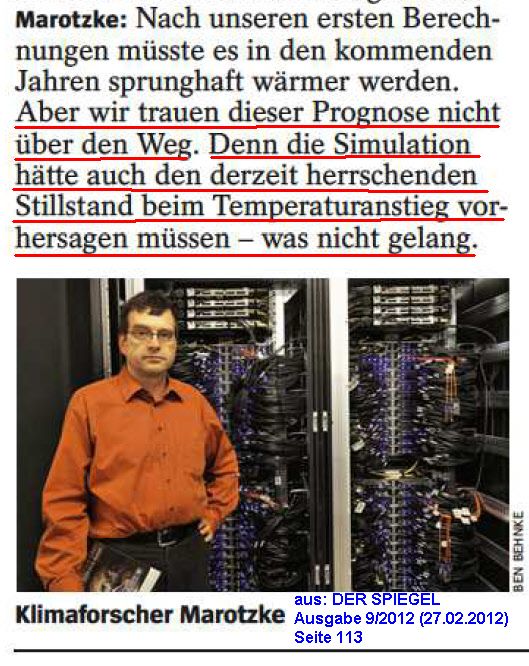
Schlussfolgerung: Aus den obigen Ausführungen, den Videos und den "regenreichen" letzten Sommer ist zu schliessen, dass die Propheten die besseren Voraussagen machen als die Supercomputer.
Das Schweizer Fernsehen als Gläubiger der Globalen Erwärmung hat mit dem Titel «Bikini-Sommer» unter den Wetterpropheten anscheinend aber den Falschen ausgesucht.
Wetter ist nicht Klima - aber... / Weather is not Climate - but...
siehe: Falsche Voraussagen und Falsche Prognosen der Warmisten
| de | en | fr |
|---|---|---|
| Auswirkungen des Klimas: Wetter | Impacts of the Climate: Weather | Impacts du climat: Temps (météorologie) |
| Extremwetter | Extreme Weather Events | Intempéries extrèmes |
| de | en | fr |
|---|---|---|
|
Neue Kälteperiode Meldungen |
New Cold Period News |
Nouvelle periode froide Actualités |
Antwort auf dieser Website / Reply on this Website / Réponse sur ce site:
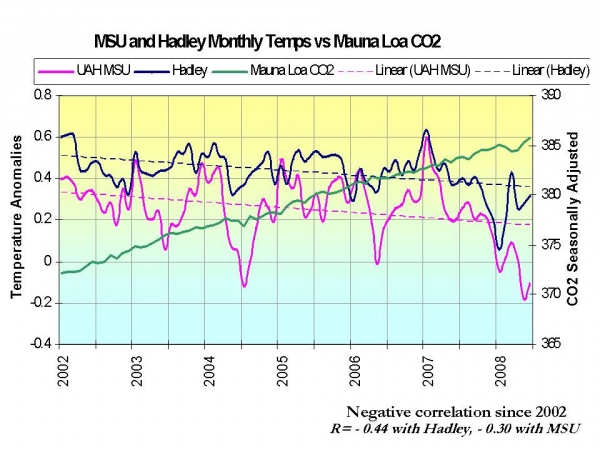 Hadley (CRUT3v) and MSU (Satellite Lower Trop) Temps vs CO₂
|
|
|
|
de Das CO₂ steigt und die Temperaturen fallen.
Wenn das CO₂ die Erwärmung erklärt,
muss es auch die Abkühlung erklären ...
oder es muss eine andere Erklärung
gefunden werden, en CO₂ is rising and the temperatures are falling.
If the CO₂ explains the warming,
it must also explain the cooling ...
or another explanation must be found fr Le CO₂ monte et les températures baissent.
Si le CO₂ explique le réchauffement,
il doit aussi expliquer le refroidissement ...
ou bien une autre explication doit être trouvée, |

de
Wo bleibt die vorhergesagte Erderwärmung?
en Goodbye Warming - Hello Cooling
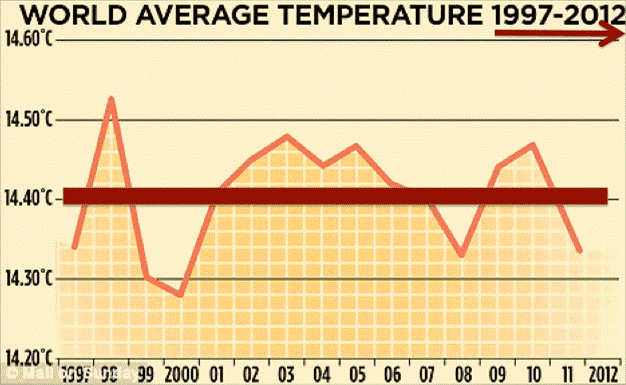 Wo bleibt die vorhergesagte Erderwärmung?
-
EIKE Europäisches Institut für Klima und Energie
2012-02-25 de G l o b a l C o o l i n g : Wo bleibt die Erderwärmung ?
-
Die kalte Sonne (Fritz Vahrenholt & Sebastian Lüning)
2012-02-25 de Klaus-Eckart Puls: Wo bleibt die vorhergesagte Erderwärmung?
-
No Tricks Zone (P Gosselin)
2012-02-25 en Veteran Meteorologist Klaus Eckhart Puls: "Goodbye Warming - Hello Cooling". From Wrong Science To Fraud Science
Auswirkungen, Teil: I II III IV
Arktis / Antarktis / Grönland / Gletscher / AlpenGate / HimalayaGate / Eisvolumen / Meeresspiegel / Extremwetter / Hurrikane / Biosphäre / CO2-Düngung / Afrika / Mt Kilimanjaro / Politik
Frage:
Wann werden die Gurus auf die Idee kommen, dass
mehr CO2 poduziert werden soll, damit
die Temperaturen wieder steigen?

(damit könnte auch das Wachstum der Pflanzen gefördert
werden)
Dem widerspricht allerdings:
Steigende Temperatur bewirkt CO2-Anstieg
(nicht umgekehrt! - zuerst kommt die Temperatur!)
Quizfrage:
Wie viel Prozent CO2 hat es in der Luft?:
..2, 5, 10, 20%, ..mehr? ..weniger?
Der Anteil von CO2 in der Luft
Wenn die CO2-Konzentration zunimmt, hat
es einen kleineren Erwärmungseffekt
Kritische Bemerkungen eines Nobelpreisträgers
für Physik:
2015
65th Lindau Nobel Laureate Meeting
2015-07-08 en
Ivar Giaever: Global Warming Revisited
Seeing as this is such a hot topic on Facebook and across the internet, due to the speaker calling out Obama as being "dead wrong". This speech was given by Ivar Griaever, who shares a Nobel Prize in Physics, on July 1, 2015.
Hopefully this opens the door to a discussion on the topic here at YouTube.
-
EIKE Europäisches Institut für Klima und Energie
2015-07-15 de Nobelpreisträger Ivar Giaever: "Haltung Obamas zur globalen Erwärmung ist lächerlich und völlig falsch!"Abstract: en Lindau Nobel Laureate Meetings
-
Climate Depot
2015-07-06 en Nobel Prize-Winning Scientist Who Endorsed Obama Now Says Prez. is 'Ridiculous' & 'Dead Wrong' on 'Global Warming'Nobel Prize Winning Physicist Dr. Ivar Giaever: 'Global warming is a non-problem'
'I say this to Obama: Excuse me, Mr. President, but you're wrong. Dead wrong.'
'Global warming really has become a new religion.'
"I am worried very much about the [UN] conference in Paris in November... I think that the people who are alarmist are in a very strong position.'
'We have to stop wasting huge, I mean huge amounts of money on global warming.'
-
EIKE Europäisches Institut für Klima und Energie
2017-01-20de Nobelpreisträger entlarvt KlimaschwindelDer Nobelpreisträger für Physik Ivar Giaever erklärt Studenten in Lindau seine Sicht der Klimasituation. Nach seinen Worten ist die ganze, der Hypothese zugrunde liegende physikalische Basis untauglich...
..Zudem erlauben die vorhandenen Daten keinerlei Bestimmung der Ursachen auf Grund ihrer unvermeidlichen Unsicherheiten.
Die Versuche eine globale Mitteltemperatur und deren Verlauf auf wenige Zehntel Grad bestimmen zu wollen bezeichnet Giaever als lächerlich.
Ihre Ergebnisse folgerichtig als absurd.
2012
-
62nd Lindau Nobel Laureate Meeting Ivar Giaever
2012 en
2012 Lindau Meeting (DE)
ABSTRACT
In 2008 I participated on a panel at the Lindau meeting discussing "Global Warming" and to prepare, I looked into the subject using the internet.
I found that the general belief is that the average surface temperature over the whole earth for a whole year has increased from ~288 °K to 288.8 °K in roughly 150 years, i.e. 0.3 % and that it is due to increased CO₂. If this is true, it means to me that the temperature has been amazingly stable.
In the same time period the number of people has increased in the world from 1.5 billions to over 7 billions. Is it possible that all the paved roads and cut down forests have had an effect on the climate?
The American Physical Society think differently, however, as its public position is:
Emissions of greenhouse gases from human activities are changing the atmosphere in ways that affect the Earth's climate. Greenhouse gases include carbon dioxide as well as methane, nitrous oxide and other gases. They are emitted from fossil fuel combustion and a range of industrial and agricultural processes.
The evidence is incontrovertible: Global warming is occurring. If no mitigating actions are taken, significant disruptions in the Earth's physical and ecological systems, social systems, security and human health are likely to occur. We must reduce emissions of greenhouse gases beginning now. I believe that nothing in science is "incontrovertible" thus, in my view, APS has become a political (or religious?) society. Consequently, I resigned from APS in the fall of 2011.
In this talk I will explain why I became concerned about the climate, and terrified by the one sided propaganda in the media. In particular I am worried about all the money wasted on alternate energies, when so many children in the world go hungry to bed. If you still believe that global warming is occurring and that the main cause is CO₂ when I have finished this talk, I urge you to argue for two things to save the world:
1. Introduction of nuclear power
2. Limit the population increase by allowing only one child/woman
|
|
|
|
|
|
Langfristiger Abkühlungstrend Nordeuropas über die letzten Jahrtausende erstmals präzise berechnet
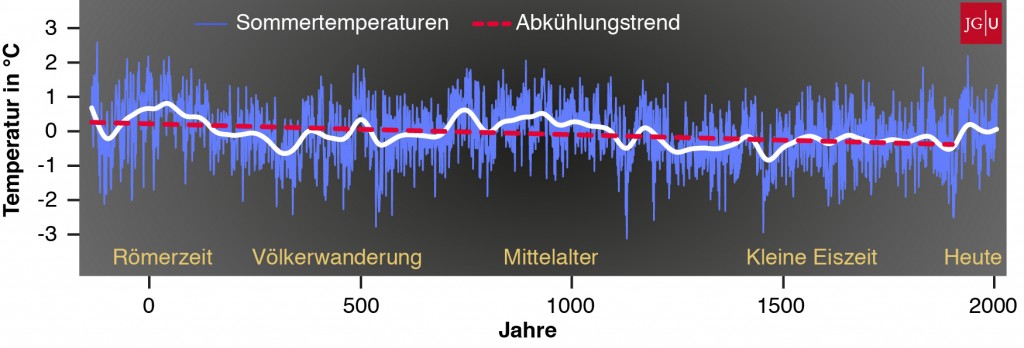 Langfristiger Abkühlungstrend Nordeuropas über die letzten
Jahrtausende
Langfristiger Abkühlungstrend Nordeuropas über die letzten
Jahrtausende
Eine 2.000-jährige Klimarekonstruktion für Nordeuropa
Langfristigen Abkühlungstrend über die letzten Jahrtausende präzise berechnet.
Temperaturen zur Römerzeit und im Mittelalter wurden bis dato als zu kühl eingeschätzt
"Diese Befunde sind auch insofern von klimapolitischer Bedeutung, da sie die Beurteilung des aktuellen Klimawandels im Vergleich zu den historischen Warmphasen beeinflussen."
Längerfristigen Abkühlungstrend Abkühlung von -0.3°C pro Jahrtausend
Die neue Klimakurve zeigt neben diesen Kalt- und Warmphasen aber noch ein Phänomen, mit dem in dieser Form nicht zu rechnen war.
Erstmalig konnten die Forscher anhand der Baumjahrringe einen viel längerfristigen Abkühlungstrend, der sich kontinuierlich über die letzten 2.000 Jahre abspielte, präzise berechnen.
Auf Grundlage der neuen Befunde macht dieser Trend, der durch langsame Veränderungen des Sonnenstandes aber auch der Distanz der Erde zur Sonne verursacht wurde, ein Abkühlung von -0.3°C pro Jahrtausend aus.
"Eigentlich erscheint diese Zahl nicht sonderlich imposant", so Professor Esper, "allerdings ist sie im Vergleich zur globalen Erwärmung, die bis heute auch weniger als 1°C beträgt, nicht zu vernachlässigen.
Wir konnten nun zeigen, dass die großräumigen Klimarekonstruktionen, die auch vom internationalen Klimarat 'IPCC' verwendet werden, den langfristigen Abkühlungstrend über die letzten Jahrtausende unterschätzen."
Temperaturrekonstruktion der letzten 2000 Jahre für Nordskandinavien.
 Temperaturrekonstruktion der letzten 2000 Jahre für Nordskandinavien
2000-jährigen Untersuchuchungszeitraum mit Abweichungen um 2 Grad.
Wenn man die Sommertemperaturen von 5-Jahres-Perioden betrachtet, findet man Unterschiede von bis zu 5 Grad.
Temperaturentwicklung von Zentral-Grönland für die letzten 4000 Jahre.
 Temperaturentwicklung von Zentral-Grönland für die letzten 4000 Jahre
Quelle / Source:
-
Die kalte Sonne (Fritz Vahrenholt & Sebastian Lüning)
2012-07-10 de Langfristiger Abkühlungstrend Nordeuropas über die letzten Jahrtausende erstmals präzise berechnet: Temperaturen zur Römerzeit und im Mittelalter wurden bis dato als zu kühl eingeschätzt
Der 'Schuldige', die Ursache und was die Warmisten-Gurus nicht
wahrhaben wollen:
Kohlendioxyd (CO2) als Treibhausgas
Ursachen des Klimawandels / Causes of Climate Change
Unterschied zwischen direkter und indirekter Wirkung der Sonne
IPCC Intergovernmental Panel on Climate Change
EIKE Europäisches Institut für Klima und Energie
2012-07-25 de
IPCC gibt selbst zu: Berichte nicht vertrauenswürdig!
Watts Up With That? (Antony Watts)
2012-07-16 en
By its actions, the IPCC Admits Its Past Reports Were Unreliable
en
Donna Laframboise: The IPCC - Almost nothing you've been told is true
de
Warum fast nichts was Sie über das IPCC wissen wahr ist
Zur Geschichte / Climat Crisis History:
-
Spiegel 1974 de Katastrophe auf Raten - Kommt eine neue Eiszeit?
-
Spiegel 1986 de "Die Klima-Katastrophe - Das Weltklima gerät aus den Fugen"
-
de
Die Widersprüche bei der Globalen Mitteltemperatur und 2 Grad Ziel
Das Video beschreibt die Widersprüche in den Medien über die Globale Mitteltemperatur und dem 2-Grad-Ziel und stellt kritische Fragen... zum Nachdenken für alle "Klimahysteriker". -
FAZ de 2007-04-03 Mehr Licht im Dunkel des Klimawandels
Die Sorge ums Weltklima ist in eine Klimahysterie umgeschlagen.
Dabei wechselten sich in der Erdgeschichte Kalt- und Warmzeiten ständig ab, ohne dass das "Klimagas" CO2 dabei eine Rolle spielte.
Es droht eine Klimadiktatur, prophezeit Christian Bartsch. (FAZ vom 3.4.2007)Wird es irgendwann einmal kälter, werden die gleichen Geister aufstehen und wiederum behaupten, diese neue "Klimakatastrophe" wäre von Menschen gemacht.
Unzählige Forscher werden bereit sein, das durch "wissenschaftliche" Untersuchungen zu bestätigen. -
Spiegel 2007 de Abschied vom Weltuntergang
-
EIKE de 2012-07-19 Was aus der Klimawandel-Krise wurde
(gilt 'noch' nicht für Deutschland, Frankreich und die Schweiz)The Market Oracle en 2012-06-28 Whatever Happened To Climate Change Crisis?
(not 'jet' valid for Germany, France and Switzerland)
| de | en | fr |
|---|---|---|
|
Klima Wandel Klima Geschichte |
Climate Change Climate History |
Climat Changement Histoire du climat |
| de | en | fr |
|---|---|---|
|
Neue Kälteperiode Kaltzeit |
New Cold Period Cold Period |
Nouvelle periode froide Periode froide |
| Voraussagen | Predictions | Prédictions |
| Kälte: Warnungen | Cooling: Warnings | Refroidissement: Avertissements |
| Erwärmung: Entwarnung | Warming: All-Clear | Réchauffement: Fin de l'alerte |
| Eiszeiten | Ice Ages | Glaciations |
↑ 2012-07 Europa
Europa
-
2012-07-20 de
Juli bisher sehr nass - Lokal schon 164 Liter Regen
-
Klimaskeptiker Info
2012-07-07 de Alarmismus des DWD und die Realität: Regentriefender Sommer statt prognostizierte DürreIm Mai noch hatte der Deutsche Wetterdienst (DWD), dessen Veröffentlichung seit Jahren an der Ideologie der vermeintlichen anthropogenen Erwärmung (AGW) festhalten, obwohl die realen Fakten zeigen, daß es seit 15 Jahren keine globale Erwärmung mehr gibt, der Meeresspiegel 2010/2011 sogar gefallen ist und es keinerlei Anstieg bei den Extremwetter-Ereignissen gibt, Sommer-Dürren in Deutschland prognostiziert.
Das Gegenteil ist eingetreten.
-
Der Tagesspiegel Berlin
2012-07-23 de Der Regensommer verhagelt die ErnteKirschen verschimmeln an den Bäumen, Spreewaldgurken welken im Wasser und das Getreide taugt nicht zum Backen - der verregnete Sommer beschert Brandenburgs Bauern ärgerliche Ernteeinbußen.
Für die meisten war dieser verregnete Sommer nur ein Ärgernis.
Brandenburgs Bauern beschert er finanzielle Einbußen.
-
spickmich
de Sommerregen: Für uns erfrischend, für Vögel tödlich
↑ 2012-07/08 USA
USA
 U.S. July temperatures (1895-2012)
-
Klimaskeptiker Info (Andreas Kreuzmann)
2012-07-21 de Hitzewellen in den USA waren in den 1930er Jahren weit schlimmerOft - wenn auch manchmal nur unterschwellig - werden die gegenwärtige Hitze und Trockenheit in den USA mit dem vermeintlichen anthropogenen Klimawandel (AGW) in Verbindung gebracht.
Wie wenig glaubwürdig eine solche Vermutung/Behauptung ist, zeigt ein Blick in die Geschichte.
Ausgerechnet die streng alarmistisch ausgerichtete EPA (Environment Protection Agency) dokumentiert, daß in den 1930er Jahren Hitzewellen und Dürren weit häufiger auftraten als irgendwann vorher oder nachher während der Aufzeichnungen.
Ein besonderes Minimum trat bei den Hitzewellen in den 1960er und 1970er Jahren auf, als nach der Ansicht der AGW-Alarmisten an sich eine anthropogene Erwärmung in vollem Gange hätte sein sollen.
-
Watts Up With That? (Antony Watts)
2012-08-08 en Dear NOAA and Seth, which 1930's were you comparing to when you say July 2012 is the record warmest? 2012-08-08 en An 'inconvenient result' - July 2012 not a record breaker according to data from the new NOAA/NCDC U.S. Climate Reference Network 2012-08-24 en A Different Take on the "Hottest Month on Record." 2012-08-27 en One benefit of the midwest drought
↑ 2012-08
-
NZZ Online
2012-08-06 de Rekordschäden wegen Sommerunwetter
Zwei Unwetter in diesem Juli haben im Kanton Zürich fast doppelt so viele Gebäude-Schäden angerichtet, als alle Wetterkapriolen des vergangenen Jahres zusammen.2012-07-03 de Über 30 Millionen Sachschaden nach Unwettern
2012-08-30 de Schnee bis 1000 Meter
Kaum ist die Hochsommerhitze vorbei, gibt es bereits schon wieder ein Lawinenbulletin. Für das Wochenende wird in der Schweiz Schnee bis knapp 1000 Meter über Meer angekündigt.
Lawinengefahr herrscht vor allem im Hochgebirge.
Bis Samstagmittag fallen oberhalb von 3000 Metern gemäss dem am Donnerstag veröffentlichten Lawinenbulletin folgende Schneemengen:
Alpennordhang 60 bis 100 cm, Wallis, Tessin und Graubünden 30 bis 60 cm.Auf 2000 Meter fallen am Alpennordhang 10 bis 20 cm, im Wallis, im Tessin und in Graubünden bis 10 cm Schnee.
-
Basler Zeitung
2012-08-30 de Bye-bye Sommer
Eine sommerliche Wetterlage ist momentan nicht mehr in Sicht.
In der Höhe bis zu einem Meter Schnee.
↑ 2012-10
-
Daily Mail (Mail Online)
2012-10-13 en Wettest start to autumn for 12 years as South West continues to be battered by torrential rainBritain is set to suffer its wettest autumn for over a decade with more rain and gale winds sparking further flood warnings.
After the UK's wettest summer in a century,
England and Wales are now on course for the wettest start of autumn for 12 years, the Met Office has said.The southwest has seen five times the usual amount of rain so far this, drastically increasing the risk of floods for the forthcoming week.
Met Office predicts rain Sunday all the way through until Wednesday
Severe weather alert issued for floods in the southwest of the UK
-
Basler Zeitung
2012-10-23 de Über 20 Grad kälter in nur einer WocheNach dem Hoch kommt das Tief: Der Schweiz steht ein heftiger Temperatursturz bevor.
Am Samstag liegen die Werte noch knapp über null Grad.
In der Nacht auf Sonntag wird es erstmals verbreitet frostig.
-
20 Minutes
2012-10-27 fr Premières neiges dans l'Est, six départements en vigilance orange
↑ Nachtrag zum Sommer 2012
Sebastian Lüning
2012-10-29 de
Und plötzlich wurde es kalt in Deutschland
Man muss Wetter und Klima natürlich voneinander trennen.
Trotzdem sollten wir uns kurz an den ziemlich bescheidenen Sommer
2012 erinnern.
Mitte August 2012 schrieb Dominik Jung von www.wetter.net in der Leipziger Volkszeitung, dass der deutsche Sommer bis dahin etwa 0,2 Grad kälter war als die langjährigen Werte der Jahre 1981 bis 2010.
In der Bildzeitung sagte Jung am 22. Juli 2012:
"Wir haben uns die Sommer der letzten neun Jahre angeschaut. Tendenziell
sind sie kühler und regnerischer gewesen als im langjährigen
Mittel."
Der große helle Fleck am Himmel ist die Sonne!
Verregnete Sommer stellen mittlerweile für Veranstalter ein ernsthaftes Risiko bei der Planung von Open-Air-Veranstaltungen dar, wie die WAZ diesen Sommer berichtete.
In Schweden gab es dieses Jahr (2012) einen der
kältesten und nassesten Juni-Monate seit Beginn der Aufzeichnungen.
Sweden Records One Of Its Coldest and Wettest June Months
Since Records Began In 1786
Auch in Großbritannien war der Sommer kalt und nass.
The Independent:
Sir David Attenborough: 'This awful summer? We've only ourselves to
blame...',
New Nostradamus:
Cold British summer: Shoppers stocking up on warming and comfort foods
Ähnliches gilt für Irland Weather to deteriorate later in week.
Bereits Ende August 2012 ist in den Alpen der erste Schnee gefallen und hat eine geschlossene Schneedecke bis 1600 m Höhe produziert.
wetter24
Erster Alpenschnee,
notrickszone
"Thing Of The Past" Now A Thing Of August! Snow Blankets Alps Down To
Less Than 1600 Meters!
Kälterekorde sind trotz der sommerlichen Hitzewelle auch aus den USA berichtet worden.
Alaska litt 2012 unter dem kältesten Juli der
Messgeschichte.
WUWT
Coldest July in history for Anchorage?,
Alaska Dispatch
Could this be the coldest July in history for Anchorage?,
Real Science
Another Wave Of Climate Refugees,
KTVA
Cold Winter and Summer Have Some Ready to Leave Alaska
In Kansas und South Dakota wurden dieses Jahr für bestimmte Stichtage im August die kältesten Temperaturen seit Beginn der Messungen beobachtet.
Insgesamt registrierten 660 Wetterstationen neue Minusrekorde,
wie Real Science berichtete.
Proof Of Global Cooling : 660 Record Lows In One Week
WUWT
Low temperature records overwhelm highs in the USA this past week -
where's the media to tell us how this should be viewed?
Rekordkälte gab es auch im Oktober 2012 in den Great
Plains
Record cold and snow to hit Great Plains
Frühen Oktober-Schnee gab es in Minnesota und
North Dakota.
Snowfall Records Shattered in Minnesota and North Dakota
Auch Iowa wurde von rekordverdächtiger Kälte
heimgesucht.
NOAA downplays record cold in Iowa
In der Arktis nördlich des 80. Breitengrades,
war seit dem Jahr 2000 jeder Sommer kälter
als der langjährige
Durchschnitt.
High Arctic Summers Have Been Colder Than Normal 12 Years In A Row
Aber auch auf der Südhalbkugel gab es berichtenswerte Kälte-Extreme.
Ein besonders heftiger Winter suchte Peru im Juli 2012
heim.
Extreme winter weather in Peru: Government sending blankets to freezing
people
Im südafrikanischen Johannesburg fing es im August
2012 plötzlich zu schneien an.
Zuletzt war dies 2007 und 1981 der Fall.
Joburg snow set to continue
In Australien sah es nicht besser aus.
In Canberra wurde 2012 der kälteste Oktober seit
40 Jahren registriert.
Record Cold Grips New South Wales, Australia Canberra Sees Coldest
October In 40 Years!
Und in der Antarktis wurden die kältesten
Septembertemperaturen verzeichnet, die jemals auf der Erdoberfläche
gemessen wurden.
-119°F [-84°C]: Coldest September Temperature Ever Recorded On Earth?
Aus globaler Sicht wäre vielleicht noch erwähnenswert, dass bis
Ende August jeder Tag im Jahr 2012 kälter als 2010 war,
mit Ausnahme von bis dahin neun Tagen.
Real Science
Hottest Year Ever Update
Ganz offensichtlich werden weitere Hilfshypothesen benötigt, um das Modell der gefährlichen Klimaerwärmung weiter aufrechterhalten zu können.
Unabhängig von Kälte- und Hitze-Extremen sollte man sich dabei
vor allem Gedanken machen, warum es seit nunmehr 16 Jahren nicht
mehr wärmer geworden ist.
"Neue HadCRUT-Daten belegen: Globale Temperatur seit 16 Jahren nicht
mehr angestiegen"
-
EIKE Europäisches Institut für Klima und Energie
2012-10-28 de ZDF-Big Brother Claus Kleber: Wärmer ist kälter- Wintereinbruch ist Folge des rapiden Klimawandels!Auch wenn man es nicht für möglich halten würde, der Anchorman des heute journals "Gutennaabend" - Claus Kleber hat es in der gestrigen Sendung wieder geschafft, dem bisher gesendeten Unsinn zum Thema Klima noch eine Steigerung zu verpassen.
Nein, nicht als Teil der Klamauksendung "heute show", das war der echte Kleber.
Denn er versuchte tatsächlich seine Zuschauer mit neuen Tricks aus der Klimamottenkiste zu verwirren.Die Klimaerwärmung - schlicht zum "rapiden Klimawandel" umbenannt, sei, so behauptet er ernsthaft, die Ursache für den jüngsten frühen Wintereinbruch.
Aus "Warm" macht Big Brother C. Kleber mal so eben "Kalt".
Demnächst wird uns Kleber noch nass als trocken anbieten und eine Dürre als Sintflut verkaufen.
Alles eine Frage der Um-Definition. Wie eben beim Big Brother aus Orwells 1984! Zum Kronzeugen für seinen Unsinn hat sich Kleber und seine Autorin dafür ausgerechnet joking Latif ausgesucht.
-
Die kalte Sonne (Fritz Vahrenholt & Sebastian Lüning)
2012-10-29 de Und plötzlich wurde es kalt in DeutschlandSo ein bisschen hatten wir uns auf die globale Erwärmung eigentlich schon gefreut.
Die Experten hatten uns ernsthaft Hoffnung gemacht, dass die harten Winter nun langsam seltener werden.
Michael Krüger schreibt dazu auf Readers Edition:
Eigentlich, ja eigentlich sollten solche Extremwetterlagen mit Frost und Schnee infolge des fortschreitenden Klimawandels immer seltener werden.
Noch im Jahr 2000 verkündetet der Klimaforscher Mojib Latif im Spiegel:
"Winter mit starkem Frost und viel Schnee wie noch vor zwanzig Jahren wird es in unseren Breiten nicht mehr geben".Und nun das, ein Schneerekord und das schon im Oktober.
Nüchtern betrachtet,
passt der frühe Wintereinbruch in Deutschland und die Serie der Kältewinter in den letzten Jahren nicht so richtig mit der angekündigten katastrophalen Klimaerwärmung zusammen.
Das haben natürlich auch die kalt überrumpelten Klimawissenschaftler bemerkt
und haben sich mittlerweile eine wissenschaftliche Hilfshypothese zurechtgelegt.
Das ist doch ganz einfach, sagen sie.
Weil das arktische Meereis schrumpft, verändern sich die atmosphärischen Zirkulationsmuster und es strömt mehr Kälte nach Europa. Ok, nette Idee.
Kann man glauben oder auch nicht.
Nur schade,
dass das Modell erst nach der Kältewinterserie kam und nicht vorher.
Wenn die Winter in Mitteleuropa jetzt kälter werden, ist die Klimakatastrophe Schuld.
Und wenn die Winter wärmer werden sollten, dann greift natürlich wieder das klassische globale Erwärmungsmodell, und wieder ist die Klimakatastrophe Schuld.
Eine sehr komfortable Situation.
Das erinnert so ein bisschen an:
Regel eins: Ich habe immer recht.
Regel zwei: Falls dies einmal nicht der Fall sein sollte, wird automatisch Regel eins wirksam.
de Aus der Panik-Küche en From the panic laboratory fr De la marmite des alarmistes
| Mojib Latif |
Dr. rer. nat.,
Professor für Meteorologie am Leibniz-Institut für
Meereswissenschaften (IFM-GEOMAR) an der Universität Kiel.
▶Mojib Latif: Who is who (Aktivisten der anthropogenen Erwärmung) |
-
Maun Post
2012-10-27 de Der Spätsommer-SchneeSolch ein Wetter-Phänomen hat die Region Mainfranken seit Jahrzehnten nicht erlebt: Schnee im Oktober.
Innerhalb von acht Tagen stürzten die Temperaturen um nahezu 25 Grad in die Tiefe und unter den Gefrierpunkt.
"Das ist ein richtiger Wintereinbruch. So etwas kommt vielleicht alle 30 bis 40 Jahre vor".
-
Readers Edition
2012-10-27 de Früher Wintereinbruch: Schneedeckenrekord in OstdeutschlandIn den Niederungen von Bremervörde - nordöstlich von Bremen gelegen - wurden Tiefstwerte von bis zu -5,8°C heute Morgen gemessen.
Im Binnenland nördlich der Lüneburger Heide lagen die Tiefstwerte verbreitet um -5°C.
Alles rekordverdächtig und nahe an den alten Tiefstwerten gelegen.
Gleichzeitig gab es eine Schneedecke an Stellen, wo es das im Oktober seit Aufzeichnungsbeginn noch nie gegeben hat.
-
Bild
2012-10-28 de Der Winter ist zu SCHNEE dran"So etwas kommt vielleicht alle 30 bis 40 Jahre vor", sagt Meteorologe Christoph Hartmann vom Deutschen Wetterdienst (DWD).
In Gera (Thüringen), wo sich die Menschen am letzten Samstag noch bei 24,5 Grad sonnten, war Schneeschippen angesagt: 17 Zentimeter Neuschnee über Nacht.
Auch Hof (zehn Zentimeter), Dresden (fünf Zentimeter) und Erfurt (sieben Zentimeter) lagen unter einer weißen Decke.
↑ 2012-12
-
Watts Up With That? (Antony Watts)
2012-12-07 en UK Endures Coldest Autumn Since 1993The UK Met Office report that the UK has just had its coldest autumn for nineteen years, leaving 2012 on course to be second coldest year since 1996.
The average temperature for the autumn in the UK was 8.6C, compared to the long term average of 9.5C and the coldest since 1993.
It is also the sixth coldest autumn in the last 50 years.
⇧ 10 2013
- 2013-01
- 2013-02
- 2013-03
- 2013-04
- 2013-05
- 2013-06
- 2013-07
- 2013-08
- 2013-09
- 2013-10
- 2013-11
- 2013-12
- 2013 Klimabulletin
- 2013 Rückblick
↑ 2013-01
-
Basler Zeitung
2013-01-10 de Starke Schneefälle im Nahen Osten: Schmugglertunnel eingestürztDer gesamte Nahe Osten leidet unter Kälte, starkem Regen und Überschwemmungen.
Zwischen Ägypten und dem Gazastreifen stürzten Schmugglertunnel ein.
Jerusalem erwachte unter einer Schneedecke.
-
BBC
2013-01-07 en Life in extreme cold around the worldWhile extreme winter weather in parts of Europe, Asia and the US has brought normal life to a virtual standstill for millions of people, many other inhabited places manage to function where such sub-zero temperatures are routine.
In the north-eastern Russian Republic of Sakha (Yakutia), the village of Oymyakon is commonly called the coldest populated place on Earth. Situated in an area of Siberia nicknamed "Stalin's Death Ring" (a former destination for political exiles), Oymyakon boasts an average winter temperature of -45C, with a one-time world record low of -71.2C.
↑ 2013-02
-
EIKE Europäisches Institut für Klima und Energie Jeha
2011-02-07 de Jahrhundert-Schneefälle in Moskau - der WWF hat einen logischen AussetzerDer stärkste Schneefall seit einem Jahrhundert hat Moskau und die Region am Dienstag fast zum Stillstand gebracht und hunderte Menschen ohne Strom zurück gelassen.
Und mit dem Anhalten der Schneefälle bis zum Wochenende bereiten sich die Behörden auf weitere chaotische Zustände auf den Straßen vor.
-
Watts Up With That? (Antony Watts)
2013-02-23 en There's no business like snow businessMoscow Covered by More Than Half Meter of Snow, Most Since 1966
2013-02-23 en Over 650 snow records set in USA this week - another wonky surface station located
Almost 60% of the contiguous USA covered in snow.
↑ 2013-03
-
Basler Zeitung
2013-03-270 de Tote Menschen, erfrorene Tiere - und kein Ende in SichtTausende Soldaten im Einsatz, 314 Kältetote, erfrorene Osterlämmer, Entlassungen in den Behörden, drohendes Hochwasser:
Der harte Winter fordert in Europa besonders im Osten und im Norden seinen Tribut.
-
20 Minutes
2013-03-10 fr Neige: Huit départements en vigilance orange ce dimancheMétéo France a placé huit départements du nord-ouest de la France en vigilance orange dimanche pour neige et verglas.
L'épisode neigeux, qui doit débuter dans la nuit de dimanche à lundi et toucher la Normandie, les Côtes d'Armor, la Somme et l'Oise, s'annonce «remarquable pour la saison», «tant par les quantités attendues que par sa durée»
D'ici lundi après-midi, 10 à 20 centimètres de neige sont attendus sur la Manche et le Calvados, 5 à 10 cm et localement 15 cm sur l'Orne et la Seine-Maritime, et environ 5 cm sur les Côtes-d'Armor, l'Eure, la Somme et l'Oise.
Ces fortes neiges sont prévues jusqu'à mardi matin.
2013-03-12 fr CLIMAT - Le coût de cet épisode neigeux pourrait atteindre 1,2 milliard d'euros.
2013-03-13 fr Intempéries: 2.500 véhicules bloqués sur l'A1, dans la Somme
2013-03-13 fr Intempéries: Les urgences débordées à Paris a cause du verglas
-
Basler Zeitung
2013-03-19 de Das Tessin erwacht unter einer SchneedeckeIm Tessin sind bis zu 35 Zentimeter Neuschnee gefallen.
-
Bild.de
2013-03-22 de Russen-Stiefel lässt Europa bibbernEiswind aus Russland bringt bis zu minus 14 Grad.
Er trifft in den nächsten sieben Tagen ganz Europa
-
NoTricksZone
2013-03-22 en "This March could be the coldest of the last 100 years,"Berlin freezes in 100-year winter.
Lots of snow and bitter cold until the end of March - Berlin hasn't seen this in more than 100 years.For some areas we are now hearing that it is being called the "100-year winter"!
↑ 2013-04
-
20 Minutes
2013-04-01 fr Record de froid dans l'extrême nord de la France«La dernière décade de mars, du 21 au 31, est la plus froide jamais observée depuis le début des mesures à Lille, Beauvais, Strasbourg, Nancy, Caen, Cherbourg et Brest», a déclaré à l'AFP François Jobard, prévisionniste. «Sur toute cette région de l'extrême nord, on n'a jamais connu une période aussi froide à cette période de l'année», a-t-il résumé. Sur l'ensemble du mois de mars, il a fait 1,5°C de moins que les normales saisonnières, et il faut remonter à 1987 pour trouver des températures aussi basses. Et avant cela, 1970, 1962 et 1955. Là encore, des records de froid ont été enregistrés le 13 mars à Beauvais avec -13°C et Lille avec - 10,5°C.
Records de précipitations dans le sud-est et en Corse
Sur le plan des précipitations, des records ont aussi été battus dans le sud-est et en Corse. «Il y a eu un cumul de pluie, entre 150 et 300 mm, souvent deux à quatre fois plus que la normale», précise M. Jobard. A Nice, il est tombé 243 mm de pluie, un niveau jamais enregistré depuis le début des mesures en 1943. Le précédent record de 194 mm datait de 1956. En revanche, il y a eu un «temps plus sec que la normale» dans le nord-nord-est, indique M. Jobard.
Cet hiver qui joue les prolongations touche tout le nord de l'Europe, avec une couche de neige accumulée à Moscou qui atteint 65 centimètres, un record absolu pour un mois d'avril. La neige privait ce lundi plus de 100.000 foyers d'électricité dans le centre et le nord-est de la Pologne.
-
Basler Zeitung
2013-04-20 de Bis zu 90 Zentimeter NeuschneeIn der Schweiz ist in der Nacht der Winter zurückgekehrt.
Die Menge an Neuschnee ist für diese Jahreszeit aussergewöhnlich.
Bäume stürzten auf Strassen, zahlreiche Zuglinien mussten geschlossen werden.Schienenwege unterbrochen
Wegen des Schnees war die Gotthardstrecke zwischen Lugano und Mailand Centrale unterbrochen.
Wie die Matterhorn Gotthard Bahn bekannt gab, schloss sie diverse Linien wegen Lawinengefahr.
Darunter waren die Bahnverbindungen Andermatt UR-Oberwald VS, Andermatt-Göschenen und Andermatt-Dieni GR.
Der Autoverlad an der Furka zwischen Andermatt und Sedrun wurde ebenfalls eingestellt.
Die Passagiere des Glacier Express zwischen Visp und Chur wurden über Bern und Zürich umgeleitet.
Zwischen Linthal und Ziegelbrücke und nach Chur sowie St. Gallen und Gossau waren die SBB-Strecken wegen des Schnees nur beschränkt befahrbar.
Reisende mussten mit Verspätungen und Zugsausfällen rechnen.
Der Rhätischen Bahn setzte eine Fahrleitungsstörung zu, die Züge zwischen Thusis und Tiefencastel fielen aus.
Im Berner Oberland stellten die Bahnen den Verkehr zwischen Wengen/Grindelwald und der Kleinen Scheidegg sowie aufs Jungfraujoch ein.
↑ 2013-05
-
Basler Zeitung
2013-05-23 de So grau war es seit 30 Jahren nicht mehrWo bleibt der Frühling?
Morgen sinkt die Schneefallgrenze wieder auf unter 1000 Meter - mancherorts ist sogar auf 500 Metern über Meer Schneefall möglich.
Ein sehr seltenes Ereignis für diese Jahreszeit.
-
2013-05-30 de Der schlechteste Frühling seit 30 Jahren
-
20 Minutes
2013-05-24 fr 3,7°C ce vendredi matin à Paris, la température la plus basse depuis 1887En France, les températures sont en moyenne inférieures de 5 à 6°C, voire localement de 10°C, aux normales saisonnières.
2013-05-25 fr Météo: La France connait son printemps le plus froid depuis 1987
-
Le Monde
2013-05-30 fr Tourisme, agriculture : le mauvais temps fauche l'économieLa France traverse le printemps le plus froid depuis 1987 et de nombreux pans de l'économie en paient le prix.
-
L'INDEPENDANT
2013-05-25 fr Porté-Puymorens : la station de ski rouvre le week-end prochain -
2013-05-30 fr Cinq pistes supplémentaires ouvertes ce week-end à Porté-Puymorens
-
The Local
2013-05-29 en French ski station to re-open slopes, in June!
↑ 2013-06
-
Watts Up With That? (Antony Watts)
2013-06-02 en Coldest Spring In England Since 1891According to the Central England Temperature Series, England has just experienced its coldest Spring since 1891.
The average mean temperature of 6.87C ranks the 31st coldest on records starting in 1659, and is 2 degrees lower than the 1981-2010 average of 8.9C.
Reportagen zur Situation in den deutschen Hochwassergebieten
-
ARD
2013-06-07 de
Die Flut und Folgen
-
20 Minutes
2013-06-09 fr Des milliers d'évacuations en Allemagne
de Aus der Panik-Küche en From the panic laboratory fr De la marmite des alarmistes
-
Focus Online
2012-12-24 en Der Klimawandel trifft vor allem den Osten Deutschlands
-
NoTricksZone
2013-06-02 en As Floods Hit Eastern Germany, Recent Potsdam Climate Institute Model Warned Of Summertime "Water Shortages"!
Was waren die wahren Hintergründe der mitteleuropäischen Flut 2013?
-
Die kalte Sonne (Fritz Vahrenholt & Sebastian Lüning)
2013-07-03 de Was waren die wahren Hintergründe der mitteleuropäischen Flut 2013?Das Wasser kam, das Wasser ging.
Zurück blieb die Ungewissheit:
War es ein ganz normales Hochwasser, wie es seit Jahrtausenden in Deutschland und anderswo immer vorgekommen ist, oder geht die Überschwemmung vielmehr auf das Konto der berüchtigten Klimakatastrophe?
Von letzterem scheint das klimatologische Fachblatt "Bildzeitung" überzeugt zu sein,
welche am 12. Juni 2013 in Zusammenarbeit mit Klimaprediger Mojib Latif lauthals verkündete:
Jahrhundertfluten - Klimawandel schlägt voll zu
Meteorologe Prof. Mojib Latif (58) von der Uni Kiel: "Die Häufung der Wetter-Extreme ist ein eindeutiges Indiz für den Klimawandel."
Grund: der Treibhauseffekt!
Latif: "Weil wir ungehemmt CO₂ in die Luft pumpen, heizt sich die Atmosphäre auf."
Die Folge: Immer mehr Wasser verdunstet in den Meeren.
Die Luftfeuchtigkeit steigt, Wolken saugen sich mit Wasser voll und regnen sich über dem Festland ab.
Es kommt zu Starkniederschlägen, zu immer heftigeren Überflutungen […].
Auch der Deutsche Wetterdienst (DWD) führt die heftigen Wetter-Phänomene auf die Erderwärmung zurück.
DWD-Wettermann Gerhard Lux (59): "Durch die Erwärmung werden wir in Zukunft immer mehr Extremwetter-Situationen haben."
Starke Sommerstürme, Hagel-Attacken, Überflutungen und heftige Gewitter häufen sich.
Auch im Spiegel tobten die Fluten,
wobei Jakob Augstein in einer Kolumne wild über Schuld und Sühne fabulierte:
Im Zweifel links: Wir sind schuldig!
Die Katastrophe klärt den Blick.
Unsere Art zu leben kommt nicht ohne Kosten aus.
Daran erinnert dieses Hochwasser - erneut.
Es ist die zweite "Jahrhundertflut" in gut zehn Jahren.
Ob dieses eine Hochwasser auf die von Menschen gemachte Erderwärmung zurückgeht, wird sich nicht beweisen lassen.
Die Frage ist: Welchen Beweis brauchen die Klimawandelleugner, bevor ihnen die Augen aufgehen?
Was muss geschehen, damit die Wachstumsprediger dazulernen?
Keiner von ihnen wird später sagen können, er habe nichts gewusst.
Auch das Potsdam-Institut zur Förderung der Klimakatastrophe (PIK) nutzte seine Chance und verbreitete via Berliner Zeitung munter Weltuntergangszenarien:
Klimawandel verstärkt Hochwasser
Potsdamer Forscher haben keinen Zweifel:
Die Erderwärmung führt zu einer größeren Zahl an Überschwemmungen in Ostdeutschland.
Dabei regnet es nicht etwa häufiger - sondern seltener.
Wenn Klimaforscher nach Ursachen von Wetterkatastrophen suchen, dann vertiefen sie sich in Zahlen.
So spüren die Experten des Potsdam-Instituts für Klimafolgenforschung (PIK) auch den derzeitigen Hochwassern in Ostdeutschland nach, indem sie Daten von Wettermessungen, zur Landschaft und zur Geografie analysieren.
Im Trend zeigt sich dabei:
Mehr als die Landnutzung an den Ufern und die Begradigung oder Vertiefung der Flüsse dürfte der Klimawandel hinter der Zunahme von starken Hochwassern stecken.
Da konnten die Potsdamer Neuesten Nachrichten nicht nachstehen und titelten verschwörerisch:
Ein interessanter Verdächtiger Der Klimawandel könnte Hochwasser hervorrufen
Die zweite Hochwasserkatastrophe in Deutschland in diesem Jahrhundert hat auch die Forschung auf den Plan gebracht.
Die Frage, ob es durch den Klimawandel eine Häufung solcher Extremereignisse gibt, liegt auf der Hand.
Am Potsdam-Institut für Klimafolgenforschung (PIK) vermutet man zumindest einen Zusammenhang.
Und auch die Zeit durfte da nicht fehlen:
Analyse: Klimawandel unter Verdacht
Ursache für das Hochwasser in Bayern und Ostdeutschland ist eine ungewöhnliche Großwetterlage - und der Klimawandel könnte eine Rolle dabei gespielt haben.
Latif auf allen Kanälen.
Kaum ein Medium, das auf ihn in dieser wetterkatastrophalen Zeit verzichten wollte.
Selbst der Focus mischte kräftig mit:
FOCUS Online:
Inwiefern bedingt die Klimaerwärmung das Hochwasser?
Latif:
Die Erderwärmung ist trotz kalter Winter global messbar.
In einer wärmeren Welt verdunstet mehr Wasser.
Das ist ein ganz einfaches Naturgesetz:
Höhere Temperaturen führen zu dauerhaft mehr Wasserdampf in der Luft und deshalb auch zu mehr Niederschlägen.
Da ist es dann egal, dass die Erderwärmung in den letzten 15 Jahren gar nicht stattgefunden hat.
Merkt eh keiner, hat sich Latif sicher gedacht.
Ziemlich egal dürfte Latif auch die Ansicht seines Fachkollegen Eduardo Zoritas sein, der zu recht Plausibilitätsprobleme bemängelte.
Auf der Klimazwiebel kommentierte Zorita, dass Europa gerade erst wieder einen der kältesten und längsten Winter der letzten Jahrzehnte erlebt hat und dass es daher schwer vorstellbar sei, die Klimaerwärmung in Deutschland habe jetzt plötzlich zu mehr Wasserdampf in der Atmosphäre geführt.
Fakten, Fakten, Fakten
Was war eigentlich passiert?
Auf Spiegel Online fasste Axel Bojanowski die wichtigsten Fakten zum deutsch-österreichisch-tschechischen Hochwasser 2013 gut zusammen:

Weiterlesen
-
20 Minutes
2013-06-19 fr Orages et crues: 41 départements sont placés en orange, deux en rougeLes producteurs de blé inquiets pour leur récolte.
2013-06-23 fr Aux 2 Alpes, on skie en plein été
MONTAGNE - La station iséroise a ouvert ses pistes ce week-end à partir de 2.600 mètres...
-
NoTricksZone
2013-06-28 en Cooling Europe...Germany Preliminary June Mean Temperature Comes In Way Below Model Projections
↑ 2013-07
-
Basler Zeitung
2013-07-07 de Pilz bedroht KirschernteWegen des feuchten Sommers sind viele Bäume krank. Nun müssen auch die fauligen Früchte gepflückt werden. Ansonsten nistet sich der Pilz in den Bäumen ein.
-
BBC
2013-07-18 en Antarctic cold snap kills nine in Argentina
↑ 2013-08
-
20 Minutes
2013-08-30 fr Viticulture : plus d'un millier d'emplois mis en danger par la grêleSur les coteaux de Sainte-Colombe (33), le paysage viticole qui se déploie dans la chaleur estivale dégage un sentiment de calme et de sérénité. L'apparence est trompeuse, car la vigne ne porte pas les fruits qu'elle devrait à cette époque de l'année. L'orage du 2 août est passé par là.
Philippe Carrille, le propriétaire du Château Poupille, 22 hectares en appellation Castillon Côtes de Bordeaux, reste marqué par ces « cinq minutes terribles » où il a vu des grêlons parfois « gros comme des soucoupes » anéantir la récolte 2013, qui, chez lui, s'annonçait prometteuse. Bilan : une perte qu'il évalue à 700 000 euros.
Depuis quarante-six ans que la famille s'est installée, la grêle n'avait jamais frappé l'exploitation.
Le Château Poupille n'est que l'une des 350 exploitations agricoles girondines, très majoritairement viticoles, touchées à plus de 80 % par l'orage de grêle du 2 août dernier.
Au total, la « zone grêle » a concerné 31 000 hectares de terres agricoles et 25 000 hectares de vignes, soit environ le cinquième du potentiel viticole girondin.
-
BBC
2013-08-30 en Peru snow state of emergency extended to more regions
-
Power Line
2013-08-31 en Global Warming Expedition Foiled By IceSevere weather conditions hindered our early progress and now ice chokes the passage ahead.
Residents of Resolute say 20 years have not seen anything like. It's, ice, ice and more ice.
"This has been the coldest season with the most ice since we started Arctic Watch in 2000. Almost no whales. The NWPassage is still blocked with ice. Some of the bays still have not melted!"
↑ 2013-09
-
20 Minutes
2013-08-30 fr Vendanges : la récolte 2012 est la plus faible depuis quarante ans en FranceLes chiffres sont là, avec la palme de la mauvaise nouvelle pour la Champagne : - 37 % par rapport à la moyenne quinquennale (récoltes 2007 à 2011). Suivent la Bourgogne et le Beaujolais (- 26 %), le Val de Loire (- 19 %), les Charentes (- 13 %) et le Languedoc-Roussillon (- 12 %).
C'est la récolte la plus basse depuis au moins quarante ans.
-
BBC
2013-09-01 en Peru snow state of emergency extended to more regionsTens of thousands of animals have frozen to death over the past week. were caught by surprise. Up to half a meter of snow fell at some locations.
↑ 2013-10
-
20 Minutes
2013-10-08 fr Météo: La neige arrive à cause d'un «spectaculaire» refroidissementCLIMAT - A partir de jeudi, la neige est attendue dès 1.000 mètres d'altitude...
Des giboulées sont mêmes probables ainsi que l'apparition de la neige dès 1.000 mètres d'altitude sur les Vosges, le Jura, les monts d'Auvergne et la Savoie.
-
Basler Zeitung
2013-10-11 de Bis zu 80 Zentimeter Neuschnee in den BergenDer erste Wintereinbruch: Vor allem in Graubünden fiel verbreitet Schnee. Strassen und Bahnstrecken sind gesperrt.
-
Die Welt
2013-10-12 de Wintereinbruch stürzt Teile Deutschlands ins Chaos"Gestern Abend gegen 18 Uhr begann es dann sogar in der bayerischen Landeshauptstadt München zu schneien. Viele Meteorologen-Kollegen hatten das im Vorfeld noch als unwahrscheinlich erachtet", sagte Wetterexperte Dominik Jung und führte aus: "Dieses Jahr hat der Winter ungewöhnlich früh und ungewöhnlich heftig zugeschlagen.
Südlich von München konnte sich teilweise eine über 20 Zentimeter hohe Schneedecke bilden."
-
NoTricksZone (Pierre L. Gosselin)
2013-10-12 en "Most Severe Winter Start In 200 Years!" Now Ignoring Foolish Predictions Of Warm WintersGerman RTL television last night here (starting at 4:30) called it the "most severe start of winter in 200 years!", saying many meteorologists were caught by surprise. Up to half a meter of snow fell at some locations.
↑ 2013-11
-
20 Minutes
2013-11-20 fr Neige: Des centaines de véhicules bloqués toute la journée sur l'A48 entre Lyon et Grenoble2013-11-21 fr Neige et verglas: Quinze départements encore en vigilance orange
2013-11-21 fr Intempéries: La neige cause un troisième décès et 90.000 foyers restent privés d'électricité
-
Basler Zeitung
2013-11-22 de Stromausfälle und Schnee in der Magadino-EbeneDer Winter hat fast die gesamte Schweiz mit einer weissen Decke überzogen.
Im Schweizer Mittelland fielen in der Nacht bis zu 15 Zentimeter Schnee.Besonders stark schneite es im Tessin. Dort fielen bis zu 40 Zentimeter Neuschnee in den Bergen.
Auch in der Magadino-Ebene fiel viel Schnee.
↑ 2013-12
-
Basler Zeitung
2013-12-13 de In Jerusalem liegt ein halber Meter SchneeAutofahrer steckten zum Teil bis zu zehn Stunden fest:
Teile von Israel wurden von einem heftigen Wintersturm heimgesucht.
Dieser brachte Schneemassen, welche die Stadt Jerusalem lahmlegen.
-
Science Skeptical Blog
2013-12-13 de Extremwetter einmal anders: In Kairo fällt nach 112 Jahren wieder Schnee
-
Watts Up With That? (Antony Watts)
2013-12-13 en Over 2000 cold and snow records set in the USA this past week
-
Neue Zürcher Zeitung
2013-12-16 de Winterdrama im Nahen Osten
-
NoTricksZone (Pierre L. Gosselin)
2013-12-16 en Ultra-Warmist Austrian Daily Awed By "Unusual Cold And Snow Amounts" In Middle East
-
Ice Age Now
2013-12-18 en Jerusalem breaks 134-year-old snowfall record
-
Watts Up With That? (Antony Watts)
2013-12-26 en So much sea ice in Antarctica that a research vessel gets stuck, in summer!Turns out this "research" vessel was mostly a taxpayer funded junket for getting video stories to BBC in the UK and ABC in Australia.
The expedition is being led by Chris Turney, "climate scientist", who has "set up a carbon refining company called Carbonscape which has developed technology to fix carbon from the atmosphere and make a host of green bi-products, helping reduce greenhouse gas levels."
The purpose of the expedition is "to discover and communicate the environmental changes taking place in the south."
↑ Klimabulletin Jahr 2013
-
Meteo Schweiz
Jahr 2013 de Klimabulletin Jahr 2013
↑ 2013 Rückblick
|
Update 2014-06-08: de Der Stillstand geht weiter / en The pause continues
de
Immer noch keine globale Erwärmung,
nunmehr seit 17 Jahren und 9 Monaten
|
|
|
|
en Whither went the warmer weather? en For Global Warming Campaigners, 2013 Was The Year From Hell en Almost everything that could go wrong did go wrong for the cause of global warming en 2014-06-07: NOAA shows 'the pause' in the U.S. surface temperature record over nearly a decade |
|
|
|
|
|
EIKE Die Wiedererwärmung Deutschlands und Europas nach der Kleinen Eiszeit (1450 bis 1850) fand um 1998 ein vorläufiges Ende. Da die Temperaturen seitdem fallen, sind wir wieder bei den Temperaturen wie vor 25 Jahren angekommen. |
|
|
|
|
|
de EIKE: Winter werden in Deutschland seit einem Vierteljahrhundert deutlich kälter en NoTricksZone: Real Data: 2013 Germany's Second Coldest In At Least 17 Years...Overall Trend Shows Clear Cooling! |


⇧ 11 2014
↑ 2014-01
-
Basler Zeitung
2014-01-03 de 11 Menschen sterben bei Schneesturm in den USA60 Zentimeter Neuschnee, minus 23 Grad:
Im Nordosten des Landes legt ein Wintersturm das öffentliche Leben lahm.Im Staat New York wurden die Menschen aufgerufen, ihre Häuser nicht zu verlassen.
2014-01-04 de USA droht zweite Kältewelle
2014-01-05 de Flugzeug rutscht in New York von eisglatter Rollbahn
2014-01-06 de Innert Minuten drohen Erfrierungen
2014-01-22 de Wegen Schneesturm macht sogar die UNO dicht
-
20 Minuten
2014-01-06 de So wütet der Sturm in England und Wales
|
|
||
|
|
Arktis (Nordpol)
Antarktis (Südpol)
|
|
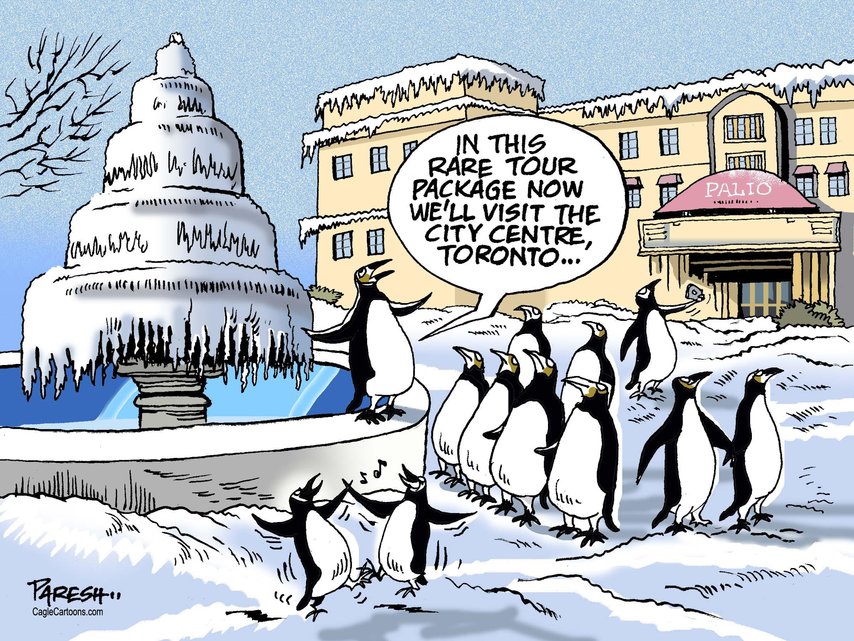
-
Die Welt
2014-01-07 de Nordamerika erlebt den 'Arctic Outbreak'Ungewöhnlich stabile Muster im Jetstream sind für die extreme Kälte in den USA und Kanada verantwortlich.
Am Dienstag erreichte die außergewöhnliche Kaltfront sogar den US-Bundesstaat Florida.
Den Nordosten der Vereinigten Staaten hat die Kälte schon seit Tagen fest im Griff.
Dort werden vielerorts Temperaturen von unter minus 30 Grad Celsius gemessen - gefühlt können das dann sogar minus 50 Grad sein.
Gleichzeitig ist es in Deutschland mit bis zu 14 Grad Celsius für Anfang Januar ungewohnt warm.
-
NoTricksZone (Pierre L. Gosselin)
2014-01-07 en Natural Causes: German Meteorologist Says North America Is Geographically Predestinated For Polar VorticesARD public television chief meteorologist Karsten Schwanke attributes the severe cold to an "unusually stable pattern by the Jet Stream".
The cold air mass was brought down to the states by a "polar vortex"
and that "North America is geographically predestinated for cold air to come south very quickly because there are no mountain ranges to block the way."
de Aus der Panik-Küche en From the panic laboratory fr De la marmite des alarmistes
-
Basler Zeitung
2014-01-22 de 2013 war das siebtwärmste je gemessene Jahr«Ein weiterer Beweis für den Klimawandel»:
Forscher haben berechnet, dass das letzte Jahr eines der wärmsten seit Beginn der Aufzeichnungen war. Damit hält ein ungewöhnlicher Trend an.
-
Los Angeles Times
2014-01-21 en 2013 was one of the 10 hottest years on record; will 2014 be hotter?Scientists from NASA and NOAA report that 2013 was one of the 10 hottest years on record, and there is a good chance 2014 will be even warmer.
According to the National Aeronautics and Space Administration's calculations, 2013 is tied with 2009 and 2006 as the seventh hottest year since global temperature record keeping began in 1880.
The National Oceanic and Atmospheric Administration's slightly different calculations say 2013 tied with 2003 as the fourth hottest year on record.
-
Liberation
2014-01-21 fr 2013, une des années les plus chaudes dans le monde depuis 1880L'année 2013 a été l'une des plus chaudes sur le globe depuis le début des relevés de températures en 1880, ont annoncé mardi la Nasa et l'Agence atmosphérique américaine, confirmant selon les climatologues la poursuite du réchauffement de la planète.
de Beurteilen Sie selbst! en Judge yourself! fr Jugez vous-même!
|
|
||
|
|
Range of predictions by 138 climate computer models.
The Earth's recorded aveage temperature showing a pause in warming
for the past 17 years
Watts Up With That?
NOAA/NASA |
|

|
Update 2014-06-08: de Der Stillstand geht weiter / en The pause continues
de
Immer noch keine globale Erwärmung,
nunmehr seit 17 Jahren und 9 Monaten
|
|
|
|
en Whither went the warmer weather? en For Global Warming Campaigners, 2013 Was The Year From Hell en Almost everything that could go wrong did go wrong for the cause of global warming en 2014-06-07: NOAA shows 'the pause' in the U.S. surface temperature record over nearly a decade |
|
|
|
|
|
EIKE Die Wiedererwärmung Deutschlands und Europas nach der Kleinen Eiszeit (1450 bis 1850) fand um 1998 ein vorläufiges Ende. Da die Temperaturen seitdem fallen, sind wir wieder bei den Temperaturen wie vor 25 Jahren angekommen. |
|
|
|
|
|
de EIKE: Winter werden in Deutschland seit einem Vierteljahrhundert deutlich kälter en NoTricksZone: Real Data: 2013 Germany's Second Coldest In At Least 17 Years...Overall Trend Shows Clear Cooling! |
|
Vademecum: |
de
ARD
en
NoTricksZone |

-
Die Welt
2014-01-07 en Nordamerika erlebt den 'Arctic Outbreak'Ungewöhnlich stabile Muster im Jetstream sind für die extreme Kälte in den USA und Kanada verantwortlich.
Am Dienstag erreichte die außergewöhnliche Kaltfront sogar den US-Bundesstaat Florida.
Den Nordosten der Vereinigten Staaten hat die Kälte schon seit Tagen fest im Griff.
Dort werden vielerorts Temperaturen von unter minus 30 Grad Celsius gemessen - gefühlt können das dann sogar minus 50 Grad sein.
Gleichzeitig ist es in Deutschland mit bis zu 14 Grad Celsius für Anfang Januar ungewohnt warm.
-
Die kalte Sonne:
2014-01-29 de Absurdes PIK-Konstrukt vor dem Aus: Nordamerikanische Kältewelle im Januar 2014 war keine Folge der Klimaerwärmung
-
NoTricksZone (Pierre L. Gosselin)
2014-01-07 en Natural Causes: German Meteorologist Says North America Is Geographically Predestinated For Polar VorticesARD public television chief meteorologist Karsten Schwanke attributes the severe cold to an "unusually stable pattern by the Jet Stream".
The cold air mass was brought down to the states by a "polar vortex"
-
Watts Up With That? (Antony Watts)
2014-01-20 en Australian heatwaves are nothing newNo doubt we will hear how the current heatwaves in Australia are "unprecedented" and evidence of dangerous man-made global warming.
They are neither "global" nor "unprecedented".
| de | en | fr |
|---|---|---|
|
Klima: Wandel Ursachen des Klimawandels |
Climate: Change Causes of Climate Change |
Climat: Changement Les causes du changement climatique |
|
Einflüsse auf das Klima Temperatur der Erde Klima-Beobachtungen Neuste Meldungen zum Klimawandel |
Impacts on Climate Change Earth Temperature Climate Observations News on Climate Change |
Impacts sur le climat Température de la terre Observations sur le climat Dernières nouvelles sur le changement climatique |
-
wetter.com
2014-01-27 de Kältetote in Polen - auch Todesopfer in Sachsen-Anhalt
-
Das Baltikum-Blatt
2014-01-30 de Kältewelle im Baltikum: Lettland hat fast 60 Todesopfer zu beklagen
-
SOTT.net
2014-01-30 de Starker Schneefall und Kälte legen Bulgarien lahm
↑ 2014-02
-
Spiegel Online
2014-02-01 de Kältewelle in Europa: Extremwetter fordert mindestens 15 Todesopfer
-
NoTricksZone (Pierre L. Gosselin)
2014-02-01 en Bitter European Cold Snap Claims Dozens of LivesAs a whole, Europe has enjoyed a relatively very mild winter this year, as one Atlantic low after another have regularly pumped mild Atlantic air over much of the continent.
But that pattern was interrupted by a blast of cold air from the East about 10 days ago.
The results have been deadly.
-
Watts Up With That? (Antony Watts)
2014-02-07 en Over two-thirds of the contiguous USA covered with snow
-
20 Minutes
2014-02-09 fr Japon: La neige paralyse une grande partie du pays, faisant 11 morts et plus de 1.250 blessés
-
Basler Zeitung
2014-02-05 de Das Tessin versinkt im Schnee -
2014-02-10 de Rekordschneefall in Japan - 11 Tote und 1200 Verletzte
In Tokio und anderen Regionen Japans hat es seit Jahrzehnten nicht mehr so viel geschneit.
Fast ein Dutzend Menschen kam bei Verkehrsunfällen ums Leben.
740 Flüge wurden gestrichen. Das Unwetter zieht nach Osten.
-
2014-02-16 de Bereits zwölf Tote wegen Schnee in Japan
↑ 2014-03
-
Watts Up With That? (Antony Watts)
2014-03-01 en The Great Freeze Over The Great Lakes
-
Mail Online
2014-03-04 en Niagara Falls comes to a halt AGAIN: Millions of gallons of cascading water is frozen in bitter temperatures
-
Basler Zeitung
2014-03-09 de Schweiz: Der Katastrophen-WinterIn den Schweizer Skigebieten sind die Gästezahlen im Februar geradezu eingebrochen.
Tatsächlich nimmt die Zahl der Schneesportler seit Jahren ab.
Dennoch investieren viele Regionen im grossen Stil.
-
TruthOrFiction.com
2014-03-04 en Pictures of Frozen Waves - Fiction!
-
EIKE Europäisches Institut für Klima und Energie Jeha
2011-03-21 de Das ist nicht der Nordpol - sondern der Michigan-See!!Einführung: Schon seit einiger Zeit ist das fast völlige Zufrieren der Großen Seen zwischen den USA und Kanada jenseits des Atlantiks ein Thema. Hier folgen nun einige Bilder davon, die uns freundlicherweise von Anrainern des Michigansees zur Verfügung wurden.
Im Anschluss folgt noch ein kurzer Artikel von Anthony Watts über einen weiteren Vorstoß extrem kalter Luft im Osten der USA zum kalendarischen Frühlingsbeginn.
-
The Guardian
2014-03-26 en Warm, Cold, Dry,Wet? It's All your Fault Anyway!
↑ 2014-04
-
Die kalte Sonne:
2014-04-19 de Winter 2013/2014 in den USA war der kälteste seit 100 Jahren
-
Watts Up With That? (Antony Watts)
2014-03-26 en Coldest U.S. winter in a century
-
20 Minutes
2014-04-20 fr VIDEO. Japon: Ouverture d'une route entre des murs de neige de 15 mètres de haut
↑ 2014-07
-
Basler Zeitung
2014-07-25 de Fällt der Tourismussommer 2014 ins Wasser?Der Sommer 2014 will nicht so recht auf Touren kommen.
Zwar gab es schon mehrere hochsommerliche Tage, doch die sonnigen Phasen hielten nicht lange an.
Ausgerechnet in der Schulferienzeit machten wiederholte intensive Regenfälle mit Überschwemmungen von sich reden.
↑ 2014-08
-
Basler Zeitung
2014-08-06 de Der Sommer, der nie wurde, was er sein sollteEs gab das schon mal: 1816 - Ein Jahr ohne Sommer
Es gab das schon mal, ein Jahr ohne Sommer, 1816 war es, ein Elendsjahr, weil auf der indonesischen Insel Sumbawa der Vulkan Tambora ausgebrochen war und seine Asche sich vor die Sonne schob.
Es wurde bitterkalt, die Menschen sagten «Achtzehnhundertunderfroren». In der Schweiz schneite es am 2. und 30. Juli «bis in tiefe Lagen», Flüsse traten über die Ufer.
Es gab Hungersnöte. Und der Zentralschweizer Priester Augustin Schibig schrieb von Heisshunger und war erschrocken, was Menschen so alles essen und dass Kinder oft im Gras geweidet hätten wie die Schafe.
Das mag ein leiser und relativierender Trost sein für das Wetter dieser Tage, ein nutzloser auch - wer im aktuellen Regen festsitzt, wird auch nicht weniger nass und depressiv, nur weil er weiss, dass alles schon einmal viel schlimmer gewesen ist.
Dennoch, wir hatten keinen Schnee und keinen Hunger und keine Asche, sondern bloss Saharastaub, und, hurra, wir leben noch, wir hatten nur ein bisschen Pech.
Man hat uns nicht das Leben gestohlen, doch aber eine Jahreszeit. Allerdings die schönste.
Fassen wir diesen Nichtsommer zusammen
Mai: (obwohl da meteorologisch noch kein Sommer war): kühler Monatsbeginn,
wechselhaft bis zur Monatsmitte, Föhn bringt Wärme und Saharastaub. Bilanz für Basel: 0,3 Grad unter der Norm von 14,2 Grad im Schnitt.
Die Sonnenscheindauer lag bei 165 Stunden, elf weniger als normal.Juni: kurze, aber intensive Hitzewelle über Pfingsten, 35,5 Grad am Pfingstmontag in Basel.
Die Hitzewelle, eine Rarität, wie sich herausstellen sollte, endete am 12. Juni.
Danach hätte man eigentlich das Land verlassen müssen, weil Kaltfronten das Zepter übernahmen.
Aber trotzdem, die Werte des Juni lagen über der Norm.Juli: beschissen.
Herbst im Sommer, nass und kalt, Rekord-Sonnenarmut, aber auch schwül, Kreislaufkollapswetter.
Die Sonne schien 115 Stunden lang, 50 weniger als normal, es fielen 367 Millimeter Regen, das ist die Regenmenge von zwei verschifften Monaten.Das war Sommer 2014. Adieu.
1816 The Year Without a Summer
Die Kleine Eiszeit, eine frühneuzeitliche Klimakatastrophe
-
Basler Zeitung
2014-08-11 de Wieder gehen Bäche über die UferFür den Kanton Bern ist es definitiv ein Sommer zum Vergessen.
Heftiger Regen in der Nacht sorgt erneut für Chaos auf Strasse und Schiene.
-
n-tv
2014-08-26 de Bodenfrost im August - Kälterekord in Norddeutschland geknackt
-
Basler Zeitung
2014-08-28 de Dürren bedrohen hunderttausende MenschenVon Mittelamerika bis China: Weltweit haben Dürren grosse Landstriche ausgetrocknet. Schuld ist auch ein Klimaphänomen.
-
EIKE Europäisches Institut für Klima und Energie
2014-08-31 de Sommer 2014 in Deutschland: Ungewöhnlich nass und schwül, zu heiß oder doch eher normal?Der Sommer in Deutschland zeigt keinen signifikanten Temperaturtrend.
Die lineare Trendlinie ist nahezu ausgeglichen.
Der wärmste Sommer war im Jahre 2003.
An der polynomischen Trendlinie ist aber zu erahnen, dass auch der sommerliche Abkühlungstrend bereits begonnen hat.
In der freien Fläche, weitab der Wärmezonen der menschlichen Ansiedlungen, ist dies bereits Fakt.
Wenn man berücksichtigt, dass die Sonne, der wesentliche Taktgeber des Klimas, immer inaktiver wird (der gegenwärtige Sonnenfleckenzyklus Nr. 24 ist der schwächste seit fast 200 Jahren), so ist bei der von den meisten Astrophysikern prognostizierten solaren Inaktivität eher eine mehr oder weniger deutliche Abkühlung aller Jahreszeiten in Deutschland zu erwarten.
-
NoTricksZone (Pierre L. Gosselin)
2014-08-31 en Europe's Wintry 2014 August...Sees "One Of The Chilliest In Decades"... Forecasts Of Snow!
-
Die kalte Sonne (Fritz Vahrenholt & Sebastian Lüning)
Josef Kowatsch und Stefan Kämpfe
2014-09-07 de Eine Analyse der Sommertemperaturen in Deutschland
-
Die kalte Sonne (Fritz Vahrenholt & Sebastian Lüning)
2014-08-24 de FAZ: Bauchlandung für die Klimavorhersagen: El Nino flaut früh ab, kein Super-Klimachaos
-
EIKE Europäisches Institut für Klima und Energie
2014-09-03 de FAZ: Bauchlandung für die Klimavorhersagen: El Nino flaut früh ab, kein Super-Klimachaos
↑ 2014-09
-
20 Minuten
2014-09-02 de August war kalt - Herbst wird «durchschnittlich»
-
NoTricksZone (Pierre L. Gosselin)
2014-09-04 en Switzerland's August 1.5°C Colder Than Normal...Arctic Sea Ice Explosion Despite Claims "Arctic Is Warming"
↑ 2014-10
-
Watts Up With That? (Antony Watts)
2014-10-27 en Winter comes a month early in Kazakhstan and other northern regions
↑ 2014-11
-
Basler Zeitung
2014-10-05 de Alpenstrecke zu - Schnee vor dem GotthardEs schneit bis gegen 600 Meter hinunter, zahlreiche Alpenpässe sind bereits gesperrt.
Dem Wintereinbruch gingen riesige Regenmengen im Tessin voraus.
Über 2000 Metern Höhe fielen ein bis anderthalb Meter Schnee.
Basler Zeitung
2014-10-09 de Pulver gut und Sonne pur
-
Salzburg ORF.at
2014-11-06 de Studie: Winter sind kälter gewordenTrotz des Klimawandels sind die Winter in Salzburgs Bergen in den vergangenen 30 Jahren nicht wärmer, sondern kälter geworden.
Das zeigt eine Studie, die die Schmittenhöhe Bahnen erstellen haben lassen.
Unabhängige Meteorologen bestätigen den Trend.
-
NoTricksZone (Pierre L. Gosselin)
2014-11-06 en Surprise! Austrian Winters Have Gotten 0.9°C Colder Since 1984 ...Confirmed By Independent Meteorologists
-
Watts Up With That? (Antony Watts)
David DuByne
2014-11-03 en
100 Year Snow Records broken across the South Eastern US on October
31st and November 01st
2014-10-02 en
2015-2035 Mini Ice Age
(
Source)
1 Sunspots and Rising Grain Prices
2 Snow and Record Cold 2014
3 Nine Arctic Seas Gain Ice 2014
4 Agricultural Losses 2014 from Cold Temperatures
-
Watts Up With That? (Antony Watts)
2014-11-18 en All 50 states have below freezing temperatures
-
Basler Zeitung
2014-11-20 de USA: «Der Schneesturm wird alle möglichen Rekorde brechen»
↑ 2014-12
-
Die kalte Sonne:
2014-04-26 de Keine Spur vom angeblichen Hitzejahr 2014 in den globalen Satellitendaten
-
20 Minuten
2014-12-28 de Neige: 15.000 personnes ont passé la nuit en hébergement d'urgence en Savoie, 4 département en vigilance orange
⇧ 12 2015
- 2015-01
- 2015-02
- 2015-03
- 2015-05
- 2015-06
- 2015-07
- 2015-08
- 2015-09
- 2015-10
- 2015-11
- 2015-12
- 2015-Rekapitulation
↑ 2015-01
-
EIKE Europäisches Institut für Klima und Energie Jeha
2015-01-04 de 2014, Ein Jahr voll Sinnlosigkeit im Kampf gegen den Klimawandel
-
Real Science (Steven Goddard)
2015-01-13 en US Having 10th Coldest January On Record
Apropos "In Zukunft wird es im Winter keinen Schnee mehr haben":
-
Basler Zeitung
2015-01-17 de Ein Meter Neuschnee in den Bergen - LawinengefahrDas Engadin ist bis mindestens Sonntag praktisch abgeschottet.
In Graubünden und im Tessin sind zahlreiche Strassen schneebedeckt, mehrere Pässe sind gesperrt.
-
Die kalte Sonne (Fritz Vahrenholt & Sebastian Lüning)
2015-01-18 de Pressemitteilung des Verbands Deutscher Seilbahnen: "Von einem 'AUS' des Wintersports aufgrund des Klimawandels, wie es häufig prognostiziert wird, kann demnach keine Rede sein"
-
2015-01-05 en
Heavy Snow in Across North African Deserts
Snows have blanketed North African nations,including areas in the Sahara Desert.
Libya,Tunisia,Morocco, Turkey, Greece and Italy.
The media reports a dusting/sprinkling/light blanket of snow.
See the images for yourself and decide if this was light or heavy snowfall.
↑ 2015-02
-
20 Minutes
2015-02-22 fr Situation toujours chaotique sur les routes des Alpes en raison de la neige
-
Basler Zeitung
2015-02-23 de Eisschollen in ManhattenDer Hudson River in New York friert wegen der anhaltenden Kälte langsam zu.
-
Basler Zeitung
2015-02-25 de Staunen und Bibbern an den NiagarafällenSie sind nicht die grössten Wasserfälle der Welt, aber sie gehören zu den bekanntesten und eindrucksvollsten - wenn das Wasser denn läuft.
-
Die kalte Sonne (Fritz Vahrenholt & Sebastian Lüning)
2015-03-24 de Winter in Deutschland immer milder?
Februar-Temperaturen sind während der vergangenen 28 Jahre immer weiter abgesackt
↑ 2015-03
-
EIKE Europäisches Institut für Klima und Energie Jeha
Stefan Kämpfe, Josef Kowatsch
2015-03-02 de Winter 2014/15 in Deutschland: Erneut zu mild - warum?Der abgelaufene Winter fiel deutlich weniger mild als sein Vorgänger aus, trotzdem verdiente er seinen Namen kaum.
Allerdings zeichnet sich Mitteleuropa wegen seiner Nähe zum wärmenden Atlantik häufig durch milde Winter aus.
In der Vergangenheit gab es auch längere Serien als nur zwei zu milder Winter hintereinander, so etwa 1909/10 bis 1912/13, 1918/19 bis 1920/21, 1934/35 bis 1936/37, 1947/48 bis 1949/50, 1987/88 bis 1989/90.
Im Folgenden soll beleuchtet werden, warum dieser Winter relativ mild und im Flachland teilweise schneearm verlief, was die Wintertemperaturen in Deutschland beeinflusst, und ob unsere Winter tatsächlich immer milder und schneeärmer werden, was ja häufig behauptet wird.
Und zu guter Letzt wollen wir untersuchen, ob die für diesen Winter erstellten Prognosen zutreffend waren.
-
NoTricksZone (Pierre L. Gosselin)
2015-03-03 en European Institute For Climate And Energy: Ocean Cycles Are Main Driver, No Relationship Between Arctic Sea Ice And European Winters!
-
20 Minutes
2015-03-02 fr Pyrénées: Piau, station la plus enneigée du monde
-
20 Minutes
2015-03-21 fr Canada: Un ferry et ses passagers coincés par la glaceLa croisière ne s'amuse plus. Un brise-glace des garde-côtes canadiens tentait vendredi de libérer un ferry bloqué depuis plus de deux jours avec 40 passagers à bord dans le golfe du Saint-Laurent, à l'est du Canada.
Par endroit, la glace a une épaisseur d'environ 8 mètres
«Les garde-côtes décrivent ces conditions comme les pires des 30 dernières années.
↑ 2015-05
-
Tages-Anzeiger
2015-05-15 de Das Comeback des WintersDie letzte der vier Eisheiligen, die kalte Sophie, hat kurzzeitig den Winter zurück in die Schweiz gebracht.
↑ 2015-06
-
Tages-Anzeiger
2015-06-04 de El Niño lässt Börsen zitternErstmals nach fünf Jahren erwarten Meteorologen die Herausbildung des berüchtigten Wetterphänomens.
In früheren Perioden reagierte der Preis von Nickel besonders stark.
-
SACHSEN FERNSEHEN
2015-06-17 de Wetter: Schafskälte schlägt voll zu - Bodenfrost bis minus 3 Grad!Rund um Hamburg ging es stellenweise auf bis zu minus 3 Grad runter.
In Lübeck und Hannover wurden direkt über dem Erdboden bis zu minus 2 Grad gemessen.
Selbst in Berlin zeigte das Thermometer am frühen Morgen Bodenfrost bei Werten um 0 Grad an.
↑ 2015-07
-
kachelmannwetter.com
2015-05-15 de Von der Hitze zum BodenfrostInnerhalb von 5 bis 6 Tagen hat sich die Wetterlage in Deutschland komplett umgestellt. Erlebten wir fast landesweit noch am letzten Wochenende, teils auch bis Dienstag, den 07. Juli eine ausgeprägte Hitzewelle mit Temperaturrekorden, so wurde es ab Mittwoch, den 08. Juli deutlich kälter.
In der Nacht zum 10. Juli kam zuvor eingeflossene Meereskaltluft unter Hochdruckeinfluss "zur Ruhe", wie wir Meteorologen es gerne nennen. Das Hochdruckgebiet sorgt verbreitet für große Wolkenauflockerungen und im Bereich schwacher Luftdruckgegensätze für wenig Wind oder sogar Windstille.
Damit sind die Bedingungen ideal für eine starke Auskühlung in der Nacht, denn besonders der Erdboden kann durch Wärmeabstrahlung in den Weltraum stark auskühlen.
de
10. Juli 2015: Nach Hitze Frost in der Eifel
Julifrost gibt es manchmal auch.
Wie wir uns selbst davon überzeugen konnten ist es nur 5 Tage nach der Hitzewelle wieder so kühl geworden, dass es in einer windschwachen und klaren Nacht für Bodenfrost und örtlich sogar für geringen Luftfrost in der Eifel reichte.
-
Basler Zeitung
2015-07-12 de Ohne Heizung Australier kämpfen gegen Kälte und SchneeEin ungewöhnlich kalter Winter ist im Osten Australiens ausgebrochen. Nach Angaben des australischen Wetterdienstes erreichten die nördlichsten Schneefälle die Grenze zum Bundesstaat Queensland. Die starken Windböen der Kaltfront hätten einige Häuser im Landesinneren beschädigt.
Weil die meisten Wohnhäuser in Australien keine Heizung haben, versuchten betroffene Bürger sich an Grills und anderen provisorischen Heizgeräten zu wärmen. In der Folge musste die Feuerwehr zahlreiche Brände löschen, die deshalb entstanden.
↑ 2015-08
-
SRF
2015-08-17 de Sommerwetter: ausgleichende Gerechtigkeit?Im Sommer vor einem Jahr war es bei uns oft kühl, trüb und nass.
Ganz anders in Skandinavien:
Sonnenschein und Sommerwärme standen auf dem Programm.Im Sommer 2015 ist es nun genau umgekehrt.
Kommentar von Werner Furrer:
War so viel Wahrheit ein Versehen, ein Zufall oder ernst gemeint?
Vor einem Monat durfte der ETH Märchen-Onkel Knutti in 10 vor 10 noch behaupten, die Sommer-Hitze sei Menschen-gemacht, und es werde im Sommer jeweils 5° wärmer.
Es lohnt sich, den angegebenen Link zu öffnen und die unterschiedlichen Gross-Wetterlagen zu vergleichen.
Da ist mal wohltuend nicht vom CO2 die Rede.
Anzumerken ist noch, dass im Kommentar nur mit Skandinavien verglichen wird.
Kühl war es in diesem Sommer jedoch auch in Grossbritannien und offenbar teilweise in der Süd-Türkei.
Interssant war der Kontrast in Frankreich.
Das südliche Elsass im Westen des Landes lag im Hitze-Zentrum, der westliche Zipfel der Bretagne am Rand der Kälte-Zone, teilweise mit halb so hohen Temparaturen, wie im Elsass (gemessen natürlich in °C).
-
EIKE Europäisches Institut für Klima und Energie Jeha
2015-08-16 de Weitere Stürme auf dem Atlantik!Mir ist aufgefallen, dass in weit über der Hälfte aller weltweiten Messpunkte die Minimum-Temperaturen nicht mehr über dem Mittelwert liegen.
-
NoTricksZone (Pierre L. Gosselin)
2015-08-22 en The North Atlantic Ice Age No One Wants To Acknowledge: "Record Snow" In Sweden In August - "Never Seen So Much Snow At This Time"!Sweden residents can't remember seeing so much snow in August since the 1960s.
Villagers can't remember there's ever been so much snow left at this time.
"It should have been gone by now but it's not."
"More snow than bare ground."It turns out of course that the warm European summer has been limited more to central and southeastern Europe.
The media refuses to talk about what has been going on over a vast North Atlantic region spanning from Greenland to Great Briatain, and across Scandinavia.
-
wobleibtdieglobaleerwaermung
2015-08-20 de Rekordschnee auf Bergen in Schweden - im August 2015! Niedrigste Tmin in Südengland seit 1878!Selbst ältere Einwohner des von mehreren Bergen mit einer Höhe von gut 1400m bis zu knapp 1600m umgebenen Wintersportortes können sich nicht erinnern, seit den 1960er Jahren solche ausgedehnten Schneeflächen und Rekordschneehöhen im August gesehen zu haben.
Der Hubschrauberpilot Jerry Viklund überfliegt die Gegend seit mehr als dreißig Jahren und hat zu dieser Jahreszeit noch nie so viel Schnee gesehen. Selbst auf den tiefer gelegenen Bergen von etwa 1100m nahe der norwegischen Grenze ist mehr Schneefläche als schneefreier Untergund zu sehen. Dort gibt es derzeit immer noch Wasserflächen, die mit Eis bedeckt sind.
Der nun auf sein meteorologisches Ende zugehende Sommer 2015 zeigte in Europa zwei völlig gegensätzliche Gesichter:
Dem durchweg unterkühlten Norden und Westen stehen eine durchweg überwärmte Mitte sowie der Osten und Süden gegenüber,
↑ 2015-09
-
Watts Up With That? (Antony Watts)
2015-09-01 en Another BBQ Summer Fiasco: Met Office Gets It Wrong (Again)
-
wobleibtdieglobaleerwaermung
2015-09-24 de Starke Schneefälle in den Alpen bis 1000 m: Bad Gastein im Schnee zum Herbstbeginn 2015rdwestpassage weiter unbefahrbar: Die frostige Arktis verweigert die Durchfahrt...No
Wärmeinseleffekt in Berlin 2015-10-01
-
NoTricksZone (Pierre L. Gosselin)
2015-10-02 en This Morning's Temperature Readings From Berlin's 7 Stations Profoundly Illustrate Urban Heat Island Effec
Datenquelle:
-
WetterKontor
2015-10-02 de Berlin
| de | en | fr |
|---|---|---|
| Temperatur | Temperature | Température |
| Wärme-Inseln | Urban Heat Islands | Îlots de chaleur urbain |
September-Temperaturen 2015 in Deutschland
-
Die kalte Sonne (Fritz Vahrenholt & Sebastian Lüning)
de Auskömmlicher Klimaalarmismus: Ehemaliger IPCC-Leitautor erzielt mit der Beförderung der Klimakatastrophe Einnahmen von 750.000 US$ pro JahrSeptember-Temperaturen 2015 in Deutschland
Der offizielle Wert für die September-Temperaturen 2015 in Deutschland ist nun vom Deutsche Wetterdienst bekanntgegeben worden.
Josef Kowatsch hat für uns die Entwicklung der letzten 17 Jahre in einem Diagramm aufgetragen.
Unerwartet: Der September in Deutschland ist in den letzten gut anderthalb Jahrzehnten immer kühler geworden.
↑ 2015-10
-
NoTricksZone (Pierre L. Gosselin)
2015-10-03 en Central Europe Sees Cool September... Germany Mean Temperature 0.5°C Colder Than Normal
↑ 2015-11
-
Basler Zeitung
2015-11-21 de Erster Schnee in tieferen Lagen
-
20 Minutes
2015-11-22 fr Strasbourg: De la neige et des routes glissantes dès 500 mètres d'altitude
-
Die kalte Sonne (Fritz Vahrenholt & Sebastian Lüning)
2015-11-22 de Ornithologen warnen: Zug der Zwergschwäne weist auf harten Winter hin
-
20 Minutes
2015-11-26 fr Le Qatar et l'Arabie saoudite inondés
↑ 2015-12
-
Tages-Anzeiger
2015-12-18 de Das Märli von weissen WeihnachtenAuch dieses Jahr gibt es keine weissen Weihnachten im Flachland.
Wer jetzt denkt, früher habe es an den Festtagen öfter Schnee gegeben, sollte sich diese Daten anschauen.
Seit 1931 gab es nur 20-mal wirklich weisse Weihnachten
Ist der Klimawandel schuld daran, dass es so selten weisse Weihnachten gibt?
Nein.
Ein Blick in die Statistik zeigt, auch früher lag am 24., 25. oder 26. Dezember im Raum Zürich nicht öfter Schnee.
Über die fast 80-jährige Messreihe ist kein eindeutiger Trend zu erkennen.
So gab es die längste Phase von grünen Weihnachten von 1941 bis 1949.
-
Die kalte Sonne (Fritz Vahrenholt & Sebastian Lüning)
2015-12-25 de Große Weihnachtsüberraschung: Die längste Phase von grünen Weihnachten in der Schweiz ereignete sich 1941 bis 1949
-
Süddeutsche Zeitung
2015-12-20 de Weiße Weihnachten - ein MythosMinus 13,5 Grad: Den kältesten Heiligabend erlebte München im Jahr 1879.
Sonst ist Schnee an den Feiertagen eher die Ausnahme - auch wenn man das gerne verdrängt.
-
NoTricksZone (Pierre L. Gosselin)
2015-12-22 en Zurich's Record String Of SNOWLESS Christmases Was Set In 1940s! ...No Trend Over Past 80 Years
-
Le Figaro
2015-12-24 fr Un hiver au Québec
-
Basler Zeitung
2015-12-28 de Selbst in den USA kennt man den «Frozen Oeschinensee»Denn dank des trockenen Wetters kann seit 19 Jahren wieder einmal auf dem zugefrorenen Oeschinensee Schlittschuh gelaufen werden.
Tremendous Cooling Of Northern Hemisphere Sea Surface Temperatures - Sharp Spell Of Global Cooling Ahead?
 Warm sea surface temperature anomaly over the northeastern
Pacific along the North American west coast indicated in red,
recorded April 2015, along with a small patch of cool North
Atlantic sea surface.
Warm sea surface temperature anomaly over the northeastern
Pacific along the North American west coast indicated in red,
recorded April 2015, along with a small patch of cool North
Atlantic sea surface.
|
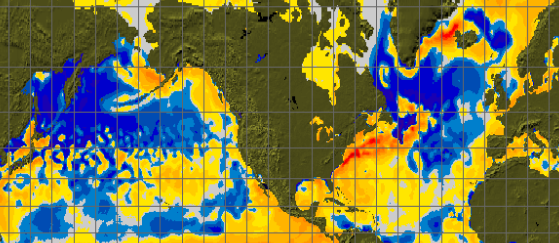 The latest chart shows the large reduction of the northeastern Pacific
warm blob, and the huge growth in the North Atlantic cold region.
The latest chart shows the large reduction of the northeastern Pacific
warm blob, and the huge growth in the North Atlantic cold region.
|

|
|
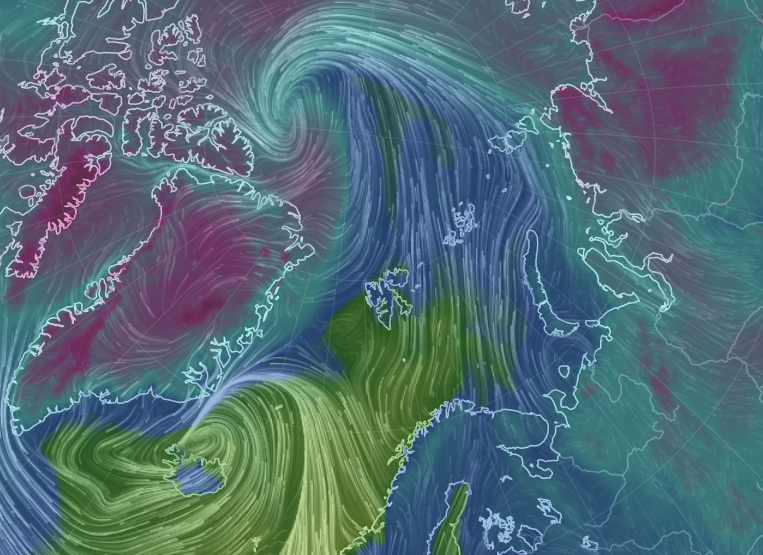 Unusual event: warm tropical air getting transported all the way to
the North Pole..
Unusual event: warm tropical air getting transported all the way to
the North Pole..Today we see a powerful storm centered over Iceland that is pumping up yet more warmth - all the way to the North Pole. |
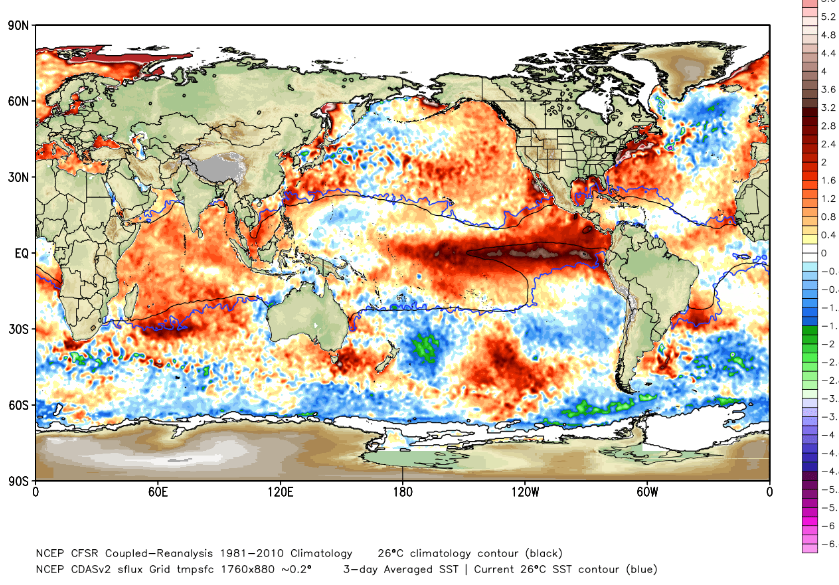 Here's what NCEP chart shows.
Wouldn't that pattern accelerate the surface cooling of the oceans at the mid and lower Atlantic latitudes ? Could this now protracted pattern have made the cooling in the Atlantic even more pronounced and explain in part why the North Atlantic has cooled? |
|
|
|
-
NoTricksZone (Pierre L. Gosselin)
2015-12-30 en Tremendous Cooling Of Northern Hemisphere Sea Surface Temperatures - Sharp Spell Of Global Cooling Ahead?
-
Basler Zeitung
2015-12-31 de Das Wetter, diese gefährliche Diva
-
Le Figaro
2015-12-31 fr Au Pôle Nord, le thermomètre affiche 20 degrés de plus que les normales de saison
-
EIKE Europäisches Institut für Klima und Energie
2016-01-01 de Sturm "ECKARD": Massenhysterie in den Medien - nicht in den Wetterstatistiken2016-01-06 de Die Klimaente zum Jahreswechsel Der Nordpol taut mitten im Winter
-
Die kalte Sonne (Fritz Vahrenholt & Sebastian Lüning)
2016-01-04 de Wirbel um den Polarwirbel: Klage gegen Wissenschaftsberater des US-Präsidenten wegen Klimaaktivismus eingereicht2016-01-16 de Wochenzeitung 'Die Zeit': Nordpol-Hitzewelle liegt nicht am Klimawandel
2016-01-17 de Wo bleibt die 'ungebremste' Erwärmung? Kein neuer Wärmerekord 2015 - trotz El Nino-Unterstützung
The EU is to Blame for Britain's Flood Disaster
-
Breitbart
2015-12-28 en The EU is to Blame for Britain's Flood DisasterNorthern Britain has spent Christmas being inundated with floods of "biblical proportions".
Yes, they are indeed a man-made creation - but the people mainly
responsible are the bureaucrats and green activists at the European Union
whose legislation has made it illegal for Britain to take the measures necessary to reduce the risk of flooding.
British rivers have always been prone to flooding because Britain is a kingdom of rains (where royalty comes in gangs).
But traditionally, those living in flood-threatened areas have been able to mitigate the problem by making sure that their rivers are well dredged - and thus able to flow freely.
Historical perspective
...For all of recorded history, it almost went without saying that a watercourse needed to be big enough to take any water that flowed into it, otherwise it would overflow and inundate the surrounding land and houses.
Every civilisation has known that, except apparently ours.
It is just common sense.
City authorities and, before them, manors and towns and villages, organised themselves to make sure their watercourses were cleansed, deepened and sometimes embanked to hold whatever water they had to carry away.
In nineteenth century Cockermouth they came up with an ingenious way of doing this. Any able-bodied man seeking bed and board for the night in the workhouse was required to take a shovel and wheelbarrow down to the River Derwent and fetch back two barrow-loads of gravel for mending the roads.
This had the triple benefit of dredging the river, maintaining the roads and making indigent men useful.
In Cumbria they knew they had to keep the river clear of the huge quantities of gravel that were washed down from the fells, especially in times of flood.
For Cumbrian rivers are notoriously quick to rise as the heavy rain that falls copiously on the High Fells rapidly runs off the thin soils and large surface area over which it falls.
Cumbrian people have always known that their rivers would be subject to such sudden and often violent inundations and prepared for them by deepening and embanking their channels. Such work was taken very seriously.
So what changed? EU Regulation, that's what.
Thanks to the European Water Framework Directive - which passed into UK law in 2000 and which is enforced by the Environment Agency - the emphasis has shifted from preventing flooding to encouraging it.
Instead, the emphasis shifted, in an astonishing reversal of policy, to a primary obligation to achieve 'good ecological status' for our national rivers.
This is defined as being as close as possible to 'undisturbed natural conditions'.
"Heavily modified waters", which include rivers dredged or embanked to prevent flooding, cannot, by definition, ever satisfy the terms of the directive.
So, in order to comply with the obligations imposed on us by the EU we had to stop dredging and embanking and allow rivers to 're-connect with their floodplains', as the currently fashionable jargon has it.
And to ensure this is done, the obligation to dredge has been shifted from the relevant statutory authority (now the Environment Agency) onto each individual landowner, at the same time making sure there are no funds for dredging.
And any sand and gravel that might be removed is now classed as 'hazardous waste' and cannot be deposited to raise the river banks, as it used to be, but has to be carted away.
On the other hand there is an apparently inexhaustible supply of grant money available for all manner of conservation and river 'restoration' schemes carried out by various bodies, all of which aim to put into effect the utopian requirements of the E W F Directive to make rivers as 'natural' as possible.
For example, 47 rivers trusts have sprung up over the last decade, charities heavily encouraged and grant-aided by the EU, Natural England, the Environment Agency, and also by specific grants from various well-meaning bodies such as the National Lottery, water companies and county councils.
The West Cumbria Rivers Trust, which is involved in the River Derwent catchment, and includes many rivers that have flooded, is a good example.
But they all have the same aim, entirely consonant with EU policy, to return rivers to their 'natural healthy' state, reversing any 'straightening and modifying' which was done in 'a misguided attempt to get water off the land quicker'.
They only think it 'misguided' because fast flowing water contained within its banks can scour out its bed and maybe wash out some rare crayfish or freshwater mussel, and that conflicts with their (and the EU's) ideal of a 'natural' river.
| de | en | fr |
|---|---|---|
|
Klima Skandal: Erwärmung Falschinformationen |
Scandal: Warming Desinformations |
Scandale: Réchauffement Désinformations |
↑ 2015-Rekapitulation
Final 2015 Statistics (Now Includes December Data)
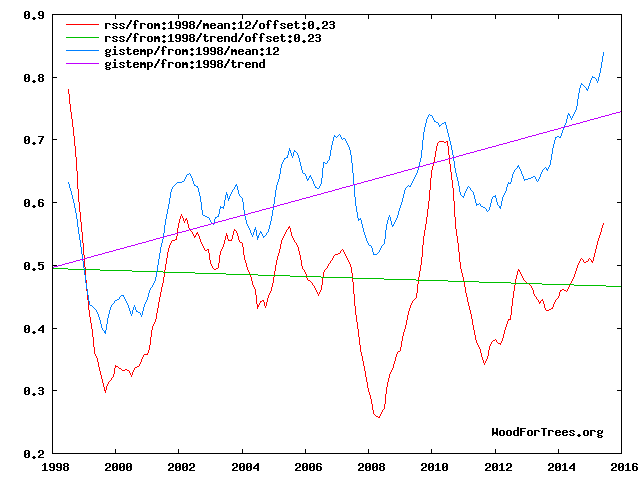
-
EIKE Europäisches Institut für Klima und Energie
2016-02-01 de Globale Mitteltemperatur! Abschluss-Statistik 2015: jetzt einschließlich Dezember 2015Eine der großen Schlagzeilen des Jahres 2015 sind die Rekorde brechenden Anomalien der Temperatur-Datensätze des Jahres 2015 im Vergleich zu den sich aus Satellitenbeobachtungen ergebenden Anomalien, die das Jahr 2015 an die dritte Stelle setzen.
Die Diskrepanz zwischen 1998 und 2015 zwischen beiden Quellen ist nunmehr größer denn je, wie man auf der Graphik rechts erkennt.
Man vergleiche die blauen Endpunkte mit den roten Endpunkten.
-
Watts Up With That? (Antony Watts)
2016-01-27 en Final 2015 Statistics (Now Includes December Data)One of the big stories from 2015 is the record shattering anomalies
on the surface temperature data sets for 2015
versus the third ranked satellite anomalies for 2015.
The discrepancy between 1998 and 2015 is now larger than it has ever been between the satellites and surface records as can be seen on the graphic above.
Compare the blue end points with the red end points.
Deutschland-Temperaturen
-
Die kalte Sonne (Fritz Vahrenholt & Sebastian Lüning)
2016-01-17 de Wo bleibt die 'ungebremste' Erwärmung? Kein neuer Wärmerekord 2015 - trotz El Nino-UnterstützungVon Sebastian Lüning und Josef Kowatsch
2016-01-25 de Deutschland-Temperaturen 2000-2015: 7 Monate wärmer, 5 Monate kälter2016-02-08 de Deutschlandtemperaturen 1995-2015: 8 Monate wärmer, 4 Monate kälter
2016-02-13 de Deutschland-Temperaturen 1990-2015: 7 Monate wärmer, 5 Monate kälterr
Quellen: Wikipedia de Zeitreihe der Lufttemperatur in Deutschland
de
NOAA löscht die Erwärmungspause
en
NOAA erases 'pause' in warming
2015: NOAA Data Tampering Since Last Year
|
|
|

-
Die kalte Sonne (Fritz Vahrenholt & Sebastian Lüning)
2015-12-09 de IPCC-Autor Gerald Meehl verurteilt fragwürdige Rettungsaktionen von Klimaaktivisten zur Erwärmungspause: Der Hiatus ist real und ist erklärungsbedürftig2015-07-02 de NOAA in Not: Erwärmungspause der letzten 15 Jahre lässt sich nicht so einfach wegtricksen
2015-06-15 de Max Planck Gesellschaft: "Die Temperaturen stagnieren ungefähr seit 1998, wenn auch auf hohem Niveau"
-
Watts Up With That? (Antony Watts)
2015-06-09 en Climate scientists criticize government paper (Karl et al. 2015) that erases 'pause' in warmingUntil last week, government data on climate change indicated that the Earth has warmed over the last century, but that the warming slowed dramatically and even stopped at points over the last 17 years.
National Oceanic and Atmospheric Administration has readjusted the data
But a paper released May 28 by researchers at the National Oceanic and Atmospheric Administration has readjusted the data in a way that makes the reduction in warming disappear, indicating a steady increase in temperature instead.
But the study's readjusted data conflict with many other climate measurements, including data taken by satellites, and some climate scientists aren't buying the new claim.
"While I'm sure this latest analysis from NOAA will be regarded as politically useful for the Obama administration, I don't regard it as a particularly useful contribution to our scientific understanding of what is going on," Judith Curry, a climate science professor at Georgia Tech, wrote in a response to the study.
"The new NOAA dataset disagrees with a UK dataset, which is generally regarded as the gold standard for global sea surface temperature datasets," she said.
"The new dataset also disagrees with ARGO buoys and satellite analyses."
-
EIKE Europäisches Institut für Klima und Energie
2016-01-24 de Die "Karlisierung" der Temperatur der Erde
-
Watts Up With That? (Antony Watts)
2016-01-21 en The 'Karlization' of Earth's Temperature
-
Gerald A. Meehl, National Center for Atmospheric Research
2015 en
Decadal climate variability and the early-2000s hiatus
-
Die kalte Sonne (Fritz Vahrenholt & Sebastian Lüning)
Frank Bosse und Fritz Vahrenholt
2016-02-09 de Die Sonne im Januar 2016, Rekorde und Ozeanströmungen: Der Golfstrom bleibt stabil!Das Rekordjahr 2015 und was dazu beitrug
Das Jahr 2015 endete mit einem Rekordwert: Die Temperaturreihe GISS verzeichnete +0,87 °C Anomalie gegenüber dem Referenzzeitraum 1951-1981.
Dies waren nochmals 0,13°C mehr als im Vorjahr 2014 global festgestellt wurde. Besonders stark stiegen die Ozeantemperaturen an.
Ein Blick zurück auf einen nur wenige Monate älteren Datensatz GISS vom Mai 2015 zeigt, dass die globalen Mitteltemperaturen 2014 damals noch um 0,06°C geringer angezeigt wurden als im Januar 2016.
Wie kann das sein? Im Sommer 2015 wurde eine Korrektur der Meerestemperaturen eingeführt, wir hatten u.a. hier darüber berichtet.
Der Auslöser:
Die Messmethoden zur Erfassung der Oberflächentemperaturen der Meere (SST- Sea Surface Temperature) änderten sich ab 1998.Wurden früher die SST von Schiffen aus bestimmt, oft indem die Wassertemperatur in Eimern oder über das angesaugte Kühlwasser gemessen wurde, ging man später zu präziseren Bojenmessungen über.
Dieser Übergang trug, so die Wissenschaftler um T. Karl von der NOAA, eine negative Verfälschung ein, die man mit Korrekturen (für die offensichtlich zu warmen Messungen der Vergangenheit nach unten, für die präzisen Messungen der Gegenwart nach oben) minimierte.
Diese Maßnahme wurde sehr schnell für die globalen Bodentemperatur-Reihen übernommen.
Es gibt hierfür nicht nur Beifall in der Fachwelt, wie unser Artikel "IPCC-Autor Gerald Meehl verurteilt fragwürdige Rettungsaktionen von Klimaaktivisten zur Erwärmungspause: Der Hiatus ist real und ist erklärungsbedürftig" zeigte.
Es erscheint recht fragwürdig, gute neuere Bojenmessungen nach oben zu verändern, um sie an die schlechten alten Eimermessungen anzupassen.
...
NOAA in Not: Erwärmungspause der letzten 15 Jahre lässt sich nicht so
einfach wegtricksen
Update: University of Alabama in Huntsville (UAH) lehnt fragwürdige Veränderungen am RSS-Satelliten-Temperaturdatensatz abEinfluss des El Nino
Einen deutlich höheren Einfluss auf die weltweiten Temperaturen sehen Sie in Abb. 4 im äquatorialen Pazifik: den bereits im November 2015 voll entwickelten ElNino.
Über die Entstehung und den Verlauf dieser internen Variabilität unseres Klimas hatten wir hier berichtet.
Bereits im Jahre 2014 kündigte er sich an, zumindest bis zum Mai.
Ab Anfang August 2014 war er abgesagt, wie wir hier meldeten.
Nun also kam er mit einiger Wucht in 2015 und bescherte den globalen Temperaturen im Jahr 2015 im Mittel einen Anstieg von ca. 0,09 °C.
Das viele rot in Abb. 4 hinterließ seine Spuren in den Troposphären-und Bodentemperaturen.
Alle genannten Beiträge zum Rekord in Summe belaufen sich auf ca. 0,16°C. Nach GISS hätten wir dann etwa die globalen Temperaturen des Vorjahres.
Der Rekord in 2015 ist also zu ganz großen Teilen auf natürliche Variabilität
und eine umstrittene Korrektur von Messdaten größtenteils der Vergangenheit zurückzuführen,
die die Trends ansteigen ließ, gewissermaßen "on top" auf die klimatische Entwicklung.
Im Übrigen zeigen die Satellitenmessungen der Troposphäre keinen Rekordanstieg : beide Messreihen, sowohl UAH als auch RSS, geben 2015 nur als drittwärmstes Jahr seit 1979 an.
Dass die Troposphärentemperaturen langsamer steigen als die Bodentemperaturen ist ein Sachverhalt, den die Klimamodelle nicht reproduzieren. Sie erwarten es genau anders herum.
...
Was erwarten wir von 2016?
Zunächst werden die Temperaturen weiter hoch bleiben.
Die Wärme des ElNino ist noch vorhanden: Sie schlägt sich in verstärkter Wolkenbildung im Ostpazifik nieder. Diese latente Wärme wird erst später in den Weltraum abgestrahlt.
Der ganze Vorgang sollte noch etwa 4-5 Monate dauern,
dann werden die globalen Temperaturen sinken.
Es kündigt sich dann nämlich eine LaNina an. Dies ist nicht etwa das Gegenteil eines ElNino mit seiner Strömungsumkehr.
Vielmehr sind es "verstärkte Normalbedingungen".
Die Passatwinde wehen heftiger als normal und fördern sehr viel kühles Tiefenwasser vor Südamerika an die Oberfläche.
Dadurch wird ein Teil des erwärmten Wassers eines ElNino wieder in die Tiefe vor Indonesien verfrachtet und in die Oberflächentemperaturen geht eine große Kaltwasserfläche im äquatorialen Teil des Pazifiks ein.
In die globalen Temperaturen wird dieser doch recht heftige Umschwung sehr wahrscheinlich erst in 2017 voll durchschlagen.
Für klimatische Einschätzungen wird es so auch in 2017 noch zu früh sein, denn erst nach der zu erwartenden LaNina wird sich ein "neutrales Niveau" einstellen.
Wo das liegt ist noch unbestimmt.
Entwarnung im Atlantik
Erinnern Sie sich noch an die medial so "ausführlich" ausgeschlachteten Meldungen vom Frühjahr 2015, dass sich der Golfstrom dramatisch abgeschwächt hat durch das Schmelzen des Grönlandeises?
Wir hatten uns hier sehr kritisch mit einer Arbeit (Rahmstorf 2015) von Stefan Rahmstorf vom PIK und Kollegen auseinandergesetzt, die den neuerlichen Hype auslöste.
Die Süddeutsche Zeitung beispielsweise vermied das Wort "Katastrophe", zitierte jedoch die Autoren, die ihrer Besorgnis Ausdruck verliehen, dass stark reduzierte Atlantikströme "massive Folgen" für Mensch und Umwelt haben, ergänzten die Forscher.
Die Ökosysteme in den Meeren könnten gestört werden, was die Fischerei und die Lebensgrundlage vieler Menschen entlang der Küsten treffe.
Auch trügen Veränderungen zu einem regionalen Meeresspiegelanstieg etwa in den US-Städten New York und Boston bei.
Zudem seien auch Wetterveränderungen sowohl in Nordamerika als auch in Europa denkbar."
Im Januar 2015 erschien nun eine Arbeit von Parker & Ollier, die die Schlüsse von Rahmstorf2015 entschieden zurückweist.
Wie wir in unserem Artikel damals schon zeigten hatte Rahmstorf 2015 einen Stellvertreter ("Proxy") für die Stärke der AMOC (Atlantic Meridional Overturning Circulation, der Wärmetransport nach Norden) verwendet, der bei näherer Betrachtung offensichtlich Schwierigkeiten mit der Kausalität hatte: er reagierte auf AMOC- Veränderungen bevor diese eintraten.
Die Autoren der widerlegenden Arbeit um Albert Parker von der James Cook- Universität in Townsville, Australien verwendeten einen vertrauenserweckenden Parameter, der auch kürzere Schwankungen der AMOC gut abbildet.
-
EIKE Europäisches Institut für Klima und Energie
Klaus-Eckart Puls
2016-02-17 de Klima-Fakten 2015/16Das Jahr 2015 wurde von den Klima-Alarmisten in bewährtem engen Schulterschluß mit den deutschen(!) Medien zum "wärmsten Jahr aller Zeiten" und zum "endgültigen Klimasignal" hoch gejubelt. Jedoch - die Nachprüfung zeigt:
Es war ein so genannter "Super-El-Nino",
der die Temperatur trieb - wie zuletzt 1998. Eine nahezu verzweifelte Aktion, um nach 18 Jahren der Temperatur-Stagnation eine angeblich anthropogen verursachte Klima-Katastrophen-Hypothese zu retten, anhand eines einzigen Jahres.
Alle anderen Parameter machen auch nicht mit:
Weder die Stürme, noch die Sturmfluten, noch der Meeres-Anstieg!
EIKE Europäisches Institut für Klima und Energie
Quang M. Nguyen, P.E.
2016-02-16 de Wärmer, noch wärmer, am wärmsten - NOAA und NASA erwischt mit der Manipulation der AufzeichnungenFAZIT
Wie so häufig von den Mainstream-Medien seit April 2015 wiederholt, erklärten NOAA und NASA offiziell, dass 2015 heißer als 2014 war, das alte wärmste Jahr der Aufzeichnungen und "versprechen", dass 2016 heißer als 2015 sein könnte!
Jedoch, unleugbare Beweise zeigen, dass die von NOAA und der NASA berechneten durchschnittlichen globalen Temperaturen ungenau, unzuverlässig und nicht mit den Satellitendaten konsistent erscheinen.
1997 war das heißeste Jahr
Laut Daten der NOAA Website, war 1997 wirklich das heißeste Jahr der Aufzeichnung mit 16,9°C (62.45°F).
Die globale Durchschnittstemperatur im Jahr 2015 betrug 14,8°C (58.62°F) oder 2,12K (3.83F) von unter der Temperatur 1997. [... und unter der "Normal" Temperatur von 15°C gemäß PIK u.ä., der Übersetzer]
Nach den Daten der NOAA Website, haben die Parameter wie beispielsweise die Durchschnittstemperatur des 20. Jahrhunderts und der jährlichen Temperaturanomalien, die konstant sein müssten, unterschiedliche Werte in den jährlichen globalen Analysen.
Korrigierte historische Temperaturdaten
NOAA und NASA korrigierten historische Temperaturdaten und stellten Temperaturdaten in Gebieten ohne Temperaturaufzeichnung systematisch her, weit verbreitet und unidirektional zum "kühlen" der Vergangenheit, in dem Versuch, einen steigenden Temperaturtrend zu beweisen.
NOAA und NASAm diskreditieren ihre eigenen Satellitendaten.
NOAA und der NASA haben Anstrengungen unternommen, um ihre eigenen Satellitendaten zu diskreditieren - die im Einklang mit dem Ballon Daten sind - weil eine globale Erwärmung Pause seit 1998 im Widerspruch mit der von NOAA und der NASA bevorzugten Behauptung steht.
NOAA und NASA weigern sich die angeforderten Daten heraus zugeben
NOAA und NASA haben sich geweigert, die durch das US-Repräsentantenhaus für Wissenschaft, Weltraum und Technologie angeforderten Daten und Informationen heraus zugeben.
Es gibt keinen Grund für sie die Daten und Informationen, die öffentlich zugänglich sind, zurückzuhalten, es sei denn, sie haben etwas zu verbergen.
| de | en | fr |
|---|---|---|
|
Klimawandel: Probleme Temperatur-Manipulationen Skandal Manipulationen Teil I, II, III Climategate Institute, Who's who, Mails |
Climate change: Problems Temperature Manipulations Scandal Manipulations Part I, II, III Climategate Institutes, Who's who, Mails |
Climat: Problèmes Manipulation des températures Scandale Manipulations partie I, II, III Climategate Instituts, Qui est qui, Méls |
⇧ 13 2016
↑ 2016-01
-
Die kalte Sonne (Fritz Vahrenholt & Sebastian Lüning)
2016-01-18 de Meteorologe Christian Zenkl: Im Alpenraum sind die Temperaturen in den Bergen in den letzten 30 Jahren um etwa ein Grad C gesunken
-
Basler Zeitung
2016-01-24 de «Snowzilla» legt die US-Ostküste lahmIm Osten der USA ging am Wochenende nichts mehr:
Der Schneesturm «Jonas» hatte vor allem New York und Washington mit bis zu 90 Zentimetern Neuschnee überzogen.
Zusammenfassung
Einer der schwersten Schneestürme seit vielen Jahren legt schon zwei Tage lang die US-Ostküste lahm.
Sieben Staaten erklärten den Notstand.
Rund 80 Millionen Menschen in den betroffenen US-Staaten wurden aufgefordert, zu Hause zu bleiben.
Hundertausende Menschen in North Carolina waren ohne Strom, Tausende Flüge wurden abgesagt.
Es kam zu vielen Unfällen mit 18 Toten.
Schulen und Behörden blieben geschlossen.
-
No Tricks Zone (Pierre L. Gosselin)
2016-01-27 en Cold Shock Claims Dozens Of Lives In Tropical Asia Amid Record Lows... Taiwanese See Snow First Time In Their Lives!
-
Watts Up With That? (Antony Watts)
2016-01-27 en Brutal Freeze kills 85+ people in Tropical Taiwan
- a en Agricultural Losses in 2014 due to Cold Temperatures
- b en China's Food Production Strategy for the New Grand Solar Minimum
- c en Grand Solar Minimum - Global Cooling
↑ a en Agricultural Losses in 2014 due to Cold Temperatures
-
Watts Up With That? (Antony Watts)
2014-10-11 en Agricultural Losses in 2014 due to Cold TemperaturesEarly frost events, below normal temperatures and snows across the globe are starting to reduce agricultural yields.
Cooling temperatures and reduced sunspot counts are easy data points to find, so to match results,
I have recorded early frost events, below normal temperatures and snows across the globe are starting to reduce agricultural yields.
2014-10-09 en
Agricultural Losses 2014 from Cold Temperatures
Early frost events, below normal temperatures and snows across the globe are starting to reduce agricultural yields. Here are some events from Sept-Oct 2014. Australia, Algeria, USA, Canada, China, South Africa.
↑ b en China's Food Production Strategy for the New Grand Solar Minimu
Das neue solare Minimum hat begonnen. Kommt jetzt eine neue Kleine Eiszeit? Das folgende Video diskutiert, wie Chinas Landwirtschaftsstrategie aussehen könnte:
2015-03-23 en
China's Food Production Strategy for the New Grand Solar Minimum
China's Food Production Strategy for the New Grand Solar Minimum.
What is their Knowledge of Solar Minimums and Climate Change since trading for 2000+ years to faraway destinations?
Do they know what the climate in Africa will change to this solar minimum and is why they are investing so heavily in N.Africa for future food production areas?
Land Grabbing
-
Wikipedia
de
Land Grabbing
en Land grabbing
fr Accaparement des terres
-
Basler Zeitung
2016-03-10 de Hier machte es bei Markus Ritter klickWissen Sie, was «Land Grabbing» bedeutet?
Für den obersten Schweizer Bauern war dies der Start für die Ernährungs-Initiative - wegen eines hohen Besuchs aus China.
Für den Bauernverbandspräsidenten ist klar, dass für die Versorgung der Schweizer Bevölkerung mit einheimischen Produkten viel Land gebraucht wird.
Die Schweiz sei jetzt nur noch zu 50 Prozent selbstversorgend, und es werde immer weniger.
Das chinesische Land Grabbing als Inspiration für die Initiative
Ritter vergleicht die Reduzierung von Kulturland in der Schweiz in seiner Argumentation mit dem Land Grabbing: dem grossflächigen Aufkaufen von Land in Schwellen- und Drittweltländern durch finanziell starke Staaten, vor allem in Afrika und in Asien.
«Das Land Grabbing zeigt, dass sich viele Staaten auf der ganzen Welt bewusst sind, dass die Versorgung ihrer Bevölkerung mittel- und langfristig mit dem eigenen Kulturland nicht gesichert ist», sagt Ritter.
In den kommenden 20 Jahren würde es in weiten Teilen der Erde zu einem «Engpass in der Ernährungssicherheit» kommen.
Es sei wichtig, dass die Versorgung der Schweizer Bevölkerung für die Zukunft gesichert werde: «Das geht nur, wenn der Verlust von Kulturland deutlich reduziert wird.
Andernfalls ist in 200 Jahren die ganze Schweiz vom Bodensee bis zum Genfersee verbaut.»
Besonders bekannt für das Land Grabbing sind die Chinesen. Schon seit mehreren Jahren kauft sich das Land systematisch in afrikanische Farmen, beispielsweise in Moçambique, ein und bringt zur Bewirtschaftung nicht selten gleich noch chinesische Bauern mit.
Es sind denn auch die Chinesen, die Ritter und die anderen Initianten für diese Initiative inspiriert haben.
Während eines Besuchs des chinesischen Ministerpräsidenten Li Keqiang, unter anderem auf einem Hof eines Mitglieds des Bauernverbands, sei die Idee entstanden, sagt Ritter.
Über 220 Millionen Hektaren wurden in Drittweltländern gekauft
Land Grabbing wird mittlerweile von vielen Staaten oder auch privaten Investoren getätigt. Japan, Südkorea und China bezwecken damit vor allem, sicherstellen zu können, ihre Bevölkerung ausreichend zu ernähren.
Golfstaaten wie Katar oder Saudiarabien haben das gleiche Ziel vor Augen, doch verschiedene Bedingungen.
Wegen der Wüstenlandschaften ist der landwirtschaftliche Anbau in ihren Ländern schwierig.
Durch den Ankauf von Land in fruchtbareren Regionen wollen sie vor allem unabhängiger werden.
↑ c en Grand Solar Minimum - Global Cooling
-
2016-01-24 en
Taipei, Taiwan Snow for the First Time in 80 Years at 23 N Latitude
Mini Ice Age 2015-2035
Taipei Snow for the First Time in 80 Years at 23 North Latitude For the first time in 80 years it has snowed in Taipei City, Taiwan.
Highways across the country are shut and temperatures dipped below freezing.
Hong Kong is also at 36F this is at 23N. Massive cold surge sweeps Asia in January up to 50F below normal temperatures.
-
2016-02-01 en
First Ever Recorded Snow 300km south of Hanoi Vietnam 18°N Latitude
Snows blanketed Vietnam and Laos the last week of January 2016 breaking hundreds of cold and snow records.
SaPa farmers at total crop losses, 9000+ cattle froze to death and Nghe An recorded its first snowfall ever with records stretching back to 1650.
Quellen / Sources
-
Oil Seed Crops (David DuByne)
en HomeMini Ice Age 2015-2035
2016-01-01 en
2016-2019 Grand Solar Minimum Global Cooling Forecast
Using an overlapping set of data points including Pacific Decadal Oscillation (PDO), Atlantic Multi Decadal Oscillation (AMO) Southern Oscillation Index (SOI), and Solar Cycles
I show the Earths climate will cool significantly beginning 2017.
2015-12-15 en
Changes in Clouds Worldwide Now Affecting Earth's
Temperatures - Mini Ice Age 2015-2035
Svensmark's "The Cloud Mystery" demonstrates that when a grand solar minimum starts the weakened magnetosphere on our Earth allows more galactic cosmic rays in which create more low clouds, which in turn lead to more floods, snows, winds and other weather effects.
We are beginning to see that now, so I synthesized all of the cloud data I could find to show this effect of low cloud formation is indeed happening.
2015-06-12 en
A New Grand Solar Minimum Has Begun Are You Ready to Thrive
With the new solar minimum upon our planet, think about prosperity and thriving with your communities during this next 30 years.
Life will change for billions of people on our planet.
Adapt 2030 brings you barely reported cold weather events across ur planet so you can prepare for this new cold era and keep abreast of food prices and solutions for our new era of existence.
2015-07-14 en
60% Reduction in Solar Activity Means a 5C Drop by 2030 | Mini Ice Age 2015-2035 (85)
60% Reduction in Solar Activity by 2030, What to Expect The Sun is Going to Sleep (Suspicious Observers)
2015-07-27 en
Solar Wind Decrease, 2nd Confirmation of 2030 Mini Ice Age
Second Confirmation the Sun is Reducing Output and where the cold spots will be upon Earth.
2015-04-28 en
Nova Scotia Agriculture Decimated, Insurers Reel From Cold Claims
Nova Scotia Agriculture Decimated Insurers Reel From Cold Claims
2015-04-24 en
Delayed Crop Planting, Volcanic Cycles & -20F in Maine
Smoke and ash rise from the Calbuco volcano as seen from the city of Puerto Montt
2015-03-20 en
Nova Scotia Salmon Aquaculture Kill Off
Salmon die from super chilled waters in aquaculture facilities, another break in the foods supply chain due to cold temperatures in 2014-2015.
2015-01-08 en
Saudia Arabia Freezes & Panic Grain Buying in Russia
Cold Wave to Lash Kingdom of Saudi Arabia with Snow & Wind: Saudi Arabia warning to wear clothes Bitterly cold weather accompanied by wind, sub-zero temperatures and snow is expected to hit the KSA (Kingdom of Saudi Arabia) on Wednesday and last until Sunday, the Presidency of Meteorology and Environmental Protection (PME) said on Monday.
-
Middle East Eye
2016-01-28 en Snow falls in Kuwait for 'first time ever'

Temperatures in Kuwait soar up to 50C in the summer months and even in winter 20C is the norm. However, on Thursday the temperature was as low as 3C.
There is no record of snow having fallen in Kuwait before, although the emirate has experienced hail and frost in the past when temperatures have fallen in the winter.
A Kuwaiti told MEE that Thursday's snow was a first for the country.
"I asked my grandfather, he said there has never been snow before," they said, preferring to remain anonymous. "Everyone is surprised."
While snow is unheard of in Kuwait, in neighbouring Saudi Arabia the north of the country regularly sees snowfall.
In the city of Rafha on Thursday temperatures fell to -2C. Photos and footage sent to MEE showed the ground covered in snow.
-
ANYARENA
2016-01-25 en PARTS OF VIETNAM SEE SNOW FOR FIRST TIME EVERIt's officially Snow Day in Northern Vietnam right now, with a massive cold blast hitting that part of the country and giving some regions their first ever taste of snow.
Ever.Confused locals and tourists alike have been getting out into the winter wonderland and enjoying the cold, wet, white substance known as snow.
-
Life of Guangzhou
2016-01-25 en Snow in Guangzhou - for the First Time in 88 YearsGuangzhou residents were excited Sunday to observe snow falling in their subtropical city for the first time in 88 years.
Even if the flakes were small and the snow didn't really stick, people were out in force taking photos of this rare phenomenon.
-
Nippon Television Network
2016-01-24 en
COLD SNAP BRINGS OKINAWA FIRST-EVER SNOW
Okinawa's main island in southwestern Japan gets its first snowfall on record.
-
AccuWeather
2016-01-21 en Top 10 snowiest major cities around the world
-
TUOI TRE NEWS
2016-01-25 en Hanoi shivering with coldest spell in nearly four decadesThe capital city of Vietnam has experienced the most frigid weather after almost 40 years, with temperatures way lower than expected, local meteorologists said.
According to the National Center for Hydro-Meteorological Forecasting, the lowest temperature in Hanoi had been estimated at 8-9 degrees Celsius but a huge cold snap currently hitting the northern region caused it to plunge to 5.4 degrees Celsius on Sunday at 9:00 am.
This is the lowest point since January 31, 1977.
-
Free Republic
2016-01-26 en The snowfall total in Moscow beats 50 years recordA record amount of snow has fallen this January in Moscow.
"An analysis of our last 50 years' records allows us to say that this January is the most snowy since the January of 1970
with its 100 cm of snow (39 3/8 inches).
This January's total snowfall has already risen to 104 cm (41 inch) and the month isn't over yet, so the total can grow more.
The 50 years average is 40-45 cm (15 3/4-17 5/7 inches)".
-
Global Times
2016-01-24 en China copes with worst cold in decadesChina has geared up to cope with the winter's coldest weekend as the worst cold front in decades sweeps across the country.
The national observatory raised the weather warning level from yellow to orange on Saturday morning.
According to the National Meteorological Center (NMC), temperatures dropped 6 to 10 degrees Celsius on Saturday morning in parts of northwest China, north China and the Huanghuai area.
China has a four-tier warning system for severe weather, with red being the most serious, followed by orange, yellow and blue.
In Beijing, temperatures dropped to under minus 10 degrees Celsius on Friday and will hit a 30-year low of minus 16 degrees Celsius from Saturday through Sunday, the Beijing meteorological station said.
The maximum load of Beijing's power grid system reached about 16.96 million kilowatts at 5:54 pm on Friday, setting a record for the capital's winter power supply in recent years.
A total of 465 emergency repair vehicles and 15 emergency generator wagons allocated by Beijing Electric Power Corporation are ready to help with any power supply problems.
The downtown of southwest China's Chongqing Municipality braced for its first snow since 1996 from Friday night to Saturday morning.
The "super cold wave" brought sleet and heavy snow to southwest China's Sichuan Province from Friday night to Saturday morning, disrupting parts of the province's power supply system.
The power supply of more than 300,000 households in Sichuan has been affected, and local power companies are racing to repair the paralyzed grid system.
The NMC also expects temperatures in South and Southeast China to drop by 6 to 10 degrees Celsius from Saturday to Monday. Temperatures in central and eastern regions of China were 6 to 8 degrees Celsius lower than the average historical level.
Temperatures in parts of Anhui, Zhejiang, Fujian and Guangdong are forecast to approach or even drop below the lowest levels on record, it said.
As of Saturday noon, a total of 493,600 people in Zhejiang Province had been affected by the cold weather, while 31,852 people had been relocated.
About 5,500 hectares of farmland in Zhejiang have been damaged and seven homes had collapsed, resulting in direct economic losses of about 40.13 million yuan (6.1 million US dollars), the provincial civil affairs department said.
The department so far has provided assistance to 3,565 people and ordered personnel to visit more than 2,280 nursing homes across the province. The department also sent personnel to patrol the streets to help the homeless
In east China's Anhui Province, traffic was disrupted by the snow. Several highways saw different sections closed as of Saturday morning, while long-distance coach service from Wuhu City was suspended.
In neighboring Jiangxi Province, the provincial fishery department ordered local authorities to help the endangered finless porpoise survive the harsh weather. According to weather forecasts, the province will experience the coldest weather since 1992 from Saturday to Tuesday, which could threaten the porpoise.
Special personnel were sent to feed the animals and patrol the Yangtze River to quickly identify porpoises that need help.
The cold air has also brought trouble to China's coastal areas.
Due to freezing weather, sea ice coverage in the north of Liaodong Gulf almost doubled within 10 days to 12,415 square kilometers. The size is 7,650 square kilometers larger than last year.
Liaoning maritime authorities issued a warning on Friday urging those involved in fishing, drilling and shipping in the sea to pay attention to changes in weather and ice and take precautionary measures.
The southernmost island province of Hainan did not escape the weather. Severe cold air caused strong winds to howl across the Qiongzhou Strait. Ferry services across the strait between Hainan and the mainland were suspended on Saturday, according to the Haikou Maritime Safety Administration.
Geothermal
-
As the world has seen over the last 15 years, solar panels and wind turbines for grid scale power have limits due to the lack of continuous wind or sunlight.
These renewable energy sources are great for developed economies with 24/7 electricity availability as an-add in electrical source, but what about Myanmar which is beginning to establish a power grid from 1960's infrastructure to develop into our modern 21st century world? Editors Personal Article.
2013-06-06 en Geothermal Resources of Myanmar Overview
Myanmar is one of the countries with numerous geothermal resources that could be represented as an additional source of energy to fulfill its future energy requirements.
Hot springs are found in Kachin State, Shan State, Kayah State, the Southern Part of Rakhine State in Kyaukphyu, Central Myanmar Area, Shwebo Monywa Area and especially in Mon State and Taninthayi Division.
A total of 93 hot springs have so far been recorded and identified.
China's Shale Gas
-
2014-10-25 en China's Shale Gas Development 2014-2034
China's first tier (good) shale gas acreages overlap with existing conventional gas blocks owned by China National Petroleum Corporation (CNPC) and Sinopec.
The recent announcement of Sinopec's "big find" in its Fuling shale gas Block 3 is potentially the beginning of a new phase.
To date, PetroChina has formed a joint venture with (Yibin City Holding and Beijing Guolian Energy Investment Fund) in Sichuan to explore a ChangNing shale gas block.
| de | en | fr |
|---|---|---|
|
Neue Kälteperiode Kaltzeit |
New Cold Period Cold Period |
Nouvelle periode froide Periode froide |
| Voraussagen | Predictions | Prédictions |
| Kälte: Warnungen | Cooling: Warnings | Refroidissement: Avertissements |
| Erwärmung: Entwarnung | Warming: All-Clear | Réchauffement: Fin de l'alerte |
| Eiszeiten | Ice Ages | Glaciations |
↑ 2016-02
-
NoTricksZone (Pierre L. Gosselin)
2016-02-14 en As Winter Reaches Its Zenith Record Cold, Heavy Snow Bring Chaos, Death Over Northern Hemisphere
↑ 2016-3
-
Basler Zeitung
2016-03-06 de Heftigste März-Schneefälle im Tessin seit 1975Von wegen Frühling: Gestern schneite es kräftig - besonders im Tessin, wo sogar Kettenpflicht angeordnet wurde.
Mit Verspätung hat sich der Winter im Tessin gemeldet: Den ganzen Samstag über fielen südlich der Alpen grosse Flocken vom Himmel.
Oberhalb von 1000 Metern über Meer fielen 30 bis 50, lokal bis zu 60 Zentimeter Schnee.
Aussergewöhnlich war jedoch nicht die Menge, sondern der Zeitpunkt:
Erst einmal zuvor fiel im März im Tessin derart viel Schnee - nur am 17. März 1975 wurden grössere Schneemengen gemessen.
-
Tagesschau.de
Tim Staeger / ARD-Wetterredaktion
2016-03-18 de Astronomischer FrühlingsanfangAm Sonntagmorgen 20. März um 5:30 Uhr ist kalendarischer oder astronomischer Frühlingsanfang.
Dann durchquert die Sonne auf ihren scheinbaren Weg entlang der Ekliptik, der Fläche, auf der Erde und Sonne liegen, den Himmelsäquator, der gegenüber der Ekliptik um 23,5 Grad geneigt ist.
Diese Neigung beschert uns die Jahreszeiten, denn im Winter ist die Nordhalbkugel der Sonne abgeneigt, im Sommer entsprechend zugeneigt.
Auf der Südhalbkugel sind aus diesem Grund die Jahreszeiten genau umgekehrt, dort beginnt am Sonntag der Herbst.
↑ 2016-04
-
Tagesschau.de
Tim Staeger / ARD-Wetterredaktion
2016-04-13 de Dürre statt WasserfestAber nicht nur in Thailand herrscht eine extreme Witterung, auch im benachbarten Malaysia wurden wegen großer Hitze über 250 Schulen geschlossen.
Und vor allem in Afrika drohen durch anhaltende Dürre erneut Hungersnöte.
Auf der anderen Seite freut sich Kalifornien über lang ersehnte Niederschläge, die die seit Jahren anhaltende Trockenheit lindern, jedoch wohl nicht nachhaltig genug.
Andernorts wie in Kolumbien oder Argentinien werden Rekordfluten verzeichnet.
Auch in Brasilien, Paraguay und Uruguay wurden in den vergangenen Wochen Zehntausende durch Hochwässer in die Flucht getrieben.
Die weltweiten Wetterkapriolen haben eine gemeinsame Ursache, nämlich das aktuelle extrem starke El Niño.
Seinen Namen leitet El Niño (spanisch für Christkind) von der Tatsache ab, dass es häufig um die Weihnachtszeit zu einer Erhöhung der oberflächennahen Wassertemperatur vor den Küsten Ecuadors und Perus kommt.
Während des letzten extrem starken El Niño-Ereignisses 1997/98 erblühte die Atacamawüste in Chile und Peru, eine der trockensten Regionen der Erde. Gleichzeitig herrschte in weiten Teilen Indonesiens und Australiens eine verheerende Dürre, die zu riesigen Waldbränden und Buschfeuern führte. Aber auch in anderen Teilen geriet das Wetter aus dem Takt, so behindert El Niño die Entwicklung starker Hurrikane im Atlantik, führt im Nordosten Brasiliens zu Trockenheit und hat sogar Auswirkungen auf den Verlauf des Nordamerikanischen Winters: starke Winterstürme in Kalifornien, feuchtkühle Witterung im Südwesten der USA und ein ausgeprägt trockener und milder Verlauf im Norden sind die Folge. Der Einfluss auf das Europäische Wettergeschehen ist jedoch gering und bisher noch nicht nachgewiesen.
Normalerweise befindet sich vor der Peruanischen Küste ein Meeresgebiet in dem kaltes und nährstoffreiches Tiefenwasser aufquillt und zur Freude der Fischer riesige Anchovis-Schwärme anlockt. Über dem kalten Wasser sinkt die Luft großräumig ab, wodurch dort normalerweise sonniges und trockenes Wetter vorherrscht. Die absinkende Luft ist Teil eines riesigen Zirkulationssystems, der nach ihrem Entdecker benannten Walker-Zirkulation, welches sich entlang der Tropen rund um den Globus erstreckt. Die vor der Südamerikanischen Küste absinkende Luft strömt in tieferen Atmosphärenschichten nach Westen über den Pazifik und drückt quasi das oberflächennahe warme Wasser in Richtung Indonesien und Australien, wo die Luft über dem warmen Ozean aufsteigt und dabei verbreitet für Niederschläge sorgt. Dies ist quasi der Normalzustand.
Alle paar Jahre lassen die beständigen Passatwinde nach und in der Folge schwappt nun sozusagen das warme Oberflächenwasser nach Südamerika zurück, wodurch sich die Verhältnisse auch in der Atmosphäre umkehren: In Südostasien bleibt der Regen aus und an der Westküste Südamerikas kommt es zu extremen Regengüssen, die dort Schlammlawinen auslösen. Zudem finden die Fische in dem wärmeren Wasser nicht mehr genug Nahrung und wandern ab, wodurch ein wichtiger Industriezweig in die Krise rutscht.
Der Aktuelle Super-El Niño eines der stärksten aus historischer Zeit. Ähnlich wie 1997798 und 1982/83. Seit etwa neun Monaten hat sich das oberflächennahe Wasser im tropischen Pazifik von der südamerikanischen Küste bis zur gut 10 000 km entfernten Datumsgrenze um etwa ein bis drei Grad erwärmt. Anhand spezieller Klimamodelle lässt sich der Ablauf eines solchen Ereignisses recht gut simulieren, sofern es erst einmal in Gang gekommen ist. Das aktuelle Ereignis klingt zwar bereits ab, wird aber voraussichtlich noch bis zum Sommer andauern. Das Jahrhundert-Ereignis von 1997/98 forderte weltweit etwa 23 000 Todesopfer und verursachte einen geschätzten Schaden von 33 Milliarden Dollar.
↑ 2016-06
-
Basler Zeitung
2016-06-28 de Der Juni war doppelt so nass wie gewöhnlich
↑ 2016-07
-
EIKE Europäisches Institut für Klima und Energie
Edgar L. Gärtner
2016-07-13 de Was ist nur mit der Sonne los?Frostige Aussichten: Steht eine neue Eiszeit bevor?!.
-
Basler Zeitung
2016-07-14 de Der Norden friert - der Süden hat SonneIn der Nacht hat es in mehreren Orten wie Arosa geschneit.
Mehrere Alpenpässe wegen Schneefällen gesperrt
Die Sonne zeigt sich wieder in der Schweiz - jedoch nur im Süden. Im Norden bleibts kühl.
 Say Hello to La Niña Conditions
-
Watts Up With That? (Antony Watts)
2016-07-18 en Say Hello to La Niña Conditions
↑ 2016-09
-
Tages-Anzeiger
2016-09-16 de Nun muss der Regenmantel herAuf das herrliche Badewetter folgt ein herbstliches Wochenende - mit viel Niederschlag.
Der Herbst hält zum Wochenende mit Regen und kühleren Temperaturen Einzug in die Schweiz.
Nach einer ersten Septemberhälfte mit Temperaturen im sommerlichen bis hochsommerlichen Bereich, bringt der Einfluss eines tiefen Luftdrucks in den kommenden Tagen und Wochen ein der Jahreszeit entsprechendes Klima.
August holt Juli als heissesten Monat der Moderne ein
Gerade noch galt der Juli dieses Jahres als heissester Monat der Moderne - nun muss er sich nach UNO-Angaben diesen Titel mit dem August teilen.
Die Weltorganisation für Meteorologie (WMO) erklärte heute, der August sei genauso heiss gewesen wie der Juli.
Dieses Jahr werde insgesamt wohl das heisseste Jahr seit Beginn der Wetteraufzeichnung vor 137 Jahren sein, nachdem bereits 2015 den bisherigen Rekord gebrochen hatte.
Laut der WMO war dieser August um 0,16 Grad wärmer als der bisher heisseste August im Jahr 2014.
Zudem war er 0,98 Grad wärmer als der durchschnittliche August im Zeitraum von 1950 bis 1980.
Es war im August genauso heiss wie im Juli, der laut UNO gerade erst den Rekord als «heissester jemals verzeichneter Monat» aufgestellt hatte.
de Aus der Panik-Küche en From the panic laboratory fr De la marmite des alarmistes
WMO-Direktor Petteri Taalas
Die hohen Temperaturen im August sind ein weiterer Hinweis auf die Erderwärmung, da gewöhnlich der Juli der heisseste Monat ist.
«Wir haben eine längere Periode aussergewöhnlicher Hitze erlebt, die zur neuen Norm werden wird», erklärte WMO-Direktor Petteri Taalas.
Seine Organisation appellierte erneut an die Staaten, das Klimaabkommen von Paris zu ratifizieren.
| Petteri Taalas | WMO-Direktor |
-
JoNova
2016-10-01 en Coldest Perth September recorded in 120 years of records (must be climate change)In the last 120 years in Perth there has never been a September as cold as this one.
↑ 2016-10
-
Die kalte Sonne (Fritz Vahrenholt & Sebastian Lüning)
2016-10-01 de Deutschlandwetter: Rückschau auf den September 2016Ein schöner warmer Septembermonat ging zu Ende, der an den meisten Tagen eine angenehme Sommerverlängerung war.
Er war der Ausgleich zum ausgefallenen Wonnemonat Mai.
Der Deutsche Wetterdienst (DWD) gibt nach vorläufigen Auszählungen die Durchschnittstemperatur mit 16,8 C an, wahrscheinlich wird der Wert noch ein Zehntel nach unten korrigiert.
Da diese Temperatur deutlich über dem Schnitt der relativ kühlen meteorologischen Vergleichsperiode von 1961 bis 1990 liegt, wird der September vom DWD als "extrem warm" und in den Medien als eine Bestätigung der menschengemachten CO2-Klimaerwärmung eingestuft.
Zunächst stimmt an diesen Behauptungen, dass es sich um einen warmen September 2016 handelt.
Aber auch früher gab es schon warme September.
Dies wird klar, wenn wir einen längeren Betrachtungszeitraum wählen:

Und wer sich noch an den kalten September 1972 mit seinen 10,7 C erinnert, der weiß wie angenehm 2016 war.
1972 haben Vogelschützer die entkräfteten nach Süden ziehenden Schwalben eingesammelt und sie über die Alpen gebracht.
Damals redete man noch von einer bevorstehenden kleinen Eiszeit mit unangenehmen Folgen für den Erntemonat September und mit gravierenden Ernteeinbußen.
Eine bevorstehende kleine Eiszeit?
Die seinerzeit - vor 40 Jahren - prophezeite weitere Abkühlung setzte sich jedoch glücklicherweise nicht fort.
Das zeigt die nächste Grafik:
Zusammenfassung
-
Trotz eines angenehm warmen Septembers 2016 stagnieren die Septembertemperaturen seit 75 Jahren.
-
Zwischen 1960 und 1978 lagen die Septembermonatstemperaturen in einem ausgesprochenen Kältetal.
Aus diesem Tal heraus betrachtet sind die momentanen Temperaturen höher.
Der DWD redet fälschlicherweise von "extrem warm".
-
Nach 1978 sind die Temperaturen bis 1999 gestiegen, ein neues Temperaturplateau ist entstanden.
-
Seit 1999 bis 2016 gab es dann keine weitere Erhöhung mehr.
-
Im ganzen Zeitraum sind die Kohlendioxidkonzentrationen, insbesondere auch in den letzten 17 Jahren rasant gestiegen.
-
-
Watts Up With That? (Antony Watts)
2016-10-03 en September Global Temperature Unchanged from August - but still cooler than 1998 or 2010The Version 6.0 global average lower tropospheric temperature (LT) anomaly for September 2016 is +0.44 deg. C, statistically unchanged from the August, 2016 value of +0.43 deg. C
[Note that the August value of +0.43 is changed slightly from its previously reported value of +0.44. This is because inter-satellite calibrations are improved with each additional month of global data, which can change previous months' results by several thousandths of a degree.]
The pause in El Nino cooling continues as recent Climate Prediction Center forecasts have been leaning more toward ENSO-neutral conditions rather than La Nina.
-
NZZ
2016-10-13 en Klimawandel, Klimaleugner - Das Letzte: Erster SchneeWie macht er das nur?
Der Schnee ist ein Phänomen - er löst Begeisterung und echte, bedingungslose Liebe aus.
Und nebenbei hat er eine ziemlich politische Komponente.Zugegeben, es schneit immer irgendwo.
Dass nun auch in den Alpen Schnee gefallen ist, wäre im Normalfall nicht der Rede wert.
Es schneit, das hat der Herbst so an sich.Und doch ist in diesem Fall der erste Schnee das Letzte: Er gibt den Klimaleugnern recht.
Klimaleugner?
Niemand bei klarem Verstand wird leugnen, dass es ein Klima gibt.
Die Frage ist, welches.
Doch dass das Klima immer das bestmögliche ist, dass es schon irgendwie irgendwann wieder auf die Füsse kommt, hat uns der Wald gezeigt:Das Gerücht vom Waldsterben zählt zu den bemerkenswerten Irrtümern der jüngsten Wissenschaftsgeschichte.
Das Waldsterben war eine fiese Lüge. Überflüssiger Albtraum einer ganzen Generation.
Manchenorts liegt nun also auch Schnee im Wald.
Und ob man will oder nicht, ob man dafür ist oder dagegen:
Der erste Schnee ist ein Punkt für den «Klimawandelskeptiker».
So heisst politisch korrekt der Mensch, der den menschengemachten Klimawandel in Abrede stellt.
↑ 2016-11
-
Die kalte Sonne (Fritz Vahrenholt & Sebastian Lüning)
Josef Kowatsch und Sebastian Lüning
2016-11-02 de Temperaturentwicklung des Monats Oktober 2016 in DeutschlandDieser Oktober war nicht golden, sondern lieferte eher einen Vorgeschmack auf den November.
Er war der Ausgleich zum warmen September 2016.
Der Deutsche Wetterdienst (DWD) gibt ihn vorläufig mit 8,6C an und damit leicht unter dem Schnitt der eh schon kühlen Vergleichsperiode 1961 bis 1990.
-
EIKE Europäisches Institut für Klima und Energie
Josef Kowatsch, Stefan Kämpfe
2016-10-31 de Temperaturentwicklung des Monats Oktober über die letzten 75 Jahre in Deutschland
-
EIKE Europäisches Institut für Klima und Energie
Helmut Kuntz
2016-11-06 de Oktoberrückschau die 2.: Klimawandel, wohin bist du verschwunden
Giss Globaltemperatur-Anomalie von 1880 - Oktober 2016

Nun erinnere man sich an den Videovortrag des neuen, selbsternannten Klimahysterie-Gurus Prof. H. Lesch.
Diese einsame Spitze in den Giss-Daten wurde von ihm als DER Beleg für die Erdüberhitzung angeführt. Kaum sind wenige Monate vergangen, ist dieser "sichere" Beleg" zerschmolzen.
Und ob sich dieses in hohem Maß wahrscheinlich auf einem Ozeanzyklus beruhende Ereignis so schnell wiederholt, wird man sehen.
Giss Globaltemperatur-Anomalie gezoomt von 1995 - Oktober 2016
 Prof. Lesch zeigt im Video die Daten der NASA mit einer drastischen
"Überhitzung"
Prof. Lesch zeigt im Video die Daten der NASA mit einer drastischen
"Überhitzung"

Passend dazu kam eine Meldung, welche laut dem Klimawissenschaftler, Herrn Mojib Latif doch längst der Klimavergangenheit angehören sollte:
wetteronline, 02.11.2016: Eis und Schnee breiten sich ausStromerzeugung und Stromverbrauch Deutschlad 2016-10-01/31
Auch im Oktober haben die Neuen Energien ihre Nutzlosigkeit unter
Beweis gestellt.

Quelle: Agora
-
wetteronline
2016-11-02 de Eis und Schnee breiten sich aus Schneebedeckung auf Rekordhoch - Die Schneebedeckung auf der Nordhalbkugel hat den zweithöchsten Wert seit rund 50 Jahren erreicht.Nur im Jahr 1976 lag nach Satellitenbeobachtungen zu dieser Jahreszeit mehr Schnee.
Welche Folgen hat dies für den Winter?
-
Armstrong Economics
2016-11-06 en NASA reports that Antarctic sea ice reaches new record maximumNASA has reported that Antarctic sea ice (different from Artic ice) reached a new record maximum.
Meanwhile, top Russian scientist Dr. Habibullo Abdussamatov, who is the head of space research for the Pulkovo Observatory at the Russian Academy of Sciences, has come out and stated that the new mini-Ice Age began at the end of 2015.
Using data from ice core samples, our models also targeted 2015 as the turning point in the decline in energy output of the sun.
-
Tages-Anzeiger
2016-11-14 de 2016 ist das heisseste Jahr seit MessbeginnDie Temperaturen steigen weiter:
Auch 2016 bricht laut UNO-Wetterexperten wahrscheinlich den Wärmerekord.Das laufende Jahr dürfte nach Einschätzung von UNO-Wetterexperten einen neuen Wärmerekord brechen: 2016 wird wahrscheinlich das heisseste Jahr seit Beginn der Aufzeichnungen.
Die globalen Temperaturen lagen ungefähr 1,2 Grad Celsius über dem Niveau des vorindustriellen Zeitalters, wie die Weltorganisation für Meteorologie (WMO) am Montag in Marrakesch berichtete.
Eisschild schmilzt
Auch langfristige Symptome der Erderwärmung brechen laut WMO neue Rekorde.Flutwellen, Überschwemmungen und tropische Zyklone
In Russlands arktischen Regionen lagen die Temperaturen laut WMO 6 bis 7 Grad Celsius über dem längerfristigen Durchschnitt.«Wir messen Temperaturrekorde normalerweise in Bruchteilen eines Grad», erklärte WMO-Generalsekretär Petteri Taalas.
«Das hier ist etwas ganz anderes.»
Zudem habe der Klimawandel dafür gesorgt, dass extreme Wetterereignisse häufiger vorkommen und schwerere Verwüstungen anrichten.
Taalas nannte unter anderem Flutwellen, Überschwemmungen und tropische Zyklone.
| Petteri Taalas | WMO-Direktor |
-
Tages_Anzeiger
2016-11-18 de Kurze Schnee-EuphorieDas Novemberhoch hat viele Pisten schon früher befahrbar gemacht.
Die ersten Impressionen aus den Schweizer Bergen.
-
Science Skeptical Blog
2016-11-09 de Schnee- & Kälterekorde in Norddeutschland. Bremen von der globalen Erwärmung eiskalt erwischt!An mehreren Orten in Norddeutschland gab es in der vergangenen Nacht Schnee- und Kälterekorde.
Noch nie war es an einem 9. November so kalt.
Am tiefsten fiel die Quecksilbersäule in Boizenburg an der Elbe: minus 8,8 Grad Celsius.
Bis zu 20 cm Schnee sind in der letzten Nacht in der Norddeutschen Tiefebenen gefallen.
Boizenburg bei Hamburg verzeichnet aktuell noch 19 cm Schneehöhe.
In Hamburg selbst wurde der Kälterekord von 1960 geknackt. 1960 waren es -5°C, in der letzten Nacht -6°C.
-
RT TV-Novosti
2016-11-29 en Saudi Arabia snowfall turns desert sands powdery white (PHOTOS, VIDEOS)It's not every day that powdery snow covers the desert sand in Saudi Arabia - but that's exactly what happened to parts of the country when temperatures dropped below freezing.
Saudis are reacting with a healthy dose of humor, and even a few snowmen.
The frigid temperatures and blanket of snow is an unexpected treat for Saudi Arabia's central and northwest regions, which tend to see daily high temperatures of around 20° C (68° F), even in the November "cold season."
↑ 2016-12
⇧ 14 2017
↑ 2017-01

-
Watts Up With That? (Antony Watts)
2017-01-01 en Cold is Deadlier than Heat: NY Times Warning About the WinterMost of the Northern Hemisphere is now in the throes of the deadliest time of the year.
Cold kills, and I don't mean just extreme cold and crippling blizzards.
I mean ordinary winter cold, like that typically experienced, chronically or episodically, by people in every state but Hawaii from late fall through early spring.
While casualties resulting from heat waves receive wide publicity, deaths from bouts of extreme cold rarely do, and those resulting from ordinary winter weather warrant virtually no attention.
Yet an international study covering 384 locations in 13 countries, including the United States, found that cold weather is responsible, directly or indirectly, for 17 times as many deaths as hot weather.
Over time, as global temperatures rise, milder winter temperatures are likely to result in fewer cold-related deaths, a benefit that could outweigh a smaller rise in heat-caused mortality.
In winter in the United States, mortality is generally 10 percent to 15 percent higher than on typical summer days.
The study, published in July 2015 in The Lancet, was based on an analysis of more than 74 million deaths and calculated mortality attributable to heat and cold in Australia, Brazil, Canada, China, Italy, Japan, South Korea, Spain, Sweden, Taiwan, Thailand, Britain and the United States.
Furthermore, unlike what you might expect, the overwhelming majority of cold-weather casualties do not result from vehicular accidents, falls on ice or snow-related activities.
Rather, they are attributable to leading killers like heart disease, stroke and respiratory disease, and are especially common among those aged 75 and older.
Looking at the graphs on page 371 of the Lancet Study, the optimum temperature varies significantly between different countries, but in all cases it is warm - around 25c (77F), warmer in countries which are used to hot weather.
While The Lancet stopped short of recommending more global warming, the message is pretty clear.
A warmer world is a safer world for humans, especially older humans.
-
Tages_Anzeiger
2017-01-07 de Dutzende Kältetote in Europa - Hunderte Flüge annulliertErfrorene Menschen, gestrichene Flüge, Schneestürme: Der Winter lässt Europa seine immense Kraft spüren.
Der Winter hat Europa fest im Griff. Die Kälte hat bereits mehrere Todesopfer gefordert:
Polen, Ukraine, Bulgarien
In Polen sind in den letzten zwei Tagen nach aktuellen Kenntnissen zehn Menschen erfroren.
Auch in der Ukraine sind vier Personen der Kälte zum Opfer gefallen.
An der bulgarisch-türkischen Grenzen haben Anwohner in einem Waldgebiet derweil die Leichen zweier erfrorener Iraker gefunden - offensichtlich Flüchtlinge.
Türkei, Bosporus, Serbien, Neapel in Italien
Der Winter behindert auch den Personen- und Güterverkehr: In der türkischen Millionenmetropole Istanbul mussten seit Freitag wegen der heftigen Schneestürme am Flughafen Atatürk Hunderte Flüge gestrichen werden.
Der Bosporus - eine der wichtigsten Wasserstrassen der Welt - wurde am Samstagmorgen für den Schiffsverkehr gesperrt.
Auch in Serbien türmte der Wind den Schnee am Freitag bis zu zwei Meter hoch.
Selbst in Neapel schneite es.
Polen erleidet «den tragischsten Tag dieses Winters»
In Teilen Polens liegen die Temperaturen seit Donnerstag bei minus 20 Grad und darunter.
Nach Angaben der Wetterexperten dürfte sich die Kältewelle am Wochenende fortsetzen.
Neben mindestens zehn Kältetoten starben zwei weitere Menschen, weil sie an Kohlenmonoxid aus defekten Heizungen erstickten.
Der Freitag sei bislang «der tragischste Tag in diesem Winter», sagte die Sprecherin des Regierungszentrums für nationale Sicherheit (RCB), Bozena Wysocka.
Der Wintersturm tobte am Freitag mit bis zu 90 Kilometern pro Stunde durch die Gebirge im Süden des Landes.
In der Region Rybnik fiel bei mehr als 2000 Menschen die Heizung aus.
Von da ostwärts gleich hinter der Grenze starben in der westukrainischen Region Lwiw vier Menschen an den Folgen der Kälte.
Der Frost hat auch Tschechien fest im Griff.
In Prag fand eine Polizeistreife am Samstag unter einer Brücke die Leiche eines Obdachlosen, der in der Nacht erfroren war. In der Gemeinde Hradistko in Mittelböhmen brachen zwei Männer auf dem Eis eines Sees ein.
Für einen der beiden kam die Hilfe der Rettungskräfte zu spät, er starb an Unterkühlung. Es soll Alkohol im Spiel gewesen sein.
Krisenzentrum in Istanbul eingerichtet
In Istanbul sei die Sichtweite auf dem Bosporus zeitweise unter 100 Meter gefallen. Auch die Bosporusfähren zwischen der europäischen und der asiatischen Seite Istanbuls stellten den Verkehr ein. Turkish Airlines allein musste Hunderte Flüge vom Flughafen Atatürk streichen. Dutzende weitere Airlines waren betroffen.
Anadolu berichtete am Samstag, stellenweise seien in Istanbul über Nacht bis zu 40 Zentimeter Schnee gefallen. Die heftigen Niederschläge bei Temperaturen unter dem Gefrierpunkt führten zu starken Verkehrsbehinderungen in der hügeligen Stadt. Der Gouverneur von Istanbul richtete ein Krisenzentrum ein.
Eine Kaltfront hatte bereits am Freitag zu einem Temperatursturz in der Stadt geführt. Am Abend hatte zusätzlich zu stürmischen Winden dichter Schneefall eingesetzt, der den Vorhersagen zufolge noch den Samstag über andauern sollte. Auch für kommende Woche ist Schnee vorhergesagt.
Windgeschwindigkeiten bis 160 Stundenkilometer in der Adria
In Italien traf der Sturm unter anderem die im Sommer von einem Erdbeben verwüsteten Gegenden. Auf Sizilien und in Neapel mussten Fähren im Hafen bleiben. In der Stadt am Vesuv schneite es zum ersten Mal seit langer Zeit wieder. Züge fielen aus, Strassen wurden gesperrt. In Rom trotzten rund 35000 Gläubige der Kälte und warteten auf dem Petersplatz auf den Segen von Papst Franziskus zum Dreikönigstag.
In der Adria wütete der Sturm mit Spitzengeschwindigkeiten von 160 Stundenkilometern. Kroatien stoppte den Fährverkehr zu einigen Inseln. Auch Brücken wurden gesperrt.
Verkehrschaos und abgeschnittene Dörfer in Südosteuropa
In Rumänien blieben am Freitag zahlreiche Autos im Schnee stecken. Rettungskräfte holten 90 Menschen aus liegen gebliebenen Fahrzeugen. Rund 30 weitere Personen harrten noch in ihren Autos aus. Die Behörden evakuierten 622 Dialysepatienten und 126 Schwangere. Wegen zugeschneiter Gleise fielen mehr als 40 Züge aus.
In Bulgarien schnitt der Schneesturm die Stromversorgung für rund 650 Dörfer ab. Im Norden Albaniens arbeiteten sich die Rettungsdienste durch bis zu 120 Zentimeter hohen Schnee in abgeschnittene Dörfer vor. Auch der Strom fiel vielerorts aus.
Weitere Opfer wird es wohl in Ungarn geben. Da gab es im vergangenen Jahr bereits doppelt so viele Kältetote wie im Jahr zuvor. Im vergangenen Jahr seien mindestens 80 Personen erfroren, gab das Ungarische Sozialforum in einer ersten Bilanz am Freitag bekannt. Darunter seien viele Obdachlose. Und in dieser Bilanz ist die aktuelle Kältewelle noch nicht eingerechnet.
Schnee auf griechischen Inseln
Im Norden Griechenlands herrscht seit Freitag Dauerfrost. Die Thermometer in der Hafenstadt Thessaloniki zeigten am Samstag um die Mittagszeit minus sieben Grad Celsius. Am schlimmsten leiden Tausende Flüchtlinge auf den Inseln, die in Zelten ausharren müssen.
Zahlreiche Landstrassen waren nur mit Schneeketten befahrbar, wie die Polizei mitteilte. Eine dünne Schneedecke lag auf den Stränden zahlreicher Touristeninseln. Auch im Zentrum Athens herrschten Temperaturen um den Gefrierpunkt.
Die Balkanstaaten meldeten Temperaturen von bis zu 27 Grad Minus. Selbst in der kroatischen Hafenstadt Split lagen sie nach Angaben des Wetterdiensts bei minus sieben Grad - und waren damit so niedrig wie seit 50 Jahren nicht mehr.
Glatteis in Frankreich und den Niederlanden
In Frankreich gaben die Behörden vor allem für den Norden Glatteiswarnung aus. Selbst in der Pariser Region wurden bis zu elf Grad Minus gemessen. In mehr als 30 Departements galt erhöhte Alarmstufe. Mehrere Städte hatten in Turnhallen Schlafplätze für Obdachlose eingerichtet.
In den Niederlanden wurden bei rund 330 Glätteunfällen am Samstag mehrere Menschen verletzt. Ein Autofahrer kam ums Leben, wie die Polizei mitteilte. Er sei nahe der Ortschaft IJzendoorn in der Provinz Gelderland mit seinem Wagen in einen Graben neben der Autobahn A15 gestürzt.
Eisregen habe Strassen in weiten Teilen des Landes in Rutschbahnen verwandelt, sagte ein Sprecher des Ministeriums für Infrastruktur und Umwelt. Auch im Bahnverkehr sorgte Eisregen für Störungen.
Deutschland
Der Deutsche Wetterdienst warnte am Samstag ebenfalls vor «unwetterartiger Glatteisbildung» in Nordrhein-Westfalen und Unwettergefahren durch Glatteis auch im Nordwesten. Er rief die Menschen auf, zu Hause zu bleiben und nach Möglichkeit Autofahrten zu vermeiden.
Kein neuer Rekord: Globale Mitteltemperatur 2016 erreichte lediglich
das Niveau von 1998
en
2016 edges 1998 as warmest year in satellite record - by 0.02°C
-
Die kalte Sonne (Fritz Vahrenholt & Sebastian Lüning)
2017-01-11 de Kein neuer Rekord: Globale Mitteltemperatur 2016 erreichte lediglich das Niveau von 1998
-
Die kalte Sonne (Fritz Vahrenholt & Sebastian Lüning)
2017-01-13 de Die ungeliebte Verlangsamung der Erwärmung: Tricksen bis der Arzt kommtMit dem neuen Temperaturrekord hat es 2016 nicht geklappt.
Trotzdem wollten Klimaaktivisten und kooperierende Journalisten zu Jahresbeginn der Bevölkerung eine scharfe Klimaermahnung mit auf den Weg geben.Da kam ihnen ein soeben veröffentlichtes Paper gerade recht:
Die Erwärmungspause ("der Hiatus") bzw. die Verlangsamung der Erwärmung ("Slowdown") der letzten 18 Jahre existiere gar nicht, alles nur Schall und Rauch.In Wahrheit sei es kräftig wärmer geworden, und zwar in den Ozeanen.
Ganz vorne bei der Berichterstattung mit dabei ist Spektrum der Wissenschaft, eine Plattform, auf der auch der Potsdamer Klimaaktivist Stefan Rahsmtorf schreibt.
Der Redaktionsleiter von spektrum.de, Daniel Lingenhöhl, erklärte den Lesern höchstpersönlich:
Klimawandel: Keine verlangsamte Erwärmung im Ozean
Während der letzten 15 Jahre sollen sich die Weltmeere nur verlangsamt erwärmt haben.
Manche sprachen sogar von einer Pause.
Doch das wurde erneut widerlegt.Daniel Lingenhöhl, Joachim Müller-Jung, Zeke Hausfather et al. kämpfen unentwegt gegen den unerwarteten Hiatus an - und machen sich dabei gänzlich lächerlich.
Was werden sie in zehn Jahren im Rückblick zu ihrem Aktivismus zu sagen haben, wenn die wahre Temperaturentwicklung bekannt sein wird?
Jede Wette, dass sie dann gar nicht mehr gerne an ihre wilde Aktivistenzeit erinnert werden wollen
-
Watts Up With That? (Antony Watts)
2017-01-19 en @NOAA data demonstrates that 2016 was not the 'hottest year ever' in the USAMuch of that "record heat" is based on interpolation of data in the Arctic, such as BEST has done.
But in reality, there's just not much data at the poles, there is no permanent thermometers at the North pole, since sea ice drifts, is unstable, and melts in the summer as it has for millennia.
Weather stations can't be permanent in the Arctic ocean.
So, the data is often interpolated from the nearest land-based thermometers.
-
Watts Up With That? (Antony Watts)
2017-01-03 en 2016 edges 1998 as warmest year in satellite record - by 0.02°C
-
Dr. Roy Spencer
2017-01-03 en Global Satellites: 2016 not Statistically Warmer than 1998The resulting 2016 annual average global temperature anomaly is +0.50 deg. C, which is (a statistically insignificant) 0.02 deg. C warmer than 1998 at +0.48 deg. C.
We estimate that 2016 would have had to be 0.10 C warmer than 1998 to be significantly different at the 95% confidence level.
Both 2016 and 1998 were strong El Nino years.
-
Science Skeptical Blog
2017-01-11 de Extremwetter: Schnee in der Türkei, wie seit 30 Jahren nicht mehr, Papst ruft zur Kältehilfe aufTürkei: In den vergangenen Tagen wurde nach Angaben der Zeitung "Hürriyet" in manchen Bezirken der Millionenmetropole mehr als ein Meter Schnee gemessen.
Das Blatt sprach vom stärksten Schneefall in Istanbul seit 30 Jahren.
Seit Beginn der starken Schneefälle in Istanbul in der Nacht zu Samstag wurden am Atatürk-Flughafen Hunderte Flüge gestrichen.
Das Wetter-Chaos hat unschöne Konsequenzen für viele Urlauber.
Wegen des Schneechaos in Istanbul sitzen weiter Hunderte Urlauber auf dem Flughafen Atatürk fest.
↑ 2017-02
-
Tages-Anzeiger
2017-02-06 de Schneemassen begraben mehrere DörferBei Lawinen in Afghanistan und Pakistan sind in den vergangenen Tagen mehr als hundert Menschen ums Leben gekommen.
↑ 2017-03
-
Tages_Anzeiger
2017-03-14 de Börsenhändler der Wall Street bleiben zuhauseWintersturm «Stella» legt die Ostküste der USA lahm.
In New York haben Schulen, Flughäfen und sogar die UNO geschlossen.
-
Basler Zeitung / Eugen Sorg
2017-03-28 de Falsche ProphetenSeit Jahrzehnten warnen grüne Unheilspropheten und Klimaschamanen vor einem menschengemachten Hitzekollaps der Erde.
Keine der Voraussagen traf ein.
Letzten Samstag war Earth Hour.
Um 20.30 Uhr Lokalzeit sollten weltweit alle Lichter für eine Stunde gelöscht werden.
Zum elften Mal bereits.
«Um den Politikern zu zeigen, dass sich die Menschen wegen des Klimawandels Sorgen machen», heisst es beim WWF, der die Aktion erfunden hat.
Anders als von den Initianten erwartet, ist die «grösste Umweltschutzaktion der Welt» gerade bei Politikern beliebt.
Sie erlaubt ihnen, risikofrei als verantwortungsvolle Amtsträger zu posieren.
Die «Menschen» hingegen haben den Anlass kaum bemerkt.
Wer zufällig am verdunkelten Eiffelturm oder am Kreml, an den im Finsteren liegenden Pyramiden von Gizeh oder am erloschenen Kölner Dom vorbeikam, dachte eher an einen ärgerlichen Stromunterbruch als an ein umweltpolitisches Protestsignal und strebte schleunigst helleren Orten zu.
Und welcher normale Zeitgenosse in Basel oder gar in Kairo, der halbwegs bei Trost ist, würde am Samstagabend zu Hause freiwillig Licht, TV und Backofen ausknipsen, um damit ein «Zeichen für mehr Klimaschutz» zu setzen?
Nur Weltenretter wie Al Gore foutieren sich um die Empirie.
Seit Jahrzehnten warnen grüne Unheilspropheten und Klimaschamanen vor einem menschengemachten Hitzekollaps der Erde.
Stellvertretend für jene kündigte Chefapokalyptiker Al Gore 2006 das Abschmelzen der Polarkappen innerhalb der nächsten Jahre an, einen Anstieg des Meeresspiegels um sechs Meter und hundert Millionen Erdenbürger auf der Flucht vor Wassermassen und entfesselten Tornados.
Er bekam dafür den Friedensnobelpreis und sein Horrorszenario ist bis heute Lehrmaterial an vielen Schulen, obwohl keine der Voraussagen eintraf.
Die Pinguine im antarktischen und die Eisbären im arktischen Eis gedeihen prächtig, aus Ozeanien ist kein einziger Klimaflüchtling aufgetaucht und im Winter schneit es weiterhin.
Die «Menschen» bemerken die Diskrepanz zwischen Verkündung und Realität, überlassen Earth Hour den Politikern und Aktivisten und widmen sich ihrem Alltag.
Nur Weltenretter wie Gore foutieren sich um die Empirie.
In einem Interview mit dem Filmmagazin Empire assoziierte er kürzlich abenteuerlich, der Klimawandel sei nicht nur «Hauptgrund» für den Bürgerkrieg in Syrien, sondern auch für den britischen Brexit.
Der Mann ist unbelehrbar.
Inconvenient Truth for Al Gore
| de | en | fr |
|---|---|---|
|
Klimawandel Who is who |
Climate change Who is who |
Réchauffement climatique Qui est qui |
| de | en | fr |
|---|---|---|
|
Who is who Verfechter der anthropogenen (vom Menschen verursachten) Klimaerwärmung |
Who is who Who is who of Anthropogenic Global Warming |
Qui est qui Who is who du réchauffement climatique anthropique |
| Aktivisten der Globalen Erwärmung | Global Warming Activists | Activists du réchauffement climatique |
| Institute und Organisationen der Globalen Erwärmung | Global Warming Institutes and Organizations | Instituts et organisations du réchauffement climatique |
| Versicherungen | Insurances | Assurances |
 Verschiebung des Blühtermins
X-Achse: Jahre seit 1988,
Y-Achse: Blühtermin in Tagen nach Jahresbeginn
 Februar-Temperaturen in Deutschland während der vergangenen 30 Jahre
-
Die kalte Sonne (Fritz Vahrenholt & Sebastian Lüning)
Sebastian Lüning und Josef Kowatsch
2017-03-28 de Eine unglaubliche Geschichte: Wikipedia und der Hamburger ForsythienstrauchAn der Hamburger Binnenalster steht nahe der Lombardsbrücke ein Forsythienstrauch.
Vor wenigen Tagen, am 24. März 2017, war es wieder soweit:
Der Strauch blühte! Na und, wird der eine oder andere sagen. Soll er doch blühen.Nun ist dieser Strauch jedoch nicht irgendein Strauch, sondern auch ein wissenschaftliches Studienobjekt, das seit 1945 ununterbrochen beobachtet wird. Der Blühtermin des Forsythienstrauchs wird penibel festgehalten und in einer Langzeitreihe aufgetragen.
Die letzten 30 Jahre: Späteres Blühen
Schauen wir zunächst auf die letzten 30 Jahre, ein Zeitraum der kimawissenschaftlich Relevanz besitzt (Abb. 1). Auf der X-Achse sind die Jahre seit 1988 aufgetragen, auf der Y-Achse der Blühtermin, gemessen in Tagen nach Jahresbeginn (1. Januar).
Gut zu erkennen ist der deutliche Verspätungstrend beim Blühen. Der neue Datenpunkt aus diesem Jahr (2017) passt sich bestens in diesen Trend ein.
Späteres Blühen ist in der Regel ein Anzeichen für einen kalten Winter (Abb. 2).
Insofern will der unbestechliche Hamburger Forsythienstrauch so gar nicht in das Erzählmuster einer katastrophalen Klimaerwärmung passen.
Aufgrund seiner klimaologischen Relevanz besitzt der Hamburger Strauch sogar seine eigene Wikipedia-Seite.
Wikipedia: Hamburger Forsythien-Kalender
Die zunehmende Verspätung des Blühens während der letzten 30 Jahre blieb seltsamerweise im Wikipedia-Artikel unerwähnt.
Kürzlich kontaktierte uns ein Naturfreund,
dem diese Informationslücke auf der Wikipedia-Seite ebenfalls aufgefallen war.
Der anonym bleiben wollende Naturfreund erklärte, dass er sich in der Mitte zwischen den Klimalagern verortet sehe, beide Seiten hätten zum Teil gute Argumente.
Er hatte vom kruden Vorwurf von Seiten der Skeptiker gelesen, dass Wikipedia angeblich von Klimaktivisten unterwandert wäre. Dies sei schwer nachvollziehbar, dachte er sich.
Daher wagte er ein Experiment.
Ganz oben auf der Wikipedia-Seite gibt es die Reiter "Bearbeiten" und "Versionsgeschichte".
Dort kann Jedermann/Jederfrau Ergänzungen oder Korrekturen von Wikipediaartikeln vornehmen.
Am 8. Februar 2017 loggte sich der Naturfreund als "Greenway21" bei Wikipedia ein und schlug eine wichtige Ergänzung auf der Seite des Hamburger Forsythienstrauches vor:
Wikipedia: Version vom 8. Februar 2017, 21:41 Uhr von Greenway21:
"Hamburger Forsythien-Kalender" - VersionsunterschiedWährend der letzten 50 Jahren ist ein generelles Vorrücken der Forsythienblüte im Jahresverlauf zu erkennen. Seit 1988 allerdings verspätet sich der Blüh-Termin der Hamburger Forsythien wieder zunehmend. [3]
Ein wissenschaftlich einwandfreies Statement, beschreibt es doch in fairer Weise zum einen den Langzeittrend und andererseits den hochrelevanten aktuellen Trend der letzten 30 Jahre.
Die offizielle Langzeitreihe seit 1945 können Sie auf dieser Webseite des Deutschen Wetterdienstes anschauen (zweite Graphik auf der Seite, gelbe Kurve).
Wikipedia: Einzelnachweise [3]:
DWD Deutscher Wetterdienst: "Hamburger Forsythien-Kalender" - VersionsunterschiedDas Experiment hatte begonnen.
Würden die Wikipedia-Redakteure die wichtige Ergänzung zulassen und freischalten?
Es dauerte keine halbe Stunde, da war die Ergänzung wieder rückgängig gemacht.
Ein Seiten-Editor mit dem Codenamen "DeWikiMan" verweigerte die Aufnahme.
Grund: Der Trend zum verspäteten Blühen während der letzten 30 Jahre wäre statistisch nicht ausreichend belegt.
Schauen Sie sich Abbildung 1 nocheinmal genau an.
Ist der Trend wirklich nicht erkennbar?
Ganz offensichtlich wurde hier ein wichtiger Zusatz aus persönlichen Gründen blockiert.
Daher lohnt sich ein Blick auf die Person "DeWikiMan".
Wer steckt dahinter?
In seinem Wikipedia-Profil outet er sich als ökologisch Interessierter:
Mein Hauptinteresse hier gilt allem, was mit Umweltökonomik, Ökologischer Ökonomik und speziell Klimaökonomik (das Rot schmerzt!) zu tun hat.
Genau so stellt man sich einen Klimaaktivisten vor.
Ein klassischer Torwächter, der auf Wikipedia nur Inhalte zulässst, die mit seiner Ideologie übereinstimmen.
Auf keinen Fall ein guter Inhalts-Schiedsrichter für diese wichtige Online-Enzyklopädie.
Aber DeWikiMan setzte noch einen oben drauf.
Er grübelte 11 Tage und schrieb dann selber einen längeren Absatz, den niemand hinterfragte, ja hinterfragen konnte, denn DeWikiMan hatte ja die Änderungsmacht.
Am 19. Februar 2017 erschien auf der Wikipedia-Seite ein ganz neues Unterkapitel
mit dem kuriosen Titel "Früherer Blühbeginn",
also dem genauen Gegenteil des aktuellen Trends:
Im Jahr 1995 stellte der DWD fest, dass die Lombardsbrücke mit einer Verfrühung um 26 Tage in 50 Jahren von allen Standorten mit einer phänologischen Datenreihe den stärksten Trend aufwies.[3]
Auch 2015 konstantierte der DWD für den Zeitraum zwischen 1945 und 2014 einen Trend zu einem immer früheren Blühbeginn.[4]
Neben Änderungen des Klimas sind auch andere Änderungen der Umwelteinflüsse an diesem urbanen Standortes als Ursache in Betracht zu ziehen.[2][3]
Hinzu kommt, dass die Forsythie, wenn kein ausreichender Kältereiz vorhanden ist, nicht unbedingt der Temperatur folgt.
So gab es im Winter 2006/2007 ein Temperaturmaximum an der Lombardsbrücke, dennoch blühte die Forsythie relativ spät, deutlich nach ihrem Rekordwert 2001/2002, weil im warmen Winter 2006/2007 der Kältereiz gefehlt hatte.[4]
Der Wikipedia-Klimaaktivist nutzte seinen Hebel, um die Desinformation auf die Spitze zu treiben.
Anstatt im Text in transparenter Weise auch Raum für den unbequemen Trend der letzten 30 Jahre zu schaffen, umtänzelt er ihn und betrachtet lediglich das für ihn passende Zeitfenster von 60 Jahren.
Bitterböses Rosinenpicken.
Wir danken Naturfreund "Greenway21" für diesen wichtigen Test,
der in eindrucksvoller Art und Weise bestätigt, dass Klimaaktivisten die Wikipedia-Seite gekapert und fest im Griff haben.
DeWikiMan ist als Editor schwer haltbar geworden und Wikipedia sollte seine Aktivitäten einmal etwas genauer unter die Lupe nehmen.
Schade, dass das ursprünglich ausgezeichnete Konzept einer von Freiwilligen geschriebenen Online-Enzyklopädie von politischen Aktivisten gekapert und in sensiblen Themenbereichen unbrauchbar gemacht wurde.
Update 2018-02-22: Der Forsythien-Klimalügenbusch in Seesen
 Forsythienblüte in Seesen/Kirchberg. Quelle: Kowatsch, EIKE
-
Die kalte Sonne (Fritz Vahrenholt & Sebastian Lüning)
2018-02-22 de Der Forsythien-Klimalügenbusch in SeesenSie erinnern sich an die Hamburger Forsythienblüte. Ein mittelgroßes Fiasko für die Torwächter von Wikipedia. Sie versuchten plump, unbequeme Fakten mit Gewalt zu verschweigen. Hier kommt nun weiteres Ungemach.
In Seesen gibt es nämlich ebenfalls einen Forsythienbusch.
Und dessen Blühtermin verspätet sich während der letzten 31 Jahre ebenfalls immer weiter.
Wieso tut der Busch das?
Ist es ihm zu kalt?
Kennt er nicht das Konzept der stetig voranschreitenden Klimaerwärmung, das ihn eigentlich dazu verpflichtet, immer früher zu blühen?
Wir müssen uns nicht wundern, wenn der widerspenstige Busch demnächst von Klimaaktivisten in einer Nacht- und Nebelaktion umgehauen wird.
Er steht dem Klimaschutz eindeutig im Wege.
Ein Klimalügenbusch sozusagen.
Wir wünschen ihm trotzdem weiterhin gutes Gedeihen.
Er wird hoffentlich das Zeitalter der Klimaverwirrung unbeschadet überstehen.
Quelle/Source:
-
EIKE Europäisches Institut für Klima und Energie
Josef Kowatsch, Stefan Kämpfe
2017-04-06 de Auch die Forsythienblüte in Seesen verspätet sichErgebnis: Der Frühling beginnt in Deutschland etwas später.
Alle Märzblüher sind verspätet.
Wir führen das auf die seit gut 30 Jahren kälter werdenden Monate Januar, Februar und März zurück.
Es wird Zeit, dass die deutschen Medienvertreter endlich davon Kenntnis erhalten, die drei Wintermonate werden kälter seit 30 Jahren, ebenso der März.
| de |
▶ Internet-Terror: Manipulation von Wikipedia durch einen Administrator
Video: Die dunkle Seite der Wikipedia
▶ Das Lexikon der Lügen ▶ Vom Onlinelexikon zur Propagandamaschine: Zensur, Einschüchterung und arglistige Täuschung ▶ Wikipedia: Klima-Fälscher Connolley: Der Mann, der unser Weltbild umschrieb ▶Die dunkle Seite von WIKIPEDIA: EIKE Zensur - kurz und knapp [Who is who (Skeptische Institute): EIKE; Wikipedia: Websites, Opfer: EIKE, Manipulatoren: Andol] |
|||||
|---|---|---|---|---|---|---|
| en |
▶ At Wikipedia, one man engineers the debate on global warmingator |
|||||
| fr |
▶ A Wikipedia, un homme dirige le débat sur le réchauffement climatique et à sa manière |
-
WOBLEIBTDIEGLOBALEERWAERMUNG
2017-03-02 de Grönlandeis mit Rekordwachstum: Drei Monate voraus!
↑ 2017-04
de Aus der Panik-Küche en From the panic laboratory fr De la marmite des alarmistes
-
Der Westen de (FUNKE MEDIEN NRW)
2017-03-21 de Hitzewellen in der Arktis - Klimaforscher schlagen AlarmIm Winter gab es in der Arktis Temperaturen fast am Schmelzpunkt.
Nicht das einzige Wetterextrem, von dem Klimaforscher berichten.
Weltwetterorganisation (WMO) in Genf
Klimaforscher haben nach dem neuen Wärmerekord im Jahr 2016 im gerade auf der Nordhalbkugel zu Ende gegangenen Winter weitere alarmierende Wetterdaten aufgezeichnet.
Mindestens drei Mal sei es Anfang 2017 in der Arktis zu so etwas wie Hitzewellen gekommen, berichtete die Weltwetterorganisation (WMO) in Genf.
de Fakten en Facts fr Faits
-
Die kalte Sonne (Fritz Vahrenholt & Sebastian Lüning)
2017-04-02 de Aus der Klimageschichte lernen: Die arktischen Hitzewellen der 1930er und 40er JahreIst es wirklich fünf vor zwölf?
Wird es in der Arktis immer heißer und heißer?
Schauen wir uns den Verlauf der HadCRUT4-Temperaturen in der Arktis einmal an.
Abbildung 1: Schön zu sehen ist die Erwärmungsphase 1990-2005.
Temperaturentwicklung in der Arktis seit 1957
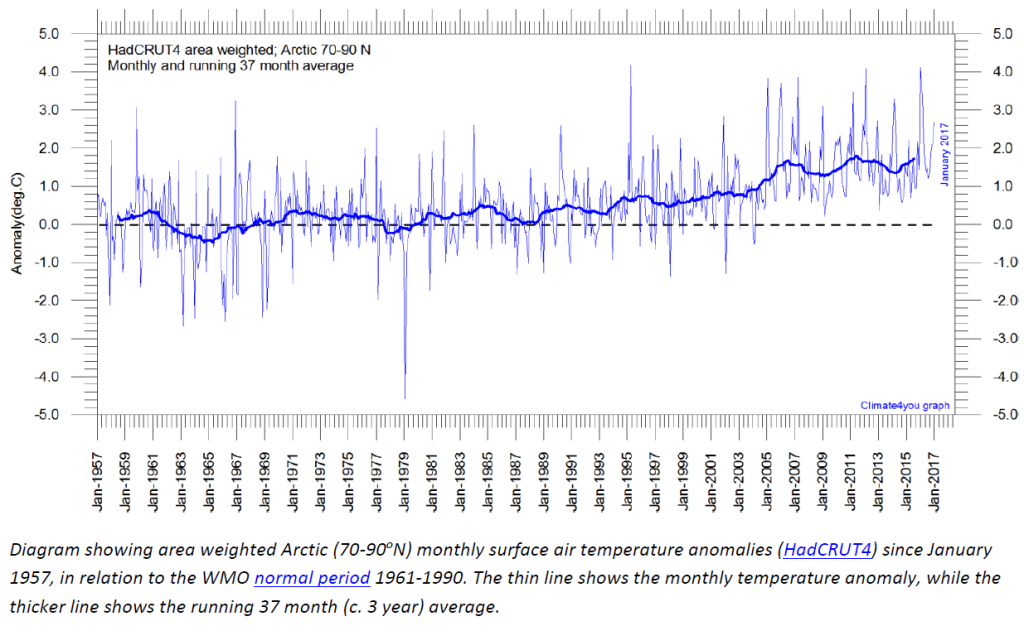
Davor und danach herrschte eher ein welliges Temperaturplateau.
Eine signifikante Arktis-Erwärmung in den letzten 10 Jahren ist nicht zu erkennen.
Abbildung 2: Erweitern wir nun unseren Zeithorizon und schauen fast 100 Jahre zurück.
Temperaturentwicklung in der Arktis seit 1920

Was für eine Überraschung:
In den 1930er und 40er Jahren gab es in der Arktis zwei Hitze-Jahrzehnte, die ähnlich warm waren wie heute.
Eine klitzekleine Auslassung in der WMO-Pressemitteilung und dem Artikel auf derwesten.de.
Abbildung 3: Die frühen arktischen Hitzejahre sind eindrucksvoll in den Temperaturaufzeichnungen der isländischen Stadt Akureyri dokumentiert.
Temperaturentwicklung des isländischen Ortes Akureyri seit 1880
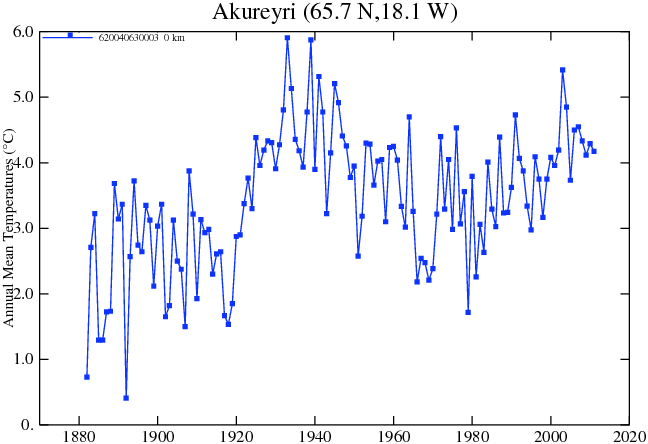
Abbildung 4: Was könnte wohl zu der Erwärmung in den 1930er/40er Jahren geführt haben?

Hier genügt ein Blick auf den Verlauf des 60-jährigen Atlantikzyklus, der AMO (Atlantische Multidekaden Ozillation).
Die kann man ganz einfach auf der NOAA-Webseite hochaktuell selber plotten.
Die AMO-Kurven auf Wikipedia oder anderswo sind zwar farbenfroher, aber oft fehlen die letzten Jahre.
Hauptantrieb der Arktis-Erwärmung in den 1990er und 2000er Jahren war der zeitgleiche starke Anstieg der AMO.
Die von der WMO berichteten Hitzewellen passen gut zum aktuelle Plateau der AMO.
Nun muss man kein Wahrsager sein, um die zukünftig Entwicklung realistisch abzuschätzen:
Das AMO-Plateau könnte sich noch einige Jahre fortsetzen.
Eine weitere massive Erwärmung ist nicht zu erwarten, da der höchste Punkt der AMO-Spitze bereits erreicht ist.
Irgendwann in den kommenden Jahren beginnt dann die Talfahrt der AMO.
Entsprechend sollten auch die Temperaturen in der Arktis dann zurückgehen.
Der Blick in die Klimageschichte lohnt sich.
Bereits Winston Churchill wusste:
Je weiter man zurückblicken kann, desto weiter wird man vorausschauen.
Irgendwann werden das dann auch die Damen und Herren Zeitungsredakteure erkennen.
Die Kunst des Faktencheckens scheint seit Erfindung der Copy-Paste-Funktion verlorengegangen zu sein.
Pro Memo
| de | en | fr |
|---|---|---|
|
Klimawandel: Probleme Glaube und Hysterie (Teile I-III) |
Climate change: Problems Climate Hysteria (Parts I-III) |
Climat: Problèmes Hystérie sur le climat (parties I-III) |
-
Tages-Anzeiger
2017-04-20 de Frost-April bricht KälterekordDie Schweiz hat eine für diese Jahreszeit äusserst kalte Nacht mit Temperaturen unter dem Gefrierpunkt hinter sich.
In Reconvilier BE im Berner Jura wurden minus 5,8 Grad, in Visp VS im Rhonetal minus 5,3 Grad gemessen.
Gemäss Angaben des Wetterdienstes MeteoNews vom Donnerstagmorgen war es in der zweiten Aprilhälfte im Rhonetal noch nie so kalt wie in dieser Nacht.
Der bisherige Rekord stammt vom 23. April 1997.
-
Berner Zeitung
2017-04-21 de Kälterekord am Flughafen ZürichIn Kloten war es diese Nacht minus 4,8 Grad kalt.
So tiefe Temperaturen wurden dort in der zweiten Aprilhälfte seit 20 Jahren nicht mehr gemessen.
-
WOBLEIBTDIEGLOBALEERWAERMUNG
2017-04-20 de Kältewelle im April 2017: Sturmtief OTTO bringt Frost und Schnee!
-
WOBLEIBTDIEGLOBALEERWAERMUNG
2017-04-26 de Kältewelle bis in den Mai? April-Schneechaos in Teilen Europas!
↑ 2017-05
-
Basler Zeitung
2017-05-24 de Zwei Millionen für Frost-NothilfeDie Baselbieter Regierung beantragt zwei Millionen für betroffene Landwirte.
Um Folgen des Spätfrosts Ende April zu mindern, will die Baselbieter Regierung betroffene landwirtschaftliche Produzenten mit Nothilfe unterstützen.
Um diese zu finanzieren, beantragt sie dem Landrat einen Nachtragskredit von zwei Millionen Franken.
Das Landwirtschaftliche Zentrum Ebenrain (LZE) in Sissach schätzt die für die Überbrückung finanzieller Notlagen nötigen Mittel auf 5,3 Millionen Franken, wie es in einer Regierungsmitteilung vom Mittwoch heisst.
Im Fonds für Betriebshilfe sind derzeit 1,3 Millionen Franken.
Die fehlenden vier Millionen Franken sollen hälftig von Kanton und Bund übernommen werden.
Um die zwei Millionen Bundesgelder auszulösen, muss der Kanton gemäss Mitteilung die gleiche Summe als Darlehen gewähren.
Dieses werde in den kommenden zehn Jahren wieder an die Staatskasse zurückfliessen.
↑ 2017-07
-
Tages-Anzeiger
2017-07-16 de Schneesturm legt Santiago de Chile lahmEs ist so kalt wie seit zehn Jahren nicht mehr:
Chiles Hauptstadt leidet seit Tagen unter Minustemperaturen.
Ein seltener Schneesturm hat die chilenische Hauptstadt Santiago ins Chaos gestürzt.
Mehr als 250'000 Menschen waren laut Zivilschutz am Samstagmorgen ohne Strom.
↑ 2017-08
-
Die kalte Sonne (Fritz Vahrenholt & Sebastian Lüning)
Josef Kowatsch
2017-09-05 de Der Hochsommermonat August wird in Deutschland nicht mehr wärmerAugust 2017
Der Monat August 2017 hatte laut Deutschem Wetterdienst einen Schnitt von 17,9 C.
Im Norden war er eher kühl und regnerisch, genauso wie die Nord- und Ostsee.
Nur im Süden erfüllte er weitgehend die Sommererwartungen.
In der Nähe der Alpen zeigte sich an einigen Tagen sogar mediterranes Klima.
Augustverlauf seit über 250 Jahren
August Berlin/Tempelhof seit 1756
Die Trendlinie ist zugleich die Durchschnittslinie.
Der wärmste August in Berlin und wohl überall in Deutschland war der August 1807.
Man beachte: Die Werte sind nicht wärmeinselbereinigt, sonst lägen die letzten 130 Jahre tiefer.
Tempelhof war 1756 im Geburtsjahr Mozarts noch ein kleiner ländlicher Vorort von Berlin, heute ist Tempelhof ein Stadtteil mit über 60 000 Einwohnern.

Temperaturgang der deutschen Durschnittstemperaturen seit 1942
Man kann den Temperaturgang der deutschen Durschnittstemperaturen seit 1942 in vier Abschnitte einteilen:
-
Während der Nazizeit warm
-
Ab 1942 sanken die Durchschnittstemperaturen und die kühlen Augustmonate hielten an bis 1975.
-
Ab 1975 erfolgte ein Anstieg auf ein neues Temperaturhoch.
-
Seit der Jahrtausendwende haben wir dieses Temperaturhoch überschritten, die Temperaturen des Monates August sinken wieder.
Insgesamt liegt das Temperaturniveau aber jetzt höher als zu Beginn der Betrachtung, zumindest zeigt das der Schnitt der jetzigen DWD-Messstationen, die natürlich nicht dieselben sein können wie 1942.
Temperaturentwicklung in Deutschland für den Monat August seit 1942.

Augusttemperaturen seit 1961
Um die Entwicklung dramatischer aussehen zu lassen als sie ist, greifen einige Berichterstatter zu einem Trick:
Sie lassen die Temperaturbetrachtung inmitten des Kältetales beginnen.
Meist beginnt ihre Betrachtungskurve 1961 und im Wellental gestartet kann tatsächlich eine Erwärmung gezeigt werden.
Tatsächlich sind aus dem Kältetal der 60er Jahre heraus bis heute die Augusttemperaturen deutlich angestiegen.
Der Hochsommermonat August wurde in den letzten 57 Jahren deutlich wärmer.
Die Durchschnittstemperaturen lagen damals laut Trendlinie bei 16 Grad, während wir in der Gegenwart laut Trendlinie um 2 Grad höher liegen.
Temperaturentwicklung in Deutschland für den Monat August seit 1961

Augusttemperaturen Ländlicher Stationen seit 30 Jahren
Ländliche Stationen mit geringen Wärmeinselwirkungen zeigen bereits seit 30 Jahren eine leichte Augustabkühlung.
Es lohnt sich, diese Fakten im Hinterkopf zu behalten, wenn in der Presse wieder einmal die sommerliche "Hitzesau" durchs Dorf getrieben wird.
Hier gilt es, einen kühlen Kopf zu behalten.
Einige ländliche Stationen, in deren Umgebung sich weniger baulich verändert hat als in unseren Städten oder an den Flughäfen, zeigen bereits seit 30 Jahren eine leichte Abkühlung.
Als Beispiel wählen wir Amtsberg-Dittersdorf im Erzgebirge

Fazit
Die Augusttemperaturen verlaufen in Mitteleuropa über mehrere Jahrzehnte betrachtet in Wellen.
Momentan befinden wir uns auf einem hohen Niveau.
Besonders die wärmeinselarmen Stationen auf dem Lande zeigen jedoch schon wieder eine leichte Abwärtsbewegung an.
-
-
EIKE Europäisches Institut für Klima und Energie
Josef Kowatsch, Stefan Kämpfe
2017-09-03 de Was ist da los? Der Hochsommermonat August wird in Deutschland nicht mehr wärmer.
Der Hochsommermonat August hat seit zwei Jahrzehnten in Deutschland
eine leichte Abkühlungstendenz. Der Trend ist nicht signifikant.
 Ländliche Stationen, in deren Umgebung sich weniger baulich verändert
hat wie in unseren Städten oder an den Flughäfen, zeigen bereits seit 30
Jahren eine leichte Abkühlung.
Ländliche Stationen, in deren Umgebung sich weniger baulich verändert
hat wie in unseren Städten oder an den Flughäfen, zeigen bereits seit 30
Jahren eine leichte Abkühlung.

-
WOBLEIBTDIEGLOBALEERWAERMUNG
2017-08-20 de Erster Sonnenfleck des neuen Sonnenzyklus Nr. 25 ist da! Schwache Sonne - kühle Erde!Es tut sich was auf der Sonnenoberfläche:
Im schwächsten Sonnenzyklus (SC 24) seit 200 Jahren ist der erste Sonnenfleck mit umgekehrter Polarität auf der Südhälfte der Sonne aufgetaucht!
Wir gehen für Jahrzehnte global kühleren Zeiten entgegen!
Das Auftauchen eines Sonnenflecks mit "falscher" Polarität ist zuammen mit der relativen Äquatorferne dieses Flecks ein sicheres Zeichen für den Beginn einer mehrjährigen Übergangsphase vom aktuellen SC 24 zum neuen schwachen SC 25.
↑ 2017-09
-
WOBLEIBTDIEGLOBALEERWAERMUNG
2017-09-03 de Kühler Herbst und kalter Winter?Mehr als 60 cm Neuschnee auf der Zugspitze! Der Schneefall dauert an! webcam.
Starke Schneefälle in den Alpen bis 1800 m: Live-Video.
Nach einem durchschnittlich temperierten Sommer 2017 in Deutschland steht das NOAA-Wettermodell CFSv2 für den Herbst und vor allem für den kommenden Winter weiter auf "Kalt".
In Ostsibirien hat es Ende August 2017 ungewöhnlich frühe Schneefälle gegeben, die dort zu großflächigen Stromausfällen und der Ausrufung des Ausnahmezustandes führten, wie das ZDF heute in seinem Videotext meldet.
Eine frühe Einwinterung in Sibirien bereits Ende August könnte auch eine frühe Einwinterung in Nordosteuropa im Oktober 2017 nach sich ziehen: Eine gute Voraussetzung für einen kalten Winter auch bei uns in Mitteleuropa.
Neuer Juli-Kälterekord mit -33°C auf Grönland!
-
Basler Zeitung
2017-09-10 de Im Süden regnets, im Bündnerland schneitsIm Tessin hat es in den vergangenen 36 Stunden viel Niederschlag gegeben.
In den Bündner Tälern ist die Schneefallgrenze teilweise bis gegen 1000 Meter gesunken.
-
Die kalte Sonne (Fritz Vahrenholt & Sebastian Lüning)
Josef Kowatsch und Sebastian Lüning
2017-10-02 de Rätselhafte Deutschlandtemperaturen: Der September zeigt während der letzten 70 Jahre kaum ErwärmungDie Temperaturen steigen und steigen und steigen. So lesen wir es jedenfalls in der Tageszeitung, und so erklärt es uns der eine oder andere Fernsehprofessor, Aktivist und Klimaforscher. Seltsamerweise werden in den wenigsten Fällen Temperaturkurven gezeigt. Warum ist das so?
Am Beispiel der deutschen Septembertemperaturen wollen wir diese merkwürdige mediale Dokumentationslücke beleuchten.Entwicklung der Septembertemperaturen in Deutschland während der vergangenen 100 Jahre
Wir verwenden dazu die offiziellen Temperaturdaten des Deutschen Wetterdienstes (DWD).
Bei Betrachtung der letzten 100 Jahre zeigt sich eine recht bescheidene Erwärmung von wenigen Zehntelgraden.
Das war auch nicht anders zu erwarten, immerhin handelt es sich um die Wiedererwärmung nach der Kleinen Eiszeit, der kältesten Phase der letzten 10.000 Jahre.
Es wäre schlimm, wenn das Klima auf diesem nicht repräsentativen tiefen Niveau verharrt hätte.
Entwicklung der Septembertemperaturen in Deutschland während der
vergangenen 100 Jahre
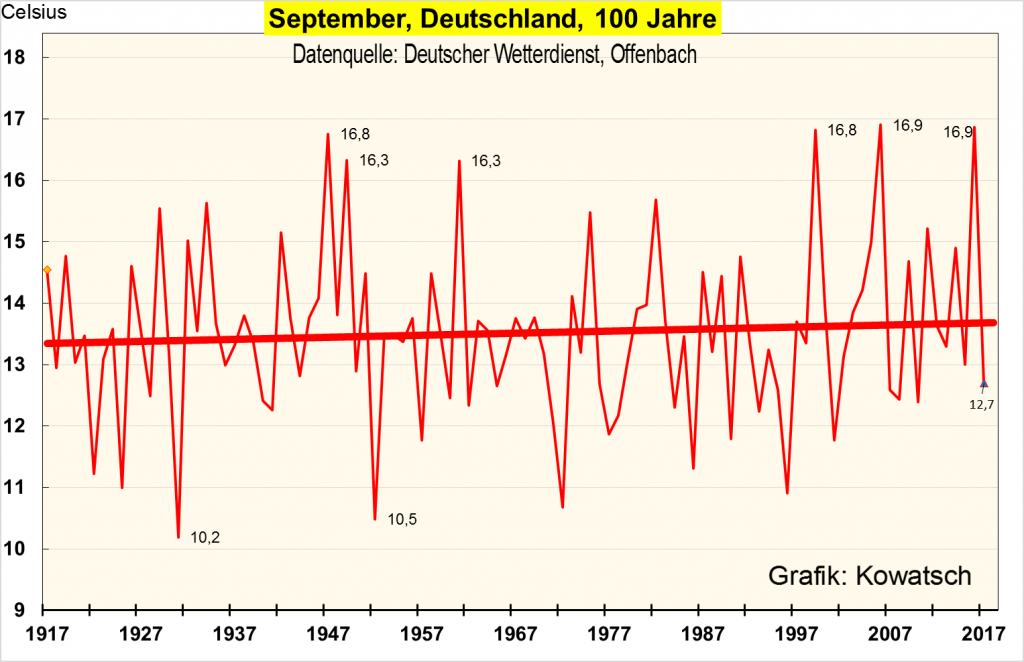
Gut zu erkennen sind die weitspannigen Wellen im Temperaturverlauf.
Wir haben eine kleine Kaltphase zwischen 1920 und 1930, dann eine Warmphase zur Nazizeit, die nach dem Krieg in ein lang anhaltendes Kältetal übergeht.
Ab 1985 wird der September dann wieder wärmer und erreicht kurz nach der Jahrtausendwende ein neues Plateau, auf dem wir uns momentan befinden.
Man könnte auf Basis der vergangenen Entwicklung spekulieren, dass nun erneut eine leichte Abkühlung folgt.
Die Zukunft wird es zeigen.
Betrachten wir nun als nächstes die Nachkriegszeit bis heute, immerhin auch über 70 Jahre, die Zeit vom vorletzten Plateau bis heute.
Wir sehen sofort, wir sind weit entfernt von einer besorgniserregenden Klimaerwärmung.
Entwicklung der Septembertemperaturen in Deutschland während der vergangenen 13 Jahre
Schließlich noch die Betrachtung der letzten 13 Jahre, also der Entwicklung seit 2004.
Wieder keine signifikante Erwärmung, diesmal sogar eine leichte Abkühlung. Wahrlich alles andere als eine Klimakatastrophe.
Entwicklung der Septembertemperaturen in Deutschland während
der vergangenen 13 Jahre

Weshalb zeigen die Medien nicht die deutschen Temperaturenkurven?
Kommen wir zurück zur Ausgangsfrage: Weshalb zeigen die Medien nicht die deutschen Temperaturenkurven?
Offenbar sind die wahren Fakten zu unbequem, als dass man sie der Bevölkerung zumuten könnte.
Ein Teil der Bürger könnte gar den Glauben an die allseits gepredigte Klimakatastrophe verlieren und die harten Einschnitte kritisieren, die die Politik auf dem Rücken der Klimaangst plant vorzunehmen.
Es wird höchste Zeit, dass die Aktivisten in die Schranken gewiesen werden.
Es wird höchste Zeit, dass das Thema wieder transparenter wird und Aktivisten in die Schranken gewiesen werden.
Wir brauchen eine neue Umweltschutzethik, die sich um den gesamten Strauß an Problemen kümmert.
Die überhöhte Alleinstellung der Klimafrage ist nicht mehr haltbar, sogar kontraproduktiv.
Andere wichtige und zeitnah lösbare Themen erfordern verstärkte Aufmerksamkeit: Sauberes Wasser, saubere Luft und saubere Nahrungsmittel gleichmäßig verteilt, wären ein gemeinsames ethisches Ziel, das die Menschheit anstreben sollte.
Der mit der Angstmasche hochstilisierte Klimaschutz reiht sich nahtlos in die früheren Geschäftsmodelle Erbsünde und Ablasshandel ein.

↑ 2017-10
-
EIKE Europäisches Institut für Klima und Energie
Josef Kowatsch, Stefan Kämpfe
2017-10-29 de Milder Oktober 2017: Eine bloße Laune der Natur?Nach dem rauen September bescherte uns der Oktober wenigstens noch eine Woche mit sehr warmen, oft sonnigen Spätsommertagen;
Am Monatsanfang und zum Ende war es aber spätherbstlich kühl.
Wie die meisten anderen Monate, so hat sich auch der Oktober seit 1881 in Deutschland merklich erwärmt
- allerdings scheint diese Erwärmungsphase mit Beginn der 2000er Jahre beendet zu sein, und extrem zu warm war dieser Oktober sowieso nicht, wie ein Blick in die Vergangenheit zeigt.
Oktobertemperaturen über die letzten 230 Jahre
Die Oktobertemperaturen auf dem HPB verhalten sich wie eine Schwingung mit zwei Wellenbergen und einem Wellental.
Sie waren zu Beginn der Betrachtung auf einem ähnlichen hohen Niveau wie heute.
Die Kältedepression lag im Zeitraum 1860 bis1910.

Die Sonnenaktiviät
Im letzten Drittel des 19. Jahrhunderts kam es vorerst letztmalig zu einer geringeren Sonnenaktivität;
um 1900 endete die Kleine Eiszeit ("End of Little Ice Age").
Mit dem schon merklich schwächeren 24. SCHWABE- Zyklus (Maximum 2014) hat möglicherweise der Übergang in eine neue Kleine Eiszeit bereits begonnen.

Nachtrag der kalten Sonne vom 8. November 2017
Der Oktober 2017 in Deutschland war mild.
Darüber sollte man sich freuen.
Im Kontext der letzten 20 Jahre war die kleine Wärmespitze jedoch nichts Besonderes.
Entwicklung der Oktober-Temperaturen in Deutschland ab 1995

-
Basler Zeitung
2017-10-23 de Der Winter ist im AnmarschIn den Bergen liegt bereits der erste Schnee.
In der Nacht auf morgen muss auch auf 1000 Metern über Meer mit Flocken gerechnet werden.
-
Science Skeptical Blog / Rudolf Kipp
2017-10-15 de Früher Wintereinbruch und Schneefall in vielen Teilen der WeltIn den Alpen ist der Winter eingekehrt.
Auf der 2962 Meter hohen Zugspitze, Deutschlands höchstem Berg, wurde am Dienstag eine Schneehöhe von 70 Zentimetern gemessen.
Im Flachland sorgte der Wintereinbruch teilweise für Chaos auf den Straßen.
↑ 2017-11
-
EIKE Europäisches Institut für Klima und Energie
Anthony Watts / Chris Frey
2017-11-02 de Wie unbequem: Ozeane kühlen sich weiter abDas nächste Jahr wird interessant.
Allerdings bestimmen die Ozeane über die Temperatur des Planeten, und wie die jüngste Graphik der Wassertemperatur-Abweichungen zeigt, gibt es sehr viel kühles Wasser und den klaren Hinweis der La Nina vor der Küste Südamerikas.
-
Watts Up With That? (Antony Watts)
2017-11-28 en Inconvenient: oceans continue to coolNext year will be interesting.
However, oceans rule the temperature of the planet, and as this most recent SST shows, there's a lot of cool water and a clear signature of La Niña shaping up off the coast of South America.
-
Basler Zeitung
2017-11-05 de Der Schnee ist daEine Kaltfront hat die Schweiz erreicht.
Die Schneefallgrenze sinkt bis auf 500 Meter.
↑ 2017-12
-
EIKE Europäisches Institut für Klima und Energie
Stefan Kämpfe, Josef Kowatsch
2017-12-08 de Der Winter zeigt der Klimaerwärmung die kalte Schulter - Abkühlung seit 30 Jahren
-
Basler Zeitung
2017-12-09 de Sogar in Mexiko ist plötzlich WinterZum ersten Mal seit 10 Jahren fegten diese Nacht Schneestürme über Mexiko.
Der Wintereinbruch führte zu Chaos.
Von Kanada bis nach Mexiko herrscht dieser Tage Wetteralarm.
Im Süden von Texas überraschte der Schnee die Menschen über Nacht.
250'000 Haushalte seien ohne Strom, 1000 Flüge wurden gestrichen, wie US-Medien berichten.
Auch in der Schweiz schneite es von Freitag auf Samstag bis in tiefe Lagen - der Wintereinbruch sorgte für diverse Polizeieinsätze und Verkehrsbehinderungen.
-
Science Skeptical Blog / Michael Krueger
2017-12-13 de Extremwetter einmal anders: In Kairo fällt nach 112 Jahren wieder SchneeFür viele Ägypter ist es das erste Mal, dass sie Schnee zu Gesicht bekommen.
In Kairo fiel heute Morgen nach 112 Jahren erstmals wieder Schnee, wie von diversen Medienanstalten berichtet wurde.
Bei Twitter kursieren Bilder von diesem ungewöhnlichen Ereignis.
Weisse Weihnachten
-
Die kalte Sonne (Fritz Vahrenholt & Sebastian Lüning)
2017-12-31 de Deutscher Wetterdienst: Keine generelle Abnahme von Weißen Weihnachten in Deutschland für die vergangenen 50 Jahre feststellbarVor kurzem war Weihnachten. Viele Mitmenschen verbinden damit ein lustiges Schneegestöber, aus dem dann der Weihnachtsmann auf seinem Rentierschlitten auftaucht, um seine Geschenke zu verteilen.
Wenn dann in Wirklichkeit weder Schneegestöber, noch Rentier, noch Weihnachtsmann erscheinen, ist die Enttäuschung groß.
Sind unsere Erwartungen überhaupt realistisch?
Hat es in der Vergangenheit in Deutschland stets geschneit, bevölkern riesige Rentierhorden die germanischen Wälder und gibt es den Weihnachtsmann überhaupt?
Hanna Zobel vom Spiegel-Jugendmagazin Bento ging am 21. Dezember 2017 der ersten dieser Fragen nach und befragte den Deutschen Wetterdienst:
-
beneto / Hanna Zobel
2017-12-21 de Gab es früher öfter Schnee an Weihnachten?Gab es früher öfter Schnee an Weihnachten?
Klären wir das - ein für alle Mal.
Ja, ja, früher war alles besser.
Vor allem an Weihnachten!
Da gab's noch richtig Schnee. [...]
Aber stimmt das überhaupt?
Gibt es heute wirklich seltener Weiße Weihnachten als in vorigen Jahrzehnten?Wir haben Andreas Friedrich, Meteorologe vom Deutschen Wetterdienst, gefragt. [...]
BENTO: Viele Menschen haben das Gefühl, früher habe es öfter Weiße Weihnachten gegeben. Stimmt das?
DWD: "Nein. Wir haben das mal für die vergangenen 50 Jahre untersucht und können keine generelle Abnahme von Weißen Weihnachten in Deutschland feststellen.
Es war schon immer ein sehr seltenes Ereignis.
Die Statistik zeigt, dass es nur in zehn Prozent der vergangenen 50 Jahre Weiße Weihnachten gab. [...]
BENTO: Also hat sich nichts verändert durch Klimawandel und Erderwärmung?
DWD: "Momentan hat sich das noch nicht so dramatisch ausgewirkt.
Das liegt aber größtenteils daran, dass es in vielen Regionen Deutschlands vor 50 Jahren im Winter so kalt war, dass die durchschnittlich ein bis anderthalb Grad Erwärmung, die wir seit der vorindustriellen Zeit verzeichnen, noch nicht den entscheidenen Impuls gegeben haben.
-
Tages-Anzeiger / Marc Fehr und Marc Brupbacher
2017-12-22 de Das Märli von weissen WeihnachtenAuch dieses Jahr gibt es keine weissen Weihnachten im Flachland.
Wer jetzt denkt, früher habe es an den Festtagen öfter Schnee gegeben, sollte sich diese Daten anschauen.
Lange ist es her:
Richtig weisse Weihnachten gab es in Zürich zuletzt 2003.
Immerhin ein bisschen Schnee gab es nochmals 2010.
Seit nunmehr sieben Jahren ist es nun aber an allen drei Weihnachtstagen grün.
Seit 1931 gab es in Zürich nur 20 Mal wirklich weisse Weihnachten
Rekord-Minusgrade in den USA
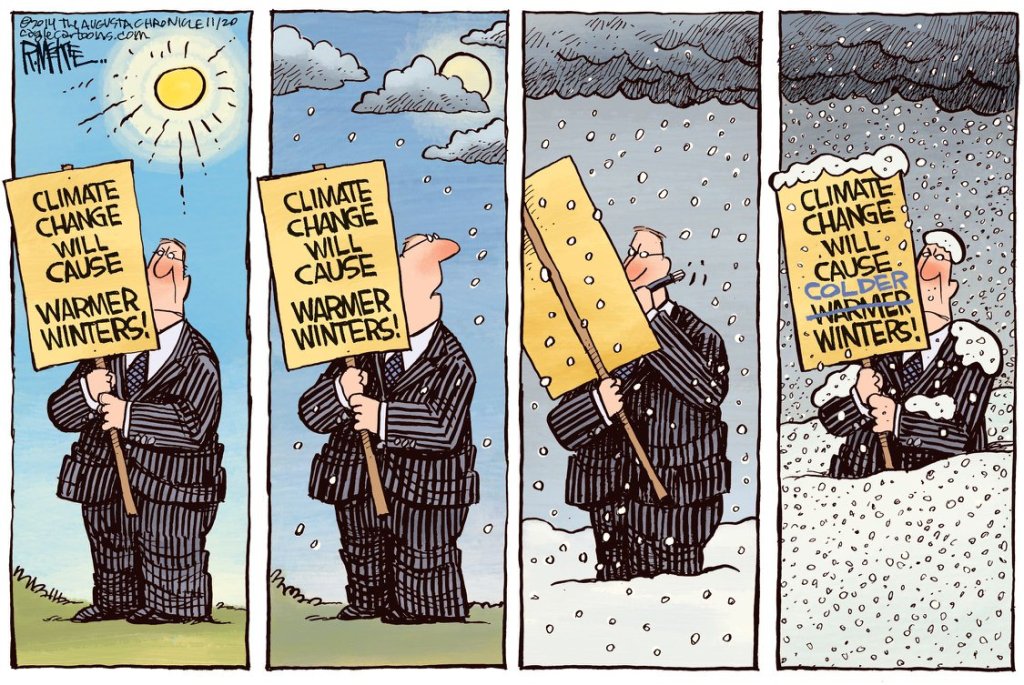
-
Spiegel-Online
2017-12-31 de Rekord-Minusgrade in den USA Kältewarnungen für 70 Millionen Amerikaner an SilvesterFrierend ins neue Jahr:
Für Millionen Amerikaner wird es die kälteste Silvesternacht seit Jahrzehnten.
Selbst Südstaaten-Metropolen könnten Temperaturen um den Gefrierpunkt erleben.
In der Gemeinde Cotton im nördlichen Bundesstaat Minnesota wurden minus 40 Grad Celsius vermeldet.
In Watertown im Norden des Bundesstaats New York waren es am Donnerstag minus 36 Grad.
Auch weiter im Süden, bis hin zu Oklahoma, drohen am Neujahrstag bis zu minus 17 Grad.
Sogar die texanische Metropole Dallas und Georgias Hauptstadt Atlanta könnten Temperaturen um den Gefrierpunkt erleben.
Der kanadische Wetterdienst sagte für Ottawa am Silvesterabend minus 24 Grad Celsius voraus.
Bei der traditionellen Silvesterfeier am New Yorker Times Square werden laut Veranstalter trotz Kälte Hunderttausende Menschen erwartet.
Wenn der berühmte Leuchtball zu Mitternacht herabgelassen wird, könnten die Temperaturen dem Wetterdienst zufolge bei minus zwölf Grad Celsius liegen.
Laut CNN wäre es der drittkälteste Jahreswechsel seit der ersten Feier auf dem Times Square im Jahr 1907.
Wie es aussieht, wird es in vielen Teilen der USA bis Ende der Woche ungewöhnlich kalt bleiben, teilweise sogar bis zum 8. Januar, wie der Wetterdienst sagt.
Erst dann soll es etwas milder werden.
-
Blick
2017-12-31 de Kälte-Wahnsinn in den USAInsgesamt 70 Millionen Menschen werden Silvester in den USA bei Kältewarnungen feiern:
Vor allem für den Mittleren Westen und Osten der USA sagte der nationale Wetterdienst teils Rekord-Minustemperaturen voraus.
-
Basler Zeitung
2017-12-28 de Schneechaos, Eiseskälte und kein Ende in SichtDer Norden der USA und Teile Kanadas erleben derzeit einen äusserst harten Winter.
Mancherorts purzeln nicht nur die Temperaturen, sondern auch die Rekorde.
-
NoTricksZone (Pierre L. Gosselin)
2017-12-31 en The Great New Year's Freeze Of 2017 Setting Cold Records ...And Leading To Outlandish 'Climate' ClaimsMeteorologist Joe Bastardi warned of a cold snap gripping the Eastern US many weeks ago, in October, at his Weatherbell Analytics site.
Today it's all over the news: The Great Freeze of 2017 is smashing through the entire North American East, bringing with it a wave of record temperatures.
President Trump put his patented sense of humor on display at Twitter, provoking climate alarmists
"In the East, it could be the COLDEST New Year's Eve on record.
Perhaps we could use a little bit of that good old Global Warming that our Country, but not other countries,
was going to pay TRILLIONS OF DOLLARS to protect against. Bundle up!"
⇧ 15 2018
- 2018-01
- 2018-02
- 2018-03
- 2018-04
- 2018-05
- 2018-06
- 2018-07
- Sommerhitze 2018
- 2018-08
- 2018-09
- 2018-10
- 2018-11
- 2018-12
↑ 2018-01
-
Blick
2018-01-04 de
Erster Schnee im Sonnenstaat Florida seit 29 Jahren
MIAMI - Zum ersten Mal seit 29 Jahren hat es in Florida geschneit.
-
Basler Zeitung / Tamedia
2018-01-09 de
Seltenes Phänomen in der Sahara
Die Sanddünen in Algerien waren plötzlich weiss.
-
Basler Zeitung / Tamedia
2018-01-12 de
Kampf gegen Schneemassen
Nationalpark Vanoise (Frankreich) 10. Januar 2018.
Bis zu 7 Meter hoch
↑ 2018-02
-
Günther Aigner
2018-02-01 en
Lech-Zürs: Eine Analyse historischer Temperatur- und Schneemessreihen
Agenda:
de Deutsche Untertitel können "angeklickt" werden.
en GERMAN SUBTITLES AVAILABLE! Please find this Speech with English Subtitles in our YouTube-Channel.
-
01:25 - Zitate des Kulturpessimismus
-
06:52 - Wintertemperaturen am Galzig (und Säntis, CH)
-
14:34 - Schneemessreihen aus Lech
-
22:39 - Schneemessreihen aus Zürs
-
25:52 - Die Entwicklung der Skisaisonlängen (Tage mit Skibetrieb)
-
27:51 - Klimatische Entwicklung der Bergsommer
-
33:26 - Zusammenfassung
-
34:58 - Beantwortung der Eingangsfrage
-
35:51 - Fachlicher Austausch (Experten)
-
36:05 - Literatur und Messdaten
-
36:22 - Biografie Günther Aigner
Vortrag in der "Postgarage Lech" am 01. Februar 2018.
Der Tiroler Skitourismusforscher Günther Aigner gibt einen spannenden Überblick über mehr als 120 Jahre Klimageschichte rund um den Arlberg.
Mit Hilfe von amtlichen Messdaten geht er verschiedenen Fragen nach:
Stimmt es, dass es in Lech früher mehr geschneit hat?
Um wie viel Grad Celsius haben sich die Winter am Arlberg (Galzig) in den letzten Jahrzehnten erwärmt?
Stimmt es, dass die Skisaisonen deshalb immer kürzer werden?
Oder gibt es eine Lücke, die zwischen der öffentlicher Wahrnehmung und den amtlichen Messdaten klafft?
-
Die kalte Sonne (Fritz Vahrenholt & Sebastian Lüning)
2018-02-27 de Schnee- und Temperaturtrends in den Alpen: 120 Jahre Klimageschichte rund um den ArlbergKlimadiskussion in der Sackgasse.
Am Ende zählen nur harte Fakten, langjährige Klimareihen und der vorindustrielle Kontext, der bitte nicht erst in der Kleinen Eiszeit beginnt, sondern auch frühere Wärmephasen mit einschließt.
Der Tiroler Skitourismusforscher Günther Aigner hat dies längst erkannt und setzt sich engagiert für eine rationale Diskussion auf solider Datengrundlage ein.
In mühsamer Fleißarbeit hat er Klimadaten zu Schnee und Temperaturen in den Alpen gesammelt und in anschaulichen Abbildungen zusammengestellt.
Am 1. Februar 2018 hielt er einen sehenswerten Vortrag in der "Postgarage Lech", den sich alle Klimainteressierten und regionalen Entscheidungsträger der Alpenregion auf jeden Fall anschauen sollten:
-
Die kalte Sonne (Fritz Vahrenholt & Sebastian Lüning)
2018-03-18 de Was ist da los? Der Februar wird in Deutschland immer kälterDie Kältewelle in Mitteleuropa ist vorbei.
Wie ordnen sich die deutschen Temperaturen des Februar 2018 in den langjährigen Kontext ein?
Josef Kowatsch hat die Graphik für uns gezeichnet:

Der Februar wird immer kälter, wenn man die letzten knapp 20 Jahre anschaut.
Die Temperaturen zappeln zwar ziemlich auf und ab, aber der Trend zeigt eindeutig nach unten.
Zuletzt war es in Deutschland im Jahr 2012 so kalt, im Jahr als unser Buch auf den Markt kam.
Nun könnte jemand kommen und sagen, naja, bitte die letzten 30 Jahre zeigen.
Denn das ist doch der Maßstab für die Definition "Klima".
Bitteschön, auch diese Graphik wollen wir Ihnen nicht vorenthalten:
Wieder dasselbe Bild:
Der Februar wird immer kälter.
In welcher Zeitung haben Sie diese Schlagzeile zuletzt gelesen?
Antwort: In keiner! Diese Nachricht möchte man den Bürgern Deutschlands offenbar nicht zumuten.
Wieder dasselbe Bild:
Der Februar wird immer kälter.
In welcher Zeitung haben Sie diese Schlagzeile zuletzt gelesen?
Antwort: In keiner! Diese Nachricht möchte man den Bürgern Deutschlands offenbar nicht zumuten.
↑ 2018-03
-
Basler Zeitung
2018-03-19 de So kalt war es zuletzt vor 43 JahrenSeit 1975 war es an einem 18. März nicht mehr so kalt wie heute.
Und das Winter-Comeback hat seinen Höhepunkt noch nicht erreicht.
-
Basler Zeitung
2018-03-29 de Dieser März ist einer der grausten seit MessbeginnWas wohl mancher so empfunden hat, belegen die Zahlen der Meteorologen:
Im März hat die Sonne weniger als üblich geschienen.
-
EIKE Europäisches Institut für Klima und Energie
Stefan Kämpfe, Josef Kowatsch
2018-03-28 de Mehr weiß als grün: Der Horror- Frühling 2018 - ein Einzelfall?Wan wird's mal wieder richtig Sommer - dieser alte Schlagertext bleibt unbeantwortet, solange der bislang raue, kalte Frühling 2018 mit zweistelligen Minusgraden und häufigen Schneefällen nicht endlich in die Gänge kommt.
Zumindest bleibt eine vage Hoffnung auf ein paar warme Frühlingstage nach Ostern.
Die Vertreter der CO2- bedingten Erwärmungstheorie wiegeln ab und behaupten, dies sei ja nur ein Einzelfall.
Doch ein Blick in die Wetteraufzeichnungen der letzten Jahre und die Temperaturtrends sowie die Vegetationsentwicklung der letzten Jahrzehnte sprechen eine deutliche Sprache.
Unsere "kleine Warmzeit" macht zunehmend einer Abkühlungsphase Platz.
 Rudi Carrell: Wann wird's mal wieder richtig Sommer
↑ 2018-04
-
Die Welt Online
2018-04-01 de Wintereinbruch zu Ostern - Dutzende Unfälle durch GlätteDie Ostertage wirken in diesem Jahr eher wie Weihnachten.
Schnee und Glätte machen es möglich.Am Dienstag soll es wärmer werden, bis dahin bleibt es auf den Straßen aber gefährlich
-
Die kalte Sonne (Fritz Vahrenholt & Sebastian Lüning)
Sebastian Lüning und Josef Kowatsch
2018-04-13 de Hamburger Forsythie muss wohl auf die schwarze KlimaleugnerlisteAm 4. April 2018 war es wieder soweit.
Auf der Hamburger Lombardsbrücke hat die Forsythie geblüht.
Und in China ist ein Sack Reis umgefallen?
Nein, die Forsythie hat eine wichtige Aufgabe inne, ihr Blühbeginn informiert nämlich über den Klimawandel.
Vereinfacht ausgedrückt:
Je früher sie blüht, desto wärmer das Klima. Das leuchtet ein.
Die Jahreszeiten verschieben sich, lesen wir allerorten in der Zeitung.Ob der Frühling wohl bald schon im Februar beginnt?
Wie viele unser Leser wissen, zeigt sich die Hamburger Forsythie gänzlich unkooperativ.
In den letzten 30 Jahren verpätet sich nämlich ihr Blühbeginn immer weiter.
Als hätte sie das Memo zur Klimakatastrophe nicht erhalten.
Sie macht das glatte Gegenteil von dem, was man erwartet hätte.
Auf Wikipedia zeigte man sich verwirrt und schrieb einfach, was man erwartet hatte, nicht was wirklich auftrat.
Wir ertappten die Aktivisten dabei, was schön peinlich war.
Mit dem 4. April blühte die Promi-Forsythie dieses Jahr besonders spät.
Nur dreimal in den letzten 30 Jahren kamen die Blüten noch später (Abb. 1).
Ganz offensichtlich war es ihr Anfang 2018 viel zu kalt, so dass sie ihre schmucken Blüten möglichst lange im warmen Inneren hielt.
| de | en | fr |
|---|---|---|
| Neuste Informationen über den Klimawandel | News on Climate Change | Nouvelles informations sur le changement climatique |
| Die Erwärmungspause | The Hiatus | La pause du réchauffement climatique |
| de |
▶ Internet-Terror: Manipulation von Wikipedia durch einen Administrator
Video: Die dunkle Seite der Wikipedia
▶ Das Lexikon der Lügen ▶ Vom Onlinelexikon zur Propagandamaschine: Zensur, Einschüchterung und arglistige Täuschung ▶ Wikipedia: Klima-Fälscher Connolley: Der Mann, der unser Weltbild umschrieb ▶Die dunkle Seite von WIKIPEDIA: EIKE Zensur - kurz und knapp [Who is who (Skeptische Institute): EIKE; Wikipedia: Websites, Opfer: EIKE, Manipulatoren: Andol] |
|||||
|---|---|---|---|---|---|---|
| en |
▶ At Wikipedia, one man engineers the debate on global warmingator |
|||||
| fr |
▶ A Wikipedia, un homme dirige le débat sur le réchauffement climatique et à sa manière |
↑ 2018-05
-
Basler Zeitung
2018-05-16 de Die «kalte Sophie» lässt es hageln und schneienNach den sommerlichen Temperaturen scheint der Winter zurück zu sein:
Die ganze Schweiz erlebt Gewitter und Hagelstürme.Sie kommen immer im Mai auf Besuch.
Und bringen Gewitter, Hagel und Frost mit.
Die Eisheiligen haben nun auch die Schweiz im Griff.Genauer gesagt:
Die «kalte Sophie» sorgt für Hagel, Schnee und Regen.
↑ 2018-06
-
EIKE Europäisches Institut für Klima und Energie
Helmut Kuntz
2018-06-04 de Nun überschwemmt der Klimawandel bereits unsere Städte. Alternativ: Hat Deutschland kein Geld mehr, um sich gegen normale (Un-)Wetter zu schützen?Gerade war der Bericht zum Unwetter am 25. Mai im Vogtland fertig, da prasselte es in Schleswig-Holstein und über Nordrhein-Westfalen ebenfalls heftig nieder.
Das macht unser Wetter in Deutschland beim Übergang vom Frühling zum Sommer seit Jahrhunderten wohl regelmäßig, wie es historische Unterlagen ausweisen.
Früher versuchte man dagegen mit lokalen Maßnehmen Besserung zu schaffen, doch seitdem alle wissen, dass es in Wirklichkeit der Klimawandel sein muss, forciert man anstelle dem "Kleckern" vor Ort die globale Lösung durch CO2-Vermeidung.
Bis diese Universallösung (wohl niemals) wirkt, muss das Volk unter dem Wetter übergangsweise leiden.
↑ 2018-07
-
EIKE Europäisches Institut für Klima und Energie
Raimund Leistenschneider
2018-07-20 de Wetter, Klima und Medien
Teil 1: Das ZDF und seine WetterfröscheZDF:
Herr Terli legte am Samstag, den 14.07. in seiner Wettervorhersage nach den 19:00 Uhr Nachrichten noch eine Steigerung drauf.
"Feststeckende Hochs und Tiefs, das sind die direkten Auswirkungen des Klimawandels."
Donnerwetter, das grenzt ja fast schon an den meteorologischen Nobelpreis unserer Tage.
Zwischenergebnis
Ein Meteorologe, der noch nicht einmal den Wetterbericht (das Wetter) für den nächsten Tag richtig vorhersagen kann, der sollte nicht vom Klimawandel schwadronieren.
Das Wettergeschehen und die Meteorologie sind leider etwas komplexer und vielschichtiger, als Herr Terli dies darstellt.
Aber vielleicht ist das heutige Studium der Meteorologie wirklich auf den Nenner geschrumpft:
CO2 = Erderwärmung, mit dem Abstrakt
mit dem Abstrakt: Autos und Industrie = Böse
Da kann dann jeder ein Diplom erringen, solange er nur im Mainstream unterwegs ist.
Ist nun eine anhaltende Dürre in Deutschland zu verzeichnen?
WetterOnline zeigt, dass kein Trend beim Niederschlag zu
verzeichnen ist.
Wetteronline dazu: "Im Vergleich zu seinen Vorgängern zeigte sich das Jahr 2017 deutlich feuchter.
Trotzdem bewegte sich die Regenmenge über Deutschland verteilt noch immer im Normalbereich des langjährigen Durchschnitts."
Wetterrückblick
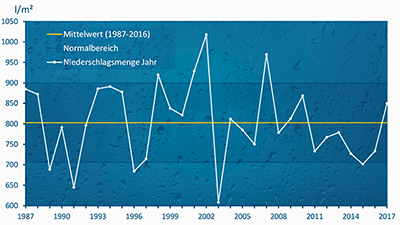 Auch weltweit ist nach den Daten der NOAA und des NCDC keine
Trockenheit zu verzeichnen.
Auch weltweit ist nach den Daten der NOAA und des NCDC keine
Trockenheit zu verzeichnen.
Mehr noch, die Jahre sind regenreicher geworden.
Man vergleiche heute mit der Situation um 1900.
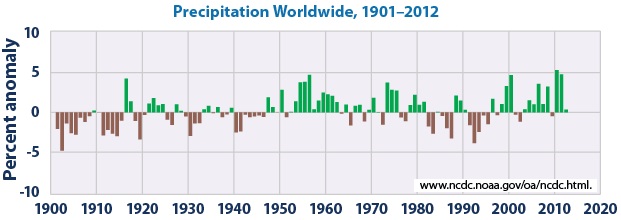
Ergebnis:
Das Desinformationsfernsehen ZDF und deren Wetterfrösche versuchen eine Hype zu schüren, den Menschen Angst einzujagen, ohne jegliche Grundlage.
Hier wird ganz offensichtlich Propaganda für bestimmte politische Richtungen betrieben.
Doch dazu im nächsten Teil mehr. Denn bei anderen Themen, wie dem Diesel, wird genauso vorgegangen.
↑ Sommerhitze 2018
-
Basler Zeitung / Martin A. Senn
2018-08-16 de Wenn das Denken baden gehtIm Zuge der Klima-Hysterie ist zu befürchten, dass noch vor den Gletschern das menschliche Denken den Hitzetod stirbt.
Bei 23 Grad Celsius, habe ich gelesen, sei die Denkfähigkeit der Leute am besten, dann nehme sie ziemlich rasch ab, und ab 27 Grad sacke sie regelrecht zusammen.
Nun ist es mit Studien zwar so eine Sache, aber diese liess sich ja in den letzten Wochen quasi in Echtzeit verifizieren.
Und was der Hitzesommer an intellektuellen Sonderleistungen hervorgebracht hat, schien den Befund der Studie glasklar zu belegen, ja es nährte gar die Befürchtung, dass noch vor den Gletschern das menschliche Denken den Hitzetod sterben könnte.
de Aus der Panik-Küche en From the panic laboratory fr De la marmite des alarmistes
-
ntv
2018-07-30 de "Bestätigt" den Klimawandel: Für Latif ist Sommerhitze "außergewöhnlich"Mehr als 30 Grad und das seit Tagen:
Deutschland ächzt unter einer Hitzeperiode.
Für den Wissenschaftler und Klimaforscher Mojib Latif ist sie erst der Anfang: "Wir erleben immer mehr Hitzetage mit 30 Grad oder mehr."Die derzeitige Hitzewelle ist nach Auffassung des Wissenschaftlers Mojib Latif "außergewöhnlich, weil sie schon so lange anhält".
Es bestätige sich "mehr und mehr, was wir Klimaforscher lange vorausgesagt haben",
und zwar mit Blick auf den Klimawandel in Deutschland,
sagte der Meteorologe und Professor am Kieler Helmholtz-Zentrum für Ozeanforschung der "Passauer Neuen Presse"."Seit Beginn der Messungen hat sich die durchschnittliche Temperatur um 1,4 Grad erhöht.
Das ist mehr als im globalen Durchschnitt", erklärte Latif.
"Die Sommerhitze nimmt zu.
Wir erleben immer mehr Hitzetage mit 30 Grad oder mehr. Zugleich nimmt die Zahl der Tropennächte zu, in denen die Temperatur nicht mehr unter 20 Grad fällt."
Zugleich nehme die Zahl der Frosttage in Deutschland immer weiter ab.
"Das ist ein offensichtlicher Trend."
Kurzfristig lasse sich diese Entwicklung nicht aufhalten, sagte der Kieler Klimaforscher und betonte: "Die internationale Politik tut zu wenig, steuert nicht konsequent um. Der weltweite CO2-Ausstoß steigt immer weiter an, die Erderwärmung nimmt immer weiter zu."
Auch die Bundesregierung tue "zu wenig und wird ihrer Verantwortung nicht gerecht".
So habe beispielsweise die Automobilindustrie "die Selbstverpflichtungen zum Klimaschutz und zum Schadstoffausstoß nie eingehalten".
Latif bedauerte: "Diese kurzfristigen wirtschaftlichen Interessen dominieren die langfristigen Interessen der Umwelt und des Landes.
Je länger wir zögern und nichts tun, desto gefährlicher wird es."
▶Prognosen von Prof. Mojib Latif
▶
Rückkehr der Sintflut: Schellnhuber, Latif, Rahmstorff
| Mojib Latif |
Dr. rer. nat.,
Professor für Meteorologie am Leibniz-Institut für
Meereswissenschaften (IFM-GEOMAR) an der Universität Kiel.
▶Mojib Latif: Who is who (Aktivisten der anthropogenen Erwärmung) |
de Aus der Panik-Küche en From the panic laboratory fr De la marmite des alarmistes
-
Die kalte Sonne (Fritz Vahrenholt & Sebastian Lüning)
2018-08-15 de Dürregeschichte Mitteleuropas: Klimaforscher Christian Pfister mit unerklärlichen GedächtnislückenAm 2. August 2018 brachte SRF ein längeres Radiointerview mit dem bekannten Berner Klima-Historiker Christian Pfister zur diesjährigen langen Dürreperiode in Mitteleuropa.
Pfister bezeichnet das Dürrejahr 1540 als Ausreißer, während die Dürre 2018 die zukünftige Norm darstellen könnte.
Eine steile These.
Zumal sie dem widerspricht, was der heute emeritierte Klimahistoriker Pfister noch im Jahr 2000 selber feststellte (pdf hier).
Dürresommer im Schweizer Mittelland seit 1525
Eine seltsame Gedächtnislücke.
Im Fazit der Arbeit lesen wir doch tatsächlich, dass beim Vergleich des Zeitraums von 1525 bis 2000 die häufigsten Dürren in Mitteleuropa während des Maunder-Minimum im 17. Jahrhundert auftraten und am wenigsten im 20. Jahrhundert:
...
Schussfolgerung
Man reibt sich verwundert die Augen.
Was passiert hier genau?
Will oder kann sich Pfister nicht mehr erinnern?
War alles falsch, was er früher gemacht hat?
Steht er lieber auf der Seite der vermeintlich Guten und verbiegt zu diesem Zweck sogar die Realitäten?
| SRF |
Schweizer Radio und Fernsehen
▶SRF: Who is who (Medien der Globalen Erwärmung) |
| de | en | fr |
|---|---|---|
|
Wetterphänomene Dürreperioden |
Weather phenomena Periods of Droughts |
Phénomènes météorologiques Periodes de sécheresses |
| de | en | fr |
|---|---|---|
|
Wetterphänomene Hitzewellen |
Weather phenomena Heat Waves |
Phénomènes météorologiques Canicules |
de Aus der Panik-Küche en From the panic laboratory fr De la marmite des alarmistes
-
Tages-Anzeiger / Linus Schöpfer Redaktor Kultur
2018-08-11 de Wissenschaft vs. SVP«Von der Realität überholt», «schlicht falsch»: Klimaforscher kritisieren das Umweltprogramm der Volkspartei scharf.
Knutti bemängelt faktische Fehler.
Etwa die Aussage der SVP, seit 2005 habe es abgekühlt. Dieser «Mythos der Klimapause» sei schon lange widerlegt.
Die Behauptung, «dass in diesem Jahrhundert keine Klimaerwärmung stattgefunden und das Meer sich sogar abgekühlt hat», sei, so der ETH-Wissenschaftler, «schlicht falsch».
Knutti verweist auf den Stand der Forschung. Diesem zufolge sei der Mensch mit einer Wahrscheinlichkeit «von mehr als 95 Prozent der Hauptverursacher der globalen Erwärmung seit 1950».
Und die SVP?
Das Generalsekretariat erklärt, man überarbeite derzeit das Parteiprogramm, somit auch die klimapolitischen Positionen.
Deshalb wolle man die Beanstandungen der Forscher nicht kommentieren.
Der Clinch zwischen Wissenschaft und Volkspartei dürfte jedenfalls weiterbestehen:
Mit «Überraschungen» sei im neuen Papier nicht zu rechnen, so das Sekretariat.
| Reto Knutti |
Professor, Dr., Institut für Atmosphäre und Klima, ETH Zürich
Er erforscht den Einfluss des Menschen auf das Klimasystem.
Er ist Hauptautor des Berichts des Uno-Klimarats IPCC, der
2013 erschien.
▶Reto Knutti: Who is who (Anthropogene Globale Erwärmung) ▶Reto Knutti: Wikipedia (Profiteure) |
| de | en | fr |
|---|---|---|
| Neuste Informationen über den Klimawandel | News on Climate Change | Nouvelles informations sur le changement climatique |
| Die Erwärmungspause | The Hiatus | La pause du réchauffement climatique |
▶
SVP Schweiz: Für eine Klimapolitik mit Augenmass
L'UDC demande le retour à la raison en politique climatique
| TA |
Tages-Anzeiger
▶Tages-Anzeiger (Presse) ▶TA: Who is who (Medien der Globalen Erwärmung) |
de Aus der Panik-Küche en From the panic laboratory fr De la marmite des alarmistes
-
2018-08-14 de
Harald Lesch bei Markus Lanz, 14.08.2018
-
EIKE Europäisches Institut für Klima und Energie
Stefan Kämpfe
2018-08-17 de Die Irrungen und Halbwahrheiten des ZDF-Fernsehprofessors Harald Lesch - eine Richtigstellung aus meteorologischer SichtDas am 14.08.2018 gesendete Interview von Herrn Lesch enthielt aus meteorologischer Sicht zahlreiche Irrungen und Halbwahrheiten, welche einer Klarstellung bedürfen.
Es wird nur auf die schlimmsten Fehler eingegangen; die Aussagen des Herrn Lesch sind sinngemäß wiedergegeben.
"Noch nie gab es im Sommer Brände diesen Ausmaßes in Deutschland, wie im Sommer 2018".
Das ist falsch- Ältere erinnern sich vielleicht an die verheerenden Brände in der Lüneburger Heide im Dürre-Sommer 1975.
Es brannten etwa 8.000 Hektar Wald. Näheres dazu hier bei Wikipedia.
Und sommerliche Dürren gab es schon immer.
Ältere erinnern sich sicher noch an 1911, 1947, 1959, 1975, 1976 und 1982.
Im Sommer 1969 blieb der Regen in Südschweden zwei Monate gänzlich aus.
Starkregen
"Das Wort Starkregen gibt es im Deutschen noch nicht lange.
90-jährige können sich an so was gar nicht erinnern."Da hätte ein Blick in ältere Aufzeichnungen gewiss geholfen - schwerste Sommer-Überschwemmungen in Deutschland gab es beispielsweise im Juli 1954.
Und auch lokale Ereignisse durch Unwetter traten leider immer wieder auf, so in Bruchstedt/Thüringen 1950, Näheres dazu hier.
Auch in früheren Jahrhunderten traten sie auf, und zwar viel schlimmer als die 2018er Ereignisse, man denke nur an die "Thüringer Sintflut" von Ende Mai 1613 hier und die vermutlich schwerste Naturkatastrophe Deutschlands, das Sommerhochwasser von 1342 hier.
"Wenn die Winter immer trockenen werden... dann bleibt das Grundwasser zu niedrig... ."
Der Langfristtrend der DWD-Niederschlagswerte (Flächenmittel Deutschland) zeigt eindeutig das Gegenteil - unsere Winter werden feuchter:
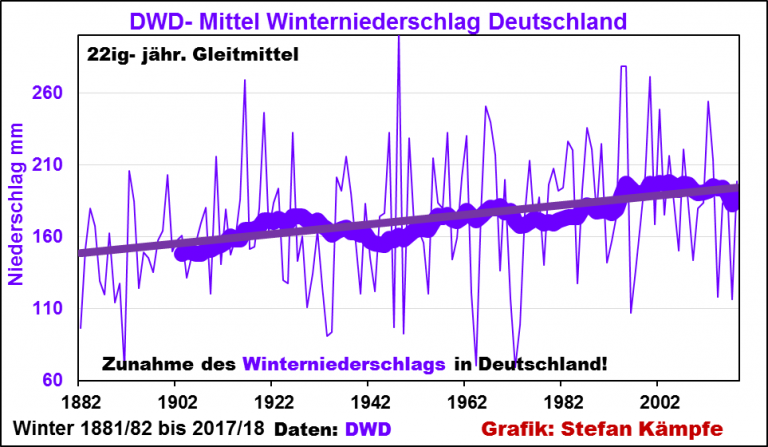
"Je wärmer die Arktis wird, desto instabiler wird der Jetstream... .
Dadurch kommt es unter anderem zu heißeren, extremeren Sommern."Das ist eine der ganz wenigen Aussagen des Herrn Lesch mit einem gewissen Wahrheitsgehalt.
Allerdings fehlen auch hierfür eindeutige Beweise, denn der Jetstream wird auch sehr stark von anderen Faktoren, wie etwa der Sonnenaktivität oder Vulkanausbrüchen, beeinflusst.
Die Datenlage hierfür ist dünn; der Zonalwind über Deutschland in der Mittleren Troposphäre (500hPa), welcher zumindest ein grobes Maß für die Stärke der Westwind-Zirkulation über Deutschland ist, wehte seit Aufzeichnungsbeginn (1948) sogar stärker;
eigentlich müsste er bei schwindendem Arktiseis schwächer werden:
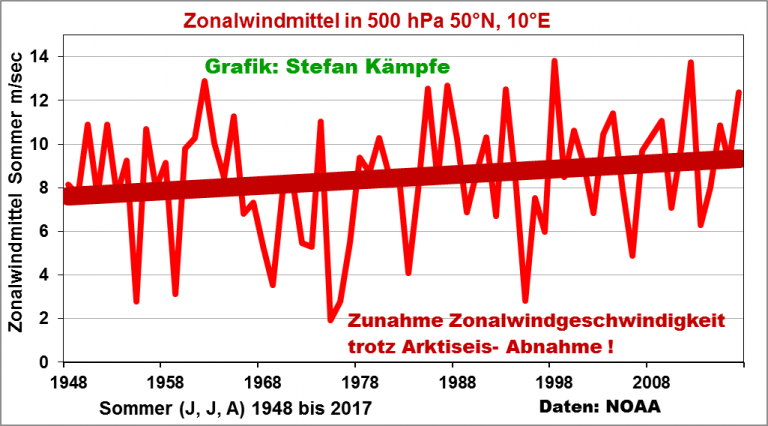
Auf der Nordhalbkugel ist es zurzeit ungewöhnlich heiß... ."
Es ist, gemessen am Langjährigen Mittel, im Juli auf der Nordhalbkugel um etwa 0,4 bis 0,5 Kelvin (entspricht 0,4 bis 0,5°C) zu warm gewesen
dramatisch ist das nicht, wie ein Vergleich mit dem Juli 1994 zeigt.
(Bildquellen: IRI International Research Institute, siehe Artikel)
Und dass es im März 2018 in großen Regionen der Nordhalbkugel markant zu kalt war, erwähnt Herr Lesch lieber nicht;
auch hierzu die Karte im Artikel (Die Anomalien beziehen sich bei allen 3 Abbildungen auf die Mittelwerte der Normalperiode 1971 bis 2000):
"Die Nutzung der Windenergie ist noch lange nicht ausgeschöpft... ."
Das könnte falsch sein.
Untersuchungen zeigen, dass der Wind in Deutschland bereits schwächer wird;
hier eine Untersuchung mit DWD-Beaufort-Werten aus Norddeutschland:

Zum Abschluss ein Wort zu den Äußerungen über den Hurrikan OPHELIA.
Dass Hurrikane statt zur Karibik Richtung Europa ziehen; kommt immer mal wieder gelegentlich vor; wer alte Wetterkarten sichtet, wird fündig.
Eine "Hitzewelle", wie in dem Interview behauptet, löste OHELIA zumindest in Deutschland nicht aus - denn es war schon Oktober.
(Über den Lebenszyklus des Hurrikans OPHELIA gibt es hier beim EIKE eine gute Dokumentation).
Und dass es da noch mal so um 25 Grad warm wurde, hatte mit der großräumigen Zirkulation zu tun - übrigens kann es immer mal bei uns im Oktober nochmals sommerlich warm werden -
wer sucht, wird beispielsweise 2001, 1995 und 1985 fündig.
Und gibt es immer mehr schwere Wirbelstürme?
Die letzte Grafik zeigt keine Zunahme:
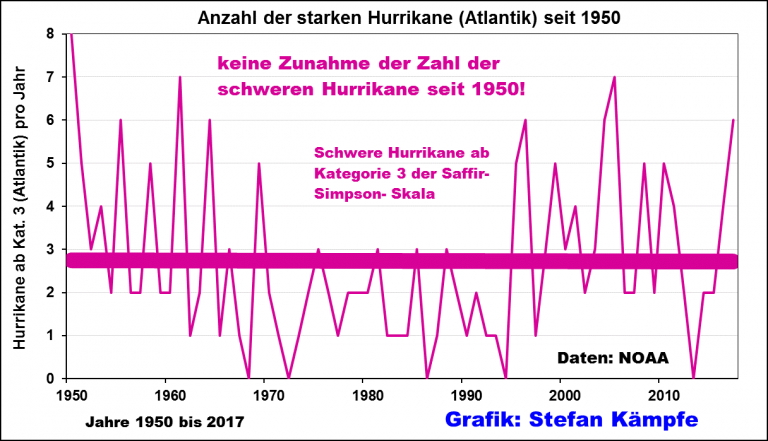
Übrigens - nach der intensiven 2017er Hurrikan-Saison wird eine sehr schwache 2018er Saison erwartet -
Grund sind unter anderem negative Wassertemperaturen im tropischen Nordatlantik.
Wieder einmal zeigt sich: ZDF bedeutet "Zwangsgebührenfinanzierte, desinformierende Falschmelder"
armes Deutschland, wenn Du dafür auch noch Gebühren zahlen musst.
| ZDF |
Zweites Deutsches Fernsehen
▶ZDF: Who is who (Medien der Globalen Erwärmung) |
▶
Harald Lesch: Übrigens zur Klimakatastrophe
| Harald Lesch |
Astrophysiker, Naturphilosoph, Wissenschaftsjournalist, Fernsehmoderator, Professor für Physik an der LMU München Lehrbeauftragter für Naturphilosophie an der Hochschule für Philosophie München. ▶Harald Lesch: Who is who (Aktivist der anthropogenen Globalen Erwärmung) ▶Harald Lesch: Wikipedia (Profiteure) |
de Fakten en Facts fr Faits
-
EIKE Europäisches Institut für Klima und Energie
Stefan Kämpfe
2018-08-01 de Juli 2018 in Deutschland - kein neuer RekordmonatAuch wenn dieser Juli 2018 vielen rekordverdächtig vorkam - er schaffte es nicht, den bisherigen Rekordhalter von 2006 auch nur annähernd zu gefährden.
Der Titel des "Vizemeisters" bleibt weiterhin dem 1994er Juli erhalten; Platz 3 belegt der Juli 1983.
Dieser Juli war speziell im letzten Monatsdrittel von Hitzewellen geprägt, weil es Ableger des Azorenhochs immer wieder schafften, sich nach Mittel- und Nordeuropa auszubreiten;
zeitweise entwickelten sich daraus kräftige Skandinavien-Hochs.
Dieser Umstand erklärt auch, warum es in diesem Monat, trotz meist positiver NAO- Werte, kaum feucht-kühles "Westwetter" gab.
Enge "Verzahnung" von Sonnenscheindauer und Temperatur.
Sonnige Juli- Monate sind stets warm;
die Sonnenscheindauer vermag mehr als 70% der Temperaturvariabilität seit 1951 zu erklären;
in keinem anderen Monat besteht ein derart enger Zusammenhang.
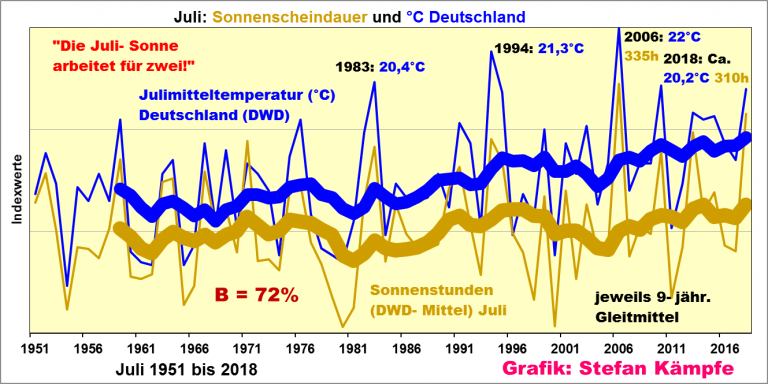
Zusammenfassung
Der 2018er Juli war dank einer hohen Sonnenscheindauer und vieler Hochdruckwetterlagen sehr warm, ohne es unter die drei wärmsten Juli-Monate in Deutschland seit Aufzeichnungsbeginn zu schaffen.
Auch langfristig lässt sich nahezu die gesamte Juli- Erwärmung in Deutschland mit geänderten Großwetterlagenhäufigkeiten und einer längeren Sonnenscheindauer erklären; hinzu kommen wachsende Wärmeinseleffekte, auf welche hier nicht näher eingegangen wird.
| EIKE |
Europäisches Institut für Klima und Energie European Institute for Climate and Energy ▶EIKE: Who is who (Skeptische Institute & Organisationen) ▶EIKE: Wikipedia (Opfer) ▶EIKE: Webseiten (Deutsch) |
-
Die kalte Sonne (Fritz Vahrenholt & Sebastian Lüning)
2018-08-11 de Deutschland hat kein Hitzeproblem - sondern ein HysterieproblemDie Hitzewelle ist in den meisten Teilen Deutschlands jetzt erstmal abgehakt.
Es war ein wahres Fest für alle Aktivisten.
Bei allem Warnen, Drohen und Qungeln vergaßen sie doch glatt, dass Klima das durchschnittliche Wetter von 30 Jahren ist.
Das war nun plötzlich ganz egal.
Es war heiß, da wollte man sich mit diesem dummen Ballast nicht mehr abgeben:
Die Hitze sei ein Vorbote der Hölle, in die alle Klimaalarm-Ungläubigen schnellstmöglich gelangen, wenn sie nicht die Forderungen der Klima-Gottheiten umgehend erfüllen.
Sonst drohe der Weltuntergang.
Zum Glück gab es in der Berichterstattung auch wenige Ausnahmen.
Zum eine wäre da Jörg Kachelmann am 3. August 2018 bei den t-online-Nachrichten:
Kachelmanns Donnerwetter: Kein Sommermärchen
Deutschland hat Angst vorm Klimawandel - und vor Ventilatoren.
Während im Winter die nächste Klimakatastrophe droht, tut die Regierung nichts.
Weil sie die vielen "Dummen" nicht verprellen will.
Manchmal bestimmt Mesut Özil nicht nur die Medienagenda für ein paar Tage, sondern für einen Sommer.
Natürlich nicht er alleine, sondern "Die Mannschaft".
Man kann das wunderbar vergleichen mit 2006.
Damals war der Juli noch mal zwei Grad wärmer als der Juli 2018, also noch mal 50 Prozent weiter über dem Durchschnitt,
aber das, was de facto viel schlimmer war als heute, war damals keine böse Hitzewelle, die alles kaputtmachte, sondern ein WM-Sommertraum oder meist das legendäre "Sommermärchen".
Der zweite Lichtblick zum Thema stammt von Torsten Krauel, der am 8. August 2018 in der Welt schrieb:
Deutschland hat kein Hitzeproblem - sondern ein Hysterieproblem
Sahara-Sommer?
Esst vegan, oder es kommt der Weltuntergang?
Von wegen.
Heiße Sommer hat es viele gegeben, regnerisch-kühle genauso. Deutschland hat kein Hitzeproblem, das zeigt ein Blick in die Vergangenheit.Deutscher Saharasommer 2018!
Glühende Landschaften!
Wer so etwa schreibt, war nie in der Sahara.36 Grad bei nur 55 oder 60 Prozent Luftfeuchtigkeit?
Das wäre in etlichen Weltregionen ein angenehm trockener Erholungstag.Um die 40 Grad bei 95 Prozent Luftfeuchte sind in weiten Teilen Chinas die Regel.
Weiterlesen in der Welt: Deutschland hat kein Hitzeproblem -
sondern ein Hysterieproblem
Danke Herr Kachelmann, Danke Herr Krauel.
Sie sprechen das aus, was viele nur insgeheim denken.
Es ist wichtig, dass man in dieser politisierten Materie mitdenkt und sein Meinung kundtut, ansonsten glaubt die Alarmfraktion, die Nation prächtig geleimt zu haben.
| Die kalte Sonne | Die kalte Sonne (Fritz Vahrenholt & Sebastian Lüning) |
Positionspapier der SVP 2009:
Für eine Klimapolitik mit Augenmass
fr
Document de fond de l'UDC Suisse 2009:
Retour au bon sens en politique climatique
-
de
Für eine Klimapolitik mit Augenmass
Aus der Zusammenfassung:
Seit jeher ist das Klima auf der Erde Veränderungen unterworfen.
Heute gemessene Entwicklungen stellen daher keine neue Erscheinung dar.Im Verlauf des 20. Jahrhunderts sind die weltweiten Durchschnittstemperaturen um ungefähr 0.6 °C angestiegen.
Seit dem Jahr 1998 hat es weltweit keine Erwärmung mehr gegeben, seit 2005 kühlte es gar ab. In der Arktis, wo heutzutage das Schmelzen gewisser Eisgebiete mit grossem Medienspektakel verfolgt wird, hat bereits zwischen 1925 und 1945 eine ähnlich warme Periode wie heute geherrscht.
Auch in der Schweiz wurde das bisher wärmste Jahr 1994 seit nunmehr über einem Jahrzehnt nicht mehr übertroffen.
Man kann somit keinesfalls von einem kontinuierlichen, starken Anstieg der Temperaturen sprechen.
Die SVP fordert:
-
Das Kyoto-Protokoll regelt die weltweiten Bemühungen zur Senkung des CO2- Ausstosses bis zum Jahr 2010.
Nimmt man die volle Periode hinzu, welche für das Erreichen des Ziels massgebend ist, entfaltet das Kyoto-Protokoll bis spätestens 2012 Wirkung.
Das CO2-Gesetz dient der nationalen Umsetzung des Kyoto-Protokolls.
Es macht keinen Sinn, dass die Schweiz ohne internationale Abstützung dieses Gesetz weiterhin behält.
Wie oben dargelegt, ist die Schweiz nur für 0.1 % der weltweiten menschengemachten CO2-Emissionen verantwortlich und allein der jährliche Anstieg der chinesischen Emissionen übersteigt die schweizerischen Emissionen um ein Vielfaches.
In dieser Situation ist es absolut widersinnig, ohne internationale Abstützung weitere Reduktionsbemühungen zu unternehmen.
Das CO2-Gesetz ist deshalb per Ende 2010, spätestens per Ende 2012 aufzuheben.
Entsprechend ist auf die Erhebung der CO2-Abgabe nach 2010 bzw. 2012 zu verzichten.
-
Entsprechend der baldigen Beendigung der Fristen des Kyoto-Prozesses darf keine Teilzweckbindung eingeführt werden. Dies würde neue Abhängigkeiten schaffen und die bei einer Subventionierung üblichen Marktverzerrungen hervorrufen.
Gerade in der aktuellen Situation einer sich anbahnenden Wirtschaftskrise wäre es genau das Falsche, den Steuerzahlern noch mehr Geld aus der Tasche zu ziehen und die Kaufkraft von Privathaushalten und Unternehmungen zu schwächen.
Die SVP fordert, dass das Versprechen von Bundesrat und Parlament, die Erträge der CO2-Abgabe den Steuerzahlern zurückzuerstatten, auch wirklich eingehalten wird.
-
Das Versprechen, die CO2-Abgabe staatsquotenneutral zu realisieren, wurde bereits durch die Unterstellung dieser Abgabe unter die Mehrwertsteuerpflicht gebrochen.
Die CO2-Abgabe ist umgehend von der Mehrwertsteuer zu befreien.
Die jährlich 18 Millionen Franken, welche den Steuerzahlern damit aus der Tasche gezogen werden, sind zurückzuerstatten.
-
SVP - Schweizerische Volkspartei
Pressekonferenz vom 24. Februar 2009
Ideologie und Angstmacherei prägt nach wie vor die Klimadiskussion.
Wie damals beim Waldsterben überbieten sich Politiker von Links bis Rechts mit oftmals realitätsfremden Forderungen zu staatlichen Umverteilungs- und Fördermassnahmen.
Die SVP fordert eine Rückkehr zur Vernunft.
Ein neues internationales Klima-Abkommen darf es nur geben, wenn alle Länder mit grossem CO2-Ausstoss an Bord sind.
Die SVP erhebt folgende klimapolitischen Forderungen:
-
Aufhebung des CO2-Gesetzes zum Zeitpunkt der Beendigung der vom Kyoto-Protokoll geregelten Periode (2010, spätestens 2012).
-
Bis dahin Beibehaltung der vollständigen Rückgabe der CO2-Abgabe an die Steuerzahler und Verzicht auf die Einführung einer Teilzweckbindung.
-
Keine Beteiligung der Schweiz an einem Nachfolge-Protokoll, wenn sich nicht sämtliche Grossemittenten zu Begrenzungen verpflichten.
-
Keine nationale Regelung, welche weitergeht als die internationalen Verpflichtungen.
SVP - Schweizerische Volkspartei
Videos vom 25. Februar 2009
-
2009-02-25 de
SVP fordert Klimapolitik mit Augenmass
-
2009-02-25 fr
L'UDC demande le retour à la raison en politique climatique
Ideologie und Angstmacherei prägt nach wie vor die Klimadiskussion.
Wie damals beim Waldsterben überbieten sich Politiker von Links bis Rechts mit oftmals realitätsfremden Forderungen zu staatlichen Umverteilungs- und Fördermassnahmen.
Die SVP fordert eine Rückkehr zur Vernunft.
Ein neues internationales Klima-Abkommen darf es nur geben, wenn alle Länder mit grossem CO2-Ausstoss an Bord sind.
▶
SVP Schweiz: Für eine Klimapolitik mit Augenmass
L'UDC demande le retour à la raison en politique climatique
| SVP / UDC |
SVP - Schweizerische Volkspartei SVP - Swiss People's Party UDC - Union démocratique du centre |
NZZ: Trinkwasser ist im Kanton Zürich
Trotz Trockenheit wäre es gar nicht nötig, Wasser zu sparen
-
NZZ Neue Zürcher Zeitung / Jan Hudec
2018-08-07 de Trotz Trockenheit wäre es gar nicht nötig, Wasser zu sparenTrinkwasser ist im Kanton Zürich trotz Trockenheit in Hülle und Fülle vorhanden - man muss es nur richtig verteilen.
Dafür sorgt der kantonale Trinkwasserverbund.
Doch noch sind nicht alle Gemeinden an das Netz angeschlossen.
100 Schwimmbecken pro Tag
Rund 380 Millionen Liter Trinkwasser, also der Inhalt von 100 Olympia-Schwimmbecken, werden im Kanton Zürich täglich verbraucht -
pro Person entspricht dies über 250 Litern.
An Spitzentagen kann der Verbrauch aber bis auf über 600 Millionen Liter ansteigen.
Das System ist damit bei weitem nicht ausgereizt.
Mit den 700 Reservoirs im Kanton können pro Tag 800 Millionen Liter bereitgestellt werden.
Es handelt sich also eher um ein Verteil- als ein Mengenproblem, denn nicht alle Regionen sind gleichermassen mit grossen Wasservorkommen gesegnet.
| de | en | fr |
|---|---|---|
| Wasser, Land, Nahrung Wasser |
Water, Land, Food Water |
Eau, terre, nourrit Eau |
| Wassermangel | ||
-
Zürichsee-Zeitung / Martin Steinegger
2015-05-08 de Der Tag, an dem es einen ganzen Zürichsee regneteWie viel Wasser kann es in der Schweiz an einem Tag regnen?
Meteoschweiz gibt in einem aktuellen Blogbeitrag dazu die Antwort:
Einmal den ganzen Zürichsee.Der regenreichste Tag seit 1961 war der 7. August 1978.
An diesem Tag fielen gemäss der Berechnung von Meteoschweiz 3,6 km3 (Kubikkilometer) Wasser.
Das entspricht 3,6 Milliarden Kubikmeter. Oder anders umgerechnet:
es entspricht ziemlich genau dem Wasservolumen des Zürichsees, der etwa 3,9 Kubikkilometer fasst.Güterzug, 16-Mal um die Erde gewickelt
In der Schweiz kann es also an einem Tag einen ganzen Zürichsee regnen. Meteoschweiz bietet dazu eine anschauliche Umrechnung:
Würde man diese Wassermenge auf Kesselwagen der SBB verteilen, die 85000 Liter fassen und gut 15 Meter lang sind, benötigte man rund 42 Millionen Wagen.Aneinandergereiht würden diese einen 640000 Kilometer langen Zug bilden.
Diesen könnte man 16-Mal um die Erde «wickeln».
Auf Rang zwei der niederschlagsreichsten Tage folgen übrigens der 21. Dezember 1991 und der 8. August 2007.
An diesen beiden Tagen fielen aber gemäss Meteoschweiz deutlich geringere Wassermengen.
Oder anders ausgedrückte: es regnete keinen ganzen Zürichsee - sondern eher einen Walensee.
| de | en | fr |
|---|---|---|
|
Wetterphänomene Wassermenge |
Weather phenomena Water amount |
Phénomènes météorologiques Débit d'eau |
Prof. Dr. Werner Kirstein sagt Claus Kleber die Meinung
-
Prof. Dr. Werner Kirstein
2018-08-06 de
Klimatologe sagt Claus Kleber die Meinung
Der Klimatologe und Physiker Prof. Dr. Werner Kirstein richtete am 04.08.2018 eine Mail an Claus Kleber vom 'heute-journal' im Zweiten, bzgl. des Beitrages
"Trockener Sommer: Woher kommt die Hitze?"
in der heute-journal-Sendung vom 03.08.2018.
Hier nach besagtem Beitrag aus der Sendung, verlesen.
Sehr aufschlussreich.
Quelle/Source:
-
EIKE Europäisches Institut für Klima und Energie
2018-08-07 de Dr. Claus Kleber (ZDF heute Journal 3.8.18): ".. sich die Atmophäre 'grundstürzend' ändert!"Am 3.8.18 brachte das ZDF im heute Journal angekündigt von seinem Moderator, dem bekannten Klimakatastrophenprediger und Sachbuchautor in nämlicher Sache, Dr. Claus Kleber einen Beitrag zur Hitzeperiode dieses Sommers.
Der Physiker und Klimatologe Prof. Dr. Werner Kirstein fühlte sich bemüßigt, diese permanent wiederholte Klimaktastrophenmeldung, diesmal
sogar als mögliche "grundstürzenden" Änderung der Atmosphäre angekündigt
zu widerlegen mehr Objektivität und Sachlichkeit anzumahnen. Wohl wissend, dass diese beiden Begriffe für das ZDF und Claus Kleber lästige Fremdworte sind.
Schauen und lesen Sie selbst
▶
Prof. Dr. Werner Kirstein: Erdklima vs. Klimapolitik
| Werner Kirstein |
Prof. Dr.
▶Werner Kirstein: Who is who (Skeptiker) ▶Werner Kirstein: Video (Präsentationen) ▶Ausschluss und Maulkorb für Kritiker (Uni Leipzig (Dekan Prof. Dr. Haase) ⬌ Prof. Dr. W. Kirstein) |
| ZDF |
Zweites Deutsches Fernsehen
▶ZDF: Who is who (Medien der Globalen Erwärmung) |
de
Die jahrelange beispiellose Hitze- und Dürreperiode in Europa um 1540
en
The year-long unprecedented European heat and drought of 1540
-
EIKE Europäisches Institut für Klima und Energie
Oliver Wetter, Christian Pfister, Johannes P. Werner, Eduardo Zorita und weitere
2018-08-04 de Die jahrelange beispiellose Hitze- und Dürreperiode in Europa um 1540 - ein Worst CaseAbstract
Die Hitzewellen der Jahre 2003 in Westeuropa und 2010 in Russland, welche allgemein als seltene klimatische Anomalien außerhalb bisheriger Erfahrungen apostrophiert werden, werden oftmals als Warnungen vor noch häufigeren Extremen in einer von der globalen Erwärmung beeinflussten Zukunft herangezogen.
Eine neue Rekonstruktion der Temperaturen in Westeuropa im Frühjahr und Sommer zeigt jedoch, dass es im Jahre 1540 signifikant höhere Temperaturen gegeben haben muss.
Um die Plausibilität dieses Ergebnisses zu überprüfen, untersuchten wir die Schwere der Dürre 1540, indem wir das Argument der bekannten Rückkopplung zwischen Austrocknung des Bodens und Temperatur untersuchten.
Quelle/Source:
-
Springer Nature
Oliver Wetter, Christian Pfister, Johannes P. Werner, Eduardo Zorita and others
2018-06-28 en The year-long unprecedented European heat and drought of 1540 - a worst caseAbstract
The heat waves of 2003 in Western Europe and 2010 in Russia, commonly labelled as rare climatic anomalies outside of previous experience, are often taken as harbingers of more frequent extremes in the global warming-influenced future.
However, a recent reconstruction of spring-summer temperatures for WE resulted in the likelihood of significantly higher temperatures in 1540.
In order to check the plausibility of this result we investigated the severity of the 1540 drought by putting forward the argument of the known soil desiccation-temperature feedback.
Based on more than 300 first-hand documentary weather report sources originating from an area of 2 to 3 million km2, we show that Europe was affected by an unprecedented 11-month-long Megadrought.
The estimated number of precipitation days and precipitation amount for Central and Western Europe in 1540 is significantly lower than the 100-year minima of the instrumental measurement period for spring, summer and autumn.
This result is supported by independent documentary evidence about extremely low river flows and Europe-wide wild-, forest- and settlement fires.
We found that an event of this severity cannot be simulated by state-of-the-art climate models.
Wie ungewöhnlich ist die aktuelle Trockenperiode?
-
EIKE Europäisches Institut für Klima und Energie
Prof. Dr. Horst-Joachim Lüdecke
2018-08-08 de Wie ungewöhnlich ist die aktuelle Trockenperiode?Kaum spielt das Wetter wieder einmal Kapriolen, kreisen auch schon die Krähen des Untergangs über unseren Häuptern und fordern CO2-Buße.
Ein nüchterner Blick auf die Daten beweist dagegen nur Eines:
"Das Gewöhnliche am Wetter ist seine Ungewöhnlichkeit".
Summe der Niederschlagsmengen von Mai+Juni+Juli für Deutschland
und Mittelengland
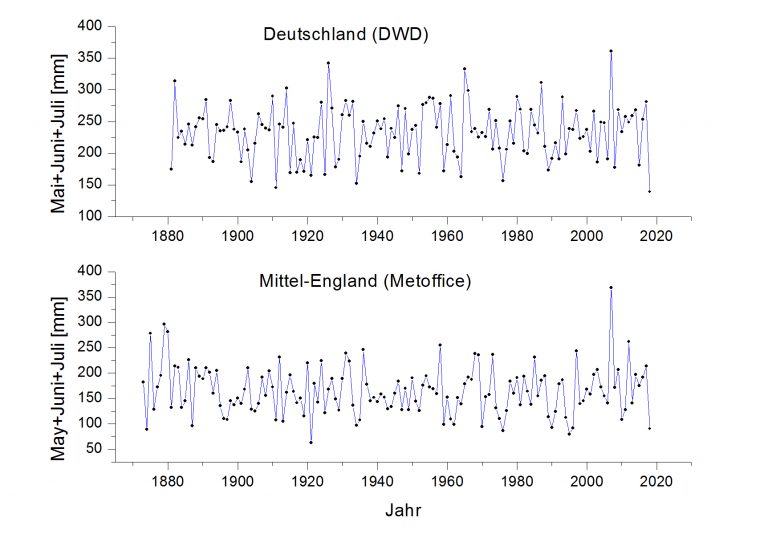
Was ist zu sehen?
Jedenfalls kein säkularer Trend, wie er seitens des IPCC durch den angestiegenen CO2-Gehalt in der Luft vermutet wird.
Wir sehen Wetterereignisse (zur Erinnerung: Klima ist definiert als der statistischen Mittelwert von Wetter über mindestens 30 Jahre).
Der Summenregenwert Mai+Juni+Juli von Deutschland in 2018 ist tatsächlich ein Wetterrekord, wenn auch nur knapp. Seine 139,4 mm Regensumme in 2018 unterbieten die 145,7 mm in 1911 nur geringfügig.
| de | en | fr |
|---|---|---|
|
Wetterphänomene Dürreperioden |
Weather phenomena Periods of Droughts |
Phénomènes météorologiques Periodes de sécheresses |
Es gibt keine "globale Hitzewellen"
-
EIKE Europäisches Institut für Klima und Energie
Michael Bastasch / Andreas Demmig
2018-08-04 de Es gibt keine "globale Hitzewellen""Globale Hitzewelle" ist ein nur Schlagwort, das in Überschriften verwendet wird
Was tatsächlich zutrifft, sind Hitzewellen, die gleichzeitig in verschiedenen Teilen der Welt auftreten.
"Globale Hitzewellen ist also weder ein wissenschaftlicher Begriff noch eine gute Beschreibung dessen, was passiert", sagt Cliff Mass, ein Klimawissenschaftler an der Universität von Washington.
In letzter Zeit Sie sind wahrscheinlich auf Schlagzeilen über die "globale Hitzewelle" gestoßen, die verheerende Schäden von Japan über Europa bis nach Nordafrika anrichtet.
Falls Sie den Begriff "globale Hitzewelle" zum ersten Mal hören, sind Sie damit nicht allein.
Das liegt daran, dass es sich um einen Begriff handelt, der in hanebüchenden Schlagzeilen verwendet wird, um die Aufmerksamkeit zu steigern.
"'Global Heat Wave' scheint ein neuer Begriff zu sein, den einige Leute in den Medien- und Klima-Lobbygruppen erfunden haben", sagte Cliff Mass, ein Klimawissenschaftler an der Universität von Washington, dem Daily Caller.
Der Juli scheint über einen Großteil der nördlichen Hemisphäre hinweg glühende Hitze zu haben, einschließlich Rekordhochs in Kalifornien und Kanada.
Dreistellige Wärmegrade (in Fahrenheit 100 F = 38°C) wurden mit Todesfällen in Japan in Verbindung gebracht und brutzelnde Temperaturen trugen zu massiven Waldbränden in Skandinavien bei - Es ist mal wieder richtig Sommer.
Aber der Begriff "globale Hitzewelle" weckt Bilder von Hitzeglocken, die den gesamten Planeten kochen.
Was gemeint ist, sind Hitzewellen, die gleichzeitig in verschiedenen Teilen der Welt auftreten.
"Hitzewellen sind zwangsläufig lokalisierte Angelegenheiten, die normalerweise mit anomal hohem Luftdruck verbunden sind", sagte Mass in einer E-Mail.
"Globale Hitzewellen sind also weder ein wissenschaftlicher Begriff noch eine gute Beschreibung dessen, was passiert ist."
Auch der Klimawissenschaftler des Cato-Instituts, Ryan Maue, kritisierte Schlagzeilen, in denen von einer "globalen Hitzewelle" die Rede ist und von Wissenschaftlern, die ihre Namen für solche haarstäubenden Behauptungen zur Verfügung stellen.
Abgesehen davon, dass es Winter in der südlichen Hemisphäre ist, bemerkte Maue,
dass die Temperatur der nördlichen Hemisphäre derzeit dem Durchschnitt der letzten 18 Jahre entspricht.
Er stellte außerdem fest,
dass die Landtemperaturen der nördlichen Hemisphäre derzeit insgesamt unter dem Normalwert lagen.
| de | en | fr |
|---|---|---|
|
Wetterphänomene Hitzewellen |
Weather phenomena Heat Waves |
Phénomènes météorologiques Canicules |
Schellnhuber-Evergreen: Und ewig kippt das Klima
-
EIKE Europäisches Institut für Klima und Energie
Dirk Maxeiner
2018-08-09 de Schellnhuber-Evergreen: Und ewig kippt das KlimaSeit vielen Jahren erfindet das PIK bis vor kurzem von Hans-Joachim Schellnhuber geleitet, neue Klima-Bedrohungen, in der nicht falschen Hoffnung dass die Medien diese verstärkend aufgreifen und so die hoch lukrative Klimafurcht-Politik weiter am Leben zu halten.
Dazu gehört auch seit einigen Jahren die durch nichts gestützte Hypothese, dass das "Weltklima" durch die menschlichen CO2 Emissionen zum "kippen" gebracht werden könne.
Natürlich ins dann unvermeidbare Elend. Weltuntergang à la Schellnhuber.
Bisher war dieser apokalyptischen Weissagung nicht viel mediale Aufmerksamkeit beschieden.
Das müsse sich nun ändern befand das rührige Meidienteam.
Motto: Lasse keine (und sei sie noch so dürftig) Krise ungenutzt.
Also flugs alten Wein in neue Schläuche gegossen und an die derzeitige Hitzewelle angehängt.
Die Journos werden schon den Rest erledigen.
Dirk Maxeiner berichtet die ganze Story
-
Süddeutsche Zeitung
2018-08-06 de Studie: Klimasystem könnte in Heißzeit kippende Aus der Panik-Küche en From the panic laboratory fr De la marmite des alarmistes
Die Gefahr einer Heißzeit kann aus Sicht von Klimaforschern selbst beim Einhalten des Pariser-Klimaabkommens nicht ausgeschlossen werden.
Dabei würde sich die Erde langfristig um etwa vier bis fünf Grad Celsius erwärmen und der Meeresspiegel um 10 bis 60 Meter ansteigen.
Das schreibt das Potsdam-Institut für Klimafolgenforschung (PIK).
Ein internationales Team von Wissenschaftlern diskutiert diese Möglichkeiten in den "Proceedings" der US-nationalen Akademie der Wissenschaften ("PNAS") und blickt dabei insbesondere auf Kippelemente im Klimasystem.
Dazu gehören laut Studie etwa die auftauenden Permafrostböden in Russland, die sich erwärmenden Methanhydrate auf dem Meeresboden und die großen Ökosysteme wie der Amazonas-Regenwald.
Sie könnten sich wie eine Reihe von Dominosteinen verhalten, sagte Mitautor Johan Rockström, Direktor des Stockholm Resilience Centre und designierter Ko-Direktor des PIK.
"Wird einer von ihnen gekippt, schiebt dieses Element die Erde auf einen weiteren Kipppunkt zu."
"Der Mensch hat als geologische Kraft bereits seine Spuren im Erdsystem hinterlassen", sagte Mitautor und PIK-Gründungsdirektor Hans Joachim Schellnhuber.
"Werden dadurch empfindliche Elemente des Erdsystems gekippt, könnte sich die Erwärmung durch Rückkoppelungseffekte selbst weiter verstärken.
Das Ergebnis wäre eine Welt, die anders ist, als alles, was wir kennen", ergänzte er.
"Die Forschung muss sich daran machen, dieses Risiko schnellstmöglich besser abzuschätzen."
Nach Angaben der Autoren könnte es schwieriger werden als bislang angenommen, die globale Erwärmung wie im Pariser Klimaabkommen vereinbart zwischen 1,5 und unter 2 Grad Celsius zu stoppen.
Man könne sich nicht darauf verlassen, dass das Erdsystem bei 2 Grad langfristig sicher "geparkt" werden könne, sagte Schellnhuber.
Derzeit ist die Erde im Durchschnitt bereits gut 1 Grad wärmer als noch vor Beginn der Industrialisierung.
Selbst bei vorläufiger Begrenzung der menschengemachten Erderwärmung auf maximal 2 Grad könnten kritische Prozesse im Klimasystem angestoßen werden, die eine noch stärkere Erwärmung - auch ohne weiteres menschliches Zutun - bewirken, erläuterte Erstautor Will Steffen von der Australian National University (ANU) und dem Stockholm Resilience Centre (SRC).
Nach PIK-Angaben könnte das bedeuten, dass sich der Klimawandel dann selbst verstärkt - "auf lange Sicht, über Jahrhunderte und vielleicht Jahrtausende".
Kippelemente im Erdsystem seien mit schweren Felsbrocken am Strand vergleichbar, erläuterte Schellnhuber.
Würden diese langsam, aber unaufhörlich unterspült, könnte irgendwann schon die Landung einer Fliege an einer neuralgischen Stelle ausreichen, um die Brocken kippen zu lassen.
"Wir weisen in unserem Artikel darauf hin, dass es im planetarischen System bereits derart unterspülte Felsbrocken gibt, die wir als Kippelemente bezeichnen.
Ist die Erderwärmung weit genug fortgeschritten, reicht vielleicht schon eine kleine Veränderung aus, um diese Elemente in einen ganz anderen Zustand zu stoßen."
In Teilen der Westantarktis seien bereits einige Kipppunkte überschritten worden. "Der Verlust des Eises in einigen Regionen könnte dort schon ein weiteres, noch umfangreicheres Abschmelzen über lange Zeiträume vorprogrammiert haben", sagte Schellnhuber.
Und der Kollaps des grönländischen Eisschildes könnte bereits bei einer Temperaturerhöhung um 2 Grad einsetzen.
"Die roten Linien für einige der Kippelemente liegen wohl genau im Pariser Korridor zwischen 1,5 und 2 Grad Erwärmung."
| de | en | fr |
|---|---|---|
|
Klima: Fragen Klima-Kipp-Punkte |
Climate: Questions Climate Tipping Points |
Climat: Questions Points de non retour dans le climat |
|
Hans-Joachim Schellnhuber *1950-06-07 |
Professor, Bis September 2018 war er Direktor des 1992 von ihm gegründeten Potsdam-Instituts für Klimafolgenforschung (PIK) ▶Hans-Joachim Schellnhuber: Who is who (Aktivisten der anthropogenen Erwärmung) |
| SZ |
Süddeutsche Zeitung
▶SZ: Who is who (Medien der Globalen Erwärmung) |
de
'Heiß-Haus Erde': Extrem fragwürdig
en
Hothouse Earth: It's extremely dodgy
-
EIKE Europäisches Institut für Klima und Energie
Dr. David Whitehouse, GWPF Science Editor / Chris Frey
2018-08-09 de 'Heiß-Haus Erde': Extrem fragwürdigKeine neue Wissenschaft, kein neues Szenario und folglich kein neuer Grund für Panik.
Es war eine lange Hitzewelle in weiten Teilen Europas, die Fragen ausgelöst hat wie "welche Rolle spielt der Klimawandel bei der diesjährigen Hitzewelle"?
Einige behaupten, dass es zweimal so oft dazu kommt, andere behaupten, dass der Klimawandel alles immer schlimmer macht.
"So sieht Klimawandel aus!", sagt Prof. Michael Mann.
Es wird das Gefühl verbreitet, dass dieser Sommer zeigt, wie es in Zukunft aussehen könnte.
"Man erwarte so etwas immer öfter!", lautet der Aufschrei.
-
The Global Warming Policy Forum (GWPF)
Dr. David Whitehouse, GWPF Science Editor
2018-08-07de Hothouse Earth: It's extremely dodgyNo new science, no new data, no new scenario and consequently no new cause for panic.
It's been a long heatwave in much of Europe which has prompted questions like 'what is the influence of climate change on this year's heatwave?'
Some claim that it's twice as likely to occur, while others claim that climate change is making it worse.
"This is the face of climate change," says Professor Michael Mann.
There is a feeling in the hot air that this summer is showing the way of the future.
'Expect this kind of thing more often', is the cry.
| de | en | fr |
|---|---|---|
| Klimawandel: Diskussionen | Climate change: Discussions | Changement climatique: Discussions |
| Hiobs-Prognosen | ||
Woher kommt die Dürre und Wärme des Sommers 2018?
-
EIKE Europäisches Institut für Klima und Energie
Hartmut Hüne
2018-08-09 de Woher kommt die Dürre und Wärme des Sommers 2018?
Die Sonne ist mehr als die sichtbare Strahlung

Die aktuelle extreme Hitze und länger dauernde Trockenheit, die wir derzeit erleben, lässt sich gut mit ungewöhnlichen Koronaentladungen auf der Sonne erklären, meint unser Autor Hartmut Hüne und liefert auch den passenden Mechanismus dazu.
Die diesjährige Trockenheit und grosse Wärme darf man zu Recht als ein besonderes "Naturereignis" klassifizieren.
Die diesjährigen Wetterverhaeltnisse werden wirklich durch "natürliche" und nicht voraussehbare Vorgänge bewirkt.
Nämlich:
Auf der Sonne sind, wie es öfter passiert, Plasmaringe (die Zigaretten-Rauchringen in ihrer Physik als "Wirbelschlauchringe" verwandt sind ) aufgebrochen. Siehe Abb. 1
Abb. 1 Geschlossene Plasmaringe (A) brechen auf (B)
und bewirken einen starken Parttikelstrom (Rot)
Magnetfeldlinien sind (Schwarz) dargestellt

Das wirkt so als ob man einen Wasserschlauch aufschneidet.
Aus dessen Enden spritzt dann das Wasser heraus.
Nach dem Aufbrechen der solaren Plasmaringe wird dann Materie aus den tieferen Schichten der Sonne, d. h. hochenergetische, ionisierte Teilchen (sonst Sonnenwind genannt) mit hoher Geschwindigkeit in gewaltigen Mengen ausgestoßen.
Die Röntgenaufnahmen der Sonne dieses Jahres zeigen die Enden der aufgebrochenen Plasmaschläuche dunkel, sogenannte "Koronarlöcher".
Abb. 2 Röntgenbilder der Sonne im Frühjahr 2018 zeigen die
"Koronalen Löcher"
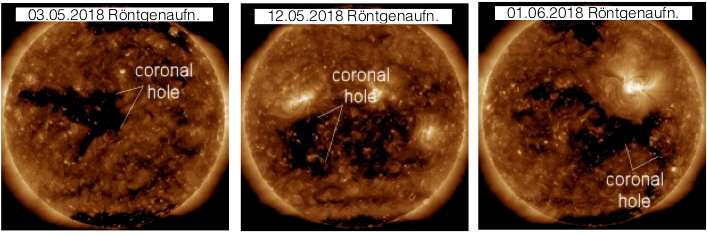

Meistens brechen die Plasmaringe in den Polregionen der Sonne.
Der Teilchenstrom geht dann senkrecht zur Ebene, in der die Planeten umlaufen, und trifft und beeinflusst die Planeten nicht.
Wie aber in Abb. 2 zu sehen, brachen dieses Jahr Ringe vorzugsweise in der Äquatorialregion, so dass der Teilchenstrom die Planeten, und eben auch die Erde, sozusagen "volle Breitseite" trifft.
Derzeit liegt der Teilchenstrom, der die Erde trifft, bei 600% (!!) des gewöhnlichen.
Das mit dem Teilchenstrom mitgeführte Magnetfeld von der Sonne hat das Erdmagnetfeld so gestört, dass es über dem Nordpol in Millionen von Quadratkilometern aufgerissen (d. h. sehr schwach) ist.
Das Erdmagnetfeld leitet gewöhnlich den Teilchenstrom um die Erde herum.
Da es jetzt fehlt, trifft der Teilchenstrom ungehindert die Erdatmosphäre.
Die gewaltige Energie der Sonnenwindteilchen trifft die Arktis und erwärmt diese massiv.
Weiterhin verdrängt der starke Sonnenwind die noch höher-energetische Höhenstrahlung aus dem Kosmos ("Forbush-Effekt"), welche auf Grund ihrer hohen Energie die Kondensationskeime für die Wolkenbildung stellen.
Folglich wird Wolkenbildung und Niederschlag signifikant reduziert.
Weniger Wolken, viel Sonnenschein, der die Erde erwärmt, und Ausfall von Regen.
Dies ist der Mechanismus, der das ungewöhnliche Wetter dieses Jahr unser Wetter bestimmt.
Was können wir aus dieser Einsicht lernen?
Nicht all zu viel.
Eine Voraussage, wie lange Koronarlöcher existieren werden, die in Richtung Erde emittieren, ist auf Grund unserer beschränkten Kenntnisse der Sonnenphysik nicht möglich.
Das Erdwetter kann also durchaus noch ins nächste Jahr fort dauern , aber auch abrupt aussetzen.
Immerhin lehrt uns dies Jahr, dass wir, und das heißt das gesamte organische Leben auf der Erde, Naturereignissen, die wir nicht beeinflussen können, relativ hilflos ausgeliefert sind.
Dies gibt uns eine etwas realistischere Sicht der Welt, als die politische Propaganda, welche uns, entgegen allen Forschungsergebnissen (!), einreden will, der Mensch beherrsche die Natur schon so intensiv, dass bereits ein "Antroprozän" angebrochen sei, indem der Mensch die Erde so stark forme, dass sie zerstört zu werden drohe.
Zum Vergleich:
Die am weitesten zurückreichende Temperatur Messreihe ist die von Mittelengland, von 1659 bis Juni 2018 - mit den zwei höchsten Monatsmittel-Temperaturwerten von 18 und 18.2 Grad C. für den Juni.
Im Juli wurden Werte von 18 bis über 19 Grad C. ca. 25 mal gemessen.
Nach dieser Tabelle war der wärmste Juni 1846!
Das diesjährige Sommerwetter ist also, obwohl für unsere Erinnerung ungewöhnlich, im historischen Kontext nicht so selten.
Auch in Zeiten, wo es eine industrielle Emission praktisch noch nicht gab.
Die historischen Daten über Niederschläge vermitteln ein ähnliches
▶ Weizenpreise und Sonnentätigkeit
| de | en | fr |
|---|---|---|
|
Die Sonne Sonnenaktivität |
The Sun Solar Activity |
Le soleil Activité solaire |
↑ 2018-08
-
EIKE Europäisches Institut für Klima und Energie
Anthony Watts / Andreas Demmig
2018-08-28 de Unerwarteter Sommer Schnee wirkt verheerend auf UrlaubspläneEs gibt überraschend viele unerwartete Schneefälle in diesem Sommer in der nördlichen Hemisphäre,
hier ist ein Kompendium von Nachrichten und Videos aus Montana, Wyoming und Idaho, sowie aus Deutschland, Österreich, Italien und Slowenien.
Schneefall einen Monat früher als sonst, in Deutschland und Österreich
Aug 2018 - Erstaunliche Fotos in sozialen Netzwerken zeigen Schnee in beiden Ländern, mit Temperaturstürzen von bis zu 15 Grad.
Winterlandschaften herrschen in Salzburg.
Laut WetterOnline hat es in einer Höhe von weniger als 1000 m über dem Meeresspiegel geschneit.
Die Bewohner des Skiortes Bad Gastein, südlich von Salzburg, haben zum Beispiel am Sonntag vor Erstaunen die Augen verzogen, weil grüne Rasenflächen und Bäume mit einer 5 cm dicken Schneedecke bedeckt waren.
Mützen und Jacken mussten die Bewohner von Obertauern, Rauris, Sankt Jakob im Defereggental oder Hintertux herausnehmen, wo der erste Schnee einen Monat früher als sonst fiel.
Die Hitzewelle ist gerade erst vorbei, da kündigt sich auch schon der Winter an.
Der größte Winterangriff ereignete sich jedoch in Österreich, wo von Samstag auf Sonntag 40 cm Schnee fielen.
Auf den Messstationen am Sonnblick und auf der Rudolfshütte in den Hohen Tauern lagen rund 40 Zentimeter Neuschnee, berichtete die Zentralanstalt für Meteorologie und Geodynamik (ZAMG) am Sonntag.
Auch auf Deutschlands höchstem Berg hat es geschneit.
Winter hat auch die Zugspitze erreicht
Auch auf der Zugspitze meldete sich am Sonntagmorgen der Winter.
Deutschlands höchster Berg (2962 Meter) verzeichnete knapp zehn Zentimeter Neuschnee, dabei war es mit minus sieben Grad frostig kalt.
In der Nacht war die Schneefallgrenze bis auf 1700 Meter gesunken, ab einer Höhe von 2000 Metern hatte sich eine geschlossene Schneedecke gebildet.
Kalte Polarwinde bringen frühen Schnee in Italien
30 cm Schnee im Gadertal
10 cm in Cortina d'Ampezzo in den Dolomiten
"Von kurzen Ärmeln zu Schneeschuhen", heißt es in der Schlagzeile. "Das ist die Weihnachtszeit!"
Slowenien - Schnee schließt die Straße nach Mangart, Kredarico ist bereits schneeweiß
In Kredarica ist bereits alles zugeschneit, während sich in Vrsic Regen und Schnee vermischen.
Laut dem Verkehrsinformationszentrum (PIC) ist die Straße nach Mangart wegen der schneebedeckten Straße gesperrt.
Der Niederschlag wird während des Tages schlimmer werden.
Die Triglav-Hütte in Kredarica, die auf einer Höhe von 2.515 m liegt, ist die höchste Berghütte in Slowenien und die höchste meteorologische Station des Landes.
Ist Schnee in dieser Höhe in Slowenien ungewöhnlich?
Ich weiß es nicht.
Aber ich denke, dass die Slowenen sich in diesem Jahr keine Sorgen über die globale Erwärmung machen müssen.
-
Watts UP With That? (Antony Watts)
2018-08-26 en Unexpected summer snows wreaking havoc on vacation plansThere's a surprising number of unexpected snows occurring this summer in the northern hemisphere,
here's a compendium of news reports and video from Montana, Wyoming and Idaho, as well as Germany, Austria, Italy, and Slovenia.
↑ 2018-09
-
Basler Zeitung / Übernommen von 20 Minuten
2018-09-01 de Erster Septembertag bringt ersten SchneePünktlich zum Herbstbeginn hat es geschneit - bis auf 2100 Meter.
Betroffene in den Bergregionen erzählen.
-
Basler Zeitung
2018-09-12 de Giraffen im Schnee: In Südafrika kehrt der Winter einIn einigen Teilen des Landes schneit es seit Tagen.
Was die Wildtiere mit der weissen Pracht anfangen, zeigen Bilder aus dem Internet.
↑ 2018-10

-
EIKE Europäisches Institut für Klima und Energie
Josef Kowatsch
2018-10-04 de Der September zeigt seit über 100 Jahren keine Erwärmung. Wo bleibt die Wirkung der Treibhausgase?Eine sich fortsetzende und aufschaukelnde Klimaerwärmung aufgrund des anthropogenen CO2-Ausstoßes ist die irrige Behauptung der Erwärmungswissenschaftler, die in Deutschland laufend die Medien füttern, um die Bevölkerung zu ängstigen.
Richtig bei dieser Aussage ist lediglich, dass die CO2-Konzentration in den letzten 50 Jahren angestiegen ist, und zwar von 0,03 % = 300 ppm auf 400 ppm.
Das bedeutet aber auch: 99,96 % der Luft bestehen immer noch aus anderen Gasen.
Und Kohlendioxid ist kein Giftgas, sondern lebensnotwendig für das Leben auf der Erde.
Es ist physikalisch unmöglich, dass ein Gas wie CO2 in den Sommermonaten in Deutschland erwärmend und im September abkühlend wirkt.
Gesamtergebnis: Es wird höchste Zeit, dass die CO2-Erwärmungsirrlehre zu den Akten gelegt wird und weltweit eine neue Umweltschutzethik entsteht.
Sauberes Wasser, saubere Luft und saubere Nahrungsmittel gleichmäßig verteilt, wären ein gemeinsames ethisches Ziel, das die Menschheit anstreben sollte.
Der angebliche Klimaschutz ist ein raffiniertes Geschäftsmodell.
-
Watts UP With That? (Antony Watts)
2018-09-30 en Coldest September night in the Netherlands in 47 yearsLast night the temperature at weather station Twenthe (near Enschede) dropped to -1.5 degrees.
It has not been that cold in September since 1971.
That year, the weather stations Soesterberg and Winterswijk recorded minimum temperatures of -2.2 and -2.4 degrees on 16 September.
↑ 2018-11
-
Basler Zeitung
2018-11-18 de Tote und Stromausfälle nach Schneesturm im Osten der USABis zu 30 Zentimeter Schnee und gefrierender Regen stürzten die Ostküste der USA ins Chaos - auch weil dieses Ausmass nicht erwartet wurde.
Während im äussersten Westen der USA weiter Dürre und Waldbrände den Katastrophenschutz in Atem hielten, fielen im Osten am Freitag bis zu 30 Zentimeter Schnee.
Gefrierender Regen machte Strassen zu gefährlichen Rutschbahnen.
Tote gab es bei Verkehrsunfällen in den Staaten Ohio, Mississippi, Indiana und Arkansas.
In New York steckten Autofahrer am Donnerstag nach Unfällen im Schnee stundenlang auf der George-Washington-Brücke fest, die über den Hudson River von New York nach New Jersey führt.
Mehr als 8200 Flüge hatten laut CNN landesweit Verspätung, über 1900 wurden gestrichen.
Am Samstag sollte der Schneefall im Nordosten der USA nachlassen, eine neue Kaltfront wurde aber am Sonntag in den Neuengland-Staaten erwartet.
-
Basler Zeitung / (sda)
2018-11-13 de So extrem ist das Schweizer Wetter in ZukunftHeissere Sommer, schneearme Winter und heftigere Starkniederschläge:
Das prophezeien ETH-Forscher.
de Beurteilen Sie selbst! en Judge yourself! fr Jugez vous-même!
-
Science Skeptical Blog / Michael Krueger
2018-11-17 de El Nino bahnt sich an. Klimaschützer können auf steigende Temperatur hoffen!Es deutet alles darauf hin, dass sich derzeit ein El Nino im Ost- und Zentralpazifik zur Jahreswende entwickelt und damit die Globaltemperatur wieder ansteigen lässt.
Der El Nino ist ein Wetterphänomen, welches warme Temperaturen im Pazifik mit sich bringt.
2015/16 bescherte ein El Nino uns neue Rekorde der Globaltemperatur.
Die Temperaturanomalie der NASA stieg auf 1°C seit 1880.
Mit Abklingen des El Nino ist sie wieder auf 0,8°C gefallen!
Seit einigen Monaten steigen die Temperaturen aufgrund der Wetterbedingungen im Pazifik wieder an.
Seit dem letzten Sommer ist dort ein Temperaturanstieg von 1°C zu verzeichnen.
In den nächsten Monaten ist infolge dessen mit einer steigenden Globaltemperatur zu rechnen.
Zur Freude der Klimaschützer.
Über den Rückgang der Globaltemperatur nach dem letzten El Nino wurde nicht berichtet, man hat sich statt dessen auf den warmen und trockenen Sommer in Deutschland konzentriert.
Sollte der nächste Sommer in Deutschland wieder kühler ausfallen, kann man sich erneut auf die steigende Globaltemperatur konzentrieren, als Beleg für den meschengemachten Klimawandel.
Ich wage mal die Prognose, dass das so geschehen wird.
Auch WetterOnline berichtet über den anstehenden El Nino.
In den nächsten Tagen stehen erst mal frostige Temperaturen in Deutschland an.
Die Kraniche fliehen vor der anstehenden Kälte schon nach Süden.
Und auch in den USA ist der Winter schon eingezogen.
Im Nordosten der USA herrschte gerade Schneechoas.
Bis zu 20 Zentimeter Neuschnee brachten die Autofahrer an der Ostküste an den Rand der Verzweiflung.
Grund dafür, die Nordatlantische Oszillation und die Arktische Oszillation, zwei Wettersysteme im hohen Norden, gehen gerade in eine negative Phase über, die kalte Temperaturen für uns und die Ostküste der USA mit sich bringen.
Kalte, polare Luft strömt dabei über Skandinavien zu uns nach Deutschland.
Und kalte, polare Luft über Kanada in den Osten der USA.
Auch hier würde ich mich nicht wundern, wenn in den nächsten Tagen die Medien berichten, auch das würde am menschengemachten Klimawandel liegen.
| de | en | fr |
|---|---|---|
|
Klimawandel: Wissenschaft Ozeanzyklen & Ozeanische Oszillationen |
Climate change: Science Ocean Cycles & Ocean Oscillations |
Changement climatique: Science Cycles et oscillations océaniques |
| Ozeanzyklen steuern das Klima / El Niño (der Knabe/warm) & La Niña (das Mädchen/kalt) / ENSO: El Niño-Southern Oscillation / AMO: Atlantic Multidecadal Oscillation / NAO: North Atlantic Oscillation / AO: Arctic Oscillation / IOD: Indischer Ozean Dipol / PDO: Pacific decada oscillation | ||
-
Basler Zeitung
2018-11-26 de Schneestürme sorgen für Flug- und StromausfälleStrenges Winterwetter hat in Teilen der USA den Verkehr an Flughäfen und auf Strassen schwer beeinträchtigt.
In den US-Bundesstaaten Missouri, Illinois und Kansas kam es bereits am Sonntag zu starken Schneefällen.
Am Montag rückte das Winterwetter weiter Richtung Nordosten in die Staaten Wisconsin, Michigan und Indiana vor.
In der Gegend um die Metropole Chicago am Lake Michigan lag der Schnee in der Nacht zum Montag stellenweise mehr als 25 Zentimeter hoch.
Der US-Fernsehsender CNN berichtete, fast 200'000 Menschen seien in Illinois ohne Strom, die meisten davon rund um Chicago.
Auch den dortigen Flughafen traf es hart:
670 Flüge seien gestrichen worden.Insgesamt seien landesweit am Montagmorgen mehr als 800 Flüge ausgefallen.
↑ 2018-12
-
Basler Zeitung / Tamedia
2018-12-10 de
Lawinengefahr: Samnaun abgeschnitten
Bis zu 70 Zentimeter Neuschnee sind übers Wochenende in Graubünden gefallen.
Mehrere Pässe sind aus Sicherheitsgründen geschlossen.
-
Die kalte Sonne (Fritz Vahrenholt & Sebastian Lüning)
2018-12-02 de Ein Sommermärchen
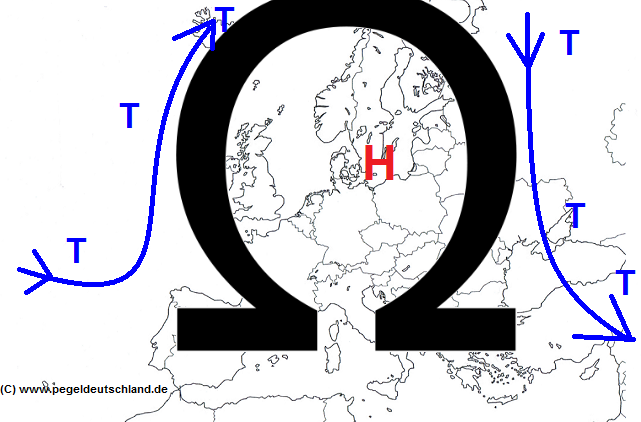
Das war ein Sommer 2018 in Mitteleuropa!
Sehr warm und vor allem sehr trocken war er.So etwas kommt vor, oft wenn sich eine "Blocking"-Wetterlage einstellt. Dann bildet sich im Sommer ein stabiles Hoch über Mitteleuropa und die von Westen anrückenden Tiefdruckgebiete werden im hohen Bogen nach Norden um das Hoch herum geführt.
Die charakteristische Form der Druckverteilung über Europa bescherte der Wetterlage auch den Beinamen "Omega Lage".
⇧ 16 2019
↑ 2019-01
 Klimawandel: So haben sich die Januar-Temperaturen in Deutschland
während der letzten 32 Jahren verändert
Klimawandel: So haben sich die Januar-Temperaturen in Deutschland
während der letzten 32 Jahren verändert
-
Basler Zeitung
2019-01-08 de Die eisigste Stadt der WeltVom 5. Januar bis zum 5. Februar findet in China das weltweit grösste Eisfestival statt.
↑ 2019-02
-
Die kalte Sonne (Fritz Vahrenholt & Sebastian Lüning)
2019-02-03 de Kälte in den USA: Das muss wohl der Klimawandel sein, oder?"Klimakommunikatoren" haben immer die gleiche "passende" Deutung für jedes Wetterereignis: Das ist der Klimawandel!
Ein warmer, vor allem trockener Sommer hierzulande: Klimawandel!
Wir berichteten unlängst darüber.
Nun also ein Kaltluftausbruch aus der Arktis bis weit südlich hinunter in die USA, auch das ist Klimawandel.
Hier zitiert ein TV- Sender unter vielen Medien aus einer Agenturmeldung von DPA.
Professor Stefan Rahmstorf (SR) erklärt.
Wer könnte es besser?Wir wollen prüfen, was dran ist.
Zunächst schauen wir bei der NOAA, die es vielleicht am besten wissen sollte.
Der Polarwirbel schwächelt im Winter oft, der Begriff "Vortex" dafür wird in den USA schon seit 1853 gebraucht.
SR behauptet nun: Das passiert immer öfter:
"... dies sei nach einer Datenauswertung des PIK aber in den vergangenen Jahrzehnten um ein Mehrfaches häufiger geworden."
...
Wir wollen das prüfen und stoßen auf eine Statistik von Roy Spencer und John Christy von der Universität Huntsville in Alabama:
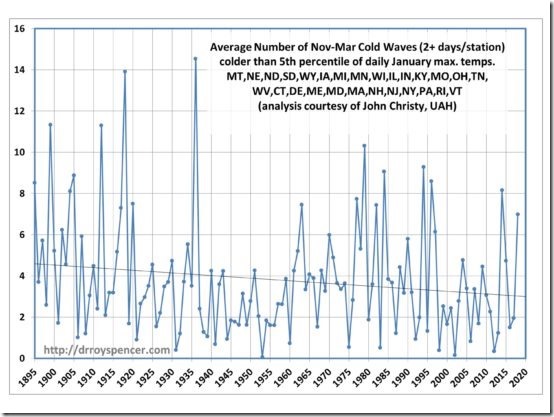
Keine Zunahme, auch keine signifikante Abnahme, der lineare Trend ist eher Ausdruck einer Zufälligkeit.
Wir finden keine Bestätigung für die "Datenauswertung des PIK".
Jörg Kachelmann ist kräftig genervt von dem Blödsinn.
Wir auch.
Und wir fragen uns: Warum wird so viel unbewiesener und umstrittener Stoff zur Erklärung auch jedes aktuellen Ereignisses in die Welt gesetzt?
Sind echte Argumente (es wird global wärmer mit einer Rate von ca. 0,125 °C/Dekade seit 1950 (nach der Reihe von Cowtan&Way) zu schwach?
Ist der Klimawandel etwas, wofür es eines hohen Werbe-Etats bedarf, um ihn zu verkaufen?
Dann allerdings entpuppen sich diese PR-Aktionen als Rohrkrepierer:
Jede zu oft laufende Werbung nervt den Konsumenten nur noch.
Der Hintergrund ist nicht Wissenschaft, wie der Konsument glauben soll. Statdessen spielen wohl politische Ambitionen die Hauptrolle.
Wahrhaft dünnes Eis!
-
NOAA
2018-02-03 de The science behind the polar vortex
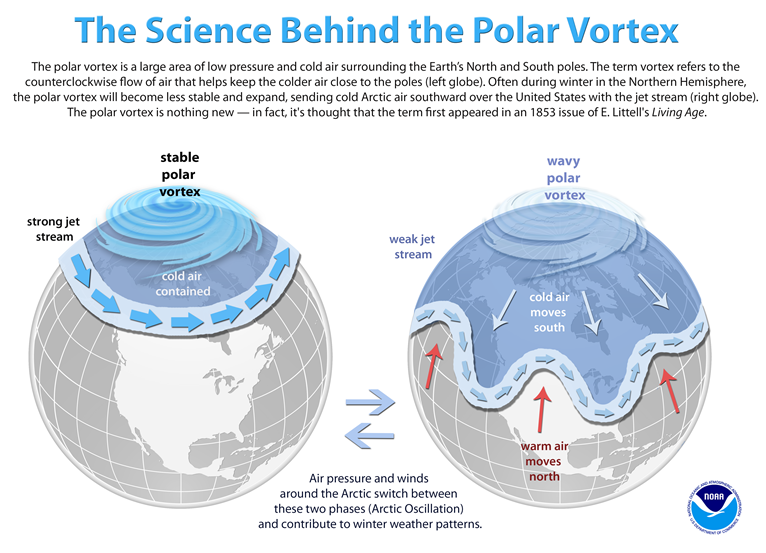
The polar vortex is a large area of low pressure and cold air surrounding the Earth's North and South poles.
The term vortex refers to the counter-clockwise flow of air that helps keep the colder air close to the poles (left globe).
Often during winter in the Northern Hemisphere, the polar vortex will become less stable and expand, sending cold Arctic air southward over the United States with the jet stream (right globe).
The polar vortex is nothing new - in fact, it's thought that the term first appeared in an 1853 issue of E. Littell's Living Age.
-
EIKE Europäisches Institut für Klima und Energie
Stefan Kämpfe, Josef Kowatsch
2019-02-06 de Der Januar kennt keine Klimaerwärmung: Der Hochwintermonat wird seit über 30 Jahren wieder kälterDer Januar 2019 überraschte uns bisweilen mit klirrender Kälte und einem Wintereinbruch mitten im Winter, Realitäten, die es angesichts des Glaubens-modells "Klimaerwärmungskatastrophe" eigentlich nicht mehr geben sollte.
-
NZZ / Gian Andrea Marti
2019-02-13 de So tief hinunter hat es auf Hawaii noch nie geschneitSeltenes Naturereignis auf Hawaii:
Ein Sturmtief bringt heftige Winde und Schnee auf die Inselgruppe im Pazifik.
-
WOBLEIBTDIEGLOBALEERWAERMUNG
2019-02-16 de GFS: Sibirische Kälte im Februar 2019?GFS = "Global Forecast System" der amerikanischen Wetterbehörde NOAA
Update 16.2.2019:
GFS bleibt dabei: Wintereinbruch zum Monatswechsel!Libyen: Kaltlufteinbruch mit Gewittern und Überflutungen.
↑ 2019-03
 Klimawandel:
So haben sich die
März‑Temperaturen
in Deutschland während der letzten 31 Jahre verändert
-
SRF
2019-03-30 de Der März 2019 in BildernRückblick auf einen spannenden Monat mit Sturm, Schnee und Frühlingswärme.
↑ 2019-04
-
Basler Zeitung
2019-04-04 de Hunderte Autos und Lastwagen stecken auf der A2 festZwei Wochen nach dem Frühlingsbeginn hat ein Wintereinbruch der Schweiz viel Schnee beschert.
Der Wintereinbruch hat am Donnerstag für erhebliche Verkehrsprobleme gesorgt.
Noch am Abend sind vereinzelte Bergungsarbeiten auf der Gotthardautobahn in Richtung Süden am Laufen, wie die Kantonspolizei Uri mitteilte.
Rund 300 Autos und 100 Lastwagen seien dort noch immer blockiert.
Teilweise sind die Fahrzeuge schon mit Sommerpneus ausgerüstet.
Grosse Lawinengefahr
Seit Mittwoch sind in grossen Teilen der Schweizer Alpen grosse Schneemengen gefallen. Am meisten Neuschnee hat es am Alpenhauptkamm vom Simplon bis ins Gotthardgebiet und im westlichen Tessin mit einem
bis zu eineinhalb Meter gegeben.
In der Nacht auf Freitag sollten die Schneefälle enden.
Bis ins Flachland: Laut SRF Meteo liegt die Schneefallgrenze aktuell bei 400 bis 900 Metern.
-
Basler Zeitung
2019-04-14 de Der Winter meldet sich nochmals zurückWie SRF Meteo auf Twitter verkündet, sind Schauer mit Schnee ab 400 Metern möglich.
Die Temperaturen verharren im einstelligen Bereich.
In St. Gallen gibt es drei Grad, in Zürich reicht es für sechs Grad.
Der Wintereinbruch hat am Donnerstag für erhebliche Verkehrsprobleme gesorgt.
-
Basler Zeitung
2019-04-27 de Schnee sorgt für mehrere VerkehrsunfälleDer Wintereinbruch in Graubünden hat zahlreiche Autofahrer mit Sommerreifen überrascht.
↑ 2019-05
-
Basler Zeitung
2019-05-05 de Grüne Bäume weiss gepudert: Schneemenge bricht RekordeKommentar von Tom Deuber:
Greta, wir haben ein Problem.Meldungen
Seit Messbeginn lag in Bern und St. Gallen im Mai noch nie so viel Schnee.
Auf den Schneebedeckten Strassen gab es viele Unfälle.
Am Abend und in der Nacht auf heute hat es teilweise bis ins Flachland geschneit.
In St. Gallen und in Bern wurde laut Meteonews im Mai noch nie soviel Neuschnee gemessen wie heute.
So lagen am Sonntagmorgen in St. Gallen 19 Zentimeter Neuschnee.
Der bisherige Rekord lag bei zwölf Zentimetern - am 7. Mai 1957.
In Bern wurde der Schneerekord ebenfalls gebrochen. Vier Zentimeter sind gemessen worden - den bisherigen Rekord gab es am 1. Mai 1945 mit einem Zentimeter.
Es ist ein ungewohntes Bild: Grüne Bäume sind weiss gepudert.
Am meisten Schnee fiel entlang der zentralen und östlichen Alpen. Weil die Bäume schon Laub haben und der der nasse Schnee auf die Äste drückt, könnten diese brechen, warnt Meteonews.
In schneereichen Gebieten solle man deshalb nicht in den Wald gehen.
Es ist amtlich. 4 cm Schnee in Bern. So spät im Jahr wurde in #Bern noch nie #Schnee gemessen. Bisher letzter gemessener Schnee: 1.Mai 1945.
Haben wir wirklich #Mai? #StGallen hat sich über #Nacht in ein #Winterwunderland verwandelt! Aktuell liegen bei #frostigen -0.6 Grad rund 12 cm #Schnee ??? http://meteonews.ch , http://wetter.tv
Die Schweiz liegt zwischen einem Hoch über den britischen Inseln und einem markanten Tief über Italien.
Die Kaltfront brachte bei Tagesanbruch minus eins bis minus zwei Grad. Im Flachland gibt es heute wechselhaftes Wetter mit Schauern und Schnee ab 400 Metern.
Ab und zu könnte sich laut Meteonews aber auch die Sonne zeigen.
Die Höchsttemperaturen liegen zwischen drei und neun Grad.
Am Montagmorgen dürfte es verbreitet Frost geben.
Der Bodenfrost birgt Gefahren im Verkehr.
Zudem könnte er blühenden Erbeerfeldern und Rebbergen zusetzen.
Bei den Obstbäumen ist die Blüte zwar vorbei, kleinere Früchte könnten laut den Meteorologen aber auch geschädigt werden.
Kommentar von Tom Deuber:
Greta, wir haben ein Problem.
-
Science Skeptical Blog / Michael Krueger
2019-05-08 de Fast 6 Meter Schnee auf Zugspitze. Soviel wie seit 20 Jahren nicht mehr!Zu Ostern wurde noch ein neuer Dürre- und Hitzesommer von den Medien befürchtet.
Dann kam aber alles anders.
In den letzten Tagen hat es reichlich geregnet und die Kälte hielt mit polarer Luft in Deutschland Einzug.
Mit derzeit 5,80 Meter türmt sich der Schnee auf der Zugspitze so hoch wie seit 20 Jahren nicht mehr.
Seit gestern sind auf Deutschlands höchstem Gipfel 80 Zentimeter hinzugekommen.
Auch in den nächsten Tagen wird es dort immer wieder schneien.
Nicht ausgeschlossen, dass bis Monatsmitte deutlich mehr als sechs Meter Schnee auf der Zugspitze liegen.
Ähnlich viel Schnee gab es zuletzt im Winter 1998/1999.
Damals wurde eine maximale Schneehöhe von 6,10 Meter gemessen.
 ▶Globale Absoluttemperaturen 2014-2018 [WMO, Genf]
| Reto Knutti |
Professor, Dr., Institut für Atmosphäre und Klima, ETH Zürich
Er erforscht den Einfluss des Menschen auf das Klimasystem.
Er ist Hauptautor des Berichts des Uno-Klimarats IPCC, der
2013 erschien.
▶Reto Knutti: Who is who (Anthropogene Globale Erwärmung) ▶Reto Knutti: Wikipedia (Profiteure) |
| de | en | fr |
|---|---|---|
|
Neue Kälteperiode Meldungen |
New Cold Period News |
Nouvelle periode froide Actualités |
▶Axel Burkart: Video (Präsentationen)
| de | en | fr |
|---|---|---|
|
Klima: Politik Dogma Das Dogma des vom Menschen verursachten Klimawandels |
Climate: Politics Dogma The Dogma of human caused Climate Change |
Climat: Politique Dogme Le dogme du changement climatique anthropogénique |
| Anthropogenic Global Warming versus Natürliche Ursachen des Klimawandels | ||
| de | en | fr |
|---|---|---|
|
Klima: Politik Wahn |
Climate: Politics Délire |
Climat: Politique Cycle climatiques |
| de | en | fr |
|---|---|---|
| Neuste Informationen über den Klimawandel | News on Climate Change | Nouvelles informations sur le changement climatique |
| Die Erwärmungspause | The Hiatus | La pause du réchauffement climatique |
| de | en | fr |
|---|---|---|
|
Klima: Wandel Ursachen des Klimawandels |
Climate: Change Causes of Climate Change |
Climat: Changement Les causes du changement climatique |
|
Einflüsse auf das Klima Temperatur der Erde Klima-Beobachtungen Neuste Meldungen zum Klimawandel |
Impacts on Climate Change Earth Temperature Climate Observations News on Climate Change |
Impacts sur le climat Température de la terre Observations sur le climat Dernières nouvelles sur le changement climatique |
| de | en | fr |
|---|---|---|
| Das CO2 steigt und die Temperaturen fallen | CO2 is rising and the temperatures are falling | Le CO2 monte et les températures baissent |
| de | en | fr |
|---|---|---|
|
Neue Kälteperiode Kaltzeit |
New Cold Period Cold Period |
Nouvelle periode froide Periode froide |
| Voraussagen | Predictions | Prédictions |
| Kälte: Warnungen | Cooling: Warnings | Refroidissement: Avertissements |
| Erwärmung: Entwarnung | Warming: All-Clear | Réchauffement: Fin de l'alerte |
| Eiszeiten | Ice Ages | Glaciations |
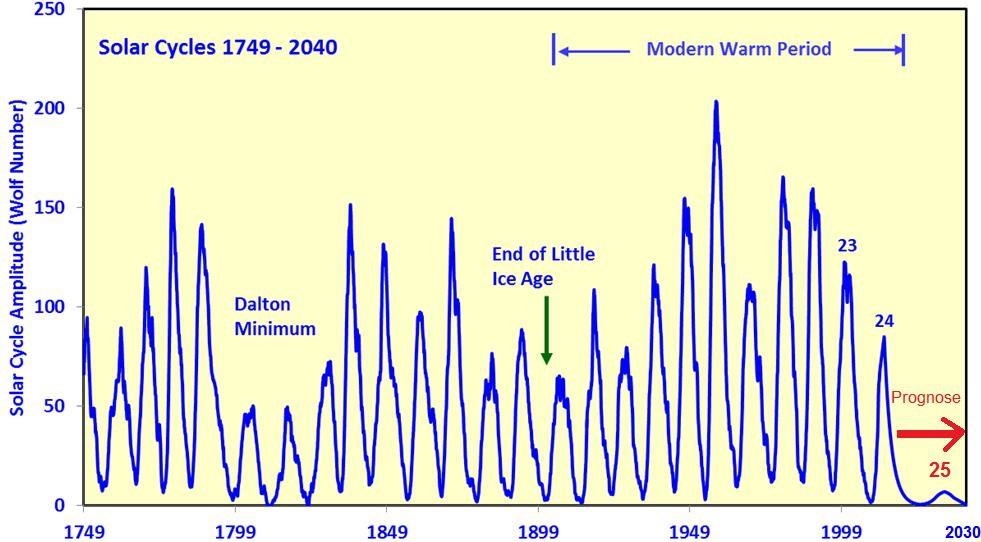
-
EIKE Europäisches Institut für Klima und Energie
Stefan Kämpfe
2019-05-10 de Schnee im Mai 2019 - ein Vorbote der Klima-Abkühlung?Noch 2018 waren die Klima-Alarmisten obenauf, denn anhaltende Hitze und Dürre lieferten ihnen Argumente für ihre Klima-Hysterie.
Doch schon damals gab es mit den sehr kalten Monaten Februar/März Schönheitsfehler, und das laufende Jahr wird deutlich kühler ausfallen.
Im Januar 2019 sorgten massive Schneefälle für Aufsehen, vor Ostern gab es einen markanten Kälterückfall und am 4. Mai starke Schneefälle bis teilweise ins Flachland.
All das ist Wetter und nicht Klima - doch könnte die von den Klimarealisten wegen der schwächelnden Sonne befürchtete Abkühlungsphase nun begonnen haben?
Diese Frage ist nicht eindeutig zu beantworten.
-
Die kalte Sonne (Fritz Vahrenholt & Sebastian Lüning)
2019-05-13 de Kachelmann über Dürre-Warnungen der Medien: "Über 90 Prozent aller Geschichten zu Wetter und Klima sind falsch oder erfunden"Am 26. April 2019 erschien auf Meedia.de ein ausgezeichnetes Interview mit Jörg Kachelmann:
Kachelmann über Dürre-Warnungen der Medien:
"Über 90 Prozent aller Geschichten zu Wetter und Klima sind falsch oder erfunden"
MEEDIA: Wenn man Medien wie Bild, FAZ und "Tagesschau" diese Woche verfolgt hat, steht uns ein weiterer Dürre-Sommer wie im vergangenen Jahr bevor ... müssen wir jetzt alle Angst haben?
KACHELMANN: Nein, alle diese Meldungen sind frei erfunden.
MEEDIA: Die genannten Medien berufen sich auf den Deutschen Wetterdienst - ist der denn nicht seriös?
KACHELMANN: Das ist eine Lüge. Der Deutsche Wetterdienst hat nie behauptet, dass es einen Dürresommer gäbe.
Er schrieb nur, dass es einen geben könnte, wenn es nicht regnet, was nicht weiter überrascht.
Daraus hat dpa dann einfach mal zugedichtet, dass der DWD vor einem Dürresommer warne.
Das wurde dann kurz darauf korrigiert, aber die unbändige Lust der deutschen Medien an klickbarem Horror lässt sich durch eine solche Korrektur nicht mehr aufhalten.
-
MEEDIA
2019-04-26 de Kachelmann über Dürre-Warnungen der Medien: Kachelmann über Dürre-Warnungen der Medien: "Über 90 Prozent aller Geschichten zu Wetter und Klima sind falsch oder erfunden"Wer am gestrigen Mittwoch die Hauptausgabe der "Tagesschau" sah oder heute die Bild-Zeitung sieht, könnte wettermäßig in Panik geraten.
"Wetterdienst warnt vor Dürresommer", meldete die ARD-Nachrichtensendung.
Die Bild übergeigte komplett mit der Schlagzeile:
"Meteorologen sicher! Sahara-Sommer mit Mega-Dürre droht.U.a. auch Greenpeace verbreitete das apokalyptische Szenario.
Alles frei erfunden, sagt der Wetterexperte Jörg Kachelmann im MEEDIA-Interview.
↑ 2019-09
-
Basler Zeitung
2019-09-06 de Bis zu 50 Zentimeter Neuschnee in den BergenErstmals in dieser Saison ist die Schneefallgrenze in der Schweiz auf unter 2000 Meter gesunken.
Autofahrer sind auf den Alpenpässen gefordert.
-
WOBLEIBTDIEGLOBALEERWAERMUNG
2019-09-13 de NASA: Neuer Sonnenzyklus schwächster der letzten 200 Jahre - Droht eine neue "Kleine Eiszeit"?
Es gibt kein katastrophales Risiko durch eine vom Menschen verursachte globale Erwärmung. Punkt!
↑ 2019-10
-
WOBLEIBTDIEGLOBALEERWAERMUNG
2019-10-06 de MIRROR: GB erwartet härtesten Winter seit fast 60 Jahren
N. Hemisphere In Hypothermia! Widespread Early Winter
"Historic Snowstorms"
"Record Books Rewritten"
-
WOBLEIBTDIEGLOBALEERWAERMUNG
2019-10-29 de CFSv2: Kalter November 2019 in der Nordosthälfte Europas?
Australien: 100 Jahre alter Kälterekord gebrochen
Die Sonne im September 2019 und arktische Mythen
↑ 2019-11
-
WOBLEIBTDIEGLOBALEERWAERMUNG
2019-11-18 de Schneechaos in Europa und in den USA
Greta kommt zur COP 25 nach Madrid
Astrophysiker Piers Corbyn: "Wir bewegen uns in eine kleine Eiszeit"Update 18.11.2019:
Schwere Missernte: Millionen Morgen kanadischer Raps durch Frost und Schnee vernichtet -
video. GFS-Prognose: Der eisige Polarwirbel besucht Europa zur COP 25.
Update 17.11.2019:
Unwetter-Warnung : Position Greta.
GFS-Prognose: Schnee in Spanien am 2.12.2019 zur COP 25.
Gretas langer stürmischer Weg nach Madrid.
November-Schneerekord in der Schweiz/Graubünden:
Schneehöhenrekord von 1959 (65cm) um 6cm übertroffen.
5.11.2019:
Norwegen: Historische Schneemengen und Frost bis nahe -30°C.
Reichlich Neuschnee auch in den Alpen - Video und Fotostrecke.
15.11.2019:
Wintereinbruch mit Schneechaos in Frankreich

15.11.2019: ARD Videotext
Übrigens:
Die aktuelle GFS00-Prognose sieht Winterwetter auch in Spanien zum Beginn der COP 25 am 2.12.2019 in Madrid...
⇧ 17 2020
↑ 2020-01
Klimawandel: So haben sich die Januar-Temperaturen in Deutschland
während der letzten 32 Jahren verändert
-
Die kalte Sonne (Fritz Vahrenholt & Sebastian Lüning)
2019-11-29 de Klimawandel: So haben sich die März-Temperaturen in Deutschland während der letzten 31 Jahre verändert
↑ 2020-02
-
Die kalte Sonne (Fritz Vahrenholt & Sebastian Lüning)
2018-03-18 de Was ist da los? Der Februar wird in Deutschland immer kälterDie Kältewelle in Mitteleuropa ist vorbei.
Wie ordnen sich die deutschen Temperaturen des Februar 2018 in den langjährigen Kontext ein?
Josef Kowatsch hat die Graphik für uns gezeichnet:
Der Februar wird immer kälter, wenn man die letzten knapp 20 Jahre anschaut.
Die Temperaturen zappeln zwar ziemlich auf und ab, aber der Trend zeigt eindeutig nach unten.
Zuletzt war es in Deutschland im Jahr 2012 so kalt, im Jahr als unser Buch auf den Markt kam.
Nun könnte jemand kommen und sagen, naja, bitte die letzten 30 Jahre zeigen.
Denn das ist doch der Maßstab für die Definition "Klima".
Bitteschön, auch diese Graphik wollen wir Ihnen nicht vorenthalten:
Wieder dasselbe Bild:
Der Februar wird immer kälter.
In welcher Zeitung haben Sie diese Schlagzeile zuletzt gelesen?
Antwort: In keiner! Diese Nachricht möchte man den Bürgern Deutschlands offenbar nicht zumuten.
Wieder dasselbe Bild:
Der Februar wird immer kälter.
In welcher Zeitung haben Sie diese Schlagzeile zuletzt gelesen?
Antwort: In keiner! Diese Nachricht möchte man den Bürgern Deutschlands offenbar nicht zumuten.
-
EIKE Europäisches Institut für Klima und Energie
Stefan Kämpfe, Josef Kowatsch
2018-03-02 de Die Februar-Abkühlung in Deutschland - nicht erst seit 2018Der Februar ist der letzte der drei Wintermonate und zugleich der Übergang zum Vorfrühling.
Davon war 2018 nichts zu spüren.
Überall in Deutschland war es der kälteste Wintermonat, in Nordostdeutschland noch einen Tick winterlicher.
Der Deutsche Wetterdienst gibt ihn nach der ersten Auszählung seiner 2000 Wetterstationen mit einem Schnitt von - 1,7 C an, was 2,1 C unter dem (bereits kühlen) Vergleichsschnitt 1961 bis 90 liegt.
Seit 1787, also seit Mozarts Zeiten haben sich die Februartemperaturen
auf dem Hohenpeißenberg kaum verändert.
Das Startjahr der Betrachtung lag auf dem Höhepunkt einer Warmphase, wie die letzten 30 Jahre, also das rechte Ende der Grafik.
Der wärmste Februar war 1990.
Der diesjährige liegt deutlich unter dem Schnitt und deutet die weitere Abkühlung innerhalb der letzten 30 Jahre an.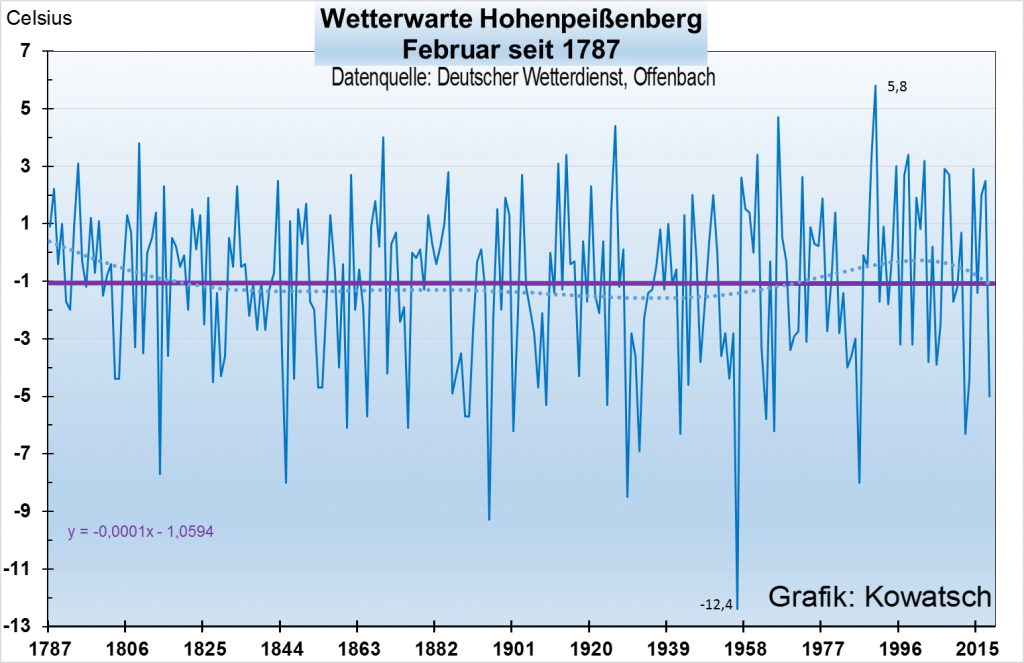
 Merklich kälter werdende Winter an der Deutschen Neumayer-Station
in der Antarktis.
Merklich kälter werdende Winter an der Deutschen Neumayer-Station
in der Antarktis.
-
EIKE Europäisches Institut für Klima und Energie
Josef Kowatsch, Stefan Kämpfe
2020-02-13 de Die Winter in der Antarktis - Behauptung und WirklichkeitAm 10. Dezember 2019 brachten die "Tagesthemen" in der ARD einen kurzen Bericht über die Arbeit der Forscher in der deutschen Neumayer-Station III des Alfred-Wegener-Instituts in der Antarktis.
Die Überschrift lautete "Neumayer-Station in Antarktis: Deutsche Klimaforschung auf brüchigem Eis" und soll wohl suggerieren, dass das Eis dort schwindet.
| Josef Kowatsch |
▶Josef Kowatsch: Who is who (Skeptiker) |
| de | en | fr |
|---|---|---|
|
Auswirkungen des Klimas Antarktis (Südpol) |
Effects of Climate Change Antarctic (South Pole) |
Conséquences climatiques Antarctique (Pôle Sud) |
↑ 2020-03
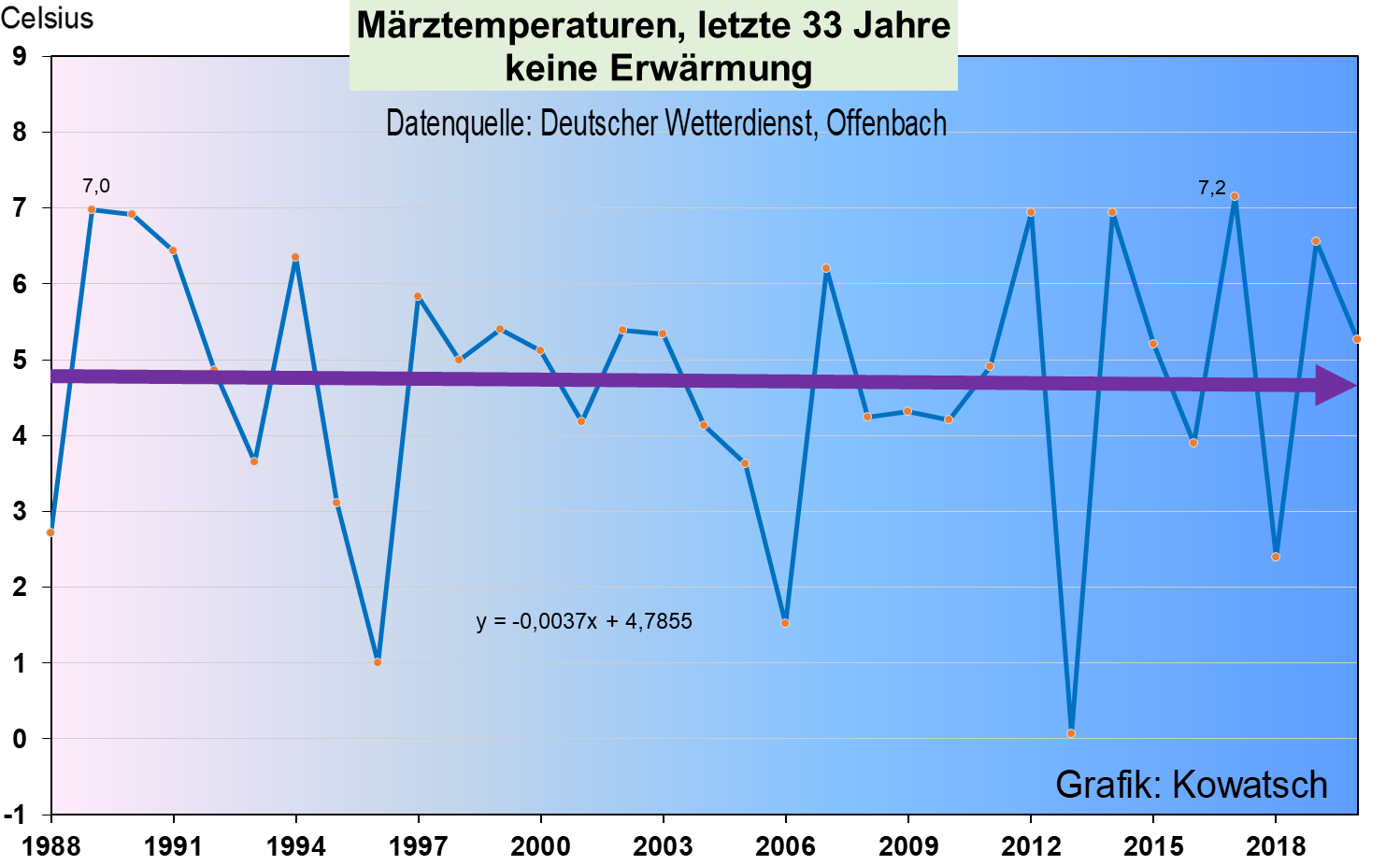 März‑Temperaturen während der
letzten 33 Jahre
März‑Temperaturen während der
letzten 33 Jahre
Der Wert für 2020 ist da - und die Überraschung ist groß.
-
EIKE Europäisches Institut für Klima und Energie
Stefan Kämpfe, Josef Kowatsch
2020-04-02 de Märztemperaturen in DeutschlandAm 30. März gab der Deutsche Wetterdienst die vorläufige Märztemperatur 2020 für seine etwa 1900 Stationen in Deutschland bekannt:
Mit etwa 5,3°C war dieser Monat deutlich kühler als der letztjährige, der es auf milde 6,6°C brachte.
Der März 2020 schaffte es also praktisch nicht, den Februar 2020 temperaturmäßig zu übertrumpfen, weil im letzten Monatsdrittel harsche Kälte aus Nordost und Nord einfiel; Näheres dazu hier.
(Kälte nach dem Frühlingsanfang 2020 in Deutschland - wie ungewöhnlich ist das? 27. März 2020)Letztmalig hatte es das im Kaltjahr 1987 gegeben;
damals fiel der März sogar etwas kühler als der Februar aus.
Schon dieser Umstand deutet an, dass nicht die CO₂-Konzentrationen, sondern ganz andere Faktoren das Verhalten der Lufttemperaturen bestimmen.
Damit startete der erste Frühlingsmonat nach einem sehr milden Winter mit Normaltemperaturen innerhalb der letzten 30 Jahre.
-
Die kalte Sonne (Fritz Vahrenholt & Sebastian Lüning)
2020-04-10 de Grüner Ralf Fücks: "Das Corona-Notstandsregime als Muster für den Klimaschutz zu propagieren ist doppelt verkehrt"Wie haben sich die Märztemperaturen in Deutschland während der letzten 33 Jahre entwickelt?
Der Wert für 2020 ist da - und die Überraschung ist groß.
↑ 2020-04
-
EIKE Europäisches Institut für Klima und Energie
Stefan Kämpfe
2020-05-02 de Immer mehr Aprilsonne über Deutschland - Fakten und HintergründeDer Spruch "Sonnenschein ist schönes Wetter - aber Regen ist gutes Wetter" soll aus dem von Wüsten umgebenen Israel stammen.
Leider gilt er immer öfter auch für Deutschland, denn gerade im Frühling bräuchte die Natur den Regen.
Auch der April 2020 zeigte sich enorm sonnig.
Doch warum wird es über Mitteleuropa im April momentan immer sonniger?
Die Ursachenforschung hierzu ist schwierig, aber sie führt zu überraschenden Ergebnissen.
Diese gelten prinzipiell für alle Monate des Sommerhalbjahres.
-
EIKE Europäisches Institut für Klima und Energie
Josef Kowatsch
2020-05-12 de Der April wurde durch einen Temperatursprung im Jahre 2007 wärmer.Unter Temperatursprünge versteht der Artikel nicht das jährliche Auf und Ab, sondern einen Sprung innerhalb ein oder zwei Jahre auf ein anderes Temperatur-Niveau, das anschließend viele Jahre gehalten wird.
April in Deutschland seit 1943 (bis und mit 2020)
 Der Apriltemperatursprung im Jahre 2007
bei den Deutschlandtemperaturen
Der Apriltemperatursprung im Jahre 2007
bei den Deutschlandtemperaturen
Die Durchschnittstemperaturen der Zeitabschnitte betragen 7,8 °C und 9,5 °C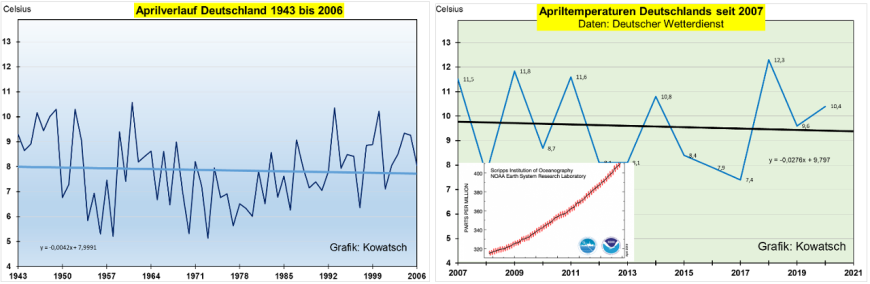
Feststellungen
Die Durchschnittstemperaturen der Zeitabschnitte betragen 7,8 °C und 9,5 °C
Es gibt keinerlei Übereinstimmung zwischen dem Anstieg der CO₂-Konzentationen und dem Apriltemperaturverlauf in Deutschland.
Der Begriff Treibhausgas ist eine unsinnige Worterfindung.
Zusammenfassung
-
Der Monat April wurde in Deutschland deutlich wärmer.
Die Erwärmung erfolgte jedoch nicht kontinuierlich, sondern hauptsächlich durch einen Temperatursprung im Jahre 2006 auf 2007.
Seitdem liegt das Temperaturniveau um fast 2 Grad bei den DWD-Durchschnittstemperaturen höher.
-
Seit 14 Jahren ist vor allem die 2. Aprilhälfte zu einem angenehmen vorgezogenen Maimonat geworden, was sich auch auf die Verfrühung der April- und der Anfang-Mai-Frühlingsvegetation ausgewirkt hat.
Eine Freude für alle Naturbeobachter.
Der Wonnemonat Mai beginnt nun 14 Tage früher.
-
Der Temperatursprung des Aprils ist natürlichen Ursprungs und vor allem bedingt durch die Zunahme der Sonnenstunden und die Abnahme des kalten NW-Niederschlages.
-
Mit einer CO₂-Treibhauserwärmung hat der Temperatursprung nichts zu tun.
Alle Grafiken des Artikels zeigen: CO₂ hat keinen Einfluss auf das Temperaturverhalten.
-
Es wird Zeit, dass endlich Natur- und Umweltschutz in den Mittelpunkt einer all umfassenden Politik gestellt werden.
Der Erhalt einer sauberen Luft, sauberes Wasser und intakte Naturlandschaften sollten das gemeinsame Ziel sein.
-
| Josef Kowatsch |
▶Josef Kowatsch: Who is who (Skeptiker) |
↑ 2020-05
⇧ 18 2021
↑ 2021-07/08
|
▶Hochwassermarken (Klimawandel/Berichte)
↑ Flut 2021: Artikel
Mit folgendem Link wird von anderen Webseiten auf diese Seite verwiesen.
| de | en | fr |
|---|---|---|
|
Wetterphänomene Auswirkungen auf Hochwasser/Überschwemmungen |
Weather phenomena Impacts on floods |
Phénomènes météorologiques Impact sur les inondations |
↑ Flut 2021: Videos
Mit folgendem Link wird von anderen Webseiten auf diese Seite verwiesen.
| de | en | fr |
|---|---|---|
|
Wetterphänomene Auswirkungen auf Hochwasser/Überschwemmungen |
Weather phenomena Impacts on floods |
Phénomènes météorologiques Impact sur les inondations |
↑ Flut 2021: Bilder
Mit folgendem Link wird von anderen Webseiten auf diese Seite verwiesen.
↑ Hochwassermarken
Mit folgendem Link wird von anderen Webseiten auf diese Seite verwiesen.
↑ Hochwassermarken
|
|
||
|
|
|
|
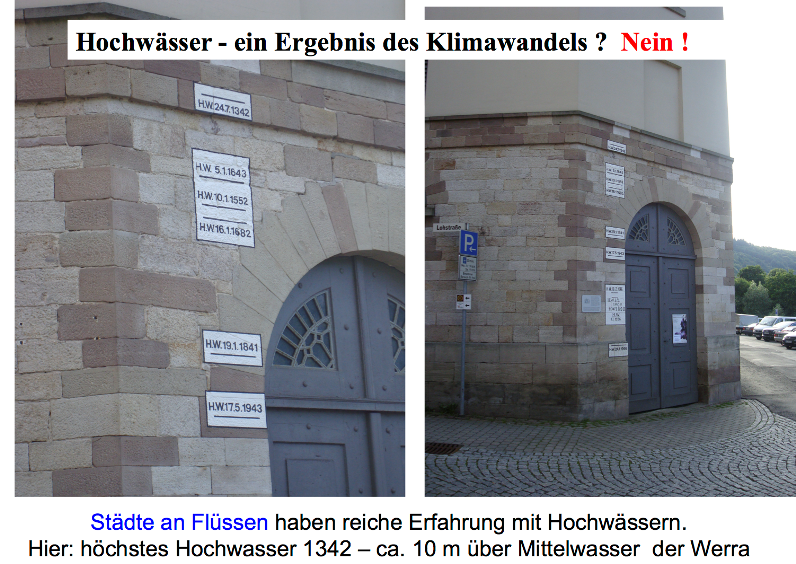

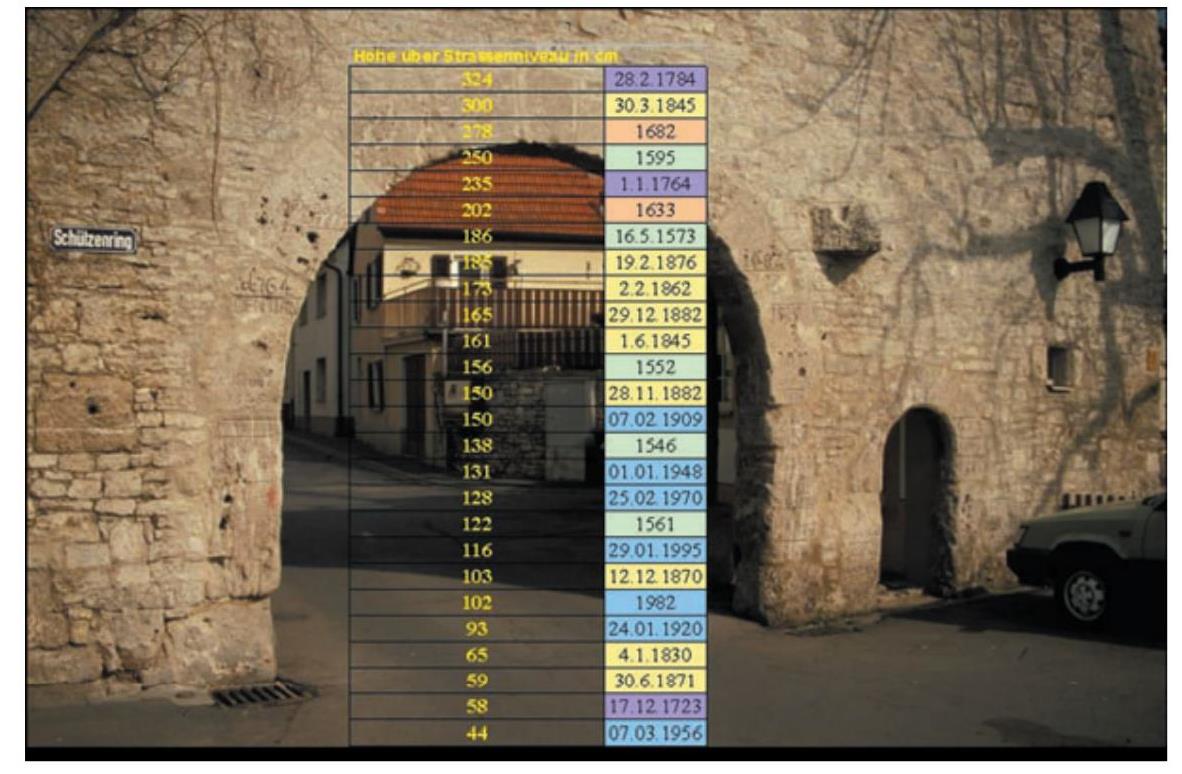 Hochwassermarken in Eibelstadt am Main
| 1342 |
Bis heute unübertroffen ist das Elbe-Hochwasser Ende Juli 1342. Diese Jahrtausendflut soll beispielsweise in Meißen in der Franziskanerkirche die Altäre überstiegen haben, wäre also um einiges höher gewesen als die jüngste Überschwemmung, die Meißens historische Altstadt schwer getroffen hat. Einzigartig war allerdings die regionale Ausdehnung der Unwetterkatastrophe von 1342, die etwa daran ablesbar ist, dass auch an Main, Donau und Rhein Brücken zerstört wurden. Viele Städte und Dörfer wurden von den anschwellenden Wassermassen, wie jüngst wieder erlebt, schlagartig getroffen. Auslöser war eine Großwetterlage, wie sie ähnlich in den Julimonaten 1897, 1927, 1997 und nunmehr im August 2002 aufgetreten ist. Die katastrophalen Auswirkungen des Hochwassers von 1342 lassen sich nicht nur an manchen impressionistischen Berichten spätmittelalterlicher Chronisten ablesen, die stets mit kritischer Vorsicht zu betrachten sind, sondern sie finden ihre Bestätigung in Untersuchungen der Landschaftsökologie. Die starken Niederschläge im Juli 1342 haben zu beträchtlichen Bodenerosionen geführt, die sich in den Schwemmfächern zahlreicher Flüsse und Bäche niedergeschlagen haben. Um das ganze Ausmaß der damaligen Katastrophe zu erfassen, muss man sich vergegenwärtigen, dass es das moderne Problem der Bodenversiegelung, das die Wirkung der Niederschläge noch steigert, vor dem 19. Jahrhundert praktisch nicht gegeben hat. Quelle:
Heinrich Röck: Wissenschaft Klima Politik (p.41)
|
||
| 1362 |
Januar 1362, Nordfriesland. Während mehrerer Tage andauernden
Nordweststürmen und extrem hohen Wasserständen ereignete
sich "die Grote Mantränke" mit Tausenden von Toten, riesigen Landverlusten
und dem Untergang der Stadt Rungholt. Die Gründe dafür sind nun gut bekannt, u. a. der Meeresspiegelanstieg. Der Mythos will es besser wissen: Es war die Strafe Gottes für die durch Handel und Ausbeutung von Rohstoffen reichen, sittlich verkommenen Bewohner Rungholts. Quelle:
Heinrich Röck: Wissenschaft Klima Politik (p.52)
|
||
| 1672 |
Ursache des ersten historisch belegten Murgangs des Varuna-Bachs in der
Schweiz 1672 soll angeblich eine Frau gewesen sein, die dann auch prompt
bei einem Hexenprozess für diese "Untat" verurteilt wurde.
Eine schweizerische Untersuchung beschrieben auf Basis von 122 Hochwassern aus den vergangenen fünf Jahrhunderten stellt deutlich gewisse zeitliche Konzentrationen und Schwerpunkte im Unwettergeschehen der Schweiz fest. Vergleicht man die Hochwasserhäufungen mit den jeweiligen Klimaphasen, so erkennt man allerdings keine klaren Zusammenhänge und auch keine Periodizität. Häufungen von Hochwassern können in allen Klimaphasen vorkommen, sowohl in kalt-kühlem, verschlechtertem Klima, als auch in Perioden kontinentalen Klimas und in Wärmephasen. Das Unwettergeschehen hält sich also an keine starren Regeln, ein empirisches Indiz, dass eine Klimaerwärmung nicht unbedingt auch eine Häufung schwerster Unwetter mit sich bringen muss, wie heute gerne extrapoliert wird. Quelle:
Heinrich Röck: Wissenschaft Klima Politik (p.42)
|
||
|
1784 |
|
||
| 1862 | en California Megaflood 1861/62 | ||
| 1910 | de Überflutungen 1910 in Paris | ||
| 1927 |
|
||
| 2010 |
de
Die Überschwemmungen in Pakistan 2010: Klimaänderung oder natürliche Variabilität? en The 2010 Pakistan floods - nothing to do with "climate change |
||
| 2011 | de 2010/2011: Überschwemmungen in Australien und Brasilien | ||
| 2021 | de 2021: Überschwemmungen in Europa - grosse Schäden vor allem in Deutschland |
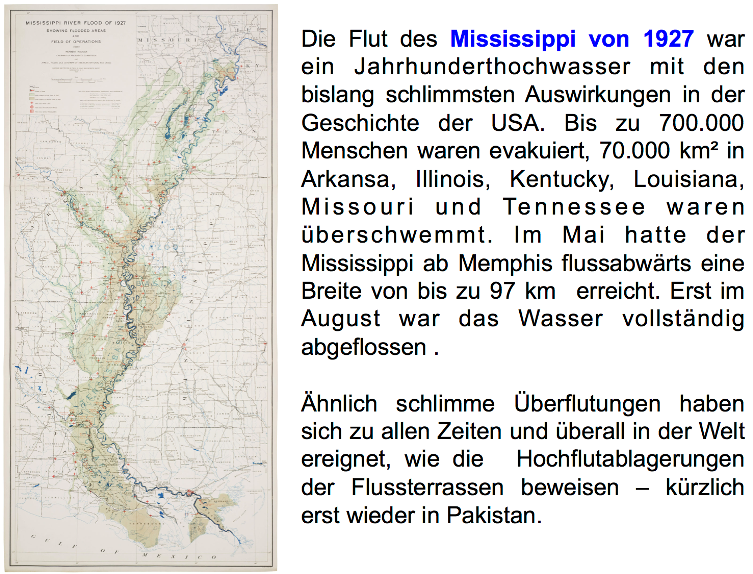
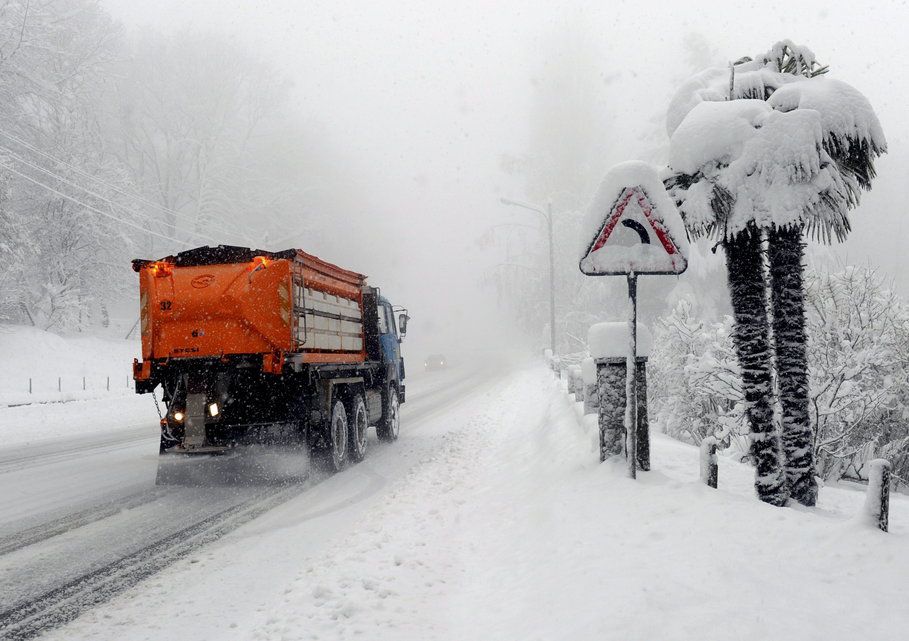


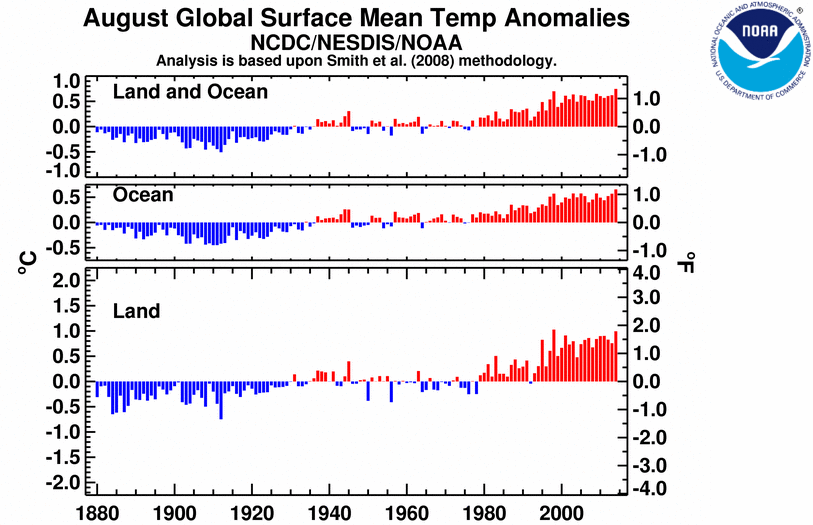
| de | en | fr |
|---|---|---|
|
Wetterphänomene Auswirkungen auf Hochwasser/Überschwemmungen |
Weather phenomena Impacts on floods |
Phénomènes météorologiques Impact sur les inondations |
↑ 2021-08
-
EIKE Europäisches Institut für Klima und Energie
Chris Frey
2021-08-08 de Kältereport Nr. 22Einführung des Übersetzers: Diese und alle weiteren Kältereports speisen sich überwiegend aus den Quellen Electroverse und iceagenow.info.
Auch in diesem Report finden sich nur Meldungen von der Südhemisphäre, wenngleich deren Zahl nun aber abnimmt.
In unseren Medien wird - wie könnte es anders sein - über die Hitzewellen vor unserer Haustür schwadroniert.
Schlimm genug sind sie sicher.
Aber 1. ist es im Sommer am Mittelmeer fast IMMER trocken,
und 2. ist die Hitze in diesem Jahr vielleicht stärker ausgeprägt als in den Vorjahren, aber keineswegs beispiellos.