3.3.7 Biosphäre der Erde
en Biosphere
fr Biosphère
Mit folgenden Links wird von anderen Webseiten auf diese Seite verwiesen:
▶Biosphäre (Auswirkung auf Lebewelt)| de | en | fr |
|---|---|---|
|
Auswirkungen des Klimawandels Biosphäre der Erde Auswirkungen auf die Lebewelt |
Impacts of Climate Change Biosphere Impacts on the World of Life |
Conséquences du changement climatique Biosphère Impacts sur la vie terrestre |
⇧ de Verzeichnis en Contents fr Sommaire
⇧ Welt-Info

|
Biosphäre / Biodiversity / Biodiversité | ||
| ►Der Wasserplanet (Ernst-Georg Beck) |
de
▷CO2, ein essentieller Naturstoff
(Wayback ohne Bilder)
▷Biologische Eigenschaften von CO₂ (Wayback‑Archiv) |
||
| Wikipedia |
|
||
| Vademecum |
▶Biosphäre (Auswirkung auf Lebewelt)
▶Welt-Info |
⇧ de Allgemein en General fr Générale


|
|

| de | en | fr |
|---|---|---|
|
Klimawandel Auswirkungen des Klimas |
Impacts of Climate Change Impacts of Climate Change |
Changement climatique Impacts du changement climatique |
⇧ de Text en Text fr Texte
⇧
1 Ozeanversauerung: Auswirkungen auf den Säuregehalt
(PH-Wert) der Meere
en Ocean acidification
fr Acidification des océans
Mit folgenden Links wird von anderen Webseiten auf diese Seite verwiesen:
▶Ozeanversauerung| de | en | fr |
|---|---|---|
|
Biosphäre der Erde Ozeanversauerung Auswirkungen auf den Säuregehalt (PH-Wert) der Meere |
Biosphere Ocean acidification Effects on ocean acidity (pH) |
Biosphère Acidification des océans Effets sur l'acidité des océans (pH) |
Links zur Klimaschau

|
▶Ozeanversauerung |
⇧ de Verzeichnis en Contents fr Sommaire
- 2016
- de NOAA-Forscher können keinen Ort auf der Erde benennen, an dem die Ozeanversauerung bereits Schäden angerichtet hätte
- de Folgen der Ozeanversauerung offenbar weniger dramatisch als gedacht
- de Warum die Ozeane nicht versauern können
- 2014
- de Ozeanversauerung: Der böse kleine Bruder der Klimaerwärmung
- 2012
- de Welche Rolle spielt die Ozeanversauerung?
- 2011
- de Definitive Entwarnung: Ozeane sind alkalisch und nicht sauer
- 2010
- de "Übersäuerung der Ozeane" - ein alarmistisches Märchen
- de
Europäisches Experiment zur Ozeanversauerung in Spitzbergen
en EPOCA (European Project on OCean Acidification) - en Ocean acidification: the "evil twin of global warming"
- 2009
- de Droht unseren Ozeanen die Übersäuerung durch den CO2 Anstieg?
- de Panik & Entwarnung
- 2007
- en Are oceans becoming more acidic and is this a threat to marine life
⇧ Welt-Info
|
|
Ozeanversauerung / Ocean acidification / Acidification des océans | |||
| ▷Die Kalte Sonne Blog‑Themen Vahrenholt/Lüning ▶Die kalte Sonne | ▷Ozeanversauerung | |||
| Wikipedia |
|
|||
| Vademecum |
▶Ozeanversauerung
▶Welt-Info |
|||
| Siehe auch: |
▶Korallen / Corals / Corails
▶Auswirkung auf Plankton |
⇧ de Allgemein en General fr Générale
Meist nur Panikmache
en Generally: Panic
fr Généralement: La panique
| de |
▶ Internet-Terror: Manipulation von Wikipedia durch einen Administrator  Video: Die dunkle Seite der Wikipedia
▶ Das Lexikon der Lügen ▶ Vom Onlinelexikon zur Propagandamaschine: Zensur, Einschüchterung und arglistige Täuschung ▶ Wikipedia: Klima-Fälscher Connolley: Der Mann, der unser Weltbild umschrieb ▶Die dunkle Seite von WIKIPEDIA: EIKE Zensur - kurz und knapp [Who is who (Skeptische Institute): EIKE; Wikipedia: Websites, Opfer: EIKE, Manipulatoren: Andol] |
|||||
|---|---|---|---|---|---|---|
| en |
▶ At Wikipedia, one man engineers the debate on global warmingator |
|||||
| fr |
▶ A Wikipedia, un homme dirige le débat sur le réchauffement climatique et à sa manière |
⇧ de Text en Text fr Texte
↑ 2016
↑ NOAA-Forscher können keinen Ort auf der Erde benennen, an dem die Ozeanversauerung bereits Schäden angerichtet hätte
-
Die kalte Sonne (Fritz Vahrenholt & Sebastian Lüning)
2016-09-17 de NOAA-Forscher können keinen Ort auf der Erde benennen, an dem die Ozeanversauerung bereits Schäden angerichtet hätteDie Werte liegen deutlich im alkalischen Bereich
Der pH-Wert der Ozeane hat sich in den letzten Jahrzehnten leicht von 8,15 auf 8,05 reduziert.
Obwohl diese Wert deutlich im alkalischen Bereich liegen (der bis pH 7 reicht), wird in der Fachsprache von einer "Ozeanversauerung" gesprochen.
Der Trend ist deutlich und wird von allen Akteuren der Klimadiskussion anerkannt.
Mithilfe von Satelliten kann der pH-Wert der Ozeane heute bequem ermittelt werden.
Die Debatte dreht sich vor allem um die Folgen, die diese leichte pH-Veränderung bei den Meeresbewohnern auslösen könnte.
Lange glaubte man, dass sich hier möglicherweise eine Katastrophe anbahnt.
Als man sich die Thematik dann im Rahmen von einer Vielzahl von Studien näher anschaute, gab es eine Teilentwarnung.
Es ist zum Glück doch nicht so schlimm, wie einige Forscher zunächst befürchtet hatten.
Im Folgenden wollen wir die aktuellen Ergebnisse aus der Wissenschaft vorstellen.
Journal of Marine Science
Im Februar 2016 erschien im Journal of Marine Science ein Sonderband zur Ozeanversauerung.
In einem einleitenden Übersichtsartikel ruft Howard Browman die Forschergemeinde zu verstärktem Skeptizismus auf.
Durch die bevorzugte Publikation von dramatisierenden Artikeln sei in der Literatur eine inhaltliche Schieflage entstanden, die es auzugleichen gilt.
Hier der Abstract seines Beitrags
Applying organized scepticism to ocean acidification research
James Cook University
Im Oktober 2015 hatte bereits die James Cook University in einer Pressemitteilung darauf hingewiesen, dass sich das Wachstum einiger Organismengruppen unter saureren Bedingungen sogar verbessert
Scientists find some thrive in acid seas
The researchers found that the more acidic the water was, the more the plant grew.
NOAA-Wissenschaftler
NOAA-Wissenschaftler mussten zudem kürzlich einräumen, dass es noch immer keinen Ort auf der Erde gibt, wo eindeutige Schäden aufgrund der Ozeanverauerung zu beklagen wären.
Dieses wichtige Eingeständnis machten sie jedoch nicht in einem öffentlichen Bericht, sondern entstammt einer Emailkorrespondenz, die erst auf juristischem Wege ans Licht kam.
Auszug aus Quadrant Online: The Fishy 'Science' of Ocean Acidification
The Question:
Can the authors give us more specific, descriptive images about how acidification has already affected the oceans?The Answer:
Unfortunately, I can't provide this information to you because it doesn't exist.As I said in my last email, currently there are NO areas of the world that are severely degraded because of OA or even areas that we know are definitely affected by OA right now.
Fachblatt Ocean Acidification
Im Juli 2015 beklagten sich Christopher Cornwall und Catriona Hurd im Fachblatt Ocean Acidification darüber, dass ein großer Teil der Laborexperimente zur Ozeanversauerung methodisch fehlerhaft seien.
Daniel Cressey berichtete darüber in Nature:
Crucial ocean-acidification models come up short
Poorly designed studies leave future uncertain for sea dwellers.
FRONTIER CENTRE FOR PUBLIC POLICY
Lesenswerte Zusammenfassungen zur Ozeanversauerungsforschung erschienen auch kürzlich
von Alan Longhurst: Ocean acidification discussion thread
and Patrick Moore: Ocean Acidification? Species Extinction? Does evidence support the claim?
Moore suggests that there is little to no evidence supporting the claim that higher levels of CO2 and lower pH in the oceans will lead to species extinction.
Moore asserts that all species, through genetic evolution, have shown that they are capable of adapting to radical changes in their environments.
Indeed, he states that research has shown that "marine species have survived though millions of years during which CO2 was at much higher levels in the atmosphere".
↑ Folgen der Ozeanversauerung offenbar weniger dramatisch als gedacht
-
Die kalte Sonne (Fritz Vahrenholt & Sebastian Lüning)
2016-04-22 de Folgen der Ozeanversauerung offenbar weniger dramatisch als gedachtErinnern Sie sich noch an früher, als uns erklärt wurde, die Ozeane wären bald Todeszonen?
Der angebliche Schuldige:
Die böse Ozeanversauerung. Etliche Jahre und viele Studien später hat sich dieses pauschale Schreckensszenario als falsch herausgestellt.Nun muss sogar die ansonsten dem Klimaalarm zugeneigte Redaktion des Deutschlandfunk (DLF) einräumen, dass die Dinge viel komplexer sind als lange angenommen.
Am 6. April 2016 brachte der DLF den folgenden Beitrag:
Populationen einer Art kommen mit Ozeanversauerung unterschiedlich gut zurecht.
Schon seit einigen Jahren beschäftigen sich Forscher mit der Frage, was passiert, wenn die Ozeane saurer werden.
Denn wenn der Kohlendioxid-Gehalt in der Luft steigt, löst sich ein großer Teil des Kohlenstoffs im Meerwasser.
Mit Labor- und Freilandexperimenten versuchen die Forscher abzuschätzen, wie Organismen auf diese Ozeanversauerung reagieren werden.
Was sie dabei aber bisher wenig beachtet haben: Verschiedene Population derselben Art können offenbar recht unterschiedlich auf höhere CO2-Konzentrationen im Wasser reagieren.
[...] Dass die Individuen der gleichen Art sehr unterschiedlich auf die Ozeanversauerung reagieren können, sollten Forscher in Zukunft stärker berücksichtigen, meint Hannah Wood.
Denn wenn sich eine lokale Population von niedrigeren pH-Werten im Experiment nicht beeindrucken lässt, kann es dennoch sein, dass ihre Verwandten sehr wohl darunter leiden.
[...] Auf der anderen Seite zeigen Woods Ergebnisse, dass es vielleicht in jeder Art Populationen oder zumindest Individuen gibt, die besser mit der Ozeanversauerung zurechtkommen.
Das könnten vor allem Gemeinschaften sein, die sich in ihrem Lebensraum schon an andere Stressfaktoren gewöhnen mussten.
↑ Warum die Ozeane nicht versauern können
-
EIKE Europäisches Institut für Klima und Energie
Fred F. Mueller
2016-02-05 de Warum die Ozeane nicht versauern könnenDas Erbe der Urzeit
Der Carbonatpuffer wirkt interessanterweise nicht nur im menschlichen Körper, sondern in modifizierter Form auch im Meer.
Und nicht nur zufällig entspricht das Ionenverhältnis in unserem Blut auch recht gut demjenigen im Meer (Bild 8), wo es bei 94:2:2:100 liegt.
Diese Zusammensetzung des Meerwassers ist eine Konstante der Entwicklung des heutigen Lebens, denn sie hat sich in den letzten ca. 700 Mio. Jahren kaum verändert.
Unsere Zellen werden vom Blut, der Lymphe und anderen Körperflüssigkeiten in einem wässrigen Milieu umspült, ernährt und am Leben erhalten.
Dieses Milieu weist bezüglich wesentlicher anorganischer Ionen und des pH-Werts große Übereinstimmungen mit dem Meerwasser auf.
Dies ist nach Erkenntnissen der Evolutionsbiologie kein Zufall, sondern als Erbe unserer Abstammung von Meereslebewesen anzusehen [NEKA].
In diesem Zusammenhang fällt noch eine weitere Besonderheit auf:
Der CO2-Partialdruck im Blut liegt wegen des im Vergleich zur Atmosphäre 100fach höheren CO2-Anteils in der Ausatemluft (4 % statt 400 ppm) um einen Faktor 100 höher als beim Regenwasser.
Obwohl die CO2/-Carbonatreaktion im Prinzip die gleiche ist wie die im Regenwasser, bleibt der pH-Wert im Blut dennoch sicher im basischen Bereich.
Im Regenwasser-Milieu würde der pH-Wert bei einem vergleichbar hohen CO2-Partialdruck mit etwa 3,5 bis 4 dagegen schon deutlich im sauren Bereich liegen.
Der Blutpuffer liefert daher einen sehr deutlichen Hinweis darauf, dass selbst ein atmosphärischer CO2-Gehalt, der um den Faktor 100 höher läge als heute, in einem dem Meerwasser sehr ähnlichen Milieu keine "Versauerung" herbeiführen würde, welche das Überleben von Organismen gefährden könnte.
Zudem gibt uns die Wirkungsweise des Blutpuffers auch einen Hinweis auf eine ferne Vergangenheit, in der sich viel mehr CO2 in der Atmosphäre befand als heute:
Der sehr hohe CO2-Gehalt in der Ausatemluft bedingt, dass wir selbst gegen einen sehr viel höheren CO2-Partialdruck noch den gasförmigen "Verbrennungs-Abfall" unseres Stoffwechsels ohne Probleme loswerden könnten.
Erst ab 4 % wären wir nicht mehr imstande, CO2 mit der Atemluft abzuführen, was zum Erstickungstod führen würde.
Weitere diesbezügliche Hinweise finden sich auch, wenn man die heutigen Erkenntnisse der Arbeitsmedizin einbezieht: Der MAK-Wert für CO2 liegt bei 5.000 ppm, recht nahe bei den vermutlich 6.000-8.000 ppm, die vor rund 550 Mio. Jahren in der Erdatmosphäre vorgelegen haben [MAK, ARBE, CALU].
Unser Körper ist offensichtlich seit Urzeiten darauf konditioniert, auch mit vielfach höheren atmosphärischen CO2-Gehalten als heute zurechtzukommen.
Der Calciumpuffer im Meer
Wie schon weiter oben ausgeführt, wirkt der Carbonatpuffer im Meer sehr ähnlich wie der im menschlichen Körper.
Gegenüber der Situation bei pristinem Regenwasser muss man die Betrachtung um eine weitere Reaktion erweitern, nämlich um diejenige des Carbonats bzw. Bicarbonats mit Calcium-Ionen unter Bildung von Calciumcarbonat CaCO3 sowie Calciumdihydrogencarbonat Ca(HCO3)2.
Während Regenwasser durch die Reaktion mit dem aus der Luft aufgenommenen CO2 einen pH-Wert von 5,5 annimmt, stellt sich bei zusätzlichem Kontakt von Regenwasser mit Marmor (dass ist ebenfalls Kalk) nach Auflösung von etwas Calciumcarbonat im Gleichgewicht ein pH-Wert von 8,3 ein [HÖLL].
Der Kontakt mit Calciumionen wirkt sich verstärkend auf die Wirkung des Carbonatpuffers aus.
Bei den im Meer üblichen pH-Werten von 7,9 - 8,5 ist das Gleichgewicht der Carbonatreaktion soweit zur rechten Seite verschoben, dass fast nur Bicarbonat vorliegt.
In diesem System hängt die Gesamtkonzentration von gelöstem, anorganischem Kohlenstoff (DIC = dissolved inorganic carbon; im Meer ca. 2,5 mmol/ l) von der Konzentration der gelösten Erdalkalien (vor allem Ca und Mg, Bild 9) ab.
Mit ihnen bildet die Kohlensäure Salze, die dem Gleichgewicht entzogen sind.
Dadurch kann weitere Kohlensäure gebildet werden und eine entsprechende Menge CO2 aus der Luft nachdiffundieren.
Je mehr Calcium (und Magnesium) im Wasser enthalten sind, umso mehr DIC kann auch gelöst sein. Deshalb ist das erdalkalienreiche Meerwasser stark gepuffert, während weiche Süßwässer nur schwach gepuffert sind.
Auch der emeritierte Geologieprofessor Dr. Friedrich-Karl Ewert und der Physikochemiker Dr. Siegfried Dittrich weisen in einer Untersuchung aus dem Jahre 2014 [EWDI] darauf hin, dass die aus magmatischen Gesteinen stammenden stark basischen Alkali- und Erdalkali-Elemente eine stabile Alkalinität des Meerwassers bewirken.
Diese großen Mengen starker Basenbildner sind so wirksam, dass sie eine Versauerung der Ozeane durch Bildung von Kohlensäure aufgrund des Zutritts von CO2 aus verschiedenen Quellen zuverlässig verhindern.
Der gleichen Ansicht ist auch Steve Burnett, der mit Blick auf die Puffer-Kapazität der Ozeane feststellt, dass "es chemisch wirklich unmöglich ist, carbonatabhängige Lebewesen im Wege einer Ozean-Versauerung durch CO2 zu schädigen".
Er weist darauf hin, dass sich die meisten kalkschalenbildenden Organismen zu einer Zeit entwickelten, in der die CO2-Konzentration über 8.000 ppm lag.
Es sei unverständlich, wieso man annehmen könne, dass solche Organismen, deren Vorgänger in einem Umfeld aufgeblüht seien, das durch CO2-Konzentrationen von bis zu > 8.000 ppm (d.h. um > 2.000 % über dem heutigen Pegel) geprägt war, heute mit einer Zunahme von lediglich 30 % nicht zurecht kommen sollten.
Die Tricks der Pufferleugner
Das Interessante an der Diskussion über die angebliche Meerwasserversauerung ist, dass diejenigen, welche diese These vertreten, im Prinzip selbst Leugner sind:
Sie leugnen Tatsachen, die längst als Stand der Wissenschaft gelten. Dabei werden teils plumpe Tricks eingesetzt, vor allem dann, wenn man es mit Laien zu tun hat, welche die Materie nicht kennen.
Diesen setzt man dann oft falsche, im Prinzip als unredlich einzustufende Erklärungen und Pseudo-Experimente vor und führt sie dadurch in die Irre.
Auf diese Weise werden dann Journalisten, Politiker, Lehrer oder Schüler indoktriniert.
Ein häufig anzutreffender Kniff besteht darin, die komplexen Wechselwirkungen des realen Milieus "Meerwasser" zu verschweigen und mit hohen, völlig unrealistischen CO2-Konzentrationen z.B. in Mineralwasser, mit konzentrierten Säuren oder sonstigen unrealistischen Vorgaben zu arbeiten.
Schon die Verwendung von Süßwasser bzw. CO2-angereichertem Süßwasser statt Salzwasser für Experimente, welche die "Meeresversauerung" beweisen sollen, ist, wie oben dargelegt, ein Taschenspielerstrick.
↑ 2014
↑ Ozeanversauerung: Der böse kleine Bruder der Klimaerwärmung
-
Die kalte Sonne (Fritz Vahrenholt & Sebastian Lüning)
Dr. D. E. Koelle
2014-10-16 de Ozeanversauerung: Der böse kleine Bruder der KlimaerwärmungDie angebliche globale Klimaerwärmung, die schon seit 18 Jahren nicht mehr stattfindet, hat durch Dr. Mark vom AWI, Bremerhaven, einen "bösen kleinen Bruder" bekommen.
Nun wurde es auch höchste Zeit, einen solchen Bruder zu finden, nachdem die Klima-Schwester immer mehr schwächelt.
Es handelt sich dabei um die nicht ganz unbekannte angebliche "Ozeanversauerung", die vom AWI in einer Pressemitteilung vom 8. Oktober 2014
zu einer neuen globalen Gefahr erhoben wurde wurde:
einschließlich "dramatischer Auswirkungen" ,"Milliardenkosten" und die Behauptung, dass der pH-Wert heute 10mal schneller sinken würde als in der Vergangenheit.
Kein Wort davon, dass die Ozeane tatsächlich keineswegs "sauer", sondern mit pH-Werten zwischen 7,8 bis 8,1 eindeutig basisch sind.
Das ist eine klare Verfälschung wissenschaftlicher Fakten (die Bürger werden es wohl schon nicht merken).
Wenn überhaupt, dann handelt es sich objektiv gesehen um eine Verringerung der Alkalizität und hat mit einer "Versauerung" nichts zu tun, die erst unterhalb von 6,9 beginnen würde.
Dabei ist die Behauptung der angeblichen pH-Wert-Reduzierung eine nicht minder unseriöse Behauptung.
Denn es gibt kein globales pH-Messnetz, das es erlauben würde, eine solche Behauptung zu belegen.
Lokale Messreihen zeigen eine Schwankung der pH-Werte um +/- 0,1 Punkte.
Belegt ist jedoch die Tatsache,
dass in der Erdgeschichte zu 90% der Zeit die CO2-Anteile in der Atmosphäre wesentlich höher waren als die bescheidenen 400 ppm von heute.
Der Durchschnitt der letzten 300 Millionen Jahre lag bei 2000 ppm (siehe das Diagramm von Retallack, das auf der Veränderung der Stomata-Öffnungen von Gingko-Pflanzen basiert).
Weder das wesentliche höhere CO2-Niveau der Erdgeschichte, noch die Maxima bis zu 6000 ppm haben eine "Versauerung der Ozeane" bewirkt.
Wenn die Behauptungen über einen schädlichen Einfluss auf die Korallen stimmen würden, hätten die Korallen schon vor vielen Millionen Jahren mehrfach aussterben müssen.
Der CO2-Gehalt der Atmosphäre in den letzten 300 Millionen Jahren


| Dietrich E. Koelle |
Dr.
▶Dietrich E. Koelle: Who is who (Skeptiker) |
↑ 2012
↑ Welche Rolle spielt die Ozeanversauerung?
-
Die kalte Sonne (Fritz Vahrenholt & Sebastian Lüning)
2012-04-29 de Welche Rolle spielt die Ozeanversauerung?
Eine Wissenschaftssparte mit noch vielen FragezeichenDurch Emissionen fossiler Kohlenwasserstoffe ist der CO2-Gehalt der Atmosphäre in den letzten 150 Jahren von 0,028 Prozent auf 0,039 Prozent angestiegen.
Das Verhältnis zwischen atmosphärischem und in den Ozeanen gebundenem CO2 ist seit 1850 trotz ansteigendem, anthropogenem CO2-Ausstoß gleichgeblieben und das Puffervermögen der Ozeane hat daher noch nicht abgenommen.
Die Weltmeere speichern momentan um die 40.000 Gigatonnen Kohlenstoff, wobei im Ozean damit zur Zeit etwa 50-mal mehr CO2 gespeichert ist als in der Atmosphäre, und 20-mal mehr als in der terrestrischen Biosphäre und den Böden.
Der limitierende Faktor ist der Transport des aufgenommenen Kohlenstoffs in die tieferen Meeresschichten ist die behäbig operierende "biologische Pumpe":
CO2 wird dabei von Meeresorganismen über Photosynthese aufgenommen und in organische Substanz eingebaut.
Absterbende Organismen sinken in die Tiefe, was den Kohlenstoff aus der Oberflächenschicht entfernt.
Zu beachten ist weiterhin, dass der CO2-Druckunterschied zwischen Atmosphäre und Ozeanwasser regional variiert.
Es gibt daher Meeresgebiete, die CO2 aus der Atmosphäre aufnehmen und Meeresgebiete die CO2 an die Atmosphäre abgeben.
Während sich das CO2 in der Atmosphäre weitestgehend chemisch neutral verhält, also nicht mit anderen Gasen reagiert, ist es im Ozean chemisch aktiv.
Gelöstes CO2 trägt prinzipiell zur Absenkung des pH-Wertes bei und das Meer wird saurer.
Dieser Effekt ist bereits messbar.
Der pH-Wert des Oberflächenwassers der Meere ist von 8,2 im Mittel um 0,1 Einheiten gesunken.
Ein pH-Wert von 7 ist neutral.
Von einem ganzzahligen pH-Wert zum nächsten ändert sich die Wasserstoff-Ionen-Konzentration um eine Zehnerpotenz.
Das Meerwasser ist daher heute noch immer deutlich basisch und liegt nicht im sauren pH-Bereich, wird jedoch offenbar "saurer".
↑ 2011
↑ Definitive Entwarnung: Ozeane sind alkalisch und nicht sauer
|
|
|
|
Wenn überhaupt, dann handelt es sich objektiv gesehen um eine Verringerung der Alkalizität und hat mit einer "Versauerung" nichts zu tun, die erst unterhalb von 6,9 beginnen würde. |
|

-
EIKE Europäisches Institut für Klima und Energie
Friedrich-Karl Ewert (Geologe) und Siefried Dittrich (Physikochemiker)
2011-11-30 de Versauerung der Ozeane? Geo-chemisch unmöglich !Das von vom IPCC und seinen Zuarbeitern intensiv propagierte Modell einer Versauerung der Ozeane durch höhere CO2-Konzentrationen der Atmosphäre widerspricht den naturgegebenen Fakten und sollte aufgegeben werden.
↑ 2010
↑ "Übersäuerung der Ozeane" - ein alarmistisches Märchen
Willis Eschenbach
-
Klimaskeptiker Info
2010-06-20 de "Übersäuerung der Ozeane" - ein alarmistisches Märchen
-
Watts Up With That? (Antony Watts)
2010-06-19 en The Electric Oceanic Acid Test
↑
Europäisches Experiment zur Ozeanversauerung in Spitzbergen
en
EPOCA (European Project on OCean Acidification)
de Aus der Panik-Küche en From the panic laboratory fr De la marmite des alarmistes
Das umfassende EU FP7 Integrationsprojekt EPOCA (European Project on OCean Acidification) startete im Mai 2008.
Sein Ziel ist es, Wissenslücken zur Ozeanversauerung und deren Konsequenzen zu schließen.
Die Kooperation verbindet mehr als 100 Wissenschaftler von 27 Instituten aus neun Ländern.
Die Forschung des auf vier Jahre angelegten Projektes wird von der Europäischen Kommission gefördert.
Folgende Partner-Institute von EPOCA nehmen am Experiment auf Spitzbergen teil:
-
Alfred-Wegener-Institut für Polar- und Meeresforschung (AWI, Deutschland),
-
Centre National de la Recherche Scientifique (CNRS, Frankreich),
-
Leibniz-Institut für Meereswissenschaften (IFM-GEOMAR, Deutschland),
-
Natural Environment Research Council (NERC, Großbritannien),
-
Netherlands Institute of Ecology (NIOO, Niederlande),
-
Plymouth Marine Laboratory (PML, Großbritannien),
-
Royal Netherlands Institute for Sea Research (NIOZ, Niederlande),
-
Station Biologique de Roscoff (Frankreich),
-
University of Bergen (UiB, Norwegen).
Weitere Teilnehmer:
-
Norsk Polarinstitutt (Norwegen),
-
University of Aarhus (Dänemark),
-
University of Oslo (Norwegen)
Das Experiment wird logistisch neben Greenpeace von der französisch-deutschen Forschungsstation AWIPEV und der Forschungseinrichtung Kings Bay sowie finanzieller Unterstützung durch das EU Projekt MESOAQUA (Network of European marine mesocosm facilities) unterstützt.
-
IFM-GEOMAR
2010-06-02 de Eine Lebensgemeinschaft in Auflösung
↑ Ocean acidification: the "evil twin of global warming"
-
Watts UP With That? (Antony Watts)
2010-03-30 en Ocean acidification: the "evil twin of global warming"
↑ 2009
↑ Droht unseren Ozeanen die Übersäuerung durch den CO2 Anstieg?
R. Leistenschneider
-
EIKE Europäisches Institut für Klima und Energie
R. Leistenschneider
2009-07-19 de Droht unseren Ozeanen die Übersäuerung durch den CO2 Anstieg?
2009-07-19 de Versauerung_der_Meere
↑
Panik & Entwarnung
en Panic & All-clear
fr Panique & fin de l'alerte
en Panic
-
The world's marine ecosystems risk being severely damaged by ocean acidification unless there are dramatic cuts in CO2 emissions, warn scientists.
BBC
2009-01-30 en Acid oceans 'need urgent action'
en All-clear
-
en This sounds very alarming, so being diligent researchers we should of course check the facts.
The ocean currently has a pH of 8.1, which is alkaline not acid.
In order to become acid, it would have to drop below 7.0.
According to Wikipedia "Between 1751 and 1994 surface ocean pH is estimated to have decreased from approximately 8.179 to 8.104."
At that rate, it will take another 3,500 years for the ocean to become even slightly acid.
There seems to be no shortage of theories about how rising CO2 levels will destroy the planet, yet the geological record shows that life flourished for hundreds of millions of years with much higher CO2 levels and temperatures.
Watts up with that? (Antony Watts)
2009-01-31 en Ocean Acidification and Corals
fr Vous allez comprendre:
-
Il y a cinquante cinq millions d'années,
pour des raisons inconnues mais sûrement pas du fait de l'homme qui
n'existait pas à l'époque, non plus que des dinosaures qui venaient
de disparaître, la proportion de CO2 dans l'atmosphère était très
élevée : En gros trois fois plus qu'aujourd'hui.
On estime que la température du globe était de 5°C supérieure à
celle d'aujourd'hui
En se dissolvant dans l'eau de mer, le CO2 se transforme en acide, ce qui représente un risque pour la faune et la flore des océans. Les planctons devraient être particulièrement touchés par cette acidification. Or, comme vous le savez, les planctons qui sont des microorganismes qui vivent en majorité près de la surface des océans, constituent la base de la chaîne alimentaire de la gent aquatique. Les petits poissons mangent du planctons (les baleines aussi). Le moyens mangent les petits. Les gros poissons mangent les moyens et ainsi de suite. Il est donc essentiel de comprendre comment survivent (ou ne survivent pas) les différentes espèces de plancton présentes dans les océans pour pouvoir imaginer ce qui pourrait arriver à l'ensemble des espèces qui vivent dans l'eau de mer qui occupe 75% de la planète. -
Voici ce que les chercheurs ont trouvé en examinant soigneusement
les restes fossilisés des marges océaniques :
En gros, les planctons ont résisté beaucoup mieux que prévu à l'acidification des eaux de mers. Certaines rares espèces fragiles ont disparu, c'est exact. Mais l'évolution et l'adaptation expliquées par Darwin ont joué leur rôle avec une grande efficacité en inventant de nouvelles espèces mieux adaptées qui elles ont survécu sans problème. D'autres, les plus résistantes, ont traversé cette période chaude et riche en CO2, sans dommage. De manière générale, les auteurs de l'article observent que l'acidification des couches superficielles des océans n'a pas entraîné de calcification des espèces en voie de mutation naturelle et que cette dernière s'est déroulé sans anicroches. On observe simplement une légère accélération du processus de l'évolution naturelle. La Nature est vraiment merveilleuse !
En bref, cher lecteur(trice) rassuré(e), les mécanismes auto-adaptatifs de la vie sur terre ont joué à plein pendant cette période chaude et riche en CO2 de l'histoire de la terre, sans générer de nouvelles monstruosités, sans produire d'extinction radicale des espèces de plancton comme nous le serinent quotidiennement les prédicateurs de l'apocalypse comme Al Gore ou Sir Stern !
-
Pensée unique
fr Les planctons survivent au CO2!
-
Pensée unique
fr Les océans se protègent du réchauffement
↑ 2007
↑ en Are oceans becoming more acidic and is this a threat to marine life
-
Seafriends Org
2007 en Are oceans becoming more acidic and is this a threat to marine life?
⇧
2 Korallen
en Corals
fr Corails
Mit folgenden Links wird von anderen Webseiten auf diese Seite verwiesen:
| de | en | fr |
|---|---|---|
|
Biosphäre der Erde Korallen |
Biosphere Corals |
Biosphère Corails |
Links zur Klimaschau
|
|
▶Korallen / Corals / Corails ▶Meeresspiegel |
de Allgemein en General fr Générale
▶Ozeanversauerung
▶Auswirkung auf Plankton
de Verzeichnis en Contents fr Sommaire
- 2020
- de
Peter Ridd: Über den wahren Zustand des Großen Barriere-Riffs
- 2018
- de Korallen sind wärmetoleranter geworden
- 2017
- de Sind fallende Meerespegel eine wesentliche Ursache der Korallenbleiche im "Korallendreieck" mit dem Great Barrier Reef?
- 2016
- de Logik-Check: Könnte der Anstieg des Meeresspiegels Korallenriffe vor dem Hitzetod retten?
- de
Lagen die Wissenschaftler falsch? Das Great Barrier Reef ist relativ
unbeeinflusst durch die globale Erwärmung
en Scientists Proven Wrong? Great Barrier Reef Found Relatively Unaffected By Global Warming - de University of Santa Barbara sieht Zukunft der Korallen hoffnungsfroh
- de Partnertausch: Hitzetolerante Algen-Symbionten schützen vor Korallenbleiche
- 2015
- en CO2 "acidification" does not harm Coral
- de Verweis auf Klimawandel lenkt von den wahren Gefahren für die Korallenriffe ab: Dynamit-Fischerei, Killer-Mikroorganismen, Seesterne, Abwassereinleitung und Rodung der Küstenwälder
- 2010
- en Not as bad as they thought: Coral can recover from climate change damage
- de
Kälte tötet Korallen
en Record cold in Florida kills reef coral - 2009
- en Carbon Dioxide, Global Warming and Coral Reefs: Prospects for the Future
de Text en Text fr Texte
↑ 2020
↑ Peter Ridd: Über den wahren Zustand des Großen Barriere-Riffs
13. Internationale EIKE-Klima- und Energiekonferenz
(IKEK-13) am 22. und 23. November 2019 in München.
2019-12-31 en/de)
Peter Ridd: Über den wahren Zustand des Großen Barriere-Riffs
Deutsche Version
Das große Barriere-Riff vor Australien stehe laut den Alarmisten klimawandelbedingt vor dem Absterben.
Der Korallen-Experte widersprach dieser Auffassung und wurde deswegen von seiner Universität entlassen.
Er betont, daß Phänomene wie die Korallenbleiche nur relativ kurzlebige und schnellwachsende Arten und damit Teile des Barriere-Riffs beträfen
und zudem reversibel seien.
Die natürliche Farbe der Korallenskelette sei weiß oder gelb; die Farbe käme von Symbionten, den Zooxanthellen.
In 200 Millionen Jahren der Evolution hätten sich die Korallen als sehr anpassungsfähig erwiesen.
Argumente zur Übersäuerung durch CO₂ etc. seien falsch oder übertrieben.
Dem Großen Barriere-Riff gehe es tatsächlich gut; man kann sich selber davon überzeugen.
| Peter Ridd |
Australian physicist, author, and former professor at
James Cook University (JCU), North Queensland, Australia. He received a Bachelor of Science degree in Physics from James Cook University in 1978, and later a PhD in Physics from that same institution in 1980. At this time, he also joined the Australian Institute of Marine Science. He started studying the Great Barrier Reef in 1984, mainly focusing on ocean currents and the movement of sediment. While teaching at James Cook University, Ridd was the head of the Physics department from 2009 to 2016, and head of the Marine Geophysical Laboratory at that institution for 15 years. ▶Peter Ridd: Who is who (Skeptiker) ▶Ausschluss und Maulkorb für Kritiker (Climate skeptic professor Peter Ridd fired for his views by James Cook University) ▶Biosphäre der Erde (Korallen) |
↑ 2018
↑ Korallen sind wärmetoleranter geworden
-
Basler Zeitung
2018-08-07 de Korallen sind wärmetoleranter gewordenEine Studie gibt Hoffnung: Korallen können sich offenbar schneller an wärmere Temperaturen anpassen als erwartet.
↑ 2017
↑ Sind fallende Meerespegel eine wesentliche Ursache der Korallenbleiche im "Korallendreieck" mit dem Great Barrier Reef?
-
EIKE Europäisches Institut für Klima und Energie
Helmut Kuntz
2017-04-11 de Sind fallende Meerespegel eine wesentliche Ursache der Korallenbleiche im "Korallendreieck" mit dem Great Barrier Reef?Wer kennt sie nicht, die regelmäßigen Meldungen der durch den Klimawandel-sterbenden Korallen
↑ 2016
↑ Logik-Check: Könnte der Anstieg des Meeresspiegels Korallenriffe vor dem Hitzetod retten?
-
Die kalte Sonne (Fritz Vahrenholt & Sebastian Lüning)
2016-06-29 de Logik-Check: Könnte der Anstieg des Meeresspiegels Korallenriffe vor dem Hitzetod retten?Die Korallenriffe freuen sich.
Aber eine Kleinigkeit wurde dann doch vergessen.
Jeder Geologe weiß:
Korallenriffe wachsen dem Meeresspiegel hinterher.
Das ist gut so, denn auf diese Weise können sich die Korallenriffe stets dem Meeresspiegel anpassen.
Das hat Millionen von Jahren gut funktioniert ("keep up" / "catch up" Modi), mit Ausnahme besonders schneller Anstiege ("drowning events"), von denen wir jedoch heutzutage weit entfernt sind.
Der schöne Kühleffekt für die Riffe bleibt also durch das Nachwachsen der Korallen eine Illusion.
Das Logik-Problem ist leider hausgemacht.
Jahrelang hat man das Nachwachsen der Korallenriffe außer acht gelassen und damit den Untergang der pazifischen Koralleninseln herbeigeschrieben.
Nun musste man wohl dieser Erzählweise treu bleiben, was zu ähnlich falschen Ergebnissen führt.
Wie konnte das Manuskript eigentlich den Begutachtungsprozess überstehen?
↑
Lagen die Wissenschaftler falsch? Das Great Barrier Reef ist relativ
unbeeinflusst durch die globale Erwärmung
en
Scientists Proven Wrong? Great Barrier Reef Found Relatively
Unaffected By Global Warming
-
EIKE Europäisches Institut für Klima und Energie
Michael Bastasch
2016-09-16 de Lagen die Wissenschaftler falsch? Das Great Barrier Reef ist relativ unbeeinflusst durch die globale ErwärmungReiseveranstalter die das Great Barrier Reef anbieten, fanden das weniger als 5 Prozent der Naturwunder als Folge der "Korallenbleiche" abgestorben sind, im Gegensatz zu Annahmen von Forschern, die den größten Teil des Riffs durch die Auswirkungen der globalen Erwärmung absterben sahen.
-
Daily Calle
Michael Bastasch
2016-08-24 en Scientists Proven Wrong? Great Barrier Reef Found Relatively Unaffected By Global WarmingGreat Barrier Reef tourist operators found less than 5 percent of the natural wonder has died off from "bleaching," despite claims from scientists that most of the reef had been killed off by the effects of global warming.
↑ University of Santa Barbara sieht Zukunft der Korallen hoffnungsfroh
-
Die kalte Sonne (Fritz Vahrenholt & Sebastian Lüning)
2016-06-29 de University of Santa Barbara sieht Zukunft der Korallen hoffnungsfroh
↑ Partnertausch: Hitzetolerante Algen-Symbionten schützen vor Korallenbleiche
-
Die kalte Sonne (Fritz Vahrenholt & Sebastian Lüning)
2016-09-18 de Partnertausch: Hitzetolerante Algen-Symbionten schützen vor KorallenbleicheEinleitung
Eines unserer Ziele hier im Kalte-Sonne-Blog ist die Bekanntmachung von klimawissenschaftlichen Resultaten, die es nicht in die Mainstream-Presse schaffen.
Hierdurch versuchen wir eine inhaltliche Schieflage auszugleichen.
Im heutigen Beitrag soll es um die Korallenbleiche gehen.
Ein Jahr lang haben wir gesammelt und waren erstaunt, wie sehr sich die Sichtweise hier geändert hat.
-
Wikipedia
de
Korallenbleiche
en Coral bleaching
fr Blanchissement des coraux
Der Grundmechanismus
Der Grundmechanismus ist natürlich geblieben:
Immer wenn es Korallen zu heiß wird, schmeißen sie ihre Algen-Symbionten raus und erbleichen dabei.
Da die Korallen von den Symbionten als Energie- und Nährstofflieferant abhängig sind, müssen die Vakanzen schnell wieder gefüllt werden.
Entweder mit den ursprünglichen Algen (wenn es wieder abkühlt) oder mit neuen Algen, die an erhöhte Temperaturen angepasst sind.
Nach diesem Prinzip operierend haben die Korallen schon etliche hundert Millionen Jahre überlebt.
University of Miami Rosenstiel School of Marine & Atmospheric Science
Die University of Miami Rosenstiel School of Marine & Atmospheric Science beschrieb den Prozess im Rahmen einer Pressemitteilung am 4. Juni 2015:
New study uncovers why some threatened corals swap 'algae' partners
A new research study showed why threatened Caribbean star corals sometimes swap partners to help them recover from bleaching events. The findings are important to understand the fate of coral reefs as ocean waters warm due to climate change.
University of Southampton
Bereits einige Monate zuvor hatte die University of Southampton der Öffentlichkeit besonders wärmeresistente Algen-Symbionten vorgestellt:
New algae species helps corals survive in the hottest reefs on the planet
A new species of algae has been discovered in reef corals of the Persian (Arabian) Gulf where it helps corals to survive seawater temperatures of up to 36 degrees Celsius - temperatures that would kill corals elsewhere.
Fachblatt Global Change Biology
Eine ähnliche Studie erschien 2015 auch von Silverstein et al. im Fachblatt Global Change Biology. In der Karibik hat sich zwischenzeitlich eine Mikroalge ausgebreitet, die die dortigen Korallen gegen Hitzestress schützt.
Penn State berichtet darüber am 1. Juni 2015 in einer Pressemitteilung:
Invasive microbe protects corals from global warming, but at a cost
An invasive species of symbiotic micro-alga has spread across the Caribbean Sea, according to an international team of researchers.
These single-cell algae, which live within the cells of coral animals, are improving the resilience of coral communities to heat stress caused by global warming, but also are diminishing the abilities of corals to build reefs.
Marine Biology
Passend zum Thema eine Studie mit dem Titel von Cruz et al. 2015 in Marine Biology:
Is Global Coral Bleaching Only Half as Bad as Has Been Believed?
"White but not bleached: photo-physiological evidence from white Montastraea cavernosa reveals potential overestimation of coral bleaching"
These single-cell algae, which live within the cells of coral animals, are improving the resilience of coral communities to heat stress caused by global warming, but also are diminishing the abilities of corals to build reefs.
Queensland University of Technology
Den Abstoßungs-Akt zwischen Koralle und Alge hat die Queensland University of Technology schön dokumentiert.
In einer Pressemitteilung vom 16. August 2016 gab die Universität bekannt:
Caught in the act: first videos of coral bleaching behaviour
Watch (Download):
Heliofungia bleaching behaviour 1
Watch (Download):
Heliofungia bleaching behaviour 2
"What's really interesting is just how quickly and violently the coral forcefully evicted its resident symbionts," said Mr Lewis, from QUT's Science and Engineering Faculty.
"The H. actiniformis began ejecting the symbionts within the first two hours of us raising the water temperature of the system."
Mr Lewis said previous studied had shown H. actiniformis was one of the very few corals on the Great Barrier Reef considered to be relatively resilient to bleaching, even as neighbouring species suffered the full effects.
"Our observations suggest this resilience could be due to the rapid expulsion of the coral's algal symbionts during thermal stress, and could very well increase H. actiniformis's chance of survival during abnormally high sea temperatures."
During the experiments, the team raised the water temperature in a 10-litre aquarium system from 26 °C to 32 °C over 12 hours, where it remained for up to eight days.
University of Exeter
Eine gute Zusammenfassung zum Thema Korallenbleiche und Klimawandel stammt von Jim Steele.
Die überraschend gute Hitzetoleranz von Phytoplankton war auch Thema einer Pressemitteilung der University of Exeter vom 27. November 2015:
Don't forget plankton in climate change models, says study
A new study found that phytoplankton - microscopic water-borne plants - can rapidly evolve tolerance to elevated water temperatures.
Uni Exeter
Nur drei Wochen später legte die Uni Exeter noch einmal nach.
Wieder ein unerwartet positives Resultat: Höhere Wasssertemperaturen steigern die Biodiversität und Photosyntheseleistung von Phytoplankton:
Phytoplankton like it hot: Warming boosts biodiversity and photosynthesis in phytoplankton
Phytoplankton like it hot: Warming boosts biodiversity and photosynthesis in phytoplankton
Warmer temperatures increase biodiversity and photosynthesis in phytoplankton.
Globally, phytoplankton - microscopic water-borne plants - absorb as much carbon dioxide as tropical rainforests and so understanding the way they respond to a warming climate is crucial.
-
Wikipedia
de
Korallenbleiche
↑ 2015
↑ en CO2 "acidification" does not harm Coral
-
Watts UP With That? (Antony Watts)
2015-10-07 en Not as bad as they thought: Coral can recover from climate change damage
↑ de Verweis auf Klimawandel lenkt von den wahren Gefahren für die Korallenriffe ab: Dynamit-Fischerei, Killer-Mikroorganismen, Seesterne, Abwassereinleitung und Rodung der Küstenwälder
-
Die kalte Sonne (Fritz Vahrenholt & Sebastian Lüning)
2015-01-12 de Verweis auf Klimawandel lenkt von den wahren Gefahren für die Korallenriffe ab: Dynamit-Fischerei, Killer-Mikroorganismen, Seesterne, Abwassereinleitung und Rodung der KüstenwälderWenn die Korallen eines Riffs einmal durch schwere Zeiten gehen, ist stets der böse Klimawandel im Verdacht.
Neue Studien zeigen jedoch, dass Korallen sehr viel resistenter gegen Wärmestress und Ozeanversauerung sind als zuvor angenommen.
Die wahren Schuldigen schlüpfen dann oft durchs Netz.
Dabei könnten auf Basis einer ehrlichen Analyse die Gefahren für die Korallen viel effektiver und schneller abgestellt werden, als mit dem esoterisch-philosophischen Hinweis auf die vermeintliche, langfristige Klimagefahr.

|
Weiterlesen Das ist sehr interessant! |
↑ 2010
↑ en Not as bad as they thought: Coral can recover from climate change damage
-
Watts UP With That? (Antony Watts)
2010-01-11 en Not as bad as they thought: Coral can recover from climate change damage
↑
Kälte tötet Korallen
en Record cold in Florida kills reef coral
-
Klimaskeptiker Info
2010-01-3011 de Kälte tötet Korallen
Zum Standardrepertoire der Warnungen vor den Wirkungen der "globalen Erwärmung" gehört die Warnung vor einem Absterben der Korallen als Folge des Klimawandels.
In Florida zeigen jetzt Korallen Zeichen für erheblichen thermischen Stress als Folge der anhaltenden starken Kälte.
-
Watts UP With That? (Antony Watts)
2010-02-01 en Record cold in Florida kills reef coral
Bitter cold this month may have wiped out many of the shallow water corals in the Keys.
↑ 2009
↑ en Carbon Dioxide, Global Warming and Coral Reefs: Prospects for the Future
-
2009-01-12 en
Carbon Dioxide, Global Warming and Coral Reefs: Prospects for
the Future
 Carbon Dioxide, Global Warming and Coral Reefs: Prospects for the Future
| Craig D. Idso |
PhD, Center for the Study of Carbon Dioxide and Global Change
▶Craig D. Idso: Who is who (Skeptiker) ▶Craig D. Idso: Video (Präsentationen) |
⇧
3 Auswirkung auf Plankton
en Climate immpacts on Plankton
fr Impacte du climat sur le plancton
Mit folgenden Links wird von anderen Webseiten auf diese Seite verwiesen:
| de | en | fr |
|---|---|---|
|
Biosphäre der Erde Auswirkung auf Plankton |
Biosphere Climate immpacts on Plankton |
Biosphère Impacte du climat sur le plancton |
de Allgemein en General fr Générale
▶Ozeanversauerung
▶Korallen / Corals / Corails
de Verzeichnis en Contents fr Sommaire
de Text en Text fr Texte
⇧ 2015
↑ en Increased carbon dioxide enhances plankton growth, opposite of what was expected
-
Watts UP With That? (Antony Watts)
2015-11-27 en Increased carbon dioxide enhances plankton growth, opposite of what was expectedCoccolithophores-tiny calcifying plants that are part of the foundation of the marine food web-have been increasing in relative abundance in the North Atlantic over the last 45 years, as carbon input into ocean waters has increased.
Their relative abundance has increased 10 times, or by an order of magnitude, during this sampling period.
This finding was diametrically opposed to what scientists had expected since coccolithophores make their plates out of calcium carbonate, which is becoming more difficult as the ocean becomes more acidic and pH is reduced.
-
Die kalte Sonne (Fritz Vahrenholt & Sebastian Lüning)
2015-08-16 de Phytoplankton kommt mit der Ozeanversauerung besser zurecht als gedachtGreenpeace: Klimawandel: Ozeanversauerung schadet Plankton
die steigenden Treibhausgas-Emissionen haben unerwartet starken Einfluss auf den Plankton.
Wie kommen die Lebewesen der Arktis mit dem niedrigen pH-Wert zurecht?
Die Resultate werden in den kommenden Wochen ausgewertet und interpretiert.
Erste Ergebnisse zeigen aber bereits gravierende Auswirkungen:
Das Phytoplankton, zum Beispiel die Kieselalge, vermehrt sich wesentlich langsamer, wenn das Meer saurer ist.
Da dieses Plankton ganz am Anfang der Nahrungskette steht, kann seine Beeinträchtigung massive Folgen für das gesamte Nahrungsnetz und Ökosystem haben.
Kommentar der kalten Sonne
Es ist gut, dass die Forscher dieser wichtigen Frage nachgehen.
Weniger gut ist hingegen, dass Greenpeace bereits "Resultate" der Forschungsfahrt verkündet, bevor die Daten überhaupt ausgewertet und interpretiert waren.
Eine unwissenschaftliche Vorgehensweise.
Klar würde man gerne schnelle Schlagzeilen produzieren, inbesondere wenn man den Wissenschaftlern das teure Greenpeace-Schiff zur Verfügung stellt. Trotzdem bedeutet dies nicht, dass man den wissenschaftlichen Arbeitsablauf außer Kraft setzen kann und im Titel der Meldung nicht vorhandene Ergebnisse behauptet.
Pressemitteilung der University of Edinburgh: lgae to cope well in climate change
Marine algae with a key role in supporting life on Earth may be better equipped to deal with climate change than expected, research shows.
The study grew phytoplankton at the high carbon dioxide levels predicted for the year 2100 and beyond.
The finding suggests that populations of the algae will adapt more to the varied conditions expected in future than was previously thought based on experiments at stable conditions.
The studies, published in the International Society for Microbial Ecology journal and Proceedings of the Royal Society B, were supported by the Royal Society, the European Commission, and the Scottish Universities Life Sciences Alliance.
⇧
4 Auswirkungen auf Meerestiere
en Marine creature
fr Animal marin
Mit folgenden Links wird von anderen Webseiten auf diese Seite verwiesen:
| de | en | fr |
|---|---|---|
|
Biosphäre der Erde Auswirkungen auf Meerestiere |
Biosphere Marine creature |
Biosphère Animal marin |
-
Die kalte Sonne (Fritz Vahrenholt & Sebastian Lüning)
2016-06-14 de Norwegische Studie: Fische können sich an wärmeres Wasser besser anpassen als gedacht
-
Die kalte Sonne (Fritz Vahrenholt & Sebastian Lüning)
2015-01-14 de Back to the roots: Meeresbewohner trotzen der Ozeanversauerung, da sie den abgesenkten pH-Wert bereits aus dem Urozean kennen
-
Die kalte Sonne (Fritz Vahrenholt & Sebastian Lüning)
2015-07-10 de Klimawandel setzt Königskrabbe zu: Und das ist auch gut so, denn sie frisst den anderen Ozeanbewohnern alles weg
⇧
5 Sauerstoffgehalt der Ozeane
en Ocean oxygen content
fr Biosphère
Mit folgenden Links wird von anderen Webseiten auf diese Seite verwiesen:
| de | en | fr |
|---|---|---|
|
Biosphäre der Erde Sauerstoffgehalt der Ozeane |
Biosphere Ocean oxygen content |
Biosphère Teneur en oxygène océanique |
-
Die kalte Sonne (Fritz Vahrenholt & Sebastian Lüning)
2015-08-26 de Studie der University of Washington: Klimaerwärmung lässt sauerstoffarme Zonen schrumpfen und das Leben gedeihen
⇧
6 Bewässerung
en Irrigation
fr Irrigation
Mit folgenden Links wird von anderen Webseiten auf diese Seite verwiesen:
| de | en | fr |
|---|---|---|
|
Biosphäre der Erde Bewässerung |
Biosphere Irrigation |
Biosphère Irrigation |
-
Die kalte Sonne (Fritz Vahrenholt & Sebastian Lüning)
2016-08-01 de Bedarf an Bewässerungswasser stärker bestimmt durch Kulturpflanze als durch KlimaänderungDie Ergebnisse zeigen, dass Anbaufläche und Pflanzenart einen stärkeren Einfluss auf den Bedarf an Bewässerungswasser hatten als die Klimaänderungen.
Weltweit steigt der Bedarf an Bewässerungswasser - auch in Regionen, wo, wie in Teilen Deutschlands, bei relativ geringen Niederschlagsmengen Kulturen mit hohen Wasseransprüchen wie Zuckerrüben und Kartoffeln angebaut werden.
Vor diesem Hintergrund haben Wissenschaftler der Potsdamer Leibniz-Institute für Agrartechnik (ATB) und Klimafolgenforschung (PIK) analysiert, wie sich der Bedarf an Zusatzwasser für die Bewässerung zwischen 1902 und 2010 in Deutschland räumlich und zeitlich verändert hat.
Die Fragestellung erlaubte einen Blick in die Vergangenheit der landwirtschaftlichen Produktionsbedingungen von der Zeit des Deutschen Kaiserreichs bis in die Gegenwart.
Die betrachteten Kulturen waren Winterweizen, Sommergerste, Kartoffeln und Hafer.
Für die Modellierung kam das AgroHyd Farmmodell zum Einsatz, eine am ATB entwickelte datenbankgestützte Software, die in hoher regionaler Auflösung auf globale Boden-, Wetter- und Ertragsdaten zugreift.
Interessanterweise bietet das an der Untersuchung ebenfalls beteiligte PIK die Pressemitteilung nicht auf seiner Medienseite an.
Offenbar war es der Institutsleitung unangenehm, dass dem Klimawandel hier nur eine Nebenrolle zukommt.
Auch die Medien ignorierten die Studie überwiegend.
Ausnahmen: Lediglich einige Spezialplattformen berichtete, darunter Proplanta sowie EUVID Wasser und Abwasser.
-
Watts UP With That? (Antony Watts)
2007-03-13 en Irrigation most likely to blame for Central California warming
⇧
7 Grundwasser
en Groundwater
fr Eau souterraine
Mit folgenden Links wird von anderen Webseiten auf diese Seite verwiesen:
| de | en | fr |
|---|---|---|
|
Biosphäre der Erde Grundwasser |
Biosphere Groundwater |
Biosphère Eau souterraine |
-
Wikipedia
de
Grundwasser
en Groundwater
fr Eau souterraine
-
Die kalte Sonne (Fritz Vahrenholt & Sebastian Lüning)
2016-01-09 de University College London: Klimawandel wird zu gesteigerter Grundwasserbildung in den Tropen führen
⇧
8 Saurer Regen
en Acic Rain
fr Pluie acide
Mit folgenden Links wird von anderen Webseiten auf diese Seite verwiesen:
| de | en | fr |
|---|---|---|
|
Biosphäre der Erde Saurer Regen |
Biosphere Acic Rain |
Biosphère Pluie acide |
de Allgemein en General fr Générale
-
Wikipedia
de
Saurer Regen
en Acid rain
fr Pluie acide
de Verzeichnis en Contents fr Sommaire
- 2018
- en
The Myth of Dangerous Acid Rain
Over the last four decades, the United States and the nations of Europe have been remarkably successful reducing emissions of nitrogen dioxide, sulfur dioxide, and other dangerous pollutants.
According to EPA data, US emissions of NO2 are down 61 percent and emissions of SO2 are down 87 percent from 1980 to 2016.
Emissions in Europe have also been reduced to a small fraction of 1980 levels.
de Text en Text fr Texte
⇧ 2018
↑ en The Myth of Dangerous Acid Rain
-
Watts UP With That? (Antony Watts) / Steve Goreham
2018-05-23 en The Myth of Dangerous Acid RainData suggests it is a non-problem
Nitrogen dioxide (NO2) & Sulfur dioxide (SO2)

Hawaii's Kilauea volcano
For almost a month, the ongoing saga of the eruption of Hawaii's Kilauea volcano has captured the attention of world media.
Fountains of red-orange fire, lava flows, and ash-plume explosions destroyed dozens of homes and forced thousands of residents to flee the area.
But media warnings about dangerous acid rain resurrected a long-believed myth of the environmental movement.
CBS and CNN ran with headlines listing acid rain as a danger from the Kilauea eruption.
US News said, "Acid rain could be the next threat Hawaii residents face in the coming days..."
CNN stated "if you do come in contact with acid rain, wash it off as soon as possible."
Sulfur dioxide gas (SO2)
The sulfur dioxide gas (SO2) emitted by Kilauea is a pollutant that can be harmful if inhaled.
Inhalation of SO2 causes irritation of the nose and throat and can cause life-threatening accumulation of fluid in the lungs at high concentrations.
In contrast, there is no evidence that anyone has ever been directly harmed by acid rain.
Scientists measure the acidity or alkalinity of solutions using a 14-point logarithmic scale, called the pH scale.
Water is neutral with a pH of 7.
Battery acid has a pH of about one.
In contrast, lye, which is alkaline or basic, has a pH as high as 13.
Rainwater is naturally acidic, along with milk and most of our foods.
Both nitrogen dioxide (NO2) and sulfur dioxide gases react in the atmosphere to form nitric and sulfuric acid.
These gases dissolve in water droplets and can increase the acidity of rainfall.
But acid rain is only mildly acidic with a pH of about 4, about 100 times less acidic than lemon juice.
In the early 1980s, acid rain caused by NO2 and SO2 emissions from industry became a major environmental concern.
Acid from rain was blamed for acidifying lakes and damaging forests in Eastern Canada, the Northeastern United States, and Northern Europe.
Magazines and newspapers showed images of dying trees, blaming industrial air pollution.
In Germany, the word "Waldsterben" (forest dieback)
was coined, and acid raid was said to be destroying Germany's Black Forest.
In 1981, Professor Bernard Ulrich of the University of Göttingen, predicted, "The first great forests will die in the next five years. They are beyond redemption."
But the actual impact of acid rain was much less than feared.
The 1990 NAPAP report, titled "Acidic Deposition: State of Science and Technology," concluded that
"acidic deposition has not been shown to be a significant factor contributing to current forest health problems in North America,"
with the possible exception of the high-elevation red spruce in the northern Appalachian Mountains.
Another study found that damage to Appalachian red spruce forests was caused by the conifer swift moth, not acid rain.
Over the last four decades, the United States and the nations of Europe have been remarkably successful reducing emissions of nitrogen dioxide, sulfur dioxide, and other dangerous pollutants.
According to EPA data, US emissions of NO2 are down 61 percent and emissions of SO2 are down 87 percent from 1980 to 2016.
Emissions in Europe have also been reduced to a small fraction of 1980 levels.
|
|
⇧
9 Sterblichkeit
en Dead rate
fr Taux de mortalité
Mit folgendem Link wird von anderen Webseiten auf diese Seite verwiesen.
Biosphäre: ▶Sterblichkeit / Dead rate
| de | en | fr |
|---|---|---|
|
Biosphäre der Erde Sterblichkeit |
Biosphere Dead rate |
Biosphère Taux de mortalité |
de Allgemein en General fr Générale
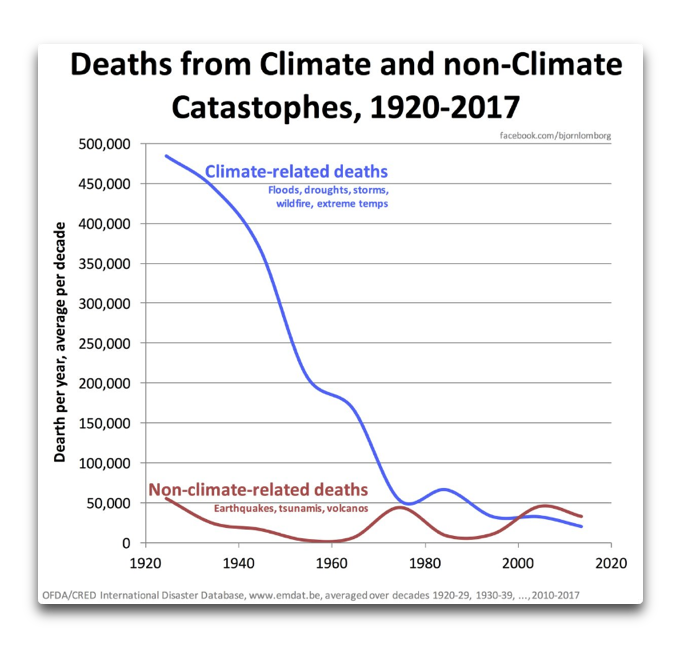
Average annual climate-related (blue line)
and non-climate-related (red line) deaths in natural disasters
Planet-Sized Experiments - we've already done the 2°C test
de Verzeichnis en Contents fr Sommaire
- 2019
- en Planet-Sized Experiments - we've already done the 2°C test
- 2018
- de
Unbequeme Daten:
Immer weniger Menschen sterben durch klimabezogene
Naturkatastrophen
en Inconvenient data: Fewer and fewer people die from climate-related natural disasters - 2017
- en Killer Cold
- 2016
- de
Opferzahl durch Hungersnöte
en World Population Growth and Deas Toll from Great Famines - 2015
- de
Gefahren durch den Klimawandel - Kälte tötet mehr Menschen als Hitze
en An inconvenient truth from medical research: cold is far worse than global warming at killing people - 2010
- de
Sterblichkeit im Winter
en Winter Mortality - 2009
- en U.N-Report
de Text en Text fr Texte
↑ 2019
↑ en Planet-Sized Experiments - we've already done the 2°C test
 ▶ Planet-Sized Experiments -
we've already done the 2°C test
▶ Planet-Sized Experiments -
we've already done the 2°C test
-
Watts UP With That? (Antony Watts) / Willis Eschenbach
2019-03-17 en Planet-Sized Experiments - we've already done the 2°C test
Berkeley Earth average European temperature, 1743 - 2013
Red/yellow line is an 8-year Gaussian average.
Horizontal red and blue lines are 2°C apart.
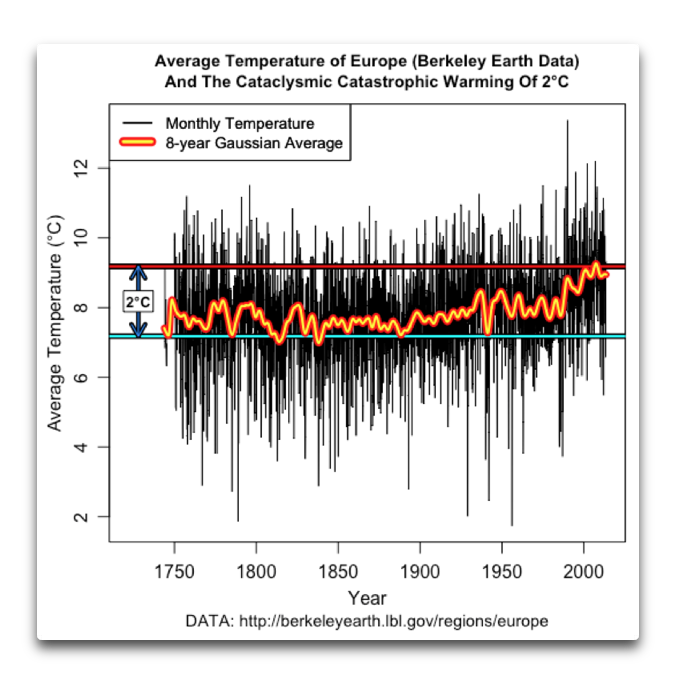
People often say that we're heading into the unknown with regards to CO2 and the planet.
They say we can't know, for example, what a 2°C warming will do because we can't do the experiment.
This is seen as important because
for unknown reasons, people have battened on to "2°C" as being the scary temperature rise
that we're told we have to avoid at all costs.
But actually, as it turns out, we have already done the experiment.
Below I show the Berkeley Earth average surface temperature record for Europe.
Europe is a good location to analyze, because some of the longest continuous temperature records are from Europe.
In addition, there are a lot of stations in Europe that have been taking record for a long time.
This gives us lots of good data.
Average annual climate-related (blue line)
and non-climate-related (red line) deaths in natural disasters
Results of the UN "My World" poll. Further analytic data

|
|
Planet-Sized Experiments - we've already done the 2°C test |
↑ 2018
↑
Unbequeme Daten:
Immer weniger Menschen sterben durch klimabezogene Naturkatastrophen
en
Inconvenient data:
Fewer and fewer people die from climate-related natural disasters

-
EIKE Europäisches Institut für Klima und Energie
Anthony Watts / Chris Frey
2018-03-19 de Unbequeme Daten: Immer weniger Menschen sterben durch klimabezogene NaturkatastrophenBjørn Lomborg beschreibt auf seiner Facebook-Seite die Graphik eines umgekehrten Hockeyschlägers, welcher mit Sicherheit für die Untergangspropheten der Klima-Alarmisten sehr unbequem ist, versuchen diese doch regelmäßig, normale Wetterereignisse als Klima zu verkaufen.
Also spielt Lomborg einfach nach ihren Regeln - mit überraschenden Ergebnissen.
Immer weniger Menschen sterben durch klimabezogene Naturkatastrophen
Das ist eindeutig das Gegenteil dessen, was man normalerweise hört - hören wir doch oftmals von einer Katastrophe nach der anderen und wie 'viele' Ereignisse auftreten.
Die Anzahl der Ereignisse, über die berichtet wird, steigt, aber das ist hauptsächlich auf bessere Reportage-Arbeit, niedrigere Schwellenwerte und bessere Zugänglichkeit zurückzuführen.
Zum Beispiel gilt für Dänemark, dass die Datenbasis erst im Jahre 1976 Ereignisse aufzeichnet.
Man beachte, dass dies 'nicht' bedeutet, dass es keine globale Erwärmung gibt oder dass ein Klimasignal eventuell zu weiteren Todesfällen führt.
Stattdessen zeigt die Graphik, dass unser gestiegener Wohlstand und unsere besseren Anpassungsfähigkeiten jedweden potentiellen Einfluss des Klimas weit überkompensiert hat, wenn es um die Verletzlichkeit von Menschen bzgl. Klima geht.
Man beachte weiter, dass der Rückgang der absoluten Zahlen der Todesfälle zu einer Zeit erfolgte, während der sich die globale Bevölkerung vervierfacht hat.
Das individuelle Risiko, durch klimabezogene Katastrophen ums Leben zu kommen, hat um 98,9% abgenommen.
Im vorigen Jahr sind weniger Menschen an klimabezogenen Katastrophen gestorben als zu jedem anderen Zeitpunkt während der letzten drei Jahrzehnte (1986 war ein ähnlich gutes Jahr).
Irgendwie ist es aber überraschend, dass der sehr starke Rückgang der klimabezogenen Todesfälle während der letzten 70 Jahre einherging mit einer kaum zurückgehenden Anzahl von Todesfällen durch andere Ursachen.
Das solle einmal näher untersucht werden.
-
Watts UP With That? (Antony Watts)
2018-03-14 en Inconvenient data: Fewer and fewer people die from climate-related natural disastersBjørn Lomborg writes on his Facebook page of a reverse hockey stick graph, one that is certainly inconvenient to the gloom and doom message of climate alarmists who try to link regular weather events to climate.
So, Lomborg plays their game, and the results are surprising.
Fewer and fewer people die from climate-related natural disasters
This is clearly opposite of what you normally hear, but that is because we're often just being told of one disaster after another - telling us how *many* events are happening.
The number of reported events is increasing, but that is mainly due to better reporting, lower thresholds and better accessibility (the CNN effect).
For instance, for Denmark, the database only shows events starting from 1976.
Notice, this does *not* mean that there is no global warming or that possibly a climate signal could eventually lead to further deaths.
Instead, it shows that our increased wealth and adaptive capacity has vastly outdone any negative impact from climate when it comes to human climate vulnerability.
Notice that the reduction in absolute deaths has happened while the global population has increased four-fold.
The individual risk of dying from climate-related disasters has declined by 98.9%.
Last year, fewer people died in climate disasters than at any point in the last three decades (1986 was a similarly fortunate year).
Somewhat surprisingly, while climate-related deaths have been declining strongly for 70 years, non-climate deaths have not seen a similar decline, and should probably get more of our attention.
↑ 2017
↑ en Killer Cold
-
Watts Up With That? (Antony Watts)
2017-04-04 en Killer Cold
↑ 2016
↑
Opferzahl durch Hungersnöte
en
World Population Growth and Deas Toll from Great Famines

-
Die kalte Sonne (Fritz Vahrenholt & Sebastian Lüning)
2016-05-31 de Indien steigert Getreideproduktion trotz DürrenSeit den 1970er Jahren ist die Opferzahl durch Hungersnöte stark gefallen.
Eine gute Entwicklung, die so gar nicht zu den apokalyptischen Visionen der Aktivisten zu passen scheinen.
Quelle / Source:
-
IFPRI International Food Policy Research Institute
de Indien steigert Getreideproduktion trotz DürrenIFPRI International Food Policy Research Institute
2015 en
GLOBAL HUNGER INDEX - ARMED CONFLICT AND THE CHALLENGE OF HUNGER
↑ 2015
↑
Gefahren durch den Klimawandel - Kälte tötet mehr Menschen als Hitze
en An inconvenient truth from medical research:
cold is far worse than global warming at killing people
-
Die kalte Sonne (Fritz Vahrenholt & Sebastian Lüning)
2015-06-04 de Studie in The Lancet: Nicht Hitzewellen, sondern winterliche Temperaturen fordern die meisten Toten
-
Spiegel Online
2015-05-21 de Wetterfolgen: Kälte wird Menschen gefährlicher als WärmeForscher haben in 74 Millionen Fällen und 13 Ländern das Wetter zum Zeitpunkt des Todes ausgewertet.
An kälteren Tagen starben 20-mal mehr Menschen als an wärmeren.
-
Der Tagesspiegel
2015-05-21 de Gefahren durch den Klimawandel - Kälte tötet mehr Menschen als HitzeNicht Hitzewellen, sondern winterliche Temperaturen fordern die meisten Toten, zeigt eine umfassende Studie.
Extreme Wetterlagen spielen eine überraschend kleine Rolle.
-
Watts Up With That? (Antony Watts)
2015-05-21 en An inconvenient truth from medical research: cold is far worse than global warming at killing people
-
Watts Up With That? (Antony Watts)
2015-05-24 en Winters not Summers Increase Mortality and Stress the Economy
↑ 2010
↑
Sterblichkeit im Winter
en Winter Mortality
fr Surmortalité en hiver
 Excess winter deaths, England and Wales, 1999/2000-2009/2010
(estimated more deaths, compared with
the average for the non-winter period)
-
UK Office for National Statistics
2010-11-23 en Winter MortalityIn the winter period (December to March) of 2009/10 there were an estimated 25,400 more deaths in England and Wales, compared with the average for the non-winter period (see definition below).
This was a decrease of 30 per cent compared with the number in the previous winter, but is slightly higher than the level seen in 2007/08.
The number of extra deaths occurring in winter varies depending on temperature, the level of disease in the population, and other factors.
Increases in deaths from respiratory and circulatory diseases cause most of the excess winter mortality.
-
Skyfall / Changement Climatique
2010-11-26 en Le changement climatique tueLe gouvernement vient de publier cette semaine les statistiques de surmortalité en hiver.
Les chiffres font froid dans le dos, 25.000 décès pendant l'hiver 2009/2010, chiffre "en baisse" par rapport à l'année précédente mais dans la moyenne depuis 2000.
On imagine à peine le tintamarre médiatique si cette surmortalité concernait l'été, surtout lorsque cela se reproduit tous les ans.
↑ 2009
↑ U.N-Report
Panikmache / Panic makers / Faiseurs de la panique
-
Watts UP With That? (Antony Watts)
2009-05-30 en U.N.'s 'Global Warming=300,000 Deaths a Year' Report - Kofi Annan implies: "close enough for government work"
Realität / Reality / Réalité

-
Watts UP With That? (Antony Watts)
2008-07-05 en Going Down: Death Rates Due to Extreme Weather Events
-
Watts UP With That? (Antony Watts)
2009-03-17 en Wrong: World Health Organization claims that health goes down as carbon goes up
-
Watts UP With That? (Antony Watts)
2009-05-06 en Dealing with climate change in the context of other, more urgent threats to human and environmental well-being
-
Watts UP With That? (Antony Watts)
20011-09-25 en The Amazing Decline in Deaths from Extreme Weather in an Era of Global Warming, 1900-2010
⇧
10 Krankheiten
en Diseases
fr Maladies
Mit folgenden Links wird von anderen Webseiten auf diese Seite verwiesen:
| de | en | fr |
|---|---|---|
|
Biosphäre der Erde Krankheiten |
Biosphere Diseases |
Biosphère Maladies |
↑
Erkrankungshäufigkeit und Sonnenaktivität
en Disease frequency and solar activity
fr Fréquence des maladies et activité solaire
Mit folgenden Links wird von anderen Webseiten auf diese Seite verwiesen:
| de | en | fr |
|---|---|---|
|
Biosphäre der Erde Erkrankungshäufigkeit und Sonnenaktivität |
Biosphere Disease frequency and solar activity |
Biosphère Fréquence des maladies et activité solaire |

Erkrankungshäufigkeit an Rückfalltyphus in Rußland (dicke Kurve) und Sonnenaktivität. |
|
|
|
Quelle/Source:
|
↑ Rheuma-Leiden und Sonnenaktivität
-
Die kalte Sonne (Fritz Vahrenholt & Sebastian Lüning)
2015-08-07 de Einfluss von solaren Schwankungen auf irdische Lebewelt stärker als gedacht: Princeton University findet Zusammenhang zwischen Rheuma-Leiden und Sonnenaktivität
⇧
11 Malaria
en Malaria
fr Malaria
Mit folgenden Links wird von anderen Webseiten auf diese Seite verwiesen:
| de | en | fr |
|---|---|---|
|
Biosphäre der Erde Malaria |
Biosphere Malaria |
Biosphère Malaria |
↑
a Klimaerwärmung führt zur Abnahme der Malaria
en Malaria study challenges warmer world predictions
-
Die kalte Sonne (Fritz Vahrenholt & Sebastian Lüning)
2012-12-16 de Neue Studie der UCSB: Klimaerwärmung führt zur Abnahme der Malaria in aktuellen Problemgebieten
-
New Scientist
2012-10-24 ene Malaria study challenges warmer world predictions
-
Wiley
2012-10-11 de Optimal temperature for malaria transmission is dramatically lower than previously predicted
↑ b Panikmeldungen
-
Spiegel Online
2004-01-18 de Malaria könnte nach Deutschland zurückkehren
↑ c Entwarnung
-
Wikipedia
de
Paul Reiter (Entomologe)
en Paul Reiter
fr -
-
Pensée unique fr Paul Reiter
fr Paul Reiter est un grand spécialiste mondial des maladies propagées par les moustiques telles que la malaria.
Il est directeur de l'équipe "insectes et maladies infectieuses" de l'Institut Pasteur et a participé à de nombreuses et prestigieuses institutions internationales comme l'OMS.
Voici ce qu'il déclare dans un interview réalisé pour un documentaire qui est sorti le 8 mars 07 sur C4 BBC, "The great Global Warming Swindle".
"L'affaire du réchauffement climatique est déguisée comme de la science mais ce n'est pas de la science : c'est de la propagande!
"J'ai été horrifié par ce que j'ai lu dans la partie II du rapport (NDLR : rapport du GIEC, la partie qui concerne les possibles épidémies liées au réchauffement climatique).
Il y avait tellement d'informations erronées sans aucun recours à la littérature scientifique, la vraie littérature scientifique des spécialistes de ces problèmes!".
Paul Reiter profite de cet interview pour démolir une des idées préférées et généreusement propagées par le GIEC (et Al Gore dans "an unconvenient truth") qui déclare que "les moustiques ne peuvent survivre à des températures inférieures à 16 ou 18 °C", faisant ainsi craindre une extension de la malaria dans l'hémisphère Nord si celui-ci se réchauffe.
Paul Reiter déclare que c'est absolument faux et que la densité de moustiques est très élevée en Arctique et, aussi, que la plus grande épidémie de malaria qui a fait plusieurs centaines de milliers de morts s'est produite dans le nord de la Russie, jusqu'en sibérie!
Et aussi de Paul Reiter, dans le même documentaire à propos des "meilleurs spécialistes du GIEC"
"Cette affirmation que le GIEC est composé des 1500 ou 2500 meilleurs savants du monde ?
Vous jetez un coup d'oeil à la bibliographie, et vous voyez que c'est faux.
Il y a dedans un grand nombre qui ne sont pas des scientifiques."
Et Richard Lindzen, lui aussi ancien membre du GIEC, donne des précisions:
"Et pour parvenir à faire monter le nombre jusqu'à 2500, ils sont dû recruter des journalistes, des gouvernementaux etc. n'importe qui proche d'eux à un moment quelconque, et on ne demande l'avis d'aucun d'entre eux !
Beaucoup d'entre eux ne sont pas d'accord!"
Paul Reiter en rajoute une couche !
"Ceux qui sont des spécialistes mais qui ne sont pas d'accord et qui démissionnent - j'en connais un grand nombre - On rajoute simplement leurs noms sur la liste des auteurs et ils font toujours partie de cette liste des fameux "2500 meilleurs scientifiques"!
(NDLR : C'est exactement ce qui est arrivé à Paul Reiter qui a dû menacer le GIEC d'un procès pour que son nom soit enfin retiré de la liste)
en "The global warming is dressed up as science but it is not science: it is propaganda!"
"I was horrified to read the second assessment report.
There was so much misinformation, without any kind of recourse to the scientific literature, the truly scientific literature by specialists in those fields ! ".
▶Skeptische Wissenschaftler des IPCC
de "Der Global-Warming-Alarm kommt im Gewand der Wissenschaft daher, aber es handelt sich dabei nicht um Wissenschaft. Es ist Propaganda."
▶Paul Reiter: Video (Präsentationen)
2009
-
2009-10-08 en
The Distortion of the Malaria Issue by the UN and Al Gore - from The Great Global Warming Swindle
This video clip from the documentary video The Great Global Warming Swindle explains that claims made by organizations such as the United Nations Intergovernmental Panel on Climate Change (IPCC) about the spread of malaria due to the effects of global warming are false and have been fabricated for political purposes.
Professor Paul Reiter, an expert on insect-borne diseases explains that mosquitoes historically have been able to survive in areas as cold as the Arctic, and the most devastating outbreak of malaria occurred in the soviet Union in the 1920.
2008
-
2008-05-09 en
Climate change & mosquitos
Part 1 Part 2 Part 3
Professor Paul Reiter contibuted to the IPCC's 3rd assessment report & explains why Al Gore is wrong on many issues involving mosquitos & climate change.
Part 2: He continues his entertaining explanation on mosquitos, diseases & climate.
Part 3: Professor Paul Reiter was a part of the IPCC's 3rd assessment report & concludes his presentation on mosquitos, diseases and climate changes refuting what Al Gore says on the subject.
2007
- Skyfall / Changement Climatique
⇧
12 Denguefieber
en Dengue fever
fr Fièvre dengue
Mit folgenden Links wird von anderen Webseiten auf diese Seite verwiesen:
| de | en | fr |
|---|---|---|
|
Biosphäre der Erde Denguefieber |
Biosphere Dengue fever |
Biosphère Fièvre dengue |
↑ a Klimaerwärmung senkt Denguefieber-Risiko in Nordost-Australien
-
Die kalte Sonne (Fritz Vahrenholt & Sebastian Lüning)
2016-09-24 de Klimaerwärmung senkt Denguefieber-Risiko in Nordost-AustralienDer fortschreitende Klimawandel bringt immer mehr Tropenkrankheiten nach Europa.
So lautete die Warnung der Experten noch vor zehn Jahren. Mittlerweile sieht man dies jedoch deutlich differenzierter.
Die Australian National University gab am 10. August 2016 per Pressemitteilung bekannt, dass ein wärmeres Klima wohl eher zu einem Rückgang der Denguefiebergefahr in vielen Gebieten führen wird, darunter Nordost-Australien:
Warmer climate could lower dengue risk
Health researchers predict that the transmission of dengue could decrease in a future warmer climate, countering previous projections that climate change would cause the potentially lethal virus to spread more easily.
Wie nahm die deutschsprachige Presse diese gute Nachricht auf?
Gar nicht.
Denn sie blieb einfach mausestumm.
Eine weiterer Fall von Schweigem im Walde
Diesmal war es aber noch schlimmer.
Die Studie wurde nicht nur verschwiegen, sondern es wurden stattdessen Artikel verbreitet, in denen im Zuge des Klimawandels vor einer Aubreitung des Denguefiebers in Europa. So konnte man einen Monat nach der australischen Pressemitteilung in der Frankfurter Rundschau am 11. September 2016 lesen:
Die Klimaveränderungen lassen einige dieser Arten weiter nach Norden ziehen.
Ich sehe hier nicht so sehr die Gefahr, dass die Malaria wieder nach Europa kommen könnte, sondern denke eher an Erkrankungen wie das Dengue-Fieber, Zika oder das Chikungunya-Fieber.
Zuvor konnte man sich am 26. August 2016 über den Deutschlandfunk wundern:
"Die Tigermücke ist einfach ein potenter Krankheitsüberträger für bestimmte, vor allem virale Erkrankungen.
Dazu zählen Chikungunyafieber, Denguefieber, West-Nil-Fieber, und es gibt Hinweise, dass auch das Zika-Virus durch diese Mücke übertragen werden kann."
Und der Klimawandel sorgt dafür, dass die Mücke an immer mehr Stellen geeignete Lebensbedingungen findet.
So wie in den vergangenen Jahren in Freiburg.
Wird es in Deutschland feuchter oder trockener?
Vielleicht sollten sich die deutschen Experten einmal mit den australischen Forschern austauschen und mögliche Diskrepanzen in der Gefahren-Interpretation diskutieren.
⇧
13 Artenvielfalt: Tier- und Pflanzenarten
en
Species diversity
fr
Richesse spécifique
Mit folgenden Links wird von anderen Webseiten auf diese Seite verwiesen:
▶Artenvielfalt: Tier‑ und Pflanzenarten| de | en | fr |
|---|---|---|
|
Biosphäre der Erde Artenvielfalt: Tier- und Pflanzenarten |
Biosphere Species diversity |
Biosphère Richesse spécifique |
Links zur Klimaschau
|
|
▶Artenvielfalt: Tier‑ und Pflanzenarten |
|
|
▶Artenvielfalt: Tier‑ und Pflanzenarten |
de Allgemein en General fr Générale
-
Wikipedia
de
Artenvielfalt
en Species diversity
fr Richesse spécifique
|
|
Artenvielfalt / Species diversity / Richesse spécifique |
| ▷Die Kalte Sonne Blog‑Themen Vahrenholt/Lüning ▶Die kalte Sonne |
de
▷Auswirkungen auf die Lebewelt
▷Suchen: Artenvielfalt |
| EIKE | de Suchsystem: Artenvielfalt |
| Science Skeptical Blog | de Tierrechte, Tierschutz. |
| Wikipedia |
de
Artenvielfalt en Species diversity fr Richesse spécifique |
| Vademecum |
▶Artenvielfalt: Tier‑ und Pflanzenarten
▶Welt-Info |
-
Charles Darwin (Bayerischer Rundfunk)
2017-09-07 de
Folge 1 - Der Ursprung des Lebens
bis 31.07.2022
2017-09-14 de
Folge 2 - Ein Forscherleben auf dem Schiff
bis 14.08.2022
2017-09-21 de
Folge 3 - Erkenntnisse zur Artenvielfalt
bis 05.09.2022
2017-09-28 de
Folge 4 - Publikation der Evolutionstheorie
bis 21.09.2022
2017-10-05 de
Folge 5 - Die Evolutionstheorie auf dem Vormarsch
bis 24.11.2020
-
Deutsche Wildtier Stiftung
de Home: Wir geben Natur und Wildtieren eine Stimmede Windenergie und Artenschutz
Der Ausbau der Windenergie aus reinen Profitgründen ist zur Gefahr für zahlreiche Wildtiere geworden.
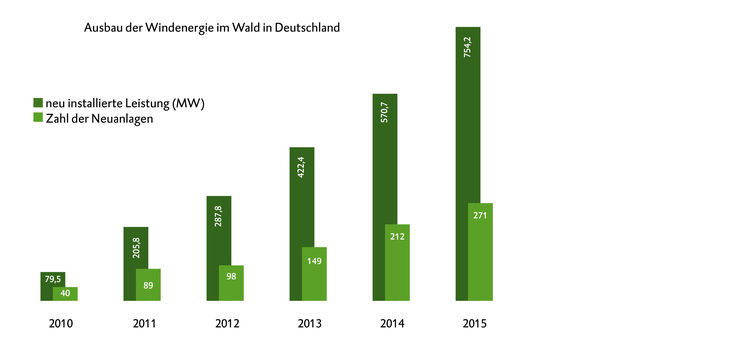
In Deutschland fallen den Windkraftanlagen heute im Jahr bis zu 250.000 Fledermäuse und über 12.000 Greifvögel zum Opfer.
Besonders gilt das im Wald.
In den für Windparks geeigneten Hochlagen finden sich vielfach wertvolle, alte und naturnahe Waldbestände, die ein Garant der biologischen Vielfalt sind.
Deutschland braucht dringend einen einheitlichen, hohen Standard, um Natur- und Artenschutz in die Energiepolitik zu integrieren.
Wir erheben unsere Stimme - mit Stellungnahmen an die Verantwortlichen und Diskussionsbeiträgen.
Wir sammeln Fakten und bereiten sie in Fachstudien auf.
de Verzeichnis en Contents fr Sommaire
- 2018
- de
Artenvielfalt vor allem durch schlechte Staatsführung,
Korruption und Krieg gefährdet
en Political instability and weak governance lead to loss of species, study finds - 2017
- de Aussterben von Spezies und Abbruch des Golfstromes
- de Natürliche Klimavariabilität: Invasoren-Arten traten auch schon früher auf
- 2016
- de University of Queensland: Weltweite Artenvielfalt vor allem durch Ressourcen-Übernutzung und Landwirtschaft, weniger vom Klimawandel bedroht
- de Brisante Studie der Martin-Luther-Universität Halle-Wittenberg: Globale Biodiversität möglicherweise um bis zu 50 Prozent unter- oder überschätzt
- 2015
- de University of Florida: Menschliche Eingriffe in den Lebensraum sind für die karibische Tierwelt viel gefährlicher als der Klimawandel
- de Mensch vernichtet mehr Arten als Klimawandel
- de Studie der Friedrich-Schiller Univerität Jena: Klimawandel hat nur geringen Einfluss auf Artenvielfalt in gemäßigten Wäldern
- 2013
- de Ökosysteme reagieren auf Klimaerwärmung durch Zunahme der Artenvielfalt
- 2007
- fr L'influence du réchauffement climatique sur l'extinction pourrait être exagérée
- 2004
- en BBC News: Climate threat - What species are at risk?
- 2003
- en Species Extinction - One Million, or Just One?
de Text en Text fr Texte
⇧ 2018
↑
Artenvielfalt vor allem durch schlechte Staatsführung,
Korruption und Krieg gefährdet
en
Political instability and weak governance lead to loss of species,
study finds
-
Die kalte Sonne (Fritz Vahrenholt & Sebastian Lüning)
2018-01-03 de Artenvielfalt vor allem durch schlechte Staatsführung, Korruption und Krieg gefährdet
-
University of Cambridge
2017-12-20 en Political instability and weak governance lead to loss of species, study finds
⇧ 2017
↑ Aussterben von Spezies und Abbruch des Golfstromes
-
EIKE Europäisches Institut für Klima und Energie
Andy May
2017-12-31 de Aussterben von Spezies und Abbruch des GolfstromesIn diesem Teil untersuchen wir die Behauptung, dass der von Menschen verursachte Klimawandel, das Wachstum der menschlichen Bevölkerung und andere menschliche Aktivitäten eine Zunahme des Artensterbens verursachen.
Und wir nehmen uns die Behauptung vor, dass der vom Menschen verursachte Klimawandel einen starken Zufluss von Süßwasser aus den schmelzenden Gletschern in Grönland in Gang setzen wird.
Dies soll zum Zusammenbruch der thermohalinen Zirkulation und/oder des Golfstromes im Nordatlantik führen.
Das wiederum soll eine starke Abkühlung mit sich bringen ähnlich der wie vor 818 bis 8340 Jahren, als ein Eisdamm in Kanada brach und gewaltige Mengen Süßwasser in den Atlantik strömten.
|
|
↑ Natürliche Klimavariabilität: Invasoren-Arten traten auch schon früher auf
-
Die kalte Sonne (Fritz Vahrenholt & Sebastian Lüning)
2017-10-06 de Natürliche Klimavariabilität: Invasoren-Arten traten auch schon früher aufImmer wieder lesen wir Geschichten in der Zeitung, in denen der Niedergang einer Pflanze oder Tierart beklagt wird, die durch andere Neuankömmlinge verdrängt wird.
In der Regel wird der Klimawandel dafür verantwortlich gemacht.
Die Trends basieren meist auf Daten von wenigen Jahrzenten.
Nur in den seltensten Fällen machen sich die Forscher die Mühe, weiter in die Klimageschichte einzutauchen und die Verbreitung der betreffenden Arten zu rekonstruieren.
Ein Forscherteam der University of the Witwatersrand um Jennifer Fitchett hat es jetzt besser gemacht.
Die Forscher untersuchten einen Sedimentkern aus dem Hochland in Lesotho, der Veränderungen im Pflanzenbewuchs der letzten 4000 Jahre dokumentiert.
Dabei entdeckten sie, dass die vermeintlichen modernen Invasoren-Arten bereits mehrfach in der Region auftauchten, also keineswegs ein modernes Phänomen darstellen.
Jenniffer Fitchett und ihr Team gehen davon aus, dass es sich um Dürreindikatoren handelt, wobei die Pflanzen bevorzugt dürregeschädigte Böden besiedeln.
Hier die Pressemitteilung der University of the Witwatersrand vom 20. Juli 2017
'Invasive' species have been around much longer than believed
⇧ 2016
↑ University of Queensland: Weltweite Artenvielfalt vor allem durch Ressourcen-Übernutzung und Landwirtschaft, weniger vom Klimawandel bedroht
-
Die kalte Sonne (Fritz Vahrenholt & Sebastian Lüning)
2016-09-20 de University of Queensland: Weltweite Artenvielfalt vor allem durch Ressourcen-Übernutzung und Landwirtschaft, weniger vom Klimawandel bedroht
↑ Brisante Studie der Martin-Luther-Universität Halle-Wittenberg: Globale Biodiversität möglicherweise um bis zu 50 Prozent unter- oder überschätzt
-
Die kalte Sonne (Fritz Vahrenholt & Sebastian Lüning)
2016-01-19 de Brisante Studie der Martin-Luther-Universität Halle-Wittenberg: Globale Biodiversität möglicherweise um bis zu 50 Prozent unter- oder überschätzt
⇧ 2015
↑ University of Florida: Menschliche Eingriffe in den Lebensraum sind für die karibische Tierwelt viel gefährlicher als der Klimawandel
-
Die kalte Sonne (Fritz Vahrenholt & Sebastian Lüning)
2015-11-21 de University of Florida: Menschliche Eingriffe in den Lebensraum sind für die karibische Tierwelt viel gefährlicher als der Klimawandel
↑ Mensch vernichtet mehr Arten als Klimawandel
-
Spektrum der Wissenschaft
2015-10-21 de Mensch vernichtet mehr Arten als Klimawandel
↑ Studie der Friedrich-Schiller Univerität Jena: Klimawandel hat nur geringen Einfluss auf Artenvielfalt in gemäßigten Wäldern
-
Die kalte Sonne (Fritz Vahrenholt & Sebastian Lüning)
2015-08-24 de Studie der Friedrich-Schiller Univerität Jena: Klimawandel hat nur geringen Einfluss auf Artenvielfalt in gemäßigten Wäldern
⇧ 2013
↑ Ökosysteme reagieren auf Klimaerwärmung durch Zunahme der Artenvielfalt
-
Die kalte Sonne (Fritz Vahrenholt & Sebastian Lüning)
2013-04-20 de Ökosysteme reagieren auf Klimaerwärmung durch Zunahme der Artenvielfalt
⇧ 2007
↑ fr L'influence du réchauffement climatique sur l'extinction pourrait être exagérée
-
Skyfall / Changement Climatique
2007-03-04 fr L'influence du réchauffement climatique sur l'extinction pourrait être exagérée
⇧ 2004
↑ BBC News: Climate threat - What species are at risk?
-
BBC News
2004-01-07 en Climate threat: What species are at risk?A new scientific report has warned that climate change could lead to the extinction of a million of the world's species as soon as 2050.
Nearly half of all protea flowering plants in South Africa 'could' become extinct due to climate change
⇧ 2003
↑ Species Extinction - One Million, or Just One?

-
john-daly.com en Species Extinction - One Million, or Just One?
The warmest period of the last 150 years was the 1930s, not the present.
Clearly if the plants survived that period, they cannot be regarded as being vulnerable to 'climate change'.
The claims are therefore entirely speculative and without scientific foundation.
⇧
14 Auswirkungen auf Eisbären
en Polar bears
fr Ours blanc
Mit folgenden Links wird von anderen Webseiten auf diese Seite verwiesen:
▶Eisbären| de | en | fr |
|---|---|---|
|
Biosphäre der Erde Auswirkungen auf Eisbären |
Biosphere Polar bears |
Biosphère Ours polaires |
de Allgemein en General fr Générale
|
|
Eisbären / Polar bears / Ours blanc |
| ▷Die Kalte Sonne Blog‑Themen Vahrenholt/Lüning ▶Die kalte Sonne |
de
▷Auswirkungen auf die Lebewelt
▷Suchen: Eisbär |
| EIKE | de Suchergebnisse für Eisbaer |
|
Wikipedia |
de
Eisbär |
| Vademecum |
▶Eisbären
▶Welt-Info |
de Verzeichnis en Contents fr Sommaire
- 2019
- en
Susan Crockford: No climate emergency for polar bears
- en Inconvenient: Polar Bear Numbers May Have Quadrupled
- 2018
- de
Realitäts-Check: Der Manager des Naturreservats Nunatsiavut sagt:
Die Eisbären hungern nicht, die Öffentlichkeit ist falsch
informiert
en Reality check: Nunatsiavut wildlife manager says polar bears not starving, public misinformed - 2017
- de
Die Eisbären-Saga: Wie ein Bild tausend Lügen erzählen kann -
Paul Niklen und Michael Mann vs. Susan Crockford
en The Polar-Bear-Gate Saga: How a picture is worth a thousand lies - Paul Nicklen and Michael Mann vs Susan Crockford - de
Der Hungerbär
de Panik-Küche en Panic laboratory fr Marmite alarmiste
- de Kirchenkult gegen Klimawandel: Bischof segnet Eisbär
- en
Fake Polar Bear Scare Unmasked:
The Saga of a Toppled Global Warming Icon
- en Polar Bear Numbers Still On The Rise, Despite Global Warming
- en Has recent summer sea ice loss caused polar bear populations to crash?
- de Der WWF ruft aktuell zu Spenden für die Eisbären auf, die wegen des Klimawandels angeblich vom Aussterben bedroht sind
- 2016
- de Vielseitige Esser: Eisbären brauchen keinen Robbenhappen
- de
Zehn düstere Prophezeiungen bzgl. des Unterganges von Eisbären sind
gescheitert: jetzt wieder 20.000 bis 30.000 Exemplare
en Ten dire polar bear predictions that have failed as global population hits 20-31k - en Recent studies show September ice extent of 3-5 mkm2 did not kill polar bears off as predicted
- 2015
- de
Fette Eisbären: Population der Svalbard Eisbären ist in den
letzten 11 Jahren um 42% gestiegen.
en More scientific evidence that polar bears are doing just fine - a 30 42% increase in population with some of them "as fat as pigs." - de Und immer wieder grüßt der Eisbär - ZDF geht WWF Aktivistin auf den Leim
- 2014
- de Eisbären-Statistik-Gruppe räumt ein: Veröffentlichte Eisbärenzahlen sind lediglich eine "qualitative Vermutung mit dem Ziel das öffentliche Interesse zu befriedigen"
- en
The politics of polar bears
- de Studie: Eisbären können ihre Fressgewohnheiten den Umweltbedingungen anpassen
- de Die neueste Eisbären-Ente
- 2013
- de Das Ammen-Märchen vom Eisbär-Sterben: Auch das als ein Konstrukt der Klima-Alarmisten entlarvt !
- de Totgesagte leben länger: Schöne Grüße vom Eisbären, es geht ihm gut
- 2012
- de Nicht Wärme sondern Schrotflinten sind die größten Feinde der Eisbären
- en
Al Gore's Polar Bear Fiction
- de
Zitate zur Aufklärung über das angebliche Eisbären Aussterben in der
Arktis
- 2010
- en
COOL IT - Saving Polar Bears
- 2009
- de Eisbären gerettet! Arktis friert wieder zu, weil es kälter wird
- de
Mitchell Taylor - Alarmisten sperren Eisbärexperten aus
en Mitchell Taylor - Polar bear expert barred by global warmists - 2008
- en Polar bear hearing affected to due global warming?"
- 2007
- en
Polar Bear: Another Global Warming Hoax exposed
de Text en Text fr Texte
↑ Horror
↑ Horrorgeschichten aus "Global Warming"
Polarbären ertrinken wenn der Meeresspiegel steigt ...
en Polar bears drown as the seas get higher ...
fr Les ours polaires se noient quant le niveau des océans monte ...
de Aus der Panik-Küche en From the panic laboratory fr De la marmite des alarmistes
-
YouTube en
Al Gore-Ball of Fire!
-
2009-09-13 en:
Al Gore Versus the Polar Bears - The AGWA Fraud
-
2007-04-09 en:
Truth About Stranded Polar Bears Image
-
Schweizer Fernsehen
2007-01-30 de
Für die Eisbären wird es eng
↑ Fakten
↑ Fakten / Facts / Faits
Fakten:
-
Eisbären haben sich aus Braunbären seit ca. 3 Millionen Jahren entwickelt.
-
Eisbären bewohnen seit ca. 200'000 Jahren den arktischen Bereich.
-
Die Eisbären haben die letzten beiden Eiszeiten und Warmzeiten überlebt.
-
Seit der letzten Eiszeit vor ca. 10'000 Jahren hatten Sie keine Probleme im Holozänmaximum, dem wärmsten Zeitabschnitt vor ca. 7'000 Jahren.
-
Der WWF gibt die Zahl der Eisbären korrekt mit etwa 25'000 an.
-
Die weltweite Eisbärenpopulation lag in den 1960er Jahren nur bei ca. 5000 Tieren.
-
Seitdem ist diese Tiergruppe offensichtlich auf das Fünffache angewachsen.

-
2007-04-03 en
Polar Bear: Another Global Warming Hoax exposed
de
-
Die kalte Sonne (Fritz Vahrenholt & Sebastian Lüning)
2014-12-15 de Eisbären-Statistik-Gruppe räumt ein: Veröffentlichte Eisbärenzahlen sind lediglich eine "qualitative Vermutung mit dem Ziel das öffentliche Interesse zu befriedigen"
-
Die kalte Sonne (Fritz Vahrenholt & Sebastian Lüning)
2014-12-13 de Studie: Eisbären können ihre Fressgewohnheiten den Umweltbedingungen anpassen
-
Die kalte Sonne (Fritz Vahrenholt & Sebastian Lüning)
2014-11-30 de Die neueste Eisbären-Ente
-
Die kalte Sonne (Fritz Vahrenholt & Sebastian Lüning)
2013-02-01 de Totgesagte leben länger: Schöne Grüße vom Eisbären, es geht ihm gut
-
Die kalte Sonne (Fritz Vahrenholt & Sebastian Lüning)
2012-05-016 de Nicht Wärme sondern Schrotflinten sind die größten Feinde der EisbärenAl Gore
In den vergangenen Jahren wurde der unmittelbar drohende Untergang der Eisbären durch die Klimaerwärmung immer wieder lautstark verkündet.In Al Gore's Oscar-prämierten Film "Eine unbequeme Wahrheit" kamen den Zuschauern Tränen in die Augen als sich ein verzweifelt im weiten Ozean paddelnder Zeichentrick-Eisbär mühsam auf eine rettende Eisscholle hievt, diese dann aber unter seinem Gewicht in mehrere Stücke zerbricht und der Eisbär scheinbar aussichtslos weiterziehen muss.
de
Al Gore's Polar Bear
Greenpeace
Auch Greenpeace drückte auf die Tränendrüse der Fernsehzuschauer und präsentierte in einem Werbeclip einen tot im Wasser treibenden Trickfilm-Eisbären als Opfer der Klimakatastrophe.
de
Klimawandel Greenpeace
IPCC
Der Eisbär musste auch als Werbe-Icone für den Bericht des Weltklimarats 2007 herhalten.Anlässlich seiner Veröffentlichung druckten zahlreiche Zeitungen das Foto einer Gruppe von Eisbären ab, die sich offenbar an den Rest eines frei im Wasser treibenden Eisbergs klammerten.
Dem Leser blieb nur die Interpretation, dass sich der Eisberg bald vollends auflösen würde und die Eisbären ertrinken würden.
Verwendet wurde dies als Beleg, dass der Klimawandel zwangsläufig zum Aussterben der Eisbären führt.
Später stellte sich heraus, dass das Foto zu dem Zeitpunkt bereits 2 Jahre alt war und mitten in der natürlichen Eisschmelze des arktischen Sommers während einer Exkursion von einer australischen Studentin aufgenommen worden war.
Die Fotografin erklärte, dass sie die Eisbären dabei keineswegs in Gefahr wägte.
Der besagte Eisberg befand sich unweit des Festlandes in Schwimmentfernung.
Eisbären sind gute Schwimmer.
Die Geschichte hierzu ist in folgendem Video schön aufbereitet:
en
Al Gore Versus the Polar Bears - The AGWA Fraud
Zeit für einen Faktencheck
Der WWF gibt die Zahl der Eisbären korrekt mit etwa 25.000 an.
Was die Organisation dem Leser leider nicht verrät ist, dass die weltweite Eisbärenpopulation in den 1960er Jahren nur bei ca. 5000 Tieren gelegen hat.
Seitdem ist diese Tiergruppe offensichtlich auf das Fünffache angewachsen.
Welt Online 2010-03-19 en Zum Abschuss freiDer Eisbär ist älter als gedacht
Bis vor kurzem hatte man angenommen, dass der Eisbär "nur" 150'000 Jahre alt wäre.
Eine internationale Forschergruppe um Frank Hailer vom Senckenberg Institut Frankfurt hat die Abspaltung des Eisbären von den nächsten Verwandten, der Gruppe der Braunbären anhand von neuen DNA-Untersuchungen jetzt auf 600.000 Jahre vor unserer Zeit ausgedehnt.
Vielmehr war die Zeit durch eine sich wiederholende Abfolge von Kaltzeiten (Eiszeiten) und dazwischenliegenden Warmzeiten (Zwischeneiszeiten) gekennzeichne
Die ehemaligen Braunbären wurden zwar auf diese Weise allmählich zu Spezialisten des Eises, mussten aber auch mittlerweile sechs Warmzeiten überstehen, von denen einige deutlich wärmer waren als die aktuelle Warmzeit.
Eine schnelle Anpassungsfähigkeit des Eisbären an veränderte Umweltbedingungen, insbesondere an fehlendes Eis, muss also als Grundqualität dieser Tiergruppe angenommen werden, ansonsten hätten sie zahlreiche Wärme- und Kaltephasen nicht überstanden.
Expertenzitate
Eine schöne Sammlung mit Expertenzitaten zum Thema Eisbär und Klimawandel ist im folgenden Youtube-Clip enthalten .
Darin erinnern z.B. der Münchener Zoologe Joseph Reichholf sowie der Tierfilmer Andreas Kieling daran, dass der Eisbär auch die letzte Zwischeneiszeit (Warmzeit) gut überstanden hat.
de
Zitate zur Aufklärung über das angebliche Eisbären-Aussterben in der Arktis !!
Polarexperte Richard Glenn vor dem Umwelt-Komitee des US-Senats
Der Polarexperte Richard Glenn bestätigte in einer Aussage von 2008 vor dem Umwelt-Komitee des US-Senats, dass Eisbären nicht nur auf dem Eis leben, sondern auch die nichtvereisten Randgebiete, inklusive dem Festland bevölkern.
Eine artgefährdende Gefahr für den Eisbären wäre daher von der aktuellen Wärmeperiode nicht zu erwarten.
de
Polar Bear Hearing: Glenn Testimony
Fakten sorgfältig zu prüfen,
Auslassungen recherchieren
und Interpretationen hinterfragenSelbst im Rahmen der Temperaturschwankungen der letzten 10'000 Jahre hat es Temperaturen gegeben, die höher oder ähnlich den heutigen waren.
Das arktische Meereis als Lebensraum für die Eisbären war daher ähnlich stark oder sogar noch stärker dezimiert wie heute.
Während des holozänen Klimaoptimums vor 6000 Jahren hat sich das arktische Eis stark zurückgezogen, was die Eisbären offenbar überlebt haben.
Und zur Zeit der Mittelalterlichen Wärmeperiode vor 1000 Jahren, als die Wikinger durch die eisarme Arktis zu ihren Entdeckungsfahrten nach Island und Grönland aufbrachen, muss das Meereis eine ähnliche Ausdehnung gehabt haben wie heute.
Der Eisbär blieb standhaft.
Wie bei fast allen Themen der religiös geführten Klimadiskussion lohnt es sich also, die Fakten sorgfältig zu prüfen, Auslassungen zu recherchieren und Interpretationen zu hinterfragen.
en
-
Watts Up With That? (Antony Watts)
2009-09-12 en Oh no, not this rubbish again: "Recent projections suggest polar bears could be extinct within 70 years"
fr
-
Skyfall / Changement Climatique
2007-01-06 fr Le discours d'Inhofe: la proposition de loi sur les ours polaires montre que la LED est défaillante
↑ 2019
↑ en Susan Crockford: No climate emergency for polar bears
-
2019-09-16 en
Susan Crockford: No climate emergency for polar bears
↑ en Inconvenient: Polar Bear Numbers May Have Quadrupled
-
Watts UP With That? (Anthony Watts)
2019-03-19 en Inconvenient: Polar Bear Numbers May Have QuadrupledPolar bear numbers could easily exceed 40,000, up from a low point of 10,000 or fewer in the 1960s.
↑ 2018
↑
Realitäts-Check: Der Manager des Naturreservats Nunatsiavut sagt:
Die Eisbären hungern nicht, die Öffentlichkeit ist falsch
informiert
en
Reality check: Nunatsiavut wildlife manager says polar bears
not starving, public misinformed
-
EIKE Europäisches Institut für Klima und Energie
Anthony Watts / Chris Frey
2018-04-26 de Realitäts-Check: Der Manager des Naturreservats Nunatsiavut sagt: Die Eisbären hungern nicht, die Öffentlichkeit ist falsch informiert
-
Watts UP With That? (Antony Watts) / Jim Steele
2018-04-23 en Reality check: Nunatsiavut wildlife manager says polar bears not starving, public misinformed
↑ 2017
↑
Die Eisbären-Saga: Wie ein Bild tausend Lügen erzählen kann -
Paul Niklen und Michael Mann vs. Susan Crockford
en
The Polar-Bear-Gate Saga: How a picture is worth a thousand lies -
Paul Nicklen and Michael Mann vs Susan Crockford
-
EIKE Europäisches Institut für Klima und Energie
Jim Steele
2017-12-21 de Die Eisbären-Saga: Wie ein Bild tausend Lügen erzählen kann - Paul Niklen und Michael Mann vs. Susan Crockford
-
Watts UP With That? (Antony Watts) / Jim Steele
2017-12-15 en The Polar-Bear-Gate Saga: How a picture is worth a thousand lies - Paul Nicklen and Michael Mann vs Susan Crockford
↑ Der Hungerbär
de Panik-Küche en Panic laboratory fr Marmite alarmiste
-
Spiegel Online
2017-12-09 de
Sterbender Eisbär in Kanada: "So sieht es aus, wenn man verhungert"
Er probiert aufzustehen und ein paar Meter zu gehen - doch jeder Schritt fällt dem völlig abgemagerten Tier schwer, es kann kaum die Hinterläufe bewegen.
Dann sucht es in einer Mülltonne am Rande einer Inuit-Siedlung nach etwas Essbarem und kaut auf irgendeinem Stück Müll herum.
Am Ende des Clips liegt der Eisbär entkräftet da und schaut mit leerem Blick in die Kamera.
Kommentare:
-
Die kalte Sonne (Fritz Vahrenholt & Sebastian Lüning)
2017-12-11 de Ethisch fragwürdig: Halbtoter Eisbär von Aktivisten für eigene Zwecke missbrauchtZunächst einmal zeigt es einen verendenden jüngeren Eisbär.
So etwas kommt in der Natur vor, wie diese Quelle darlegt:"Das nach Daten aus RAMSAY & STIRLING (1988) geschätzte Durchschnittsalter weiblicher Eisbären liegt bei ca. 8 Jahren (in freier Natur, d.A.),
das der im Zuchtbuch (LINKE 1993) aufgeführten Weibchen bei ca. 16 Jahren.
Eisbären werden im Zoo also im Mittel doppert so alt wie in der Natur! "
Mit welcher Sicherheit kann also gefolgert werden, dass der Klimawandel am Schicksal des gezeigten Eisbären Schuld ist?
Da das zurückgehende Eis auf alle Tiere der fraglichen Population in der Baffin Bay wirkt, sollte man eine zunehmende Sterblichkeit dort beobachten, also ein Schrumpfen der Population.
Quelle/Source:
Verband der Zoologischen Gärten (VdZ) e.V.
SterblichkeitMit welcher Sicherheit kann also gefolgert werden, dass der Klimawandel am Schicksal des gezeigten Eisbären Schuld ist?
Da das zurückgehende Eis auf alle Tiere der fraglichen Population in der Baffin Bay wirkt, sollte man eine zunehmende Sterblichkeit dort beobachten, also ein Schrumpfen der Population.
Eine nun wirklich unverdächtige Quelle, der WWF findet jedoch:
Polar bear survey shows good news, but worrying trends
The Baffin Bay and Kane Basin subpopulations are now estimated to be higher than the last time the bears were surveyed in the 1990s
Die Zählung fand 2011-2013 statt und wurde im Februar 2017 veröffentlicht.
Der neue Eisbärenfilm wurde im Spätsommer 2017 auf der Baffin Insel aufgenommen.
Die Eisbedingungen in 1998 unterscheiden sich dort zu diesem Zeitpunkt in keinster Weise von denen in 2017, die See ist dort zu diesem Zeitpunkt stets offen.
Das Eis zieht sich eher zurück, das ja.
Nur tritt dieser Effekt im Juni ein und kann wohl nur schwerlich für das Verhungern eines Eisbären im Spätsommer verantwortlich gemacht werden.
Mit viel Verve wird hier ein weiteres Mal ein Einzelfall eines sterbenden Eisbären (Stichprobengröße=1!) dem Klimawandel zugeschrieben und beim staundenen Publikum sollen Emotionen geweckt werden.
Propaganda versus Wissenschaft!
So funktionieren die Medien im 21. Jahrhundert.
Faktencheck - Fehlanzeige. Ein schönes Beispiel.
Wie lange lassen sich die Leser diese Art der Berichterstattung noch bieten?
Die Abozahlen des Spiegels sprechen eine klare Sprache:
Es geht abwärts, rasant.Die Leute erwarten Qualität für ihr Geld, möchten sich auf ihr Magazn verlassen können.
Aktivistenmeldungen verdeckt als Nachrichten zu präsentieren sollte für jeden ernsthaften Journalisten ein No-Go sein.
Ist Geld für die Verbreitung der Meldung angeboten worden?
Schwer zu sagen.
Vielleicht kann sich der eine oder andere Redakteur einmal Gedanken über diesen Fall darüber machen.
-
Im kanadischen CBC Radio erklärte nun ein Inuit mit langjähriger Eisbärenerfahrung, dass es sich beim sterbenden Tier wohl eher um einen bedauerlichen Einzelfall ohne Bezug zum Klimawandel handelt:
CBC/Radio-Canada
2017-12-11 en Viral video of emaciated polar bear may not be what it seems, Nunavut bear monitor saysNunavut polar bear monitor Leo Ikakhik, right, says the video of a starving Northern polar bear is sad, but not necessarily the product of climate change.
-
Basler Zeitung / Eugen Sorg
2017-12-13 de Der HungerbärMillionen waren erschüttert wegen des verhungernden Eisbären.
Gestorben ist er aber nicht, wie behauptet, wegen der Klimaerwärmung.
Doch Fakten interessieren Aktivisten nicht.
-
EIKE Europäisches Institut für Klima und Energie
Prof. Dr. Horst-Joachim Lüdecke
2017-12-13 de SPIEGEL-Online: Das gleichzeitige Ende des Eisbärs und des seriösen Journalismus in DeutschlandIn der deutschen Medienlandschaft fallen letzte Hemmungen und Schamschranken.
Ehemals lesenswerte Periodika wie der SPIEGEL sind zur Postille der "Church of Global Warming" verkommen.
Woran liegt das? Hier der Versuch einer Analyse.
Die Quittung erhalten zumindest die Printmedien schon länger

↑ Kirchenkult gegen Klimawandel: Bischof segnet Eisbär
-
Die kalte Sonne (Fritz Vahrenholt & Sebastian Lüning)
2017-04-20 de Kirchenkult gegen Klimawandel: Bischof segnet EisbärKein anderes Tier wird von Klimaaktivisten so instrumentalisiert wie der Eisbär.
Vor einigen Jahrzehnten ging es dem weißen Ursus richtig schlecht, da er im großen Maßstab gejagt wurde.
Dann stieg die Population jedoch wieder steil nach oben, da die Jagd stark eingeschränkt wurde.
Klimaaktivisten ignorieren diese Entwicklung.
Sie behaupten, das schwindende arktische Meereis würde das Aus für den Eisbären bedeuten.
Seltsam, denn vor 1000 Jahren zur Zeit der Mittelalterlichen Wärmeperiode gab es bereits schon einmal eine Eisarmut, und der Eisbär hat gut überlebt.
Dies hat wohl auch damit zu tun, weil der Eisbär ein vielseitiger Esser ist.
Wenn die Robben fehlen, kann er auch bequem auf andere Nahrung ausweichen.
-
EIKE Europäisches Institut für Klima und Energie
Helmut Kuntz
2017-03-24 de Ein Eisbär wird vom Erzbischof als Märtyrer des Klimawandels gesegnetGlauben braucht Vorbilder und Märtyrer. Der Ökoglaube weicht davon nicht ab.
Und wenn es keine Märtyrer oder Heilige gibt, werden sie eben erfunden.
↑ en Fake Polar Bear Scare Unmasked: The Saga of a Toppled Global Warming Icon

-
2017-02-27 ene
Polar Bear Scare Unmasked:
The Saga of a Toppled Global Warming Icon
In spite of claims that polar bear populations are facing pressure from loss of Arctic summer sea ice, their numbers have in fact grown.
In this short video, Dr. Susan Crockford summarises the evidence that polar bears are far more resiliant than has been assumed by those who have turned the animal into an icon of global warming.
-
Watts UP With That? (Antony Watts)
2017-02-27 en Fake Polar Bear Scare Unmasked: The Saga of a Toppled Global Warming Icon
↑ en Polar Bear Numbers Still On The Rise, Despite Global Warming
-
The Daily Caller / Andrew Follett
2017-02-16 en Polar Bear Numbers Still On The Rise, Despite Global WarmingPolar bear populations are still growing despite global warming, according to new research.
The new population estimates from the 2016 Scientific Working Group are somewhere between 22,633 to 32,257 bears, which is a net increase from the 2015 number of 22,000 to 31,000.
The current population numbers are a sharp increase from 2005's, which stated only 20,000 to 25,000 bears remained - those numbers were a major increase from estimates that only 8,000 to 10,000 bears remained in the late 1960s.
Until the new study, bear subpopulations in the Baffin Bay and Kane Basin (KB) were thought to be in decline due to over-hunting and global warming.
The new report indicates this is not the case.
Scientists are increasingly realizing that polar bears are much more resilient to changing levels of sea ice than environmentalists previously believed, and numerous healthy populations are thriving.
Predictions that bears would die due to a lack of sea ice have continuously not come to pass.
Recent rumors about polar bear extinction underscore another time when scientists discovered the creatures possess higher resilience to changing levels of sea ice than previously believed.
Another new study by Canadian scientists found "no evidence" polar bears are currently threatened by global warming.
"We see reason for concern, but find no reliable evidence to support the contention that polar bears are currently experiencing a climate crisis," Canadian scientists wrote in their study, published in the journal Ecology and Evolution.
Polar bears became an icon for environmentalists who claimed that melting Arctic sea ice could kill thousands of bears.
Former Vice President Al Gore heavily promoted this viewpoint by featuring polar bears swimming for their lives and drowning in his 2006 film on global warming.
Fears about global warming's impact on polar bears even spurred the U.S. Fish and Wildlife Service (FWS) to say that the bear was "threatened" under the Endangered Species Act in 2008.
Polar bears were the first species to be listed over possibly being harmed in the future by global warming.
Scientists, however, have increasingly been questioning alarmists as there are way more polar bears alive today than 40 years ago.
In fact, polar bears have likely survived past ice-free periods in the Arctic.
There is no evidence of large scale marine life extinctions in the Arctic in the past 1.5 million years, despite the Arctic going through prolonged periods with no summer ice cover.
↑ en Has recent summer sea ice loss caused polar bear populations to crash?
-
Watts UP With That? (Antony Watts)
2017-01-19 en Has recent summer sea ice loss caused polar bear populations to crash?A paper published today finds that predictions of polar bear population crashes due to summer sea ice loss are based on a scientifically unfounded assumption.
Predictions
Those mid-2000s survival assessments predicted significant population declines of polar bears would result by mid-century as a consequence of summer sea ice extent reaching approximately 3-5 mkm2 on a regular basis:
in 2006, the IUCN predicted a >30% decline in total population would occur, while
in 2008, the USFWS predicted the global population would decline by an astonishing 67%.
Most shocking, perhaps, was the USFWS prediction that ten subpopulations within two vulnerable sea ice ecoregions would very likely disappear entirely
(all purple and green areas shown in the map below) when summer sea ice routinely reached levels of 3-5 mkm2.

Reality
But summer sea ice declined much faster than anyone expected.
In fact, those low ice levels of 3-5 mkm2 that were not expected until mid-century have occurred regularly since 2007.
By 2015, polar bears had been living through the grim reality of their predicted future for almost 10 years, as the sea ice graphic below shows.
This early realization of predicted sea ice levels meant the 'sea ice decline = population decline' assumption for polar bears could be tested against actual survival data (i.e., observations).
As it turns, data collected between 2007 and 2015 by field biologists reveal that polar bear numbers have not declined as predicted and no subpopulation has been extirpated.
Several subpopulations expected to be at high risk of decline have remained stable and at least one showed a marked increase in population size over the entire period, despite marked sea ice loss.
Another at-risk subpopulation was not counted but showed marked improvement in reproductive parameters and body condition with less summer ice - the hallmarks of a stable or increasing population.
The hypothesis that repeated summer sea ice levels of below 5 mkm2 will cause significant population declines in polar bears must be rejected.
This result indicates the USFWS and IUCN judgments to list polar bears as threatened or vulnerable based on future risks of habitat loss back in 2006 and 2008 were scientifically unfounded and suggests that similar dire predictions for Arctic seals and walrus may be likewise flawed.
Ultimately, the lack of a demonstrable 'sea ice decline = population decline' relationship for polar bears almost certainly invalidates recent survival models that predict catastrophic population declines should the Arctic become ice-free in summer.
↑ Der WWF ruft aktuell zu Spenden für die Eisbären auf, die wegen des Klimawandels angeblich vom Aussterben bedroht sind
-
Die kalte Sonne (Fritz Vahrenholt & Sebastian Lüning)
2017-01-12 de Fritz Vahrenholt am 17.1.2017 mit Vortrag zur deutschen Energiewende im Londoner House of CommonsDer WWF ruft aktuell zu Spenden für die Eisbären auf, die wegen des Klimawandels angeblich vom Aussterben bedroht sind
Lieber Herr xxx,
durch den Klimawandel schmilzt den Eisbären das Eis so schnell unter den Tatzen weg, dass ihnen keine Zeit bleibt, sich anzupassen.
Weil sie nicht mehr genügend Nahrung finden, suchen sie sich ihre überlebenswichtige Nahrung in nahen Dörfern.
Dort ist es dann jeweils nur eine Frage der Zeit, bis es zu unliebsamen Begegnungen mit Menschen kommt.
Das Leid der Eisbären ist genauso das Leid der Menschen. Je länger die Eisbären auf dem Festland auf Eis warten müssen, desto häufiger kommt es zu Konfrontationen.
Wir kämpfen weltweit auf allen Ebenen gegen den Klimawandel, um das Leben und Überleben der Eisbären zu sichern. Parallel dazu arbeiten wir vor Ort mit Menschen am Eisbärenschutz und helfen so konkret, die Konflikte zwischen Menschen und Eisbären zu verringern.
Bitte lassen Sie die Eisbären nicht im Stich.
Helfen Sie mit einer Spende.Herzliche Grüße
Ihr WWF-TeamDas ist schon kurios, denn die Eisbärpopulation geht es laut offiziellen Zählen prächtig.
Von einem allgemeinen Schwund ist nichts zu spüren.
Im Gegenteil, noch immer dürfen Eisbären offiziell gejagt werden, auch von gut zahlenden Jagdtouristen.
Ist es nicht seltsam, dass der WWF gegen die wirkliche und akute Bedrohung durch Gewehrkugeln nicht vorgeht, stattdessen lieber den schön-abstrakten Klimawandel in den Vordergrund schiebt?
Macht vielleicht weniger Arbeit als gegen die Eisbärjagd zu kämpfen.
↑ 2016
↑ Vielseitige Esser: Eisbären brauchen keinen Robbenhappen
-
Die kalte Sonne (Fritz Vahrenholt & Sebastian Lüning)
2016-09-12 de Vielseitige Esser: Eisbären brauchen keinen RobbenhappenDer Eisbär musste lange als Prügelknabe in der Klimadiskussion herhalten.
Immer wieder wurde sein Ende vorhergesagt.
Offenbar etwas vorschnellKlimawandel: Die Rückkehr der Eisbären auf Spitzbergen
Ein Jahr vorher: Die großen Verlierer des Klimawandels
Polar bears may survive ice melt, with or without seals
Polar bears are opportunists and have been documented consuming various types and combinations of land-based food since the earliest natural history records
Risk of interbreeding due to climate change lower than expected
Study indicates polar bears are swimming more as sea ice retreats
The longest recorded swim in the study was by a subadult female that traveled over 249 miles (400 kilometers) in nine days.
↑
Zehn düstere Prophezeiungen bzgl. des Unterganges von Eisbären sind
gescheitert: jetzt wieder 20.000 bis 30.000 Exemplare
en Ten dire polar bear predictions that have
failed as global population hits 20-31k
-
EIKE Europäisches Institut für Klima und Energie
2016-02-28 de Zehn düstere Prophezeiungen bzgl. des Unterganges von Eisbären sind gescheitert: jetzt wieder 20.000 bis 30.000 ExemplareDüstere Prophezeiungen bzgl. des unmittelbar bevorstehenden Unterganges der Eisbären - ihre "harte prophetische Realität2, wie es genannt wurde - wurden seit mindestens dem Jahr 2001 hinaus posaunt.
Aber derartige deprimierende Prophezeiungen sind so weitab jeder Realität, dass man jetzt gut und gern von deren Scheitern sprechen kann.
-
Watts Up With That? (Antony Watts)
2016-02-25 en Ten dire polar bear predictions that have failed as global population hits 20-31kGrim predictions of the imminent demise of polar bears - their "harsh prophetic reality" as it's been called - have been touted since at least 2001.
But such depressing prophesies have so widely missed the mark they can now be said to have failed.
↑ en Expert: Recent studies show September ice extent of 3-5 mkm2 did not kill polar bears off as predicted
-
Watts Up With That? (Antony Watts)
2016-09-13 en Recent studies show September ice extent of 3-5 mkm2 did not kill polar bears off as predicted
↑ 2015
↑
Fette Eisbären: Population der Svalbard Eisbären ist in den
letzten 11 Jahren um 42% gestiegen
en
More scientific evidence that polar bears are doing just fine -
a 30 42% increase in population with some of them "as fat as pigs."
-
EIKE Europäisches Institut für Klima und Energie
2015-12-28 de Fette Eisbären: Population der Svalbard Eisbären ist in den letzten 11 Jahren um 42% gestiegen.
-
Watts Up With That? (Antony Watts)
2015-12-23 en More scientific evidence that polar bears are doing just fine - a 30 42% increase in population with some of them "as fat as pigs."
-
newsinenglish.noe
2015-12-23 en Polar bears make a surprise comeback
↑ Und immer wieder grüßt der Eisbär - ZDF geht WWF Aktivistin auf den Leim
-
EIKE Europäisches Institut für Klima und Energie
Michael Limburg
2015-04-08 de Und immer wieder grüßt der Eisbär - ZDF geht WWF Aktivistin auf den Leim
↑ 2014
↑ Eisbären-Statistik-Gruppe räumt ein: Veröffentlichte Eisbärenzahlen sind lediglich eine "qualitative Vermutung mit dem Ziel das öffentliche Interesse zu befriedigen"
-
Die kalte Sonne (Fritz Vahrenholt & Sebastian Lüning)
2014-12-15 de Eisbären-Statistik-Gruppe räumt ein: Veröffentlichte Eisbärenzahlen sind lediglich eine "qualitative Vermutung mit dem Ziel das öffentliche Interesse zu befriedigen"
↑ The politics of polar bears
-
2014-09-02 en
The politics of polar bears
Are polar bears really at risk?
Not everyone in the scientific community thinks so.
↑ Studie: Eisbären können ihre Fressgewohnheiten den Umweltbedingungen anpassen
-
Die kalte Sonne (Fritz Vahrenholt & Sebastian Lüning)
2014-12-13 de Studie: Eisbären können ihre Fressgewohnheiten den Umweltbedingungen anpassen
↑ Die neueste Eisbären-Ente
-
Die kalte Sonne (Fritz Vahrenholt & Sebastian Lüning)
2014-11-30 de Die neueste Eisbären-Ente
↑ 2013
↑ Das Ammen-Märchen vom Eisbär-Sterben: Auch das als ein Konstrukt der Klima-Alarmisten entlarvt !
-
EIKE Europäisches Institut für Klima und Energie
Klaus-Eckart Puls
2013-08-04 de Das Ammen-Märchen vom Eisbär-Sterben: Auch das als ein Konstrukt der Klima-Alarmisten entlarvt !
↑ Totgesagte leben länger: Schöne Grüße vom Eisbären, es geht ihm gut
-
Die kalte Sonne (Fritz Vahrenholt & Sebastian Lüning)
2013-02-01 de Totgesagte leben länger: Schöne Grüße vom Eisbären, es geht ihm gut
↑ 2012
↑ Nicht Wärme sondern Schrotflinten sind die größten Feinde der Eisbären
-
Die kalte Sonne (Fritz Vahrenholt & Sebastian Lüning)
2012-05-01 de Nicht Wärme sondern Schrotflinten sind die größten Feinde der Eisbären
↑ Al Gore's Polar Bear Fiction
-
2013-02-11 en
Al Gore's Polar Bear Fiction
Quelle / Source:
Die kalte Sonne
Nicht Wärme sondern Schrotflinten sind die größten Feinde der Eisbären
In den vergangenen Jahren wurde der unmittelbar drohende Untergang der Eisbären durch die Klimaerwärmung immer wieder lautstark verkündet.
In Al Gore's Oscar-prämierten Film "Eine unbequeme Wahrheit" kamen den Zuschauern Tränen in die Augen als sich ein verzweifelt im weiten Ozean paddelnder Zeichentrick-Eisbär mühsam auf eine rettende Eisscholle hievt, diese dann aber unter seinem Gewicht in mehrere Stücke zerbricht und der Eisbär scheinbar aussichtslos weiterziehen muss.
↑ Zitate zur Aufklärung über das angebliche Eisbären Aussterben in der Arktis
Quelle / Source:
Die kalte Sonne
Nicht Wärme sondern Schrotflinten sind die größten Feinde der Eisbären
Eine schöne Sammlung mit Expertenzitaten zum Thema Eisbär und Klimawandel ist im Youtube-Clip enthalten (mit Dank an Rainer Hoffmann für den Tip).
Darin erinnern z.B. der Münchener Zoologe Joseph Reichholf sowie der Tierfilmer Andreas Kieling daran, dass der Eisbär auch die letzte Zwischeneiszeit (Warmzeit) gut überstanden hat.
↑ 2010
↑ COOL IT - Saving Polar Bears
-
2010-10-25 en
COOL IT - Saving Polar Bears
Cool It acts in a way as a direct response or rebuttal to Al Gore's An Inconvenient Truth.
It brings up a lot of issues discussed in that movie and instead provides the viewer with an alternate take.
For example, the issue of the declining polar bear population.
An Inconvenient Truth would have you believe that this is a direct result of Global Warming.
Cool It tells us that the polar bear population stood at around five thousand in 1950 whereas the current polar bear population stands somewhere between twenty and twenty-five thousand.
So we are much further ahead today than we were some 60 years ago.
He further contends that more bears are shot every year than bears who die from the effects of Global Warming.
So if we are so concerned about the polar bear population, we should stop people from shooting bears rather than spending $250 billion on a climate change program that isn't yielding results.
Quelle / Source:
Die kalte Sonne
Nicht Wärme sondern Schrotflinten sind die größten Feinde der Eisbären
Bereits Björn Lomborg hat die wahre Bedrohung des Eisbären durch die Jagd in seinem Buch "Cool it!" sowie seinen Vorträgen hervorgehoben.
Er rechnet vor, dass ein genereller Jagdstopp eine sehr viel effektivere Schutzmaßnahme wäre.
Die geplanten CO2-Reduktionsmaßnahmen hingegen würden nur einen einzigen Eisbär pro Jahr retten.
↑ 2009
↑ Eisbären gerettet! Arktis friert wieder zu, weil es kälter wird.

Die Nachrichtenagentur ap meldet am 8.8.2009 dramatische Zahlen der arktischen Eisschmelze.
-
EIKE Europäisches Institut für Klima und Energie
2009-03-09 de Eisbären gerettet! Arktis friert wieder zu, weil es kälter wirdAll diejenigen, die um das drohende Aussterben der Eisbären bangen, können aufatmen.
Satellitenmessungen belegen seit 4 Jahren eine stetige Zunahme der Eisbedeckung in der Arktis!
Mit 14,20 Millionen Quadratkilometern hat das arktische See-Eis im Februar 09 eine Rekordausdehnung eingenommen:
Um 150.000 Quadratkilometer ist die Eisbedeckung seit dem letzten Februar zugenommen.
Das ist ein Zuwachs von der Größe der halben Bundesrepublik.
Gegenüber Februar 2006 legte die Eisbedeckung gar um zweimal die Fläche der Bundesrepublik zu.
Um die Ursache vorweg zu nehmen: es ist kälter geworden.
Die globale Erwärmung der 1990'er Jahre ist zum Stillstand gekommen seit mehreren Jahren.
Die Graphik, die das jährliche auf-und-ab der Eisbedeckung wiedergibt, belegt die Eiszunahme minutiös.
Betrachten wir sie daher näher: Zunächst sieht man ein jährliches Pulsieren der blauen Kurve zwischen ca. 5 und 15 Mio Quadratkilometern.
Jedes Jahr bildet sich Eis im Winter und schmilzt im Sommer wieder weg. Jeden Februar / März ist der Hochpunkt erreicht und im Herbst der Tiefpunkt.
Es schmelzen etwa 10 Mio. Quadratkilometer weg und ebensoviel Eis bildet sich im Winter neu.
Die Maximal- und auch die Minimalwerte weichen geringfügig ab von Jahr zu Jahr.
Aber diese Abweichungen sind im Verhältnis zu den gewaltigen Schwankungen innerhalb jedes Jahres von ca. 10 Miio Quadratkilometern unbedeutend, vielleicht 1 Zehntel.
Schauen wir uns nun die Minima an, die Punkte der Sommervereisung.
Links, also ab 2002, haben wir Werte um die 6 Mio. herum und im Sommer 2007 einen Ausrutscher bis fast hinab auf 4 Mio.
Dieser Zeitpunkt wurde von vielen Politikern und ihren Kamerateams genutzt, die Bedeutung von Klimaschutzmaßnahmen dramatisch zu unterstreichen.
Aber bei genauem Hinsehen sieht man im Vergleich zu den Vorjahren: der Ausrutscher ist kein Beleg für einen Trend zur langfristigen globalen Erwärmung bzw. stetig abnehmenden Eisbedeckung:
Bereits 2008 zeigt sich, wie rasch sich die Eisbedeckung durch einen einzigen kalten Winter (2007 / 2008) wieder neu bildet.
Im Oktober 2008 hatte das Eis rund 30% gegenüber dem Vorjahr zugenommen (grün markiert).
Und das bei weiter steigendem CO2-Gehalt in der Luft.
Betrachten wir nun die Wintervereisung, die durch die Maxima bezeichnet sind.
Die Wintervereisung zeigt sich von dem Ausreißer vom Sommer 2007 in keiner Weise berührt.
Bereits ab 2007 zeigt die Wintervereisung nach dem leichten Absinken nach 2002 eine stetige Zunahme, die einleitend schon beschrieben wurde.
Freilich mutet die jährliche Sommerschmelze dramatisch an: 2/3 des gesamten Eises schmelzen jedem Sommer weg.
Das lässt so manchen erschrecken - aber jeden Winter friert alles wieder zu.
Kein Hinweis also auf "irreversible Prozesse" oder ?Kipp-Punkte?.
Ein Kipp-Punkt würde doch bedeuten, dass nach dem starken Schmelzprozess im Sommer 2007 eben KEINE Wiedervereisung eintritt sondern ein rasch beschleunigtes Umkippen zu immer weniger Eis von Jahr zu Jahr.
Aber genau das Gegenteil ist der Fall: die Natur beeilt sich, den natürlichen Zustand rasch wieder herzustellen:
In keinem der früheren Winter ist die Wiedervereisung (z.B. per Oktober) so stark, wie 2008. Nämlich um mehr als 10 Mio. Quadratkilometer, eine Fläche, fast 30 Mal so groß wie die Bundesrepublik.
Noch ein anderer Kurvenbereich bestätigt das Ausbleiben von Kipp-Punkten:
die stetige Abnahme der Maximalvereisung im Winter zwischen 2003 und 2005.Wäre hier ein Kipp-Punkt im Spiel, so hätte ab 2006 die Vereisung nicht wieder zunehmen dürfen.
Dies ist ein klarer Beweis, dass das vorgeblich so sensible und instabile Arktisklima viel robuster ist, als von manchen Autoren und Stellen vermutet.
Die Prozesse sind nicht irreversibel.
Die Kurve ist auch im Hinblick auf die gesamte Treibhaus-Hypothese aufschlussreich!
Laut den Modellen soll ja an den Polen die Treibhauserwärmung am stärksten wirken.
Wenn aber das deutlichste Erwärmungs-Indiz, nämlich ein Rückgäng der polaren Vereisung, gar nicht stattfindet, so ist dies der klare Beweis dafür, daß die Treibhaus-Hypothese nicht stimmt.
Hier offenbart sich eine der Schizophrenien unserer Zeit:
Vor den Augen der ganzen Welt wird es von Jahr zu Jahr kälter? doch bestimmte Leute behaupten, es würde wärmer.
Dieser Umstand hat eine Bedeutung über den Tag hinaus!
Seine Auswirkungen werden uns noch beschäftigen, wenn die aktuelle Krise längst überwunden ist.
Nebenbei bemerkt, auf die Daten ist Verlass.
Die Quelle IARC ist eine Amerikanisch - Kanadisch - Japanische Gemeinschaftseinrichtung, die Satellitendaten auswertet und der Allgemeinheit zur Verfügung stellt. Das IARC geht auf eine Initiative von Al Gore, dem damaligen US-Vizepräsidenten und dem damaligen japanischen Ministerpräsidenten Hashimoto zurück.
Fazit:
in der Arktis ist heute so viel Eis wie üblich im langjährigen Durchschnitt.Eine stabile Lage.
Den Spekulanten, die auf die bald eisfreie Nordwest-Passage gewettet haben und denen, die vorsorglich Grund auf Grönland gekauft haben, geht jetzt wohl "der A?. auf Grundeis".
Dem Platzen der Klima-Spekulationsblasen sehe ich allerdings mit gemischten Gefühlen entgegen, wurde hier doch enorm viel Geld in Engagements gesteckt, das nun vermutlich verbrennt, obwohl es in Zeiten der Krise an anderer Stelle dringend gebraucht würde.
Im Vergleich mit der Immobilien-Blase ist die Klima-Blase noch viel schlimmer: denn in den USA stehen nun immerhin reale Häuser für die Menschen.
| de | en | fr |
|---|---|---|
|
Auswirkungen des Klimas Arktis (Nordpol) |
Effects of Climate Change Arctic (North Pole) |
Conséquences climatiques Arctique (Pôle Nord) |
| Temperaturen in der Arktis | Arctic Temperatures | Températures dans l'arctique |
| Meereis in der Arktis | Arctic Sea Ice | Banquise arctique |
↑
Mitchell Taylor - Alarmisten sperren Eisbärexperten aus
en Polar bear expert barred by global warmists
fr Expert exclu
-
de Vertreter der These globaler Erwärmung haben die Teilnahme des Eisbärexperten Dr. Mitchell Taylor, der sich seit 30 Jahren intensiv mit den Eisbären beschäftigt, an der Klimakonferenz in Kopenhagen verhindert.
Taylors Ansichten und Ergebnisse widersprechen den Hypothesen der Alarmisten, denn er schreibt die Erwärmung der Arktis statt dem CO₂, wie es das IPCC und die Alarmisten vertretn, änderungen der Meeresströmungen und Winde zu.
Er sieht die Eisbären auch nicht in der Gefahr, wegen globaler Erwärmung auszusterben.
Seine Ansichten wurden daher von den Alarmisten als "extrem wenig hilfreich" bewertet.
-
Klimaskeptiker Info
2009-06-27 en Alarmisten sperren Eisbärexperten aus
-
en Mitchell Taylor, who has studied the animals for 30 years, was told his views 'are extremely unhelpful'.
Over the coming days a curiously revealing event will be taking place in Copenhagen.
Top of the agenda at a meeting of the Polar Bear Specialist Group (set up under the International Union for the Conservation of Nature/Species Survival Commission) will be the need to produce a suitably scary report on how polar bears are being threatened with extinction by man-made global warming.
This is one of a steady drizzle of events planned to stoke up alarm in the run-up to the UN's major conference on climate change in Copenhagen next December.
But one of the world's leading experts on polar bears has been told to stay away from this week's meeting, specifically because his views on global warming do not accord with those of the rest of the group.
Dr Mitchell Taylor has been researching the status and management of polar bears in Canada and around the Arctic Circle for 30 years, as both an academic and a government employee.
More than once since 2006 he has made headlines by insisting that polar bear numbers, far from decreasing, are much higher than they were 30 years ago. Of the 19 different bear populations, almost all are increasing or at optimum levels, only two have for local reasons modestly declined.
Dr Taylor agrees that the Arctic has been warming over the last 30 years.
But he ascribes this not to rising levels of CO₂ - as is dictated by the computer models of the UN's Intergovernmental Panel on Climate Change and believed by his PBSG colleagues - but to currents bringing warm water into the Arctic from the Pacific and the effect of winds blowing in from the Bering Sea.
He has also observed, however, how the melting of Arctic ice, supposedly threatening the survival of the bears, has rocketed to the top of the warmists' agenda as their most iconic single cause.
The famous photograph of two bears standing forlornly on a melting iceberg was produced thousands of times by Al Gore, the WWF and others as an emblem of how the bears faced extinction - until last year the photographer, Amanda Byrd, revealed that the bears, just off the Alaska coast, were in no danger.
Her picture had nothing to do with global warming and was only taken because the wind-sculpted ice they were standing on made such a striking image.
Dr Taylor had obtained funding to attend this week's meeting of the PBSG, but this was voted down by its members because of his views on global warming.
The chairman, Dr Andy Derocher, a former university pupil of Dr Taylor's, frankly explained in an email (which I was not sent by Dr Taylor) that his rejection had nothing to do with his undoubted expertise on polar bears: "it was the position you've taken on global warming that brought opposition".
Dr Taylor was told that his views running "counter to human-induced climate change are extremely unhelpful".
His signing of the Manhattan Declaration - a statement by 500 scientists that the causes of climate change are not CO₂ but natural, such as changes in the radiation of the sun and ocean currents - was "inconsistent with the position taken by the PBSG".
So, as the great Copenhagen bandwagon rolls on, stand by this week for reports along the lines of "scientists say polar bears are threatened with extinction by vanishing Arctic ice". But also check out Anthony Watt's Watts Up With That website for the latest news of what is actually happening in the Arctic.
The average temperature at midsummer is still below zero, the latest date that this has happened in 50 years of record-keeping.
After last year's recovery from its September 2007 low, this year's ice melt is likely to be substantially less than for some time.
The bears are doing fine.
-
Watts UP With That? (Antony Watts)
2009-06-27 en Warmists deny Copenhagen access to polar bear scientist
-
The Telegraph CO UK
2009-06-27 en Polar bear expert barred by global warmists
↑ 2008
↑ Polar bear hearing affected to due global warming?
-
en
From the BBC, a video report so absurd, you wonder if it is an April fools joke
Watts Up With That? (Antony Watts)
2008-09-30 en BS Alert: Polar bear hearing affected to due global warming?
-
en
Scientists in California are testing the hearing of polar bears to
try to find out whether the noises associated with melting Arctic
ice could affect their ability to survive.
BBC Video
2008-09-30 en
How to test a bear's hearing
↑ 2007
↑ Polar Bear: Another Global Warming Hoax exposed
-
2007-04-03 en
Polar Bear: Another Global Warming Hoax exposed
⇧
15 Auswirkungen auf Seehunde (Robben)
en Effects on seals (seals)
fr Effets sur les phoques
Mit folgenden Links wird von anderen Webseiten auf diese Seite verwiesen:
| de | en | fr |
|---|---|---|
|
Biosphäre der Erde Auswirkungen auf Seehunde (Robben) |
Biosphere Effects on seals (seals) |
Biosphère Effets sur les phoques |
-
Wikipedia de
Seehund
en Common Seal
fr Phoque commun
-
Agriculture & environnement
2007-04-30 fr Climat : un excès de glaces au Canada menace une centaine de bateaux
⇧
16 See-Elefanten
en Elephant seals
fr Éléphants de mer
Mit folgenden Links wird von anderen Webseiten auf diese Seite verwiesen:
| de | en | fr |
|---|---|---|
|
Biosphäre der Erde See-Elefanten |
Biosphere Elephant seals |
Biosphère Éléphants de mer |
-
Wikipedia de
See-Elefanten
en Elephant seal
fr Éléphant de mer
-
Die kalte Sonne (Fritz Vahrenholt & Sebastian Lüning)
2014-02-21 de Abkühlung der Antarktis vor 1000 Jahren machte den See-Elefanten im Viktorialand den Gar aus
-
Proceedings of the Royal Society
2014-01-29 en Rapid increase in southern elephant seal genetic diversity after a founder event
⇧
17 Walrosse
en Walruses
fr Morses
Mit folgenden Links wird von anderen Webseiten auf diese Seite verwiesen:
| de | en | fr |
|---|---|---|
|
Biosphäre der Erde Walrosse |
Biosphere Walruses |
Biosphère Morses |
-
Wikipedia de
Walross
en Walrus
fr Morse (animal) Odobenus rosmarus
-
Die kalte Sonne (Fritz Vahrenholt & Sebastian Lüning)
2017-08-18 de Der unerklärliche Slowdown: Veröffentlichung in Nature Geoscience kritisiert unzulängliche Klimamodelle... Schließlich ist auch noch die Verknüpfung der Walroßpopulation mit dem Klimawandel großer Quatsch.
Richtig ist vielmehr: Heute leben in der pazifischen Region Alaskas wohl etwa 200.000 Walrosse, etwa doppelt so viele wie in den 1950er Jahren.
Offensichtlich geht es den Walrossen heute besser als noch vor 60 Jahren, trotz Klimaerwärmung um ein halbes Grad.
Da macht es dann einfach keinen Sinn, den Klimawandel als Gefahr für die Walrosspopulation darzustellen.
-
Die kalte Sonne (Fritz Vahrenholt & Sebastian Lüning)
2014-10-10 de Klimatische Walross-Katastrophe des WWF in Alaska entpuppt sich als Ente: Ähnliche Treffen hat es bereits früher gegeben, unabhängig von der Meereisbedeckung
⇧
18 Pinguine
en Penguins
fr Pingouins
Mit folgenden Links wird von anderen Webseiten auf diese Seite verwiesen:
| de | en | fr |
|---|---|---|
|
Biosphäre der Erde Pinguine |
Biosphere Penguins |
Biosphère Pingouins |
de Verzeichnis en Contents fr Sommaire
- de Allgemein en General fr Générale
- 2018
- de Königspinguine sind die Eisbären der Antarktis
- de
Doch keine Gefahr durch Klimaerwärmung? -
Wissenschaftler fanden Superkolonie von Pinguinen in der Antarktis
en Scientists Shocked To Find A 'Supercolony' Of Penguins In Antarctica - 2016
- de Was wird aus den Pinguinen
- 2015
- en Arctic's 'Penguins of the North' Find Workaround to Climate Change
-
de
Adélie-Pinguine in der Antarktis profitieren von der Klimaerwärmung
en Ice Loss Benefits Adélie Penguins - For Now - 2014
- de Streit um Kaiserpinguine: Spiegel Online hält sie für vom Klimawandel bedroht während Spektrum der Wissenschaft ihre Robustheit gegenüber klimatischen Veränderungen hervorhebt
- 2013
- en Pity The Penguins
- 2012
- de Zählung aus dem All zeigt: Viel mehr Kaiserpinguine als erwartet
de Text en Text fr Texte
⇧ de Allgemein en General fr Générale
|
|
Der Kaiserpinguin (Aptenodytes forsteri) ist die größte Pinguinart und mit 130 Zentimetern auch einer der größten unter den Vögeln. Als einziger brütet er auch im antarktischen Winter, in dem die Temperaturen auf minus 50 Grad Celsius sinken und die Winde bis zu 200 Kilometer pro Stunde erreichen können. Auf dem Meereseis der Küsten bildet er große Kolonien, wo er dank seines schwarzen Kopfes recht gut zu erkennen ist.
|

⇧ 2018
↑ Königspinguine sind die Eisbären der Antarktis
-
EIKE Europäisches Institut für Klima und Energie
Helmut Kuntz
2018-03-21 de Königspinguine sind die Eisbären der AntarktisWer kennt nicht die bei BUND- und Greenpeace-Veranstaltungen herumlaufenden, süßen Eisbärkostüme.
Langsam spricht sich jedoch herum, dass die Eisbären eher zur Plage als zur Mangelerscheinung werden.
Und so finden sich wohl immer weniger Statis*innen, welche darin schwitzen und von schon etwas wissenden Passant*innen ausgelacht werden wollen.
Deshalb war es an der Zeit, sich neue Klimawandel-Opfer zu suchen, welche ähnlich possierlich vor den NGO Ständen werben können.
Und die Wahl dazu fiel wohl auf den Königspinguin mit seinen schönen und auffälligen Farben.
↑
en
Doch keine Gefahr durch Klimaerwärmung? -
Wissenschaftler fanden Superkolonie von Pinguinen in der Antarktis
en
Scientists Shocked To Find A 'Supercolony' Of Penguins In Antarctica
-
DailyCaller / Michael Bastasch
2018-03-03 en Scientists Shocked To Find A 'Supercolony' Of Penguins In AntarcticaFor years, scientists thought Adélie penguins were on the decline in western Antarctica, but the recent discovery of a penguin "supercolony" on the Antarctic Peninsula has them second-guessing their assumptions.
⇧ 2016
↑ en Was wird aus den Pinguinen
-
Die kalte Sonne (Fritz Vahrenholt & Sebastian Lüning)
2016-07-18 de Antarktische Klimamodelle kriegen natürliche Variabilität nicht in den Griff: Adélie-Pinguine bellen unverdrossen weiter
Quelle / Source:
de Panik-Küche en Panic laboratory fr Marmite alarmiste
-
Wetter.de
2016-07-04 de Klimawandel: Was wird aus den Pinguinen?
⇧ 2015
↑ en Arctic's 'Penguins of the North' Find Workaround to Climate Change
-
National Geographic
2015-01-12 de Arctic's 'Penguins of the North' Find Workaround to Climate Change
Quelle / Source:
-
Wiley Online Library
2015-01-12 de Arctic warming: nonlinear impacts of sea-ice and glacier melt on seabird foraging
↑
de
Adélie-Pinguine in der Antarktis profitieren von der Klimaerwärmung
en
Ice Loss Benefits Adélie Penguins - For Now
-
Die kalte Sonne (Fritz Vahrenholt & Sebastian Lüning)
2015-12-19 de Neue Studie: Adélie-Pinguine in der Antarktis profitieren von der KlimaerwärmungNun ist es amtlich: Die Adélie-Pinguine in der Antarktis profitieren von der Klimaerwärmung.
Ihre Population hat nach Ende der letzten Eiszeit stark zugenommen.
Pinguine mögen es warm!
-
EOS
2015-11-19 en Ice Loss Benefits Adélie Penguins - For NowNew research that may presage effects of climate change on this species looks back 22,000 years, finding robust growth in the East Antarctic population as melting followed the last ice age.
⇧ 2014
↑ Streit um Kaiserpinguine: Spiegel Online hält sie für vom Klimawandel bedroht während Spektrum der Wissenschaft ihre Robustheit gegenüber klimatischen Veränderungen hervorhebt
-
Die kalte Sonne (Fritz Vahrenholt & Sebastian Lüning)
2014-07-30 de Streit um Kaiserpinguine: Spiegel Online hält sie für vom Klimawandel bedroht während Spektrum der Wissenschaft ihre Robustheit gegenüber klimatischen Veränderungen hervorhebtSpiegel Online brachte am 30. Juni 2014 eine fragwürdige Tierstory vom Südpol
Haben Sie's auch bemerkt?
Auf Basis von vollkommen überzogenenen IPCC-Hitzeprognosen wird ein Szenario bis 2100 aufgestellt.
Schon heute ist aber klar, dass die CO2-Klimasensitivität in diesen Modellen viel zu hoch angesetzt ist.
Somit ist die gesamte Studie von vorneherein hinfällig.
Schade um die verschwendeten Forschungsgelder.
Die Krönung ist jedoch,
dass bis zur Mitte des 21. Jahrhunderts zunächst das Gegenteil eintreten soll.
Somit bleibt die Hauptthese des Pinguin-Rückgangs bis zur Pensionierung der Autoren nicht überprüfbar.
Und falls die Pinguinpopulation in den kommenden Jahrzehnten wider Erwarten doch schrumpfen sollte, würde man einfach sagen, der Klimawandel schreitet noch viel schneller voran als angenommen.
Eine geniale Taktik.
de Panik-Küche en Panic laboratory fr Marmite alarmiste
-
Spiegel Online
2014-06-30 de Erderwärmung: Lebensraum der Kaiserpinguine ist bedrohtEr gilt als eine Ikone der Antarktis: der bis zu 1,20 Meter große Kaiserpinguin.
Doch seine Zukunft ist ungewiss.
Der Klimawandel verändert seinen Lebensraum, die Packeisgrenze der antarktischen Zone.
⇧ 2013
↑ Pity The Penguins
|
|
Real Science Emperor Penguins have to march an extra 35 km, due to Antarctic sea ice expansion. Antarctic sea ice extent reached 19.47 million square kilometers (7.52 million square miles) on September 22, a record high maximum extent relative to the satellite record, and slightly above the previous record high set last year. This year's maximum extent was 3.6% higher than the 1981 to 2010 average Antarctic maximum, representing an ice edge that is 35 kilometers (approximately 22 miles) further north on average. Overall, Antarctic September sea ice extent is increasing at 1.1% per decade relative to the 1981 to 2010 average. |

⇧ 2012
↑ Zählung aus dem All zeigt: Viel mehr Kaiserpinguine als erwartet
-
Wissenschaft aktuell
2012-04-16 de Zählung aus dem All zeigt: Viel mehr Kaiserpinguine als erwartetExtrem hochauflösende Satellitenbilder (VHR) und spezielle Schärfungstechnik lassen zwischen Tieren und anderen Flecken unterscheiden - enthüllen deutlich dichtere Pinguinbevölkerung als erwartet.
In der Antarktis leben rund doppelt so viele Kaiserpinguine wie bisher vermutet - das verrät die erste technisch optimierte Zählung aus dem All.
Statt der bisher geschätzten 270.000 bis 350.000 registrierte ein internationales Forscherteam 595.000 der großen Vögel.
Um diese auf dem Eis eindeutig von ihren Schatten und von Kothaufen zu unterscheiden, nutzte das Team besonders hochauflösende Satellitenbilder und fortgeschrittene Bildanalysetechnik.
Ein Abgleich mit Bodenzählungen zeigte eine hohe Zuverlässigkeit, heißt es im Fachblatt "PLoS ONE".
So setzten die Forscher auch eine verlässliche Zählmarke im Bestand der Kaiserpinguine.
de Panik-Küche en Panic laboratory fr Marmite alarmiste
-
scinexx / Springer
2012-06-26 de Globale Erwärmung bedroht Kaiserpinguine in der AntarktisWenn die globale Erwärmung weiter so fortschreitet wie bisher, könnten bis zum Jahr 2100 über 80 Prozent der Kaiserpinguine in der Antarktis verschwunden sein.
Grund dafür ist ein drastischer Rückgang des Meereises rund um den Südpol.
Kommentar von Uwe Klasen:
in 'PIK Potsdam-Institut et al. fluten mal wieder die Welt!' von EIKEEin Tag ohne Klimakatastrophenalarmismus ist wohl ein schlechter Tag
... und dann wird verwundert Festgestellt, dass der Verbrauch von Antidepressiva so ansteigt.
⇧
19 Amphibien
en Amphibians
fr Amphibiens
Mit folgenden Links wird von anderen Webseiten auf diese Seite verwiesen:
| de | en | fr |
|---|---|---|
|
Biosphäre der Erde Amphibien |
Biosphere Amphibians |
Biosphère Amphibiens |
de Allgemein en General fr Générale
-
Wikipedia
de
Schwanzlurche
en Salamander
fr Salamandre (amphibien)
-
Wikipedia
de
Salamander
en Cryptobranchoidea
fr Cryptobranchoidea
de Verzeichnis en Contents fr Sommaire
- 2019
- de Überraschung in Oregon: Forellen- und Salamander-Populationen erholen sich von Dürren innerhalb weniger Jahre
- 2018
- de Habitatszerstörung ist Hauptauslöser des Artenrückgangs bei Amphibien, nicht der Klimawandel
de Text en Text fr Texte
⇧ 2019
↑ Überraschung in Oregon: Forellen- und Salamander-Populationen erholen sich von Dürren innerhalb weniger Jahre
-
Die kalte Sonne (Fritz Vahrenholt & Sebastian Lüning)
2019-05-24 de Überraschung in Oregon: Forellen- und Salamander-Populationen erholen sich von Dürren innerhalb weniger JahreTrout, salamander populations able to quickly bounce back from severe drought conditions
⇧ 2018
↑ Habitatszerstörung ist Hauptauslöser des Artenrückgangs bei Amphibien, nicht der Klimawandel
-
Die kalte Sonne (Fritz Vahrenholt & Sebastian Lüning)
2018-11-04 de Habitatszerstörung ist Hauptauslöser des Artenrückgangs bei Amphibien, nicht der Klimawandel
⇧
20 Fische
en Fishes
fr Poissons
Mit folgenden Links wird von anderen Webseiten auf diese Seite verwiesen:
| de | en | fr |
|---|---|---|
|
Biosphäre der Erde Fische |
Biosphere Fishes |
Biosphère Poissons |
-
Understanding Evolution
en Home
en Welcome to Evolution 101!
What is evolution and how does it work?
Evolution 101 provides the nuts-and-bolts on the patterns and mechanisms of evolution.
-
Understanding Evolution: Fish
en Angling for evolutionary answers: The work of David O. Conover
Fish can evolve remarkably rapidly and that humans may be causing major evolutionary changes in the fish species that are most important to us economically.
-
en
From fish sex to fish size
All clownfish are born sexually immature, but will then develop first into a male - and then into a female if given the opportunity!
Sex in Atlantic silversides - a silvery fish five or six inches long - is determined by temperature: larvae reared in warm water become males and larvae reared in cooler water become females.
Fish collected from colder waters grew much faster than fish collected from warmer waters. -
en
Throwing back the little ones
Most regulations on fishing require that only fish above a certain size are "keepers."
Smaller fish must be thrown back. So large fish are selected out of populations while small fish survive to reproduce.
In this scenario, a fish with genes for smaller size would have a better chance of surviving and reproducing than a fish with genes for large size - because the large fish is more likely to wind up on someone's dinner plate.
David hypothesized that this form of artificial selection would cause fish populations to evolve smaller body sizes. -
en
Evolution in the lab
To test his hypothesis that fish populations evolve smaller body sizes when they are harvested based on size, David set up an experiment in his lab. -
en
Smaller fish, smaller harvest
The results of David's experiment showed not only that body size in fish can evolve in response to harvesting - but also that it can evolve rapidly.
The change that David observed in fish populations happened over just four generations and four years. Furthermore, in those four years, the fish evolved a lot!
At the end of the experiment, the mass of the fish harvested from the populations where only the smallest fish were removed was almost twice as large as that of the fish from the population where the biggest fish were removed.
If the same sort of evolution is going on in wild populations (as it seems to be), it's bad news for both the fishermen and the fish.
From the fisherman's perspective, it means that his or her catch (the mass of fish harvested) is going to decrease.
The fisherman may be able to remove the largest fish from the sea, but over time, the population will evolve such that even the largest fish will be smaller and smaller.
And from the fish's perspective, evolving smaller body sizes has some pretty drastic side effects... -
en
Along for the ride
David discovered that selecting for smaller bodied fish changes more than just the fishes' body sizes.
Big fish tend to grow fast, produce many big eggs, and have more vertebra.
Of course, these results are not what fisheries managers had in mind by requiring fishermen to "throw the little ones back."
That rule was intended to allow the little fish to reach spawning age and to reduce the competition they faced, giving them more resources to grow and reproduce. The approach sounds reasonable and yet it doesn't seem to work.
Why not?
As David explains, such rules account only for ecology and ignore evolution: "We are getting the opposite effect from what we would have predicted based on ecology alone.
That happens because we have selected for fish that grow slow, that eat less food, that don't use that food very efficiently, that produce fewer eggs, the eggs they produce were smaller in size, which means that the larvae they produced were smaller when they hatched from the egg - and we changed the behavior so that those fish were more hesitant to feed in the presence of predator - they were more shy about feeding.
All of those characteristics reduce productivity - and we can actually drive a population into lower yields instead of higher."
So because they ignore an evolutionary perspective, such regulations may do more harm than good. -
en
Finding a fix
When the fish evolved smaller body sizes in the first place, the genetic makeup of the population changed - genes for small size became much more common.
And those genes won't disappear when the selection does.
"When you stop fishing, nature doesn't automatically exert selection pressure back in the other direction very quickly." -
en
Protecting genetic variation
Marine preserves:
By establishing large areas where fishing of any sort is banned, we could create refuges in which genes for large size are not selected against.
New catch criteria
David proposes a middle ground: selecting out only medium-size fish would preserve genes for both large size and small size in the population.
So instead of keeping the large fish, fishermen would be only be allowed to keep the medium-sized fish. -
en
Expecting evolution
Whatever the solution, it's clear that our fisheries and our oceans are in trouble.
David points out that "we've removed almost all the big fish from the sea ...
⇧
21 Insekten
en Insects
fr Insectes
Mit folgenden Links wird von anderen Webseiten auf diese Seite verwiesen:
| de | en | fr |
|---|---|---|
|
Biosphäre der Erde Insekten |
Biosphere Insects |
Biosphère Insectes |
de Verzeichnis en Contents fr Sommaire
- 2019
- de DLR-Modellrechnung: Jährlich werden 1,2 Billionen Insekten von Windkraft-Rotoren in Deutschland getroffen
- de Grüne verantwortlich für den Tod von 1,2 Mrd. Insekten pro Jahr
- 2018
- de Modellanalyse liefert Hinweise auf Verluste von Fluginsekten in Windparks
de Text en Text fr Texte
⇧ 2019
↑ DLR-Modellrechnung: Jährlich werden 1,2 Billionen Insekten von Windkraft-Rotoren in Deutschland getroffen
-
Die kalte Sonne (Fritz Vahrenholt & Sebastian Lüning)
2019-05-03 de DLR-Modellrechnung: Jährlich werden 1,2 Billionen Insekten von Windkraft-Rotoren in Deutschland getroffenEs erschien alles so einfach:
Wir nutzen einfach die Kraft der Natur, so eine Art perpetuum mobile, und alles wird gut.
Wie so oft im Leben, gibt es aber kein kostenloses Mittagessen:
There ain't no such thing as a free lunch.
Das gilt auch für die riesigen Windkraftanlagen, die Energie aus dem Wind "fischen" sollen, die ansonsten ungenutzt bliebe.
Ein paar Nachteile gibt es bei der "Windfischerei" jedoch zu ertragen.
Zum einen muss man die hohen Türme in der Landschaft ertragen. Kein schöner Anblick.
Der Infraschall stellt für einige Menschen eine schlimme medizinische Belastung dar.
Zudem wirken die großen Rotorblätter wie kreisende Messer, töten Vögel und Insekten - alles was sich ihnen in den Weg stellt.
Ein hoher ökologischer Preis, den es zu zahlen gilt, wenn man es mit der Windkraft ernst meint.
Nach Jahren des Windkraft-Aufbaus, stehen nun allmählich Zahlen zur Verfügung.
Und diese könnten Anlass zur Besorgnis geben, wie Spektrum der Wissenschaft am 17. April 2019 berichtete:
↑ Grüne verantwortlich für den Tod von 1,2 Mrd. Insekten pro Jahr
-
michael-mannheimer.net (Michael Mannheimer)
2019-04-05 de Grüne verantwortlich für den Tod von 1,2 Mrd. Insekten pro JahrSPIEGEL-Redakteur entlarvt Grüne als Verantwortliche für Massensterben bei Insekten
Als der SPIEGEL-Redakteur Jan Fleischhauer während einer Talkshow bei Maischberger den dort anwesenden Grünenpolitikern Katharina Schulze (Bayern) und Anton Hofreiter die Zahlen für das unfassliche Insektensterben vorhielt, das in Deutschland durch die Politik der Grünen (Stichwort: Monokultur, Windkraftanlagen) herrscht,
waren die Grünen so baff, dass sie außerstande waren, sich wie gewohnt zur Wehr zu setzen
und ihre desaströse Politik als die allein seligmachende zu verteidigen.
⇧ 2018
↑ Modellanalyse liefert Hinweise auf Verluste von Fluginsekten in Windparks
-
Franz Trieb, Thomas Gerz und Matthias Geiger
2018-11 de
Modellanalyse liefert Hinweise auf Verluste von
Fluginsekten in Windparks
Lange Zeit dachte man, Windparks und Insekten würden sich nicht in die Quere kommen.
Wie eine umfassende Literaturrecherche belegt, besteht jedoch ein potenzieller Konflikt zwischen Fluginsekten und Windparks:
Fluginsekten nutzen zur Migration nämlich starken Wind in bis zu 2.000 m Höhe.
Die Analyse der Windenergie seit 1990 und der daraus ableitbaren Volumen- und Massenströme zeigt trotz bestehender Unsicherheiten eine Entwicklung, die besorgniserregend ist.
⇧
22 Vögel
en Birds
fr Oiseaux
Mit folgenden Links wird von anderen Webseiten auf diese Seite verwiesen:
| de | en | fr |
|---|---|---|
|
Biosphäre der Erde Vögel |
Biosphere Birds |
Biosphère Oiseaux |
-
Die kalte Sonne (Fritz Vahrenholt & Sebastian Lüning)
2015-11-24 de Stieglitz, Steinschmätzer, Türkentaube und Heidelerche sind Gewinner des Klimawandels
-
Die kalte Sonne (Fritz Vahrenholt & Sebastian Lüning)
2015-07-12 de Senckenberg Gesellschaft für Naturforschung: Schwarzhalstaucher und Großes Ochsenauge profitieren vom Klimawandel in Deutschland
-
Informationsdienst Wissenschaft
2012-02-03 de Klimawandel kommt den Albatrossen zugute
⇧
23 Dinosaurier
en Dinosaur
fr Dinosaures
Mit folgenden Links wird von anderen Webseiten auf diese Seite verwiesen:
| de | en | fr |
|---|---|---|
|
Biosphäre der Erde Dinosaurier |
Biosphere Dinosaur |
Biosphère Dinosaures |
-
en When I was a kid, I was told that dinosaurs became extinct when the climate went cold, probably as a result of a giant meteor and/or volcanic eruptions.
Like most life forms, dinosaurs liked it warm, which it was even in the polar regions during their heyday.
But prehistory has had to be revised, now that global cooling is passé, and any ill that can't be blamed on the war in Iraq must be a result of global warming - even, for those gullible enough to believe Time Magazine - the demise of the dinosaurs.
By spewing ash into the air that blocks out the sun, volcanoes used to cause cooling.
But in keeping with politically correct ideology, this now causes warming. Remarkably, Al Gore's reengineering of reality works retroactively, so that it applies even to dinosaurs, who did not know enough to save themselves by voting for higher taxes and more government control.
Time quotes a politically astute scientist who knows where grant money comes from as claiming that volcanic activity "leads to greenhouse warming that puts a major stress on the environment" - thus dooming the dinosaurs.
Moonbattery
WE'RE ALL DOOMED! WE'RE GOING TO GO THE WAY OF THE DINOSAURS! ONLY THE GORACLE'S GOSPEL CAN SAVE US!
en Time Magazine: Global Warming Killed the Dinosaurs
⇧
24 Kühe
en Cattles
fr Bovins
de Allgemein en General fr Générale

| de | en | fr |
|---|---|---|
|
Klimawandel: Wissenschaft Methan (CH4) |
Climate change: Science Methane (CH4) |
Changement climatique: Science Méthane (CH4) |
| Methan-Konzentrationen | Methane Concentrations | Concentrations du méthane |
| Methan hat keinen Einfluss auf die Globale Erwärmung | Methane has no impact on Global Warming | Méthane n'a pas d'impact sur le réchauffement climatique |
de Verzeichnis en Contents fr Sommaire
- 2020
- de
Prof. Dr. Peer Ederer: Kühe, Milch und Klima
en Why Cows Are Not Responsible For Climate Change - 2013
- de Die Kuh ist kein Klimakiller
- 2009
- en Fish oils reduce greenhouse emissions from 'flatulent cows'
- 2008
- de
Die UNO glaubt, dass das Vieh einen grösseren Einfluss auf das
Klima hat als der Transport
en Livestock production has a bigger climate impact than transport, the UN believes
fr Les Nations unies croivent que le bétail a une plus grande influence sur le climat que le transport
de Text en Text fr Texte
⇧ 2020
↑
Prof. Dr. Peer Ederer: Kühe, Milch und Klima
en
Why Cows Are Not Responsible For Climate Change
-
Prof. Dr. Peer Ederer
de
Kühe, Milch und Klima
Erläuterung
Diese Webseite ist ein integraler Bestandteil zu dem Video Kühe, Milch und Klima, das von Prof. Dr. Peer Ederer erstellt wurde.
Hier können tiefergehende Informationen und Erklärungen nachgelesen werden, sowie die wissenschaftlichen Quellen und Zitate aufgerufen werden.
Anmerkung zu dem Video
Der Autor Peer Ederer hat keine Zweifel daran, dass die Erde einen Klimawandel erlebt.
Es kann auch keinen Zweifel daran geben, dass es einen menschengemachten Klimawandel gibt.
Dieser Klimawandel kann in manchen Regionen schnelle und erhebliche ökonomische und ökologische Auswirkungen haben.
Es ist auch eindeutig, dass seit der Industriellen Revolution eine große Menge an Kohlenstoffverbindungen in die Atmosphäre eingebracht wurde, als Ergebnis des Verbrennens von fossilen Kohlestoffen wie Kohle, Öl und Gas.
Es erscheint äußerst plausibel, dass diese Mengen die Chemie und Zusammensetzung der Atmosphäre beeinflusst haben, auch wenn der Weltklimarat, der IPCC, sich bislang noch nicht dazu endgültig festlegen möchte.
Aber, es gibt keine überzeugende Evidenz dafür, dass das auch für die Nutztierhaltung gilt, weder im allgemeinen, noch für die Milchproduktion im besonderen.
Im Gegenteil, die wissenschaftliche Datenlage, die es gibt, zeigt eher das Gegenteil -
dass Nutztierhaltung einen stabilisierenden Einfluss auf das Klima und die Umwelt hat, in der wir Menschen leben.
Von Wissenschaftlern getätigte Aussagen über den klimaschädigenden Einfluss von Nutztieren, beruhen ausnahmslos auf noch sehr unscharfen mathematischen Modellen, deren Variablen mit groben Annahmen gespeist werden, und deren Ergebnisse der gemessenen Datenlage meistens widersprechen sowie der historischen Erfahrung nicht gerecht werden.
Die Tatsache, dass diese Aussagen dennoch häufig wiederholt werden und mittlerweile auch im öffentlichen Diskurs als entsprechend wahr rezipiert werden, ändert nichts an ihrer Substanzlosigkeit - und ändert nichts an dem Mangel an schlüssiger Evidenz.
Die weiter unten geschilderten Anmerkungen bei Videominute 09:00 und 11:40 verdeutlichen dies.
-
2020-04-02 en
Why Cows Are Not Responsible For Climate Change
⇧ 2013
↑ Die Kuh ist kein Klimakiller
-
Die kalte Sonne (Fritz Vahrenholt & Sebastian Lüning)
2013-03-30 de Die Kuh ist kein KlimakillerHeute soll es um Kühe und Vögel gehen.
Eine gute Nachricht erreicht uns aus Bayern.
Die Augsburger Allgemeine meldete im März 2013:
Kühe können helfen, den Klimawandel zu begrenzen.
Augsburger Allgemeine / Vortrag von Dr. Anita Idel 2013-03-019 de Kühe können helfen, den Klimawandel zu begrenzen
Mitautorin des Weltagrarberichts stellt den guten Ruf der Rinder wieder her.
Gleichzeitig hinterfragt sie hohe Milchleistung
Mitautorin des Weltagrarberichts stellt den guten Ruf der Rinder wieder her. [...]
Der Kuh wird manchmal nachgesagt, ein "Klimakiller" zu sein.
Hingegen stellte Expertin Dr. Anita Idel vor einer großen Runde von Bauern und interessierten Bürgern im Bauernmarkt in Dasing den guten Ruf der Rinder wieder her.
Zu dem Vortrag "Die Kuh ist kein Klima-Killer" hatten der Bundesverband Deutscher Milchviehhalter, der Bund Naturschutz, die Arbeitsgemeinschaft bäuerliche Landwirtschaft und Bioland eingeladen.
Mit ihrem spannenden und gut verständlichen Vortrag
stellte die Referentin die hohe Bedeutung von Rindern und allen anderen Wiederkäuern
für die weltweite Bodenfruchtbarkeit,
den Humusaufbau
und den Graslanderhalt in den Vordergrund.
Boden- und Naturzerstörungen durch Soja-Monokulturen
Als Mitautorin des Weltagrarberichtes von 2010 berichtete Anita Idel von den gravierenden Boden- und Naturzerstörungen durch Soja-Monokulturen in kilometerweise ausgeräumten Landschaften in Brasilien, Argentinien und Paraguay.
Nachdem davon auch 5 Millionen Tonnen Soja jährlich für die bundesdeutschen Futtertröge importiert werden, bestehe eine Mitverantwortung von Landwirten und Verbrauchern, so die Referentin.
"Natürlich emittieren Kühe Methan aus ihren Pansen", so Anita Idel.
Wobei Methan sogar noch 25- mal klimaschädlicher ist als z. B. CO₂.
"Aber die weitaus höchsten landwirtschaftlichen Emissionen werden durch synthetischen Dünger für die riesengroßen Monokulturen gerade in den Länder Nord- und Südamerikas freigesetzt", betonte die Expertin.
Auch der Zentralverband der Deutschen Schweineproduktion stellt den deutschen Rindern ein gutes Klimazeugnis aus:
Beteiligung der Rinder am Klimawandel ist auszuschließen. [...]
Wissenschaftler des Oskar-Kellner-Instituts haben in Klimakammern Exaktmessungen durchgeführt und anhand von 1.500 Messwerten eine Schätzformel entwickelt, mit der sich die Beteiligung der rd. 13 Millionen in Deutschland gehaltenden Rinder (1% des Weltbestandes) an Treibhausgasen relativ genau berechnen lässt:
sie beträgt nur 0,05 bis 0,07%.
Nach neuen Langzeitmessungen von US-Wissenschaftlern blieb die Methankonzentration der Atmosphäre während der vergangenen Jahrzehnte unverändert.
Für die nördliche Hemisphäre wurde sogar eine leicht reduzierte Methanemission festgestellt.
Da der Klimawandel nur durch einen Anstieg der Treibhausgase verursacht wird, der beim Methan nicht stattfindet, ist eine Beteiligung der Rinder durch produziertes Methan auszuschließen.
Und noch eine gute Nachricht:
Durch den Klimawandel haben sich bei den Kühen weder die Beine verkürzt, noch ist das Euter geschrumpft.
Der Spiegel berichtete darüber hinaus von einer neuen Bestmarke:
Spiegel / Wirtschaft
2012-12-03 de Kühe können helfen, den Klimawandel zu begrenzenRekordbilanz: Deutsche Kühe geben so viel Milch wie nie.
Grund zur Freude für die deutschen Milchbauern:
Ihre Tiere waren im vergangenen Jahr produktiver als je zuvor.
Tierschützer sind von solchen Rekorden allerdings weniger begeistert.
Grund zur Freude für die deutschen Milchbauern:
Ihre Tiere waren im vergangenen Jahr produktiver als je zuvor. [...]
Onken führte den Anstieg darauf zurück, dass der Trend zu immer größeren Herden anhalte und Landwirte mit vielen Kühen ihre Tiere professioneller betreuten, als Kleinbauern es könnten.
⇧ 2009
↑ en Fish oils reduce greenhouse emissions from 'flatulent cows'
de Aus der Panik-Küche en From the panic laboratory fr De la marmite des alarmistes
-
Whats Up With That? (Anthony Watts)
2009-04-01 en What's that smell? Bovine Fish Oil Methane Cure
-
Telegraph.co.uk
2009-03-29 en Fish oils reduce greenhouse emissions from 'flatulent cows'
⇧ 2008
↑
Die UNO glaubt, dass das Vieh einen grösseren Einfluss auf das
Klima hat als der Transport
en
Livestock production has a bigger climate
impact than transport, the UN believes
fr
Les Nations unies croivent que le bétail a
une plus grande influence sur le climat que le transport
-
en The 400-page report by the Food and Agricultural Organisation, entitled Livestock's Long Shadow, also surveys the damage done by sheep, chickens, pigs and goats.
But in almost every case, the world's 1.5 billion cattle are most to blame.
Livestock are responsible for 18 per cent of the greenhouse gases that cause global warming, more than cars, planes and all other forms of transport put together.
The report concludes that, unless drastic changes are made, the massive damage done by livestock will more than double by 2050, as demand for meat increases.
The Independent
2006-12-10 en Cow 'emissions' more damaging to planet than CO2 from cars
People should consider eating less meat as a way of combating global warming, says the UN's top climate scientist.
-
en UN figures suggest that meat production puts more greenhouse gases into the atmosphere than transport.
The FAO figure of 18% includes greenhouse gases released in every part of the meat production cycle - clearing forested land, making and transporting fertiliser, burning fossil fuels in farm vehicles, and the front and rear end emissions of cattle and sheep.
Transport, by contrast, accounts for just 13% of humankind's greenhouse gas footprint, according to the IPCC.
Dr Pachauri has just been re-appointed for a second six-year term as chairman of the Nobel Prize-winning IPCC, the body that collates and evaluates climate data for the world's governments.
Watts Up With That? (Antony Watts)
2008-09-07 en Pachauri's at it again - shun meat, he says (but what about the buffalo?)
-
BBC News
2008-09-07 en Shun meat, says UN climate chief
-
Zeit Online
2007-01-18 de Klimakiller ersten Ranges
-
Focus Online
2007-11-05 de Kommt die Abgassteuer für Kühe?
-
Google Suche de
kühe methan klima
Google Search en cows methane climate
Chercher sur Google fr vaches methane climat
⇧
25 Igel
en Erinaceidae
fr Erinaceidae
Mit folgenden Links wird von anderen Webseiten auf diese Seite verwiesen:
| de | en | fr |
|---|---|---|
|
Biosphäre der Erde Igel |
Biosphere Erinaceidae |
Biosphère Erinaceidae |
-
Wikipedia
de
Igel
en Erinaceidae
fr Erinaceidae
-
EIKE Europäisches Institut für Klima und Energie
Axel Robert Göhring
2020-08-28 de Klimawandel-Dürre: Jetzt sterben die niedlichen Igel!"Trockene Sommer: Igel verhungern und verdursten", schreibt das Klimawandel-Magazin "Frankfurter Allgemeine Zeitung".
Manche Zeitungsmeldung ist derart offensichtliche Regierungs-PR, daß man sich nicht wundert, daß Frankfurter Allgemeine, Welt und Bild, die ehemals konservativen und bürgerlichen Zeitungen, jährlich bis zu zweistellige Prozentzahlen verlieren.
Welcher Leser will für Propaganda auch noch zahlen?
"Viele der Tiere verhungern oder verdursten", sagt eine Biologin der FAZ.
Wegen der "Hitze" und "Trockenheit" in Deutschland fänden die Igel kein Wasser zum Trinken und keine Würmer, da diese sich unter den trockenen Oberboden zurückziehen.
Jaja - selbst in den letzten heißen zwei, drei Hochsommer(!)-Wochen hat es zwischendurch ordentlich geschüttet.
Auf Rügen zum Beispiel war der Waldboden bei Binz klatschnaß; und schwimmen in der Ostsee haben sich nur ein paar Hartgesottene getraut.
Man findet seit den 1990ern immer weniger überfahrene Tiere, weil es einfach immer weniger gibt.
Und warum ist das so?
Die Antwort ist unten im FAZ-Text versteckt:
"Bis heute ist der Bestand regelrecht zusammengebrochen", erklärt Nora Künkler, Biologin und Sprecherin der Sielmann-Stiftung.
Durch Pestizideinsatz, Insektensterben, dichte Bebauung und fehlende Brachflächen finden die Stacheltiere immer weniger Nahrung und Lebensräume.
Aha - wie die "Dürre" ist das Igelsterben der Bautätigkeit in deutschen Gemeinden geschuldet.
Und dem Energiepflanzenanbau - dafür brauch man nämlich riesige Monokulturen und ordentlich Pestizide, was auch der Vielfalt und Zahl der Insekten abträglich ist.
Es ist zum Haare-Ausraufen:
Unsere Regierenden und Mächtigen ruinieren unsere Natur und Landschaft, aber schuld ist nach Ansicht von Redaktions-Aktivisten eine ominöse Dürre, in Klammern der Klimawandel.
de Siehe auch en See also fr Voir également
|
|
Wird Deutschland versteppen? Die Deutschen legen ihr Land trocken Naturschutz: Wird Deutschland versteppen? Die Deutschen legen ihr Land trocken Biosphäre der Erde: Wird Deutschland versteppen? Die Deutschen legen ihr Land trocken Bevor Massnahmen gegen den Klimawandel beschlossen werden: Umwelt |
| de | en | fr |
|---|---|---|
|
Biosphäre der Erde Wüsten, Desertifikation |
Biosphere Deserts, Desertification |
Biosphère Déserts,Désertification |
⇧
26 Auswirkungen von Sonneneruptionen auf Bienen
en Effects of solar flares on bees
fr Effets des éruptions solaires sur les abeilles
Mit folgenden Links wird von anderen Webseiten auf diese Seite verwiesen:
| de | en | fr |
|---|---|---|
|
Biosphäre der Erde Auswirkungen von Sonneneruptionen auf Bienen |
Biosphere Effects of solar flares on bees |
Biosphère Effets des éruptions solaires sur les abeilles |
- en Here is some interesting reading linking solar magnetic activity to Bees. Bees use the sun to navigate, so it is not a surprise that they'd be in tune with the sun. But there are also other issues such as immune systems and ag chemicals.
-
Watts UP With That? (Antony Watts)
en Bees and Sunspots
⇧
27 Auswirkungen des Klimas auf Bäume & Wälder
en Effects of Climate Change on Trees & Forests
fr Impacts du changement climatique sur les arbres et forêts
Mit folgenden Links wird von anderen Webseiten auf diese Seite verwiesen:
▶Biosphäre: Auswirkungen des Klimas auf Bäume & Wälder
Links zur Klimaschau
|
|
▶Biosphäre: Auswirkungen des Klimas auf Bäume & Wälder |
de Allgemein en General fr Générale
| de | en | fr |
|---|---|---|
|
Biosphäre der Erde Waldbrände |
Biosphere Wildfires |
Biosphère Feu de forêts |
de Verzeichnis en Contents fr Sommaire
- de Allgemein en General fr Générale
- 2020
- de
Von guten und schlechten Bäumen
en Of good trees and bad trees: an unimaginable story - 2018
- de
Grüner Schock: Ganze Wälder werden vernichtet,
nur um Biomasse in Gestalt von Holz-Pellets herzustellen
en Green Shock: Entire Forests Being Murdered to Produce Wood Pellet Biomass - de
Ecuador: Rodungen zerstören mehr Wald als der Klimawandel
en Climate change versus deforestation: Implications for tree species distribution in the dry forests of southern Ecuador - 2017
- en Wacky Claim: Forests 'held their breath' during global warming hiatus
- 2016
- de Dank gestiegenem CO2: Bäume auf dem östlichen Tibetplateau mit kräftigem Wachstumsschub
- de Norwegische Fichten kommen mit dem Klimawandel offenbar viel besser zurecht als zuvor angenommen
- de Neue AWI-Studie zeigt, dass die Pflanzenwelt der nordrussischen Permafrostregion dem Klima schon häufig um mehrere Jahrtausende hinterherhinkte
- en Increased atmospheric Carbon Dioxide has increased U.S. forest health in recent decades
- 2014
- de Klimawandel lässt Bäume schneller wachsen
- 2013
- de Die Nachricht die keine Zeitung im Titel sehen will: Dem deutschen Wald geht es wieder besser
- 2012
- de Hessischer Wald erholt sich trotz Klimawandel
- 2010
- de
Gefährdung der tropischen Regenwälder durch globale Erwärmung
wurde übertrieben
en Environmentalists 'exaggerated' threat to tropical rainforests from global warming - de
Wälder können sich besser als bisher behauptet an Klimawandel anpassen
en World's forests can adapt to climate change, study says - 2010
- Reforesting Reduces Droughts
- 2007
- fr Les forêts de la planète aiment le réchauffement climatique
de Text en Text fr Texte
⇧ de Allgemein en General fr Générale
 Der Pakt mit dem Panda: Was uns der WWF verschweigt
| de | en | fr |
|---|---|---|
|
Wasser, Land, Nahrung Wälder |
Water, Land, Food Forests |
Eau, terre, nourriture Forêts |
| de | en | fr |
|---|---|---|
|
Energie: Erneuerbar Holz |
Energy: Renewable Wood |
Énergie: Renouvelable Bois |
| Holz als Baumaterial | Wood as a building material | Bois comme matériau de construction |
| Holz als Brennstoff | Firewood | Bois énergie |
| de | en | fr |
|---|---|---|
|
Energie: Erneuerbar Biokraftstoff |
Energy: Renewable Bio Fuel |
Énergie: Renouvelable Essence biologique |
| de | en | fr |
|---|---|---|
|
Umwelt Waldsterben |
Environment Forest dieback |
Environnement Dépérissement des forêts |
⇧ 2020
↑
Von guten und schlechten Bäumen
en
Of good trees and bad trees: an unimaginable story

-
Die kalte Sonne (Fritz Vahrenholt & Sebastian Lüning)
2020-02-09 de Von guten und schlechten Bäumen: eine unsägliche GeschichteÜber die sehr unterschiedlichen Ansichten zu Bäumen haben wir in diesem Blog ja bereits hier berichtet.
Möglicherweise hat dieses Phänomen auch etwas damit zu tun, dass die Worte Umweltschutz und Naturschutz aus unserem Sprachgebrauch langsam aber sicher verschwinden und durch den Klimaschutz verdrängt werden.
Diesem hat sich alles unterzuordnen, auch der Umwelt- und Naturschutz. Das hat zum Teil katastrophale Folgen.
Der Wert der Bäume liegt im Auge des Betrachters bzw. seiner Agenda
Bäume sind extrem wertvolle Kohlenstoffspeicher.
Sie sind wahre CO₂ Senken.
Man schätzt, dass ein großer Baum pro Jahr etwa 12,5 Kg CO₂ jährlich aus der Atmosphäre holt und speichert. Eigentlich, so müsste man doch denken, sollten wir nicht nur massiv aufforsten, so wie es auch Professor Werner Sinn in seinem Vortrag "Wie wir das Klima retten und wie nicht" vorgeschlagen hat, sondern auch vorhandenen Baumbestand erhalten. Eigentlich.
Natürlich werden Bäume geschützt, teilweise mit drastischen Mitteln wie z. B. im Hambacher Forst. Dort aber nicht aus CO₂-Speichergründen sondern, weil die Aktivisten den Braunkohleabbau verhindern wollen.
Solche Aktionen sind spektakulär und gehen durch die Medien.
Es geht hier also um gute Bäume.
Weit weniger aufmerksamkeitsstark sind hingegen Proteste von Anwohnern in Grünheide in Brandenburg,
die gegen die Abholzung einer Fläche von der Größe von 420 Fußballfeldern mobil machen,
die der neuen Gigafactory von Tesla weichen sollen.
Auch hier verliert die Natur Kohlenstoffspeicher und keinen Aktivisten juckt es wirklich, denn es sind schlechte Bäume.
Oder gab es Demos von Fridays For Future (FFF) oder Extinction Rebellion in Grünheide?
Schräge Tauschaktionen in Schottland
Genauso wenig interessiert es in Schottland.
Dort kam nun heraus, dass für die Errichtung von Windkraftanlagen (WKA) fast 14 Millionen Bäume seit 2000 gefällt werden mussten.
Nach der obigen Rechnung hat Schottland damit auf 175.000 Tonnen CO₂-Senkung im Jahr "verzichtet", um das Klima zu retten.
Da nutzen auch Anpflanzaktionen von 100.000 Bäumen wie in Schottland nicht viel, weil sie die verloren Kapazitäten nur sehr begrenzt ersetzen.
Bäume brauchen einfach Zeit bis sie stattlich sind und die o.g. Menge an CO₂ jährlich aufnehmen können.
Fundamente und Zuwegung
Dabei sind die Flächen für die Fundamente noch das kleinste Übel, obwohl man allein in Schleswig-Holstein in 2018 von einer versiegelten Fläche von 3 Millionen Quadratmetern ausging.
In solchen Fundamenten verschwinden ca. 1300 Kubikmeter Beton und 180 Tonnen Stahl.
Es ist nicht mal klar, wie solche Kolosse später mal aus dem Wald entfernt werden sollen oder überhaupt können.
Wer einmal Urlaub in Frankreich am Atlantik gemacht hat, der weiß, dass die Beton-Überreste, sprich Bunker, des 3. Reiches sich dort an den Küsten hartnäckig weigern zu verfallen.
1000-jährig werden vermutlich nur die Bunkeranlagen der Nazis sein oder später mal die Fundamente der WKA, die nicht rückgebaut werden konnten.
Viel gravierender als die Fundamente, die ja nur eine relativ kleine Fläche ausmachen, sind die Zuwegungen zu den WKA.
Die WKA werden immer höher und die Rotoren immer größer.
Der Radius, den die Spezialfahrzeuge zum Transport mittlerweile haben, ist so groß, dass eben auch sehr viele Bäume weichen müssen, wenn die Zuwegungen angelegt werden und die Topografie eine Kurve verlangt.
Und da die WKA nur eine begrenzte Lebenszeit haben, bleiben die Zuwegungen, denn es muss ja irgendwann möglicherweise rückgebaut oder auch gewartet werden.
Der Wald an dieser Stelle ist verloren und zerschnitten.
Eine Partei hat es drauf
Die CDU Niedersachen wartet nun mit einem Vorschlag auf, dass mehr WKA in Wäldern genehmigt werden sollen.
Ob hier eine Folgeabschätzung gemacht wurde?
Gerade in Wäldern ist der Bestand an Greifvögeln hoch und man kann nur erahnen, was passiert, wenn sich demnächst über den Vögeln bzw. deren Brut- und Lebensraum riesige Rotoren drehen.
Diese Rotoren sind, wie Studien belegen, eine erhebliche Gefahr für Greifvögel.
Windräder machen dem Rotmilan zu schaffen
Klarer Zusammenhang zwischen Windraddichte und Milan-EntwicklungZwar versucht die Windkraft-Lobby solche Studien zu entkräften, indem z. B. auf die große Zahl der Sing- und Gartenvögel verwiesen wird, die jährlich durch Scheiben, Autos oder Katzen getötet werden.
Wer aber den gesunden Menschenverstand einsetzt, der erkennt hier Whataboutism in reinster Form.
Greifvögel sterben äußerst selten durch Scheiben, Autos oder Katzen und Sing- und Gartenvögel selten durch WKA.
Spätestens wenn sich beim Zensus der Seevögel in der Irischen See - einer Gegend mit sehr viel WKA - herausstellt, dass die Population massiv zurückgeht, wird das Scheiben/Katzen/Auto Argument zerbröselt.
Das gleiche Ereignis - komplett unterschiedliche Reaktionen
Richtig verrückt wird es aber, wenn wir die Situation an Stellen wie dem Reinhardtswald in Hessen ansehen.
Dieser Wald ist sehr wertvoll, weil er zum Teil noch Urwaldcharakter hat.
Dennoch sollen dort WKA errichtet werden mit allen oben beschriebenen Konsequenzen.
Anwohnerproteste werden als Technik- bzw. Energiewende-Verhinderung abgetan.
Gleichzeitig gerät das Volk in kollektive Bestürzung wenn der Amazonas durch Brandrodung kleiner wird.
In beiden Fällen gehen Wälder, Biotope und Kohlenstoffspeicher verloren, allerdings mit komplett konträren Reaktionen - gute und schlechte Bäume.
Über allen Wipfeln ist war Ruh'
Wälder sind aber noch weit mehr.
Viele Menschen gehen dort verschiedenen Aktivitäten nach.
Ein Klima-Aktivist aus Berlin Kreuzberg oder Hamburg Ottensen mag sich das zwar nur schwer vorstellen, aber es gibt tatsächlich Menschen, die die Wälder zum Waldbaden aufsuchen und oft auch, um die Stille oder den Klang der Natur zu genießen.
Wenn es nach den Plänen der Windkraft-Befürworter geht, dann ist es damit in vielen Wäldern bald vorbei.

-
NoTricksZone (Pierre L. Gosselin)
2020-02-09 en Germans On Course To Permanently Ruining Remaining Forests - To Protect The ClimateOf good trees and bad trees: an unimaginable story
We have already reported about the very different views on trees in this blog.
Perhaps this phenomenon has something to do with the fact that the words environmental protection and nature conservation are slowly but surely disappearing from our language and being displaced by climate protection.
Everything has to subordinate itself to this, also environmental and nature protection.
Sometimes this has has had disastrous consequences.
The value of trees is in the eye of the observer or his agenda
Trees are extremely valuable carbon stores.
They are true CO₂ sinks.
It is estimated that a large tree removes and stores about 12.5 kg of CO₂ per year from the atmosphere.
Actually, one would have to think, we should not only reforest massively, as Professor Werner Sinn suggested in his lecture "How we save the climate and how not", but also preserve existing tree populations.
Of course, trees are protected, sometimes with drastic means such as in the Hambach Forest.
There, however, not for CO₂ storage reasons but because the activists want to prevent lignite mining.
Such actions are spectacular and get through the media.
So this is about good trees.
⇧ 2018
↑
Grüner Schock: Ganze Wälder werden vernichtet,
nur um Biomasse in Gestalt von Holz-Pellets herzustellen
en
Green Shock: Entire Forests Being Murdered to Produce
Wood Pellet Biomass
-
EIKE Europäisches Institut für Klima und Energie
Eric Worrall / Chris Frey
2018-04-22 de Grüner Schock: Ganze Wälder werden vernichtet, nur um Biomasse in Gestalt von Holz-Pellets herzustellenDie Grünen haben zu ihrem Entsetzen festgestellt, dass die Herstellung erneuerbarer Biomasse in Gestalt von Holz-Pellets eine große Menge toter Bäume erfordert.
-
Watts UP With That? (Antony Watts) / Eric Worrall
2018-04-18 en Green Shock: Entire Forests Being Murdered to Produce Wood Pellet BiomassGreens have discovered to their horror that producing renewable wood pellet biomass requires a large supply of dead trees.
↑
Ecuador: Rodungen zerstören mehr Wald als der Klimawandel
en
Climate change versus deforestation:
Implications for tree species distribution in the dry forests
of southern Ecuador
-
Die kalte Sonne (Fritz Vahrenholt & Sebastian Lüning)
2018-02-10 de Ecuador: Rodungen zerstören mehr Wald als der KlimawandelFür tropische Wälder sind Rodungen für Ackerland und der Klimawandel die Hauptgefahren.
Wissenschaftler der Technischen Universität München (TUM) verglichen Verluste durch Abholzung mit denen, die Klimawandel-Szenarien mit sich bringen würden.
Obwohl die globale Erwärmung die Artenverteilung verändern dürfte, geht durch Rodungen mehr Trockenwald verloren als durch prognostizierte Klimawandelschäden.
Quellen / Sources
-
Technische Universität München
2018-02-02 de Ecuador: Rodungen zerstören mehr Wald als der KlimawandelEin Großteil der Trockenwälder Ecuadors liegt im Südwesten des Landes, in der Region Tumbes-Chocó-Magdalena.
Diese Wälder liefern nicht nur Holz- und Nichtholzprodukte, sondern Ökosystemleistungen, die den Wasserhaushalt regulieren und Böden vor Erosion schützen.
Jedoch setzt dem Gebiet ein hoher Lebensraumverlust durch Abholzungen für mehr Acker- und Weideflächen zu.
Dies verschärft negative Auswirkungen des Klimawandels wie etwa Temperaturanstiege.
Vergleich von Trockenwaldverlusten durch Landnutzungsänderungen oder die Klimaerwärmung
In Zusammenarbeit mit Wissenschaftlern vom Thünen-Institut und der ecuadorianischen Universidad Técnica Particular de Loja verglich ein Team der TUM die prognostizierten Flächenverluste von Baumarten, die einerseits durch die Entwaldung und andererseits durch prognostizierte Waldverluste bei einem extremen Klimawandel-Szenario entstünden.
"Wir haben 660 Datensätze zum Vorkommen von 17 charakteristischen Baumarten der Trockenwälder im Süden Ecuadors ausgewertet", erklären die Erstautoren Carlos Manchego und Patrick Hildebrandt vom Lehrstuhl für Waldbau der TUM - "um beide Bedrohungspotentiale abzuschätzen, haben wir die prognostizierten jährlichen Raten der Verluste miteinander verglichen.
Wichtig ist dabei allerdings, dass die Ergebnisse nicht übertragbar sind auf andere Baumarten in anderen Regionen."
Die Verluste durch das Umwandeln im Zeitraum 2008 bis 2014 vor allem für Agrar- und Weideland lagen im Untersuchungsgebiet im Durchschnitt bei 71 Quadratkilometern pro Jahr bei allen Arten.
Der prognostizierte Artenarealverlust im Klimawandel-Szenario lag indes lediglich bei 21 Quadratkilometern jährlich.
Empfehlungen für effektiveren Waldschutz und nachhaltige Landnutzung
"Ein nicht erwartetes Ergebnis waren die durch den Klimawandel bedingten unterschiedlichen Verdrängungsrichtungen der Baumarten.
Während einige Arten nach Norden abwandern, finden andere Arten ihren künftigen Verbreitungsschwerpunkt eher in Richtung Süden.
Daraus lässt sich ein Trend zur Durchmischung von Baumarten mit bisher unbekannten Effekten auf Funktionalität und Stabilität künftiger Waldgesellschaften ableiten", sagt Hildebrandt.
"Zugleich beginnen die Rodungen in den höheren Lagen, weil es dort klimatisch einfacher ist etwas anzubauen wie etwa Mais."
Schutzmassnahmen nach Schwachstellen priorisieren
Für eine effiziente Planung, die Umsetzung von Schutzmaßnahmen und eine nachhaltige Landnutzung sei es wichtig, die Maßnahmen nach solchen Bedrohungen und Schwachstellen zu priorisieren, sagt Hildebrandt. Es muss zwischen potenziellen Bedrohungen durch den Klimawandel oder durch die Entwaldung unterschieden werden. Mit der in "PLOS One" erschienenen Studie "wollten wir einen wissenschaftlichen Bezugsrahmen zur Verfügung stellen, um das kleinere Übel zu identifizieren und gezielte Empfehlungen geben zu können."
Jedoch unabhängig von der Erhaltungsstrategie erforderten diese Ziele sowohl die Beteiligung privater Landbesitzer als auch lokaler Gemeinschaften.
-
PLOSone
2017-12-21 en Climate change versus deforestation: Implications for tree species distribution in the dry forests of southern EcuadorAbstract
Seasonally dry forests in the neotropics are heavily threatened by a combination of human disturbances and climate change; however, the severity of these threats is seldom contrasted.
This study aims to quantify and compare the effects of deforestation and climate change on the natural spatial ranges of 17 characteristic tree species of southern Ecuador dry deciduous forests, which are heavily fragmented and support high levels of endemism as part of the Tumbesian ecoregion.
We used 660 plant records to generate species distribution models and land-cover data to project species ranges for two time frames: a simulated deforestation scenario from 2008 to 2014 with native forest to anthropogenic land-use conversion, and an extreme climate change scenario (CCSM4.0, RCP 8.5) for 2050, which assumed zero change from human activities.
To assess both potential threats, we compared the estimated annual rates of species loss (i.e., range shifts) affecting each species.
Deforestation loss for all species averaged approximately 71 km2/year, while potential climate-attributed loss was almost 21 km2/year.
Moreover, annual area loss rates due to deforestation were significantly higher than those attributed to climate-change (P < 0.01).
However, projections into the future scenario show evidence of diverging displacement patterns, indicating the potential formation of novel ecosystems, which is consistent with other species assemblage predictions as result of climate change. Furthermore, we provide recommendations for management and conservation, prioritizing the most
threatened species such as Albizia multiflora, Ceiba trichistandra, and Cochlospermum vitifolium.
⇧ 2017
↑ en Wacky Claim: Forests 'held their breath' during global warming hiatus
-
Watts Up With That? (Antony Watts)
2017-01-23 en Wacky Claim: Forests 'held their breath' during global warming hiatusGlobal forest ecosystems, widely considered to act as the lungs of the planet, 'held their breath' during the most recent occurrence of a warming hiatus, new research has shown.
The international study examined the full extent to which these vital ecosystems performed as a carbon sink from 1998-2012 - the most recent recorded period of global warming slowdown.
The researchers, including Professor Pierre Friedlingstein from the University of Exeter, demonstrated that the global carbon sink - where carbon dioxide is removed from the atmosphere and stored in the natural environment - was particularly robust during this 14 year period.
The study shows that, during extended period of slower warming, worldwide forests 'breathe in' carbon dioxide through photosynthesis, but reduced the rate at which they 'breathe out' - or release the gas back to the atmosphere.
The team believes the crucial study offers a significant breakthrough for future climate modelling, which is used to predict just how different ecosystems will respond to rising global temperatures.
⇧ 2016
↑ Dank gestiegenem CO2: Bäume auf dem östlichen Tibetplateau mit kräftigem Wachstumsschub
-
Die kalte Sonne (Fritz Vahrenholt & Sebastian Lüning)
2016-10-25 de Dank gestiegenem CO2: Bäume auf dem östlichen Tibetplateau mit kräftigem WachstumsschubGute Nachrichten von der University of Oregon am 2. September 2016.
Auf dem östlichen Tibetplateau hat sich das Baumwachstum in den letzten Jahren dramatisch beschleunigt, eine Folge des gestiegenen CO2-Gehalts der Atmosphäre, wie die Forscher mitteilen.
Baumringuntersuchungen zeigen, dass es den Bäumen in Tibet seit 1760 nicht mehr so gut ging.
Der Klimawandel kann also auch durchaus etwas Positives bewirken.
Wie hat die deutsche Presse diese gute Nachricht aufgenommen?
Eine Google-News-Suche ergibt keinen Treffer.
Man zieht es vor, zu den unbequemen Ergebnissen zu schweigen.
↑ Norwegische Fichten kommen mit dem Klimawandel offenbar viel besser zurecht als zuvor angenommen
-
Die kalte Sonne (Fritz Vahrenholt & Sebastian Lüning)
2016-05-25 de Norwegische Fichten kommen mit dem Klimawandel offenbar viel besser zurecht als zuvor angenommen
↑ Neue AWI-Studie zeigt, dass die Pflanzenwelt der nordrussischen Permafrostregion dem Klima schon häufig um mehrere Jahrtausende hinterherhinkte
-
Die kalte Sonne (Fritz Vahrenholt & Sebastian Lüning)
2016-07-09 de Neue AWI-Studie zeigt, dass die Pflanzenwelt der nordrussischen Permafrostregion dem Klima schon häufig um mehrere Jahrtausende hinterherhinkte
↑ en Increased atmospheric Carbon Dioxide has increased U.S. forest health in recent decades
-
Watts UP With That? (Antony Watts)
2016-01-18 en Study: Increased atmospheric Carbon Dioxide has increased U.S. forest health in recent decades
⇧ 2014
↑ Klimawandel lässt Bäume schneller wachsen
-
Die kalte Sonne (Fritz Vahrenholt & Sebastian Lüning)
2014-10-20 de Neue Studie der TU München: Klimawandel lässt Bäume schneller wachsenStudie untersucht Trends im Waldwachstum von 1870 bis heute Global Change: Bäume wachsen immer schneller
Die Studie basiert auf insgesamt 600.000 Einzelmessungen an Bäumen seit 1870.
Über einen so langen Zeitraum lässt sich am Wachstum der Bäume ablesen, wie sie auf die sich wandelnden Umweltbedingungen reagiert haben.
Pretzsch: "Obwohl die Versuchsflächen hinsichtlich Klima und Bodenbeschaffenheit variieren, lässt sich überall ein Trend zum schnelleren Wachstum erkennen."
⇧ 2013
↑ Die Nachricht die keine Zeitung im Titel sehen will: Dem deutschen Wald geht es wieder besser
-
Die kalte Sonne (Fritz Vahrenholt & Sebastian Lüning)
2013-04-01 de Die Nachricht die keine Zeitung im Titel sehen will: Dem deutschen Wald geht es wieder besser
⇧ 2012
↑ Hessischer Wald erholt sich trotz Klimawandel
-
Die kalte Sonne (Fritz Vahrenholt & Sebastian Lüning)
2012-12-19 de Hessischer Wald erholt sich trotz Klimawandel
⇧ 2010
↑
Gefährdung der tropischen Regenwälder durch globale Erwärmung
wurde übertrieben
en
Environmentalists 'exaggerated' threat to tropical rainforests from
global warming
-
Klimaskeptiker Info
2010-11-12 de Studie: Gefährdung der tropischen Regenwälder durch globale Erwärmung wurde übertriebenDie Bedrohung tropischer Regenwälder durch den Klimawandel wurde von "Umweltschützern" womöglich übertrieben, zeigt eine neue Studie.
Forscher haben gezeigt, daß die tropischen Wälder der Erde in ferner Vergangenheit auch bei Temperaturen gediehen sind, die um 3 bis 5°C höher lagen als gegenwärtig.
Sie gehen davon aus, daß ein künftige wärmere und feuchtere Bedingungen das Pflanzenwachstum und das tierische Leben in den Tropen explodieren lassen werden.
Die Ergebnisse, die im Magazin Science veröffentlicht werden, stammen aus der Untersuchung von fossilen Pollen, die in einem Zeitabschnitt natürlicher Erwärmung vor 56,3 Millionen Jahren im Felsgestein eingelagert wurden.
-
Mail Online
2010-11-11 en Environmentalists 'exaggerated' threat to tropical rainforests from global warmingThe threat to tropical rainforests from climate change may have been exaggerated by environmentalists, according to a new study.
Researchers have shown that the world's tropical forests thrived in the far distant past when temperatures were 3 to 5C warmer than today.
They believe that a wetter, warmer future may actually boost plants and animals living the tropics.
The findings, published in the respected journal Science, come from a study of pollen trapped in rocks during a natural period of global warming 56.3million years ago.
↑
Wälder können sich besser als bisher behauptet an Klimawandel anpassen
en
World's forests can adapt to climate change, study says
-
Klimaskeptiker Info
2010-11-12 de Wälder können sich besser als bisher behauptet an Klimawandel anpassenEs wird immer wieder behauptet, daß eine globale Erwärmung den Wäldern der Erde schaden würde.
Demnach sollen höhere Temperaturen zu einer Wasserverknappung führen, was die Pflanzen zum Tode verurteilen würde.
Eine neue Studie aber belegt das Gegenteil und entlarvt die Behauptungen als Übertreibung (also Alarmismus).
-
Guardien
2010-11-11 en World's forests can adapt to climate change, study saysWater shortages as a result of rising temperatures will not do as much damage as feared, evidence from ancient trees suggest
Contrary to expectations, he found that forests bloomed with diversity. New species of plants, including those from the passionflower and chocolate families, evolved quicker as others became extinct. The study also shows moisture levels did not decrease significantly during the warm period.
"What we found was the opposite to what we were expecting: we didn't find any extinction event [in plants] associated with the increase in temperature, we didn't find that the precipitation decreased."
"Rather than global warming, the [trouble] for tropical plants is deforestation.
The fossil record shows that, when you don't have humans around, the plants can deal with high temperatures and CO2."
⇧ 2009
↑ en Reforesting Reduces Droughts
-
EcoWorld - Nature & Technology in Harmony
2009-04-18 en Reforesting Reduces Droughts
⇧ 2007
↑ fr Les forêts de la planète aiment le réchauffement climatique
-
Skyfall / Changement Climatique
2007-01-08 fr Les forêts de la planète aiment le réchauffement climatique
⇧
28 Waldbrände
en Wildfire
fr Feu de forêt
Mit folgenden Links wird von anderen Webseiten auf diese Seite verwiesen:
| de | en | fr |
|---|---|---|
|
Biosphäre der Erde Waldbrände |
Biosphere Wildfires |
Biosphère Feu de forêts |
Links zur Klimaschau
|
|
▶Waldbrände |
⇧ de Verzeichnis en Contents fr Sommaire
- 2020
- de Brände in Australien: Wie falsche Karten das Netz erobern
- de Die Feuer der Aborigines
- en Bush bull
- 2019
- de
Amazonas-Brände
en Amazonian Fires
fr Incendies de forêt en Amazonie - de Im Januar brennt die Wüste, im August der Regenwald
- 2018
- de Übersicht und Kommentar zu Wissenschaft, Wirtschaft und Regierungspolitik im Zusammenhang mit Klimawandel
- 2017
- de Trotz Klimawandel: Zahl der weltweiten Landschaftsbrände drastisch gesunken
- 2016
- de
Kanada: Waldbrände 1990-2015
Wenn als Redakteure getarnte Aktivisten gemeinsame Sache mit der Versicherungsindustrie machen: Das Märchen von den Klimawandel-Waldbränden - de Waldbrände im europäischen Mittelmeerraum
- 2015
- de In vorindustrieller Zeit gab es in Nordamerika mehr Waldbrände als heute
- 2010
- fr Russie: Des forêts laissées à l'abandon
- 2009
- de California: La Niña und Environmental Mismanagement Flächenbrände in Kalifornien auf La Niña zurückzuführen
- en
Australia: False policies on environment and
climate, Global warming
"We've lost two people in my family because you dickheads won't cut trees down ..."
Environmentalists played a role in disastrous Australia fire
⇧ Welt-Info
|
|
Waldbrände / Forest fires / feux de ê |
| ▷Die Kalte Sonne Blog‑Themen Vahrenholt/Lüning ▶Die kalte Sonne | de ▷Waldbrände |
| NOAA | en U.S. Wildfires: Acres Burned / Number of Fires |
| Vademecum |
▶Waldbrände
▶Welt-Info |
| Siehe auch: | ▶Biosphäre: Auswirkungen des Klimas auf Bäume & Wälder |
⇧ de Allgemein en General fr Générale

-
Wikipedia
de
Waldbrand
en Wildfire
fr Feu de forêt
⇧ de Text en Text fr Texte
⇧ 2020
↑ Brände in Australien: Wie falsche Karten das Netz erobern
 Das fehlinterpretierte Werk eines Künstlers -
Hearsey gibt Übertreibung zu ...
Das fehlinterpretierte Werk eines Künstlers -
Hearsey gibt Übertreibung zu ...
-
ARD / Dominik Lauck
2020-01-08 de Brände in Australien: Wie falsche Karten das Netz erobernDas weltweite Mitgefühl mit den Menschen und Tieren in Australien, die Opfer der verheerenden Buschfeuer sind, ist riesengroß.
Bislang kamen mindestens 25 Menschen in den Flammen um, mehr als 2000 Gebäude wurden zerstört und die Zahl der verbrannten Wildtiere wird inzwischen auf mehr als eine Milliarde geschätzt.
Nach Fotos von verkohlten Kängurus und Koalabären wurden in den vergangenen Tagen vor allem Karten gepostet, die das Ausmaß der Brände zeigen sollen.
Einige von ihnen sind jedoch falsch beziehungsweise irreführend.
Das fehlinterpretierte Werk eines Künstlers
Vor allem ein Foto geht viral.
Es wurde beispielsweise von Rihanna geteilt.
Die Sängerin mit den viertmeisten Followern bei Twitter schickte ein Bild an ihre mehr als 95 Millionen Abonnenten, das meist als Satellitenaufnahme wahrgenommen wurde, die die aktuell lodernden Brände über Australien zeigt.
Doch es handelt sich dabei nicht um ein aus dem Weltall geschossenes Foto, sondern vielmehr um das Werk von Anthony Hearsey.
Der Künstler hat in einer 3D-Visualisierung dargestellt, wo überall im Laufe eines Monats Feuer ausgebrochen sind.
Als Datengrundlage dienten die Angaben von FIRMS, dem weltweiten Feuerinformationssystem der NASA.
Hearsey gibt Übertreibung zu ...
↑ Die Feuer der Aborigines
-
Basler Zeitung / Peter De Marchi
2020-01-08 de Die Feuer der AboriginesIm Flinders-Chase-Nationapark hat uns vor Jahren der Ranger Tom erzählt, wie wichtig Waldbrände in Australien für Mensch und Natur sind.
Die Ureinwohner, die Aborigines, legten bewusst Feuer, um das hohe Gras des Sommers und am Boden liegende Baumrinde zu verbrennen.
Diese kontrollierten Feuer schadeten nicht.
Sie wurden gelegt, wenn es nach einem Regen noch feucht war, so konnten Büsche und Bäume nicht verbrennen.
Die Ureinwohner beugten mit kleinen Feuern verheerenden Buschfeuern in der Dürrezeit vor.
Und Tom erzählte von den Feuerpflanzen, für die die Waldbrände sogar lebenswichtig sind.
Erst wenn, etwa durch einen Blitzschlag, ein Buschbrand die Umgebung abbrennt und die Pflanze selbst von Feuer erfasst wird, platzen Nüsse auf und entlassen die Samen, die zu keimen beginnen - aus der Asche entsteht neues Leben.
↑ en Bush bull

-
Watts UP With That? (Anthony Watts) / Christopher Monckton of Brenchley
2020-01-03 en Bush bull
⇧ 2019
↑
Amazonas-Brände
en Amazonian Fires
fr Incendies de forêt en Amazonie
2019-09-02
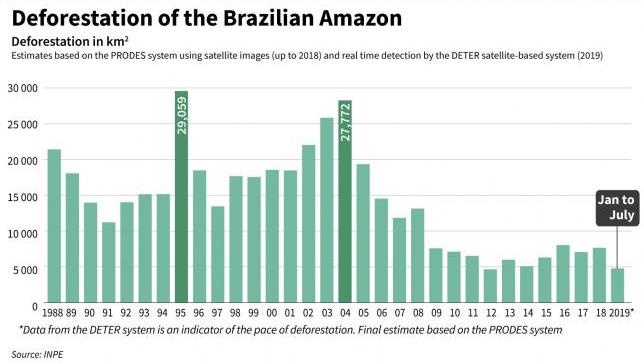
|
|
|
|
|
Jüngste Daten der NASA Earth Observatory Images unter Verwendung der MODIS-Daten haben eine Abnahme der durch Brände heimgesuchten Gebiete seit 2003 belegt, was die alarmistischen Behauptungen, dass menschliche CO₂-Emissionen die Auswirkungen von Bränden global verstärken, weiter unterminiert. In der Studie heißt es: "Eines der interessantesten Ergebnisse seit Beginn der MODIS-Messungen ist eine Abnahme der Gesamtzahl der Quadratkilometer der in jedem Jahr verbrannten Fläche pro Jahr. Zwischen 2003 und 2019 ist diese Zahl um etwa 25% zurückgegangen". Zusätzlich zeigen die Ergebnisse einer neuen Studie aus NASA-Satellitendaten, dass die globalen Wälder über einen Zeitraum von 35 Jahren um über 2,2 Millionen Quadratkilometer zugenommen haben infolge des gestiegenen CO₂-Gehaltes. Die Studie zeigt folgende Ergebnisse von 1982 bis 2016: "Es stellte sich heraus, dass die Zunahme der Waldbedeckung den Verlust derselben um etwa 2,24 Millionen Quadratkilometer überkompensiert hat - das ist etwa so groß wie Texas und Alaska zusammen". Die Behauptungen der Klima-Alarmisten und deren Manipulatoren in den Medien, wonach wir jetzt bzgl. globaler Brände in "Panik" geraten müssen, sind politischer und in keiner Weise wissenschaftlicher Natur. |
Recent data from NASA Earth Observatory Images using MODIS data has documented a decrease in global fire burned acreage since 2003 further undermining alarmist claims that man made CO₂ emissions are increasing global fire impacts. The study notes: "One of the most interesting things researchers have discovered since MODIS began collecting measurements, noted Randerson, is a decrease in the total number of square kilometers burned each year. Between 2003 and 2019, that number has dropped by roughly 25 percent." Additionally results from a new study utilizing NASA satellite data show that during a 35 year period global forests have increased growth by over 2.2 million square kilometers due to increasing CO₂. The study notes the following results over the period 1982 through 2016: "Over the entire span, the researchers found that new tree cover had offset tree cover loss by approximately 2.24 million square kilometers - which they note is approximately the size of Texas and Alaska combined." The claims by climate alarmist and their media manipulators that we must now "panic" regarding global fires including those in the Amazon region are driven by politics not science. |
|
Dr. Spencer zieht dieses scharfsinnige Fazit: "Dies ist nichts als ein weiterer Beleg dafür, wie die Medien das Narrativ kontrollieren und wie selektiv und überkritisch sie eine bestimmte (und fast immer rechts stehende Partei) verantwortlich machen". |
As Dr. Spencer astutely noted in his article: "This is just one more example of the media controlling the narrative and selectively and hypocritically placing blame on a particular (and almost always right-leaning) political party." |
2019-08-28
-
2019-08-27 de
Aus der Feuerhölle Südamerikas
Meine treuen Zuschauer aus Paraguay haben mir dieses Video geschickt zur Veröffentlichung.
Video von Paraguay Auswanderern die nach NASA Satellitendarstellung mitten im Höllenfeuer leben müssten.
Realität ist: Kein Brand weit und breit zu sehen.

-
EIKE Europäisches Institut für Klima und Energie
Michael Klein
2019-08-28 de Zentraler Desinformations-Funk - Lügen gehen weiter: ZDF zu Klimawandel und Bränden im AmazonasZuerst haben wir gedacht:
Potz Blitz, beim ZDF hat man uns gelesen und als Reaktion den eigenen Horizont erweitert, um die Brände in Afrika, die Brände in Afrika, die viel häufiger sind als die Brände im Amazonas-Gebiet.
Aber, man soll dem ZDF, dem Zentralen Desinformations-Funk nicht unterstellen, dass Fakten, die der ZDF-Berichterstattung widersprechen, als solche an die Konsumenten des Desinformations-Funks weitergegeben werden.
Nein. Die Fakten, die nun dummerweise der ganzen Hysterie um den zugrunde brennenden Regenwald im ultrarechts-geführten Brasilien zuwiderlaufen, sie werden gebogen, gedehnt, entstellt, zur Unkenntlichkeit verzerrt und, endlich hat man auch beim ZDF den Sprung auf das Trittbrett des Klimawandel-Hoaxes gewagt, zum Anlass genommen, diesen mittlerweile nur noch Langeweile verbreitenden Unsinn neu aufzutischen.
Herausgekommen ist dieses Machwerk
in der Aufbereitung für die Jungen, Naiven, die man beim ZDF auf Facebook wähnt.
2019-08-25
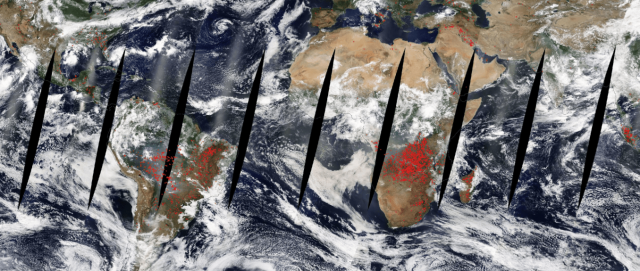
-
EIKE Europäisches Institut für Klima und Energie
Michael Klein
2019-08-25 de Szenen einer unglaublichen Heuchelei - Der brennende AmazonasGooglen Sie nach Waldbrand oder wildfires im Englischen, und sie werden mit Beiträgen zum Amazonas, zum brennenden Regenwald, zur Katastrophe der verbrennenden Lunge der Erde / Welt, je nach Politdarsteller, zugeworfen.
Wie wir im letzten Post gezeigt haben, ist der Amazonas, der Regenwald NICHT die grüne Lunge der Erde, geschweige denn der Welt.
Er ist ein Vehikel, dessen sich Politdarsteller bedienen, entweder, weil sie Druck auf Brasilien und den, wie die Tagesschau schreibt "ultrarechten Präsidenten" ausüben wollen, oder, was viel wahrscheinlicher ist, weil sie versuchen, sich zu inszenieren, als moralischer und guter Mensch, als Mensch, der sich kümmert, der bei den vielen Waldbränden an die Menschen, "die Menschen" ist immer gut, denkt, die davon betroffen sind, und die Tiere und die Pflanzen und ... der darunter leidet, dass es so heftig brennt, in Brasilien.
Die Heuchelei könnte nicht größer sein.
Wir stellen das Ausmaß der Heuchelei heute einmal in Abbildungen dar, Abbildungen von 2010 bis zum 23. August 2019.
Die Abbildungen stammen entweder von globalfiredata.org oder von der NASA.
Die Farbschattierungen auf den ersten fünf Abbildungen geben an, wie verheerend ein Feuer gewesen ist, je röter, um so weniger ist danach übrig.
↑ Im Januar brennt die Wüste, im August der Regenwald
-
Basler Zeitung / Tobias Herrmann
2019-09-19 de Im Januar brennt die Wüste, im August der RegenwaldJeden Tag gibt es auf der Welt Tausende von Waldbränden. Wo es wann lodert und warum.
⇧ 2018
↑ Übersicht und Kommentar zu Wissenschaft, Wirtschaft und Regierungspolitik im Zusammenhang mit Klimawandel
-
EIKE Europäisches Institut für Klima und Energie
Alan Moran
2018-12-07 de Übersicht und Kommentar zu Wissenschaft, Wirtschaft und Regierungspolitik im Zusammenhang mit KlimawandelGouverneur Brown sagt, dass der Klimawandel die Ursache der Buschbrände in Kalifornien sei,
aber die folgende Graphik entlarvt diese Behauptung als reine Propaganda:

⇧ 2017
↑ Trotz Klimawandel: Zahl der weltweiten Landschaftsbrände drastisch gesunken
-
Die kalte Sonne (Fritz Vahrenholt & Sebastian Lüning)
2017-09-23 de Trotz Klimawandel: Zahl der weltweiten Landschaftsbrände drastisch gesunkenQuelle:
NOAA / U.S. Wildfires Acres Burned / Number of Fires
⇧ 2016
↑ Kanada: Waldbrände 1990-2015

-
Die kalte Sonne (Fritz Vahrenholt & Sebastian Lüning)
2016-03-16 de Wenn als Redakteure getarnte Aktivisten gemeinsame Sache mit der Versicherungsindustrie machen: Das Märchen von den Klimawandel-Waldbränden
↑ Waldbrände im europäischen Mittelmeerraum
-
Die kalte Sonne (Fritz Vahrenholt & Sebastian Lüning)
2016-08-15 de Waldbrände im europäischen Mittelmeerraum sind in den letzten 30 Jahren seltener und kleiner gewordenIn Südwesteuropa lodern zur Zeit Waldbrände und legen große Waldgebiete in Schutt und Asche.
Insbesondere die Eukalyptus-Plantagen fackeln ab wie Zunder.
Auf der spanischen Kanareninsel hat ein Deutscher das Feuer fahrlässig verursacht.Wie problematisch sind Waldbrände wie sie derzeit wüten?
Auf den kanarischen Inseln ist das Feuer nichts ungewöhnliches.
Dort gibt es eine Kieferart, die sich den Feuern anpasst und danach auch noch austreiben kann.
Jetzt ist allerdings eine sehr große Fläche auf La Palma zerstört, mit Stabilität der Wald-Ökosysteme wird es so problematisch.
Ein Problem dort ist, dass die Siedlungen direkt an den Wald grenzen.
Das gilt gleichermaßen für Portugal.
Und dort werden auch gerade sehr die Eukalyptus-Aufforstungen diskutiert.
Wenn Sie vor 50 Jahren diese Landschaft besucht hätten, dann hätten Sie gesehen, dass da gar kein Wald ist.
Das waren traditionelle Landwirtschaftsgebiete. Die Landflucht hat dazu geführt, dass diese Flächen verwildern.
Dort ist einfach kein Mensch.
Jetzt ist diese Landschaft plötzlich brennbar.
Da fragt man sich, in welche Situation sich die Gesellschaft selbst manövriert hat.
Das Problem ist absolut selbst geschaffen.
Im europäischen Mittelmerrraum hat die verbrannte Fläche und Anzahl von Bränden in den letzten knapp 30 Jahren abgenommen.
Nur in Portugal zappeln die Daten ein wenig stärker.
Die allgemeine Abnahme der Waldbrände führeFeuerbekämpfungsvorkehrungen zurück.
Lokale Anstieg interpretieren Turco und Kollegen als Folge "gefährlicherer Landschafts-Konfigurationen", was vermutlich als Eukalyptus und Bauen in Waldnähe übersetzte werden kann.
Die Klimaerwärmung wird ebenfalls kurz genannt, allerdings mit untergeordneter Bedeutung.
Flächenbrände: Je mehr Mensch, desto weniger Feuer
Wissenschaftler des KIT sowie aus Schweden und Amerika zeigen, dass der Einfluss der demografischen Entwicklung auf Feuer in Ökosystemen genauso stark ist wie der des Klimawandels
Global deaths 1901-2014
-
wildfire 3,753
-
earthquakes 2.5 million
-
floods 7 million
Mittelmeerstudie:
Hier hat offenbar niemand im deutschsprachigen Raum bisher berichtet, trotz des aktuellen Bezugs. Ein Fall für das "Schweigen im Wald"
-
⇧ 2015
↑ In vorindustrieller Zeit gab es in Nordamerika mehr Waldbrände als heute
-
Die kalte Sonne (Fritz Vahrenholt & Sebastian Lüning)
2015-07-08 de Eine unbequeme Wahrheit: In vorindustrieller Zeit gab es in Nordamerika mehr Waldbrände als heute
⇧ 2010
↑ Russie: Des forêts laissées à l'abandon
-
Canada Free Press / Dr. Tim Ball
2010-08-06 fr Des forêts laissées à l'abandonAlors que les incendies de forêts continuent de faire rage dans le pays, la presse commence à s'interroger sur les raisons de la catastrophe.
Pour les Izvestia, c'est le démantèlement du système de surveillance et de protection des espaces forestiers qui est en cause.
⇧ 2009
↑ California: La Niña und Environmental Mismanagement
-
Klimaskeptiker Info
2009-09-02 de Flächenbrände in Kalifornien auf La Niña zurückzuführenen the massive California wildfires can be attributed to a cooling Pacific, two years of La Nina and environmental mismanagement.
-
Watts UP With That? (Antony Watts)
2009-09-03 en California Wildfires caused by cooler Pacific, La NiñaThis natural cyclical lack of rainfall combined with unwise policy that Dr. Scott Campbell reported concerning the prohibition against clearing up accumulated brush from the areas surrounding housing developments that were instituted at the insistence of the Sierra Club and other environmental groups has left more fuel for the fires fanned by the Santa Ana winds.
In addition, environmentalists have reduced the amount of water that can be used for agriculture.
Farmers in the Central Valley are asking for a new canal to get water from the Sacramento River, as well as a relaxation of environmental restrictions resulting from a 2007 court ruling limiting the amount of water pumped south from the delta - a giant sponge that absorbs runoff from the wetter north.
The ruling was in response to a suit by environmental groups that held that the water pumping through the delta endangered several species of fish, including smelt, green sturgeon, and winter and spring salmon.
-
Watts UP With That? (Antony Watts)
2009-09-03 en
AccuWeather's Joe Bastardi makes mincemeat of Greenpeace claim that
California Wildfires are caused by Global Warming
-
Joe Bastardi Channel
2009-09-04 en
Debunking Global Warming in California's Wildfires
The facts speak for themselves. I will show them
↑ Australia: False policies on environment and climate, Global warming
-
Watts UP With That? (Antony Watts)
2009-02-11 en "We've lost two people in my family because you dickheads won't cut trees down ..."en The recent fires in Australia and the loss of life and property were apparently compounded by a draconian policy that prevented people who lived in the fire threat zones from cutting trees and brush near their properties.
We witnessed something equally tragic in Lake Tahoe fire in 2007, owing to similar eco driven government stupidity forcing heavy handed policies there.
Residents couldn't get permits to cut down brush and trees, the result was a firestorm of catastrophic proportions.
-
Canada Free Press / Dr. Tim Ball
2009-06-16 en Environmentalists played a role in disastrous Australia fire
⇧
29 Moore
en Fens
fr Tourbières
Mit folgenden Links wird von anderen Webseiten auf diese Seite verwiesen:
| de | en | fr |
|---|---|---|
|
Biosphäre der Erde Moore |
Biosphere Fens |
Biosphère Tourbières |
-
Die kalte Sonne (Fritz Vahrenholt & Sebastian Lüning)
2015-07-08 de Neue Studie fördert überraschendes Ergebnis zutage: Erderwärmung hat keinen Einfluss auf Kohlendioxidabgabe aus Mooren
⇧
30 Wüsten, Desertifikation
en Deserts, Desertification
fr Déserts,Désertification
Mit folgenden Links wird von anderen Webseiten auf diese Seite verwiesen:
| de | en | fr |
|---|---|---|
|
Biosphäre der Erde Wüsten, Desertifikation |
Biosphere Deserts, Desertification |
Biosphère Déserts,Désertification |
de Allgemein en General fr Générale
-
Wikipedia
de
Desertifikation
en Desertification
fr Désertification
de Verzeichnis en Contents fr Sommaire
- 2020
- de
Wird Deutschland versteppen? Die Deutschen legen ihr Land trocken
Fazit:
In den nächsten 30 Jahren wird sich Deutschland trotz gleichbleibender bzw. leicht vermehrter Niederschläge größtenteils in eine Steppe verwandeln, wenn nicht sofort durch die Politik gegengesteuert wird.
Die Versteppung zeigt sich trotz gleichbleibenden Niederschlägen bereits jetzt bei den Hügeln und Kuppen, den kleinen Anhöhen in der Landschaft.
- 2013
- de
Allan Savory: Die Wüste begrünen und den Klimawandel umkehren
Was sollen wir tun?
Es gibt nur eine Möglichkeit, nochmals, nur eine Möglichkeit, die den Klimatologen und Wissenschaftlern bleibt:
Das Undenkbare tun und Viehherden einsetzen, die im Verbund umherziehen, einstige Herden und Raubtiere ersetzen und die Natur nachahmen.
Es gibt keine andere Möglichkeit für die Menschheit.
de Text en Text fr Texte
⇧ 2020
↑ Wird Deutschland versteppen? Die Deutschen legen ihr Land trocken
-
EIKE Europäisches Institut für Klima und Energie
Josef Kowatsch
2020-08-21 de Wird Deutschland versteppen? Die Deutschen legen ihr Land trocken
Trockenes Flussbett, trotz ausreichendem Regen
im August 2020
Konstant trommeln auf uns die Falschmeldungen verschiedenster Interessenverbände ein, dass es immer weniger regnen würde, und falls doch, dann hätte die Anzahl der Starkniederschläge zugenommen.
Das Wasser würde nicht in den Boden gelangen, sondern gleich oberflächlich abfließen.
Besonders schlimm träfe es den Osten Deutschlands.
Schuld daran sei einzig der menschengemachte Klimawandel und der sei wiederum auf das angebliche Treibhausgas CO₂ zurückzuführen.
Einzelne Berufsgruppen fordern von der Politik eine Klimaunterstützung, die natürlich von allen bezahlt würde.
Gleich vorweg die Antwort des Deutschen Wetterdienstes:
Es regnet nicht weniger und es gibt auch keine Zunahmen von Starkniederschlägen in Deutschland und auch nicht im Osten.
Als Beweis sollen dem Leser die Aufzeichnungen der Wetterstation Goldbach bei Bischofswerda in der Oberlausitz dienen.
Und zwar über die letzten 50 Jahre.
Niederschläge 1979 - 2020

In der Trockengegend im Osten Deutschlands haben die Niederschläge der vergangenen 50 Jahre sogar zugenommen, wobei die letzten 8 Jahre eine abnehmende Tendenz zeigen.
Der Schnitt der letzten 8 Jahre ist aber immer noch deutlich über dem Gesamtschnitt der letzten 50 Jahre.
(866 l/m2 zu 796 l/m2)
Niederschläge seit 1881 auf ganz Deutschland bezogen:
In der folgenden Liste hat das Team um Jörg Kachelmann aus allen Jahren jeweils die trockensten Jahre und die nassesten Jahre seit Messbeginn 1881 herausgesucht.
Dabei wurden die Jahre ab 1990 orange markiert.
Es finden sich seit 1881 nur drei Jahre unter den 20 trockensten Jahren und sogar sieben Jahre unter den 20 nassesten Jahren.
Es gab also seit 1990 mehr als doppelt so viele nasse Jahre als sehr trockene Jahre.
Fazit: Einen Trend zu Dürrejahren gibt es also absolut nicht.
Dabei muss man bedenken, alle Statistiken sagen keine Zukunft voraus, sondern stellen die Fakten der Vergangenheit bis heute dar.
Wetterkanal / Kachelmannwetter.com
Niederschlagsentwicklung in Deutschland seit 1881Mehr Dürre, obwohl es mehr regnet.
Anhaltende Dürre 2018 in Teilen Deutschlands
Das ist keine Auswirkung einer CO₂-bedingten Klimaerwärmung.
Die Aussagen der Jäger, Förster, Bauern und Kleingärtner und zuletzt der Medien sind dennoch richtig, unsere Landschaft wird immer trockener, gerade im Osten Deutschlands.
Nur deren Begründungen mit dem Klimawandel sind grottenfalsch.
Kein Klimawandel, nicht der vermeintlich mangelnde Regen und schon gar nicht das Kohlendioxid.
Oder dieses Bild vom 7. August 2020
Die Aufnahme zeigt eine Hügelkuppe im Ostalbkreis in Süddeutschland,
Vor der Aufnahme hatte es drei Tage lang anhaltend 40 % des gesamten Augustniederschlages geregnet, und trotzdem ist der Untergrund sehr trocken.
Kohlendioxid trocknet nichts aus,
sondern als feuchtigkeitsliebendes Molekül zieht es sogar Wasser in der kälteren Atmosphäre an und hält es fest nach der Gleichung
CO₂ + H2O → H2CO3
Bei Berührung des wärmeren Bodens zerfällt das H2CO3-Molekül wieder in Wasser und Kohlendioxid.
Wasser feuchtet den Boden an und CO₂ ist der unbedingt notwendige Bestandteil jeder Fotosynthese und damit jedweden Pflanzenwachstums.
Mehr CO₂ in der Atmosphäre führt damit eher zu nasseren Böden und besserem Pflanzenwachstum.
Trotz alledem werden die Böden Deutschlands besonders im Sommer trockener.Antwort: Die Deutschen legen ihre Landschaft selbst trocken.
Zur Römerzeit war das Gebiet des heutigen Deutschlands ein großes Sumpf- und Auengebiet, die Feuchtigkeit des Bodenkörpers bis in große Tiefen betrug wohl weit über 50 %, und zwar im Schnitt.
Alle Täler waren versumpft und nicht begehbar.
Die Wanderwege führten über Höhen oder an den Talhängen entlang.
Seitdem haben die Deutschen den nassen bis in große Tiefen voll gesaugten Schwamm Boden immer mehr trockengelegt und das entzogene Wasser ist heute Bestandteil der Ozeane.
Vor allem in den letzten 60 Jahren hat diese Trockenlegung bedrohliche Ausmaße angenommen, deren negative Folgen sich bereits zeigen durch:
Austrocknung der Landschaft bei gleichzeitigem Hochwasser und leichtem Meeresspiegelanstieg.
Die Niederschläge in Deutschland sind in den letzten 120 Jahren gleich geblieben, wobei die letzten 30 Jahre etwas nässer waren, sagt der Deutsche Wetterdienst.
Und auch die Anzahl der Starkniederschläge hat nicht zugenommen, sagt der DWD.
Die Anzahl der Gewitter hat eher abgenommen, sagt der DWD.
Fazit: Es regnet also gleich viel mit leicht zunehmender Tendenz und so wie immer.
Trotzdem nimmt einerseits die Austrocknung der Landschaft zu und gleichzeitig auch die Hochwassergefahr bei starken Regenfällen.
Wasser, das ehemals im Boden gebunden war, füllt heute die Weltmeere.
Wenn auch Medienmeldungen wie immer übertrieben sind, wird unsere Landschaft immer trockener, und zwar aufgrund menschlicher Eingriffe und gezielter Naturzerstörungen.
Besonders die Bergkuppen trocknen bereits sichtbar aus und versteppen zusehends.
Also eine Landschaftsversteppung von oben her bei gleichzeitigem Absinken des Grundwasserspiegels.
Damit ist neben Hochwasser bei Starkregen die zweite Gefahr für unser Land absehbar:
Die Grundwasserspeicher werden nicht mehr aufgefüllt.
Wasserknappheit für einzelne Regionen bei einer längeren Trockenperiode wird die absehbare Folge sein.
Einzelgründe der Austrocknungen:
Im folgenden Verlauf sollen sechs vom Menschen verschuldete Gründe der Austrocknung beschrieben werden.
-
Die moderne Agrarindustrie.
Die Bauern legten hauptsächlich in den letzten 50 Jahren die
deutsche Landschaft trocken.
Der Erfolg/Misserfolg der teuren Maßnahmen zeigt sich jetzt.
Vor dem Aufnahmezeitpunkt hatte es drei Tage lang ausgiebig geregnet.
Der durch den Maisanbau entstanden Betonackerboden kann keine Feuchtigkeit aufnehmen und speichern.
Die Bauern haben in den letzten 50/60 Jahren ihre Wiesen und Äcker mit Sickerschläuchen und weitreichenden Drainagen trockengelegt.
Hecken und Bäume, ganze Streuobstwiesen wurden entfernt und Unebenheiten (Buckelwiesen) aus der letzten Eiszeit beseitigt.
Insbesondere die Umstellung auf Monokulturen wie den Maisanbau für Biogasanlagen führen aufgrund des Pestizideinsatzes und des Kunstdüngereinsatzes zu einer nachhaltigen Zerstörung der oberen wasserspeichernden Humusschicht.
Es entstanden allmählich "Betonackerböden", die kein Wasser mehr nach unten durchlassen. Äcker und Wiesen sind neuzeitliche Industriehallen ohne Dach.
Gewellte Böden mit Nassstellen und Bäumen gibt es in keiner industriellen Produktionsstätte, so das Selbstverständnis nicht weniger Landwirte.
Die Folgen des selbst geschaffenen "Betonackers" sind fatal:
Ein großes Maisfeld an einem leicht geneigten Hang oberhalb eines Hauses bedeutet höchste Hochwassergefahr für die Bewohner des Hauses bei einem Starkregen.
-
Wald an den Talhängen und den Höhen:
Die Zeit der Pferdefuhrwerke und Pferde zum Holzrücken sind längst vorbei.
Die schweren Erntemaschinen brauchen feste Zufahrtswege

Man schlägt nicht mehr Holz, sondern man erntet mit Großmaschinen, den Harvestern.
Die schweren Erntemaschinen brauchen feste Zufahrtswege mit drainiertem Untergrund und einen trockenen Waldboden, unzählige Ablaufgräben führen das Wasser aus dem Wald hinaus.
Die Erntemaschinen verdichten zusätzlich den einst schwammigen, Wasser speichernden Waldboden.
Über 30 000 Windräder auf den Hochflächen und in den Wäldern:
Alexander Blecher, Das Gesamtfundament hat ein Gewicht von
4000 Tonnen
Jedes Windrad erfordert wegen seiner Höhe und seiner Hebelwirkungen eine hohe Standfestigkeit.
Der Boden unter Windparks muss besonders trocken sein, weil sonst die Betonfundamente dem Winddruck und der Eigenresonanz der Anlage nicht standhalten würden.
Zudem erfordern die Windräder feste Zufahrtsstraßen für die Großfahrzeuge zur Anlieferung der Bauteile und der späteren Wartung.
Und durch die ständige Sonneneinstrahlung auf die Flächen gibt es weitere zusätzliche Austrocknung.
Hohe Bäume kühlen, hohe Betonmasten erwärmen die Landschaft.
-
Auenlandschaften in den Tälern.
Vor 70 Jahren:
Ein ausufernder Kocher im Gebiet Brühl = Bruchwald, heute trockengelegt, begradigt und bebaut.
Aufgrund der ständig ausufernden Bebauung, die sich in einstige Freiflächen hineinfrisst, sind ehemalige Feuchtgebiete und Feuchtwiesen trockengelegt worden.
Die Flüsse sind begradigt, oft ausbetoniert und die Überschwemmungszonen = Versickerungszonen sind verschwunden.
Als jahrzehntelanger Gemeinderat und guter Naturbeobachter vor Ort konnte ich miterleben, wie die Wiesen und Feuchtauen um unseren Ort zunehmend trocken fielen.
-
Wikipedia
de Flussaue
en Floodplain
fr Lit majeur
-
Wikipedia
de Bruch (Landschaft)
en Swamp
fr Marécage
-
Wikipedia
de Auengebiet von nationaler Bedeutung
en List of alluvial sites in Switzerland
fr -
-
Wikipedia
de Bruchwald
en Carr (landform)
fr Carr (zone humide)
-
Wikipedia
-
Die zunehmende Bebauung, insbesondere nach dem 2.ten Weltkrieg.
Auf der zugebauten Fläche am Hang des Wettenberges (wet=nass) kann
nichts mehr versickern.

Das auf dem Bild üppige Grün um die Häuser verkommt in den Sommermonaten zum gelben Trockenrasen.
Bei Starkregen wird die landwirtschaftliche Fläche unterhalb kurzzeitig überschwemmt,
bei schönem Wetter hingegen schneller austrocknen.
Die Erwärmung des gesamten Gebietes ist eine weitere Folgeerscheinung.
Straßen und Hausdächer werden in den Sommermonaten bis 60 °C heiß
und speichern die Wärme bis in die Nachtstunden hinein.
Die Vertreibung der Deutschen aus dem Osten und Südosten Europas führte zu einem Bevölkerungsdruck im Restdeutschland, der nur durch eine rasche Bebauung aufgefangen werden konnte.
Eine Bebauung, die heute noch anhält, da der Wohlstand nach einer Vergrößerung und Verschönerung verlangt.
So fressen sich täglich neue Trockengebiete in die einst freie nassere Naturlandschaft.
Kuriose Siedlungs-Namen:
In Wohngebieten wie Wasserstall gibt es kein stehendes Wasser mehr, im Baugebiet Teich keine Teiche und im Brühl stehen alle Häuser im Trockenen, kein versumpfter Bruchwald weit und breit.
Der letzte Restsumpf wurde in meinem Heimatort vor 35 Jahren trockengelegt, als ein Schäfer festsaß.
Wir haben in Deutschland fast keine Auen mehr, in welchen Wasser versickern darf.
Regenwasser wird nicht in Überflutungswiesen zurückgehalten, sondern möglichst schnell abgeleitet.
Die menschengemachten, einst gut gemeinten, in der Wirkung aber großflächige Naturzerstörungen nach dem Kriege brachten zunehmend die Trockenheit in die deutsche Landschaft.
Nahezu jede weitere Baumaßnahme macht täglich den Boden trockener.
Wir stehen erst am Anfang des Problems "Versteppung der Landschaft" in Deutschland.
Mit CO₂ und Klimawandel hat das nichts zu tun.
Man braucht nur 5 bis 10 Häuser mit einer Zufahrtsstraße in eine Nasswiese stellen und 10 Jahre später ist der Fremde erstaunt über die Bezeichnungen der Siedlungen wie Wasserfurche, Fuchsloch, Lachwiese, Horlach, Weiherwiese, Kocheraue, im Kies.
Unsere Ortsmitte ziert ein Straßenschild "In der Pfitze", vor 70 Jahren gab es Pfützen noch reichlich in derselbigen, im Frühjahr sogar mit Froschlaich in den Wasserlöchern.
-
Bund, Land und Gemeinden: Der Straßenbau
Täglich werden in Deutschland etwa 100 Hektar freie Naturfläche überbaut, zum einen innerhalb bereits bestehender Ortschaftsbebauung durch Erweiterungen und Anbauten, aber auch ganz erheblich durch neue Siedlungen und den Straßenbau in der einst freien Naturlandschaft.
Nicht nur breitere Autobahnen und Bundesstraßen, sondern vor allem auch die Kreis- und Ortsverbindungssträßchen, sowie die Asphaltierung der einstmals erdgebundenen Feldwege, die alle auch eine Wassersammlung und Wasserableitung benötigen.
Auch trägt eine Straße ganz erheblich zur Landschaftserwärmung bei, im Hochsommer wird der dunkle Belag 50 bis 60 °C warm und nachts wird die tagsüber gespeicherte Wärme in die Landschaft abgegeben.
Die Straßen sind Wärmebänder in einer einst kühleren lebendigen Natur-Landschaft.
Wer die Landschaft trockenlegt und wer die Landschaft erwärmt, braucht sich nicht zu wundern, dass sie nach einigen Jahren auch trockener und wärmer ist.
-
Sinkender Grundwasserspiegel und zukünftige Wasserverknappung.
Aus den geschilderten Gründen sickert immer weniger Regenwasser in größere Tiefen, in welchen das Grundwasser gespeichert ist.
Dafür steigt der Meeresspiegel.
Aber damit nicht genug.
Wir holen unser Trinkwasser aus den Tiefenquellen und legen so auch noch den gesamten Bodenkörper unter uns trocken.
Alle Getränke werben auf dem Etikett mit ihrer natürlichen sauberen Tiefenquelle.
Aus Tiefenquellen werden Freibäder und Berieselungsanlagen für drainierte Sportplätze und Parkanlagen gespeist.
Jede Klospülung sind 6 bis 10 Liter bestes Grundwasser, das dem Boden entzogen wurde und dann die Weltmeere weiter auffüllt.
Eine kleine Überschlagsrechnung soll das Problem verdeutlichen.
Nehmen wir an, dass in den letzten 10 Jahren jedem Kubikmeter Boden 10 Liter Wasser auf 50 m Tiefe in Deutschland entzogen und ins Meer geleitet wurde.
Meeresspiegelanstieg?
Antwort: Auf einer Meeresfläche = Deutschland von 357 386 km2 ein Anstieg von 5 Zentimeter.
Fazit:
In den nächsten 30 Jahren wird sich Deutschland trotz gleichbleibender bzw. leicht vermehrter Niederschläge größtenteils in eine Steppe verwandeln, wenn nicht sofort durch die Politik gegengesteuert wird.
Die Versteppung zeigt sich trotz gleichbleibenden Niederschlägen bereits jetzt bei den Hügeln und Kuppen, den kleinen Anhöhen in der Landschaft.
Wir wollen weder die Versteppung Deutschlands noch eine Wasserrationierung in den Sommermonaten.
Lösungsvorschläge:
So könnten interessante Ansätze und Lösungen aussehen
Regenwasser muss am Entstehungsort zurückgehalten werden.
-
Entfernen der Drainagen und der Sickerschläuche aus den Äckern und Wiesen, dadurch nimmt der Reiz der Landschaft nebst Artenreichtum zu, da in den teilweise noch vorhandenen Senken wieder Feuchtzonen entstehen dürfen.
-
Der letzte verbliebene Tümpel auf einer Hochfläche (hinter dem Hund)
Im Mittelalter war die Fläche übersät mit Tümpeln.

Die schwäbische Bezeichnung woagarai, falsch übersetzt mit Wagenrain drückt dies aus.
Woaga, gesprochen wie schwoab, heißt Tümpel, im Fränkischen wooga.
Am 18.08.2020 waren bereits 76% der Augustniederschläge gefallen.
Das Wasser wird auf den landwirtschaftlichen Flächen in Tümpeln, Erdvertiefungen und Versickerungslöchern zurückgehalten.
Versickerung ist notwendig, um die Grundwasservorräte aufzufüllen, aber auch die Verdunstung trägt zur Landschaftsabkühlung bei Hochsommerwetter positiv bei.
Regenrückhaltung ist das Gegenteil von schnellem Ableiten, das in den letzten 60 Jahren praktiziert wurde.
-
Städte: 15 % der Deutschlandfläche sind überbaut und trockengelegt.
Eine Stadt bildet das negative Zentrum.
In der Stadt ist es im Sommer bis zu 10 °C heißer als im Umland.
Abhilfe: Niederschläge sollten aufgefangen und zwischengespeichert werden für die heißen Tage.
Wo möglich, sollten unterirdische Versickerungsflächen geschaffen werden.
-
Neue Baugebiete:
a) Das Oberflächenwasser der öffentlichen Flächen muss an der tiefsten Stelle ein erdgebundenes Versickerungsloch erhalten oder eine Versickerungsfläche als Ersatz der einstigen Dorfteiche, Hülben und Auwiesen.
b) Privat: Die Häuser müssen das Dachregenwasser in einem unterirdischen Regenwasserbecken von ca. 2 Kubikmetern zurückhalten, mindestens eine Seite darf nicht betoniert sein, damit das Wasser zwecks Grundwasserbildung versickern kann.
Nur der Überlauf darf in die Kanalisation gelangen.
-
Zunehmend müssen Bäche und Flüsse wieder rückgebaut werden, natürliche zusätzliche Wasserarme, die bei Hochwasser gefüllt und einerseits als Hochwasserschutz dienen, aber auch als Versickerungsflächen zur Verfügung stehen.
Dadurch wird sich die Vielfalt der Kulturlandschaft erhöhen.
-
Flächenversiegelung in den Orten.
Parkplatz am Ortsrand derselben Gemeinde. Falsch und richtig

Viele Parkplätze lassen sich mit Rasengittersteinen auch ökologisch aufwerten oder gleich in der Schotterwiese parken.
Selbst der Parkplatzrundweg auf dem Bild ist nicht asphaltiert.
Genauere Erläuterung des ersten Lösungsvorschlages anhand des obigen Bildes "Die moderne Agrarindustrie".
Aufnahme vom 7. 8. 2020. Zuvor hatte es drei Tage geregnet, etwa 40% des Augustniederschlages.
Auf dem Bild ist von dem überdurchschnittlichen Niederschlag nichts erkennbar:
Es handelt sich um eine ausgeräumte industrielle bewirtschaftete Agrarlandschaft zwischen der Hüttlinger Gemarkungsgrenze und der Gemeinde Neuler.
Das Gelände ist eingeebnet und damit der leichteren Maschinenbearbeitung angepasst.
Von beiden Seiten her leicht fallend zu einem Wasserauffanggraben in der Bildlmitte, der in Richtung Westen - links - abgeleitet wird ins Schlierbachtal bei Niederalfingen.
Dieser Entwässerungsgraben ist im Verlauf an den drei Bäumen der Bildmitte erkennbar.
Im Grunde braucht man nur einen Zustand ähnlich wie vor 150 Jahren herstellen,
viele Kleinmaßnahmen, die einen Niederschlag möglichst lange auf dieser Hochfläche halten.
Das käme auch der Landwirtschaft zugute.
Mögliche Kleinmaßnahmen:
Entfernung der Sickerschläuche
und Drainagen aus den Böden,
zu 70 % Zuschütten von 2 Ableitungsgräben von Neuler her in die Bildmitte zum Sammelgraben.
Auch der Sammelgraben sollte zu 70 % zugeschüttet werden. d.h. 70 % der Gräben bleiben als Grabenreste erhalten, dort sammelt sich bei Regen das Wasser in kleinen Tümpeln und kann versickern zur Grundwasserneubildung.
Die erzeugten Tümpel erhalten verlangsamt ihren Wassernachschub aus den Wiesen und Äckern - Drainagen sind weg.
Dadurch wertet man auch den Naturcharakter der Landschaft auf.
Die wie an einer Schnur aufgereihten Tümpel werden im Sommer sicher austrocknen, bilden aber trotzdem auch im Sommer eine Feuchtzone für gefährdete Lebewesen.
Die Tümpel werden sich bewachsen, Nässe liebende Sträucher und Bäume werden sich ansiedeln wie in alter Zeit.
Weiter:
die ebene Agrarfläche erinnert an eine Industriehalle ohne Dach.
In die Äcker und Wiesen müssen wieder quer zur Neigungsfläche Rillen bzw. Erhebungen eingezogen werden, damit sich der oberflächlich abfließende Niederschlag davor staut und ins Erdreich versickern kann.
Links oder rechts eines Ackerstreifens können Vertiefungen als Wassersammelstellen zur Versickerung eingebracht werden.
So erreichen wir eine Bodendurchnässung bis wenigstens 50 cm Tiefe.
Hätte man am 7. August am Fotostandort ein Spatenloch gegraben, dann wären die oberen 5 cm trocken, weitere 20 cm feucht und darunter alles trocken gewesen.
Drei oder vier Tage später hätte auch die schmale Feuchtzone im Erdreich gefehlt, weil sich die Pflanzen dort mit Wasser versorgt haben. Pflanzen, deren Wurzeln gar nicht über 5 cm herab reichen wie manche Gräser, bleiben gelbbräunlich.
Bodenerosion bei Starkregen: Die Landschaft hat im Bereich der Maisäcker keinen Humus mehr, der wurde zerstört durch die Pestizide, Kunstdünger und die schnell abfließenden Niederschläge.
In dem Weiler Niederalfingen am Unterlauf des Schlierbaches muss die Gemeinde wiederkehrend das Bachbett ausbaggern, um die Hochwassergefahr innerorts zu verringern.
Leider darf dieser Aushub dann nicht mehr auf die Felder zurückgebracht werden wegen angeblich zu vieler Schwermetalle und Pestizide.
Vor 150 Jahren war die Fläche eine gewellte unebene Landschaft mit Feucht- und Trockenzonen, die je nach Biodiversität mit Äckern und Wiesen bewirtschaftet wurden - Kühe, Gänse, Ziegen.
Neben den vielen Tümpeln mit Nassbewuchs breiteten sich vor allem Eichen und Birken auf den Flächen aus.
Im Jahre 2007 sind die letzten Birken beim Standort des Fotografen wegen Trockenheit abgestorben.
Eine Eiche steht noch, ist aber stark vom Eichenprozessionsspinner befallen und wird auch nicht überleben.
Die Eichenprozessionsspinnerschwärmer sind eine begehrte Nahrung für Fledermäuse.
In der Landschaft fliegen aber keine Fledermäuse.
Es fehlen u.a. die alten Bäume.
Im Grunde müssten sich die Bauern bzw. der Bauernverband überlegen wie er das Wasser wieder in der Landschaft halten will.
Ärgerlich ist die jetzige Strategie der Bauern, welche den schon immer währenden Klimawandel bejammern, gezielt Falschinformationen (weniger Niederschläge) in die Bevölkerung streuen und von den Politikern Abhilfe verlangen.
Wer die Landschaft und Natur trockenlegt, braucht sich nicht zu wundern, dass sie anschließend auch trocken ist.
Aber: Wir müssen den Bauern helfen und sie mit Ideen zur Selbsthilfe füttern.
-
|
|
Wird Deutschland versteppen? Die Deutschen legen ihr Land trocken Naturschutz: Wird Deutschland versteppen? Die Deutschen legen ihr Land trocken Biosphäre der Erde: Wird Deutschland versteppen? Die Deutschen legen ihr Land trocken Bevor Massnahmen gegen den Klimawandel beschlossen werden: Umwelt |
de Siehe auch en See also fr Voir également
| de | en | fr |
|---|---|---|
|
Biosphäre der Erde Igel |
Biosphere Erinaceidae |
Biosphère Erinaceidae |
| de | en | fr |
|---|---|---|
|
Biosphäre der Erde Wüsten, Desertifikation |
Biosphere Deserts, Desertification |
Biosphère Déserts,Désertification |
⇧ 2013
↑ Allan Savory: Die Wüste begrünen und den Klimawandel umkehren
Transcript (35 languages)
Wie eine Tsunami stürzt eine der größten Katastrophen über uns herein.
Diese Katastrophe gipfelt in einer immer grausameren Realität.
Wir begegnen dieser Realität in vollem Glauben, dass wir unsere Probleme mit Technik lösen können, was durchaus verständlich ist.
Diese bevorstehende Katastrophe kann auf unsere wachsende Bevölkerung, die bald 10 Milliarden Menschen erreicht, auf Wüstenbildung und natürlich den Klimawandel zurückgeführt werden.
Wie eine Tsunami stürzt eine der größten Katastrophen über uns herein.
Desertifikation ist das neue Schlagwort für Wüstenbildung.
Dazu kommt es nur, wenn wir zu viel vegetationslosen Boden verursachen.
Das ist die einzige Ursache.
Ich konzentriere mich auf den größten Teil der Erdoberfläche, der zur Wüste wird.
Was können wir also tun, um das ausgetrocknete Grasland gesund zu erhalten?
Beachten Sie, dass ich dabei vom Großteil der Erdoberfläche spreche.
Wir können die Anzahl der Tiere nicht dezimieren, ohne Desertifikation und Klimawandel zu verursachen.
Wir können es nicht abbrennen, ohne Desertifikation und Klimawandel zu verursachen.
Was sollen wir tun?
Es gibt nur eine Möglichkeit, nochmals, nur eine Möglichkeit, die den Klimatologen und Wissenschaftlern bleibt:
Das Undenkbare tun und Viehherden einsetzen, die im Verbund umherziehen, einstige Herden und Raubtiere ersetzen und die Natur nachahmen.
Es gibt keine andere Möglichkeit für die Menschheit.
Also lasst es uns tun.
Genau das machen wir auf diesem Stück Wiese im Vordergrund.
Mit Rindern wirken wir stark darauf ein, um die Natur nachzuahmen, und danach sieht es so aus.
Das ganze Gras bedeckt nun die Erde, in Form von Dung, Urin, Pflanzenabfall oder Mulch.
Jeder Gärtner unter Ihnen versteht das.
Die Erde kann jetzt Regenwasser absorbieren und speichern, Kohlendioxid speichern und Methan abbauen.
Und das funktioniert ganz ohne Brände, die der Erde schaden, und Pflanzen können wachsen.
⇧
31 Wattenmeere
en Mud flats
fr Vasières
Mit folgenden Links wird von anderen Webseiten auf diese Seite verwiesen:
| de | en | fr |
|---|---|---|
|
Biosphäre der Erde Wattenmeere |
Biosphere Mud flats |
Biosphère Vasières |
-
Wikipedia
de
Wattenmeer
en Mudflat
fr Vasière
-
Die kalte Sonne (Fritz Vahrenholt & Sebastian Lüning)
2015-12-26 de WWF-Studie: Wattenmeer wächst mit dem Meeresspiegel in die HöheAber auch dem WWF ist zum Glück die Funktionsweise des Wattenmeeres bekannt.
Das wenig bekannte Watt-Wunder:
Das Watt kann unter bestimmten Voraussetzungen nämlich dem Meeresspiegel hinterherwachsen.
Der WWF schreibt:
Damit das Wattenmeer nicht ertrinkt, muss es mit dem Meeresspiegel in die Höhe wachsen.
Damit dies aber noch rechtzeitig erfolgen könne, müsse es laut WWF neben regionalen Maßnahmen zu einem wirksamen Klimaschutz auf globaler Ebene kommen.
In einer jetzt vorgelegten WWF-Studie [pdf hier] werden 13 Fallbeispiele von Projekten aus den Niederlanden, England, den USA und anderen Ländern vorgestellt, aus denen sich Möglichkeiten zur Klimaanpassung durch "Wachsen mit dem Meer" für das Wattenmeer ableiten lassen.
Die wichtigsten Ergebnisse: Besonders an flachen Küsten müssen Wattflächen, Salzwiesen und Inseln erhalten und, falls nicht mehr vorhanden, wiederhergestellt werden.
Dadurch lasse sich die Widerstandsfähigkeit der Küste stärken.
Durch Erosion abgetragene Sedimente können durch die Aufspülung von Sand aufgefüllt werden, wenn die natürlichen Verhältnisse dies erlauben.
Auch eine natürliche Dünenentwicklung nach niederländischem Vorbild trage zur Klimaanpassung bei.
Dazu gehöre, dass Sand vom Strand durch die Dünen ins Hinterland wehen dürfe.
Dies erhöhe das Land und stärke unbesiedelte Inselbereiche.
Salzwiesen, die bei hohen Fluten durch abgelagerte Sedimente in die Höhe wachsen, wirken bei Sturmfluten wie ein Puffer zwischen Land und Meer und sollten, wo möglich, wiederhergestellt werden.
Doch welche Maßnahme man auch ergreift, es zeige sich an den Fallbeispielen auch, dass man zu ihrer erfolgreichen Umsetzung ein breites Bündnis zwischen den Betroffenen und eine langfristige Raumplanung brauche.
Die besondere Herausforderung im Nationalpark Wattenmeer besteht laut WWF darin, vor allem die Naturkräfte wie Wind und Gezeiten für das "Wachsen mit dem Meer" zu nutzen und sie dabei möglichst sanft zu unterstützen.
-
WWF Studie
2015-09 de
Klimaanpassung an weichen Küsten:
Fallbeispiele aus Europa und den USA
für das schleswig-holsteinische Wattenmeer
-
Duke University
2015-12-18 en Coastal Marshes More Resilient to Sea-Level Rise Than Previously Believed
⇧
32 Pflanzen bei hohen Temperaturen
en Plants at high temperatures
fr Plantes à hautes températures
Mit folgenden Links wird von anderen Webseiten auf diese Seite verwiesen:
| de | en | fr |
|---|---|---|
|
Biosphäre der Erde Pflanzen bei hohen Temperaturen |
Biosphere Plants at high temperatures |
Biosphère Plantes à hautes températures |
-
Die kalte Sonne (Fritz Vahrenholt & Sebastian Lüning)
2015-11-18 de Dem Klimawandel gewachsen: Ananasgewächse profitieren vom Temperaturanstieg
⇧
33 Pflanzen bei tiefen Temperaturen
en Plants at low temperatures
fr Plantes à basses températures
Mit folgenden Links wird von anderen Webseiten auf diese Seite verwiesen:
| de | en | fr |
|---|---|---|
|
Biosphäre der Erde Pflanzen bei tiefen Temperaturen |
Biosphere Plants at low temperatures |
Biosphère Plantes à basses températures |
↑ a Wie Pflanzen strengem Frost trotzen
-
Spiegel Online
de Wie Pflanzen strengem Frost trotzen
↑ b Wie sich Bäume vor extremen Temperaturen schützen
fr "Les arbres ne vivent et ne croissent pas toujours à la température de l'air ambiant."
-
En transpirant quand il fait chaud et en se recroquevillant
quand il fait froid, les feuilles des arbres font tout pour
résister aux variations de température afin de favoriser la
photosynthèse.
Rude coup porté à la dendrochronologie !
-
Pensée unique
fr Les océans se protègent du réchauffement
⇧
34 Winterkälte
en Winter Chill
fr Periodes froides en hiver
Mit folgenden Links wird von anderen Webseiten auf diese Seite verwiesen:
| de | en | fr |
|---|---|---|
|
Biosphäre der Erde Winterkälte |
Biosphere Winter Chill |
Biosphère Periodes froides en hiver |
-
Watts UP With That? (Antony Watts)
2009-07-28 en Global Warming to Threaten California Fruits and Nuts?
⇧
35 Weizenpreise und Sonnentätigkeit
en Wheat prices and sun spots
fr Prix des céréales et activité solaire
Mit folgenden Links wird von anderen Webseiten auf diese Seite verwiesen:
| de | en | fr |
|---|---|---|
|
Biosphäre der Erde Weizenpreise und Sonnentätigkeit |
Biosphere Wheat prices and sun spots |
Biosphère Prix des céréales et activité solaire |
de Allgemein en General fr Générale
| de | en | fr |
|---|---|---|
| Wasser, Land, Nahrung | Water, Land, Food | Water, Land, Food |
de Verzeichnis en Contents fr Sommaire
- 1801: William Herschel
- de
Sonnenaktivität und Weizenpreis
en Solar Activity and Wheat Prices - 2018
- de Süddeutsche Zeitung: Die fetten Jahre sind vorbei
- 2016
- en In the middle of the "hottest year ever" come record wheat harvests
- de Die erfreuliche Nachricht: Sehr gute Getreideernte 2016 in Thüringen- wo bleiben die negativen Folgen des angeblichen "Klimawandels"?
- 2015
- de Weshalb steigt die globale Weizenernte immer weiter an, obwohl der Weizen doch angeblich vom Klimawandel bedroht ist?
- 2014
- de Neue Studie: Klimawandel könnte globale Agrarfläche deutlich vergrößern
- de Gute Nachrichten: Mais trotzt dem Klimawandel
- de Bericht der EU-Kommission: Erwärmung um zwei Grad könnte europäische Ernten steigern
- 2009
- en Crops under stress as temperatures fall
- 2008
- en Winter Wheat Prices SKYROCKET! Sunspots, still at zero
de Text en Text fr Texte
⇧ 1801: William Herschel
↑
Sonnenaktivität und Weizenpreis
en Solar Activity and Wheat Prices
-
Wikipedia de
Wilhelm Herschel
en William Herschel
fr William Herschel
de
Sonnenaktivität und Weizenpreis
Schon William Herschel entdeckte den Zusammenhang
Vor über zwei Jahrhunderten bemerkte der britische königliche Astronom William Herschel einen Zusammenhang zwischen den Sonnenflecken und dem Weizenpreis in England.
Wenn wenige Flecken beobachtet wurden, stiegen die Preise.
en
Solar Activity and Wheat Prices
William Herschel noted a correlation
More than two centuries ago, the British Astronomer Royal William Herschel noted a correlation between sunspots and the price of wheat in England.
He suggested that when there were few sunspots, prices rose.
-
When the latter were few in number, he noted, the climate turned colder and drier, crop yields fell and wheat prices rose.
-
In the last few years, sunspot activity has dropped to its lowest point for a century.
One of our biggest worries is that our politicians are so fixated on the idea that CO2 is causing global warming that most of them haven't noticed that the problem may be that the world is not warming but cooling, with all the implications that has for whether we get enough to eat.
-
Spektrum der Wissenschaft / Thilo Körkel
2003-01-01 de Beeinflusst die kosmische Strahlung das Klima?Astronomiebegeisterte Weizenspekulanten hätten mit den Erkenntnissen von William Herschel (1738-1822) viel Geld verdienen können.
Hypothese vom Jahr 1801
Im Jahre 1801 stellte der aus Hannover stammende Astronom eine gewagte Hypothese auf
Vermehrte Sonnenflecken gehen mit intensiverer Sonnenstrahlung und damit einer milderen Witterung einher.
Allerdings fehlten Herschel die Temperaturdaten, um seine Idee zu überprüfen.
Daher nahm er kurzerhand den Weizenpreis als Indikator
Kälte, so seine Überlegung, führt zu schlechteren Ernten, und das treibt den Preis in die Höhe.
Tatsächlich zeigte die langjährige statistische Analyse, dass sich das Getreide bei sinkender Anzahl der Sonnenflecken verteuerte.
Das Gelächter
Das Gelächter, mit dem Herschels Gedanken seinerzeit bedacht wurden, ist längst verstummt.
Die Verbindung zwischen Sonnenflecken, solarer Aktivität und globalem Klima hat sich als real und folgenschwer erwiesen.
So ließ eine aktivere Sonne zwischen dem 9. und dem 14. Jahrhundert die Temperatur in Europa um bis zu ein Grad ansteigen.
Auch die "Kleine Eiszeit" in Nordeuropa zwischen 1550 und 1850 beruht zu einem großen Teil auf Schwankungen der solaren Aktivität, verstärkt durch Vulkanismus.
Damals verschwanden fast alle Sonnenflecken; die Temperatur sank um ein Grad.
Missernten führten zu Hungersnöten, und extrem kalte Winter ließen die Flüsse zufrieren.
Die Rolle des Sonnenwinds
Auch zur heute beobachteten globalen Erwärmung leistet die steigende Sonnenaktivität einen Beitrag.
Das Intergovernmental Panel for Climate Change (IPCC), eine Art Klimabeirat der Vereinten Nationen, schätzt ihn auf rund zwanzig Prozent.
Den Löwenanteil schreibt es den Treibhausgasen zu, die der Mensch der Atmosphäre zuführt.
Als Maß für die Klimawirksamkeit dient dabei der so genannte Strahlungsantrieb.
Er gibt an, wie stark ein bestimmter Klimafaktor das Gleichgewicht zwischen der auf die Erde einfallenden und der von ihr ins All zurückgeworfenen Strahlung verschiebt.
Je größer der Strahlungsantrieb dieses Faktors, desto mehr trägt er zur Erwärmung bei.
Eine neuere Theorie schreibt der Sonne allerdings einen größeren Einfluss zu als die vom IPCC geschätzten 0,3 Watt pro Quadratmeter.
Dabei berücksichtigt sie einen indirekten Effekt über den Sonnenwind, der sich bei zunehmender solarer Aktivität gleichfalls intensiviert.
Die Argumentation ist recht vertrackt und geht um mehrere Ecken.
Der Sonnenwind selbst wirkt sich nämlich nicht auf das Klima aus, da ihn das Erdmagnetfeld in weitem Bogen um unseren Planeten herumlenkt.
Allerdings beeinflusst er seinerseits einen anderen Teilchenstrom: die so genannte kosmische Strahlung aus dem Weltall.
Sie besteht aus Teilchen mit Energien bis zu 1020 Elektronenvolt - 100 Millionen Mal so viel, wie Physiker mit den besten Teilchenbeschleunigern erreichen können.
Hauptsächlich handelt es sich um Protonen, hinzu kommen Kerne von Helium sowie - zu einem geringen Prozentsatz - von schwereren Elementen.
Der Ursprung der kosmischen Strahlungsteilchen ist noch unklar, möglicherweise stammen sie von fernen Sternexplosionen (Supernovae).
Durch ihre sehr hohe Energie dringen sie bis in die untere Atmosphäre ein.
In jüngster Zeit aber wurden immer mehr von ihnen schon im All ausgebremst:
Der Sonnenwind verdoppelte in den vergangenen hundert Jahren seine Stärke und reduzierte so die Intensität der auf die Erde auftreffenden kosmischen Strahlung um rund fünfzehn Prozent.
Im Jahr 1997 fanden Eigil Friis-Christensen und Henrik Svensmark vom Dänischen Institut für Weltraumforschung in Kopenhagen Hinweise auf einen möglichen Zusammenhang zwischen diesem Effekt und der globalen Erwärmung.
Sie stellten fest, dass bei hoher Intensität kosmischer Strahlung die Wolkenbedeckung über den Meeren zunimmt und umgekehrt.
Drei Jahre später konnten sie dieselbe Korrelation auf Basis umfassenderer Daten auch für die Landflächen nachweisen.
Demnach würde die Abschwächung der kosmischen Strahlung durch einen heftigeren Sonnenwind über geringere Wolkenbildung für mehr Sonnenschein und damit höhere Temperaturen sorgen.
Aber wie können die Teilchen aus dem All die Wolkenbildung fördern?
Eine mögliche Antwort liefern nun Untersuchungen von Fangqun Yu von der State University of New York in Albany.
Er fand anhand von Modellrechnungen heraus, dass eine intensivere kosmische Strahlung in der unteren Troposphäre mehr Kondensationskeime für Wassertröpfchen erzeugt, von denen die Wolkenbildung ausgeht.
Die Troposphäre ist die erdnahe Atmosphärenschicht, in der das Wetter stattfindet; darüber liegt ab etwa acht Kilometer Höhe die Stratosphäre.
Wenn also die kosmische Strahlung abnimmt, ist die Wolkendecke dünner und hält weniger Sonnenlicht ab.
Dadurch steigt die Temperatur an der Erdoberfläche.
Gleichzeitig kühlt sich die untere Troposphäre ab, da es dort weniger Wolken gibt, die sich durch Lichtabsorption erwärmen könnten.
Das würde vielleicht auch ein besonders widerspenstiges Problem der Klimaforscher lösen:
Während sich die Oberfläche der Erde im Verlauf der vergangenen zwei Jahrzehnte um rund 0,15 Grad Celsius pro Jahrzehnt erwärmt hat, ergeben Satelliten- und Ballonmessungen bis in acht Kilometer Höhe überraschenderweise nur einen Temperaturanstieg um ein Drittel dieses Werts; sogar sinkende Temperaturen liegen im Bereich der Messunsicherheiten.
Im Widerspruch dazu prognostizieren die aktuellen Klimamodelle, dass sich die Troposphäre aufgrund des Treibhauseffektes sogar schneller als die Erdoberfläche aufwärmen sollte.
Angesichts dieser Diskrepanz haben manche Wissenschaftler sogar bezweifelt, dass tatsächlich eine globale Erwärmung stattfindet.
Mit Yus Modellrechnungen ließe sie sich hingegen zwanglos erklären.
Insgesamt könnte die verringerte kosmische Strahlung, wie der amerikanische Forscher spekuliert, in den letzten beiden Jahrzehnten rund ein Drittel des tatsächlich gemessenen Temperaturanstiegs der Erdoberfläche verursacht haben.
Auch Wissenschaftler des Europäischen Teilchenforschungszentrums Cern sehen dies so.
Im Cloud-Projekt, das voraussichtlich in diesem Sommer starten wird, wollen sie mit Hilfe einer künstlichen Quelle für kosmische Strahlung deren Einfluss auf die Mikrophysik der Atmosphäre überprüfen.
Dünnere Wolkendecke
Projektleiter Jasper Kirkby vermutet, dass die globale Wolkenbedeckung in niedrigen Höhen im letzten Jahrhundert um 1,3 Prozent abgenommen hat.
Dies entspräche einem Strahlungsantrieb von 0,8 Watt pro Quadratmeter.
Den Strahlungsantrieb durch den Menschen, hervorgerufen durch die Emission von Treibhausgasen und Aerosolen sowie zu kleinen Teilen durch eine veränderte Landnutzung, schätzt das IPCC im selben Zeitraum auf 1,3 Watt pro Quadratmeter.
Der kosmische Effekt rückt somit in eine ähnliche Größenordnung wie der menschliche Einfluss auf das Klima.
Doch wie gesichert ist eine solche Erkenntnis?
Bisherige Klimamodelle bilden die variablen Eigenschaften der Sonne ebenso wie die komplexen Vorgänge in der Atmosphäre nur unzureichend ab.
Auch die neuen Ansätze weisen gravierende Schwachpunkte auf und sind von einer vollständigen Beschreibung aller beteiligten Prozesse weit entfernt.
Angesichts der großen Unsicherheiten gehen die Positionen der Wissenschaftler daher teilweise weit auseinander.
Unterdessen weitet sich die Suche nach Klimaeinflüssen auf die gesamte Milchstraße aus.
Einer neuen Studie zufolge trifft seit einigen Jahrmillionen nur wenig kosmische Strahlung auf die Erde, weil sich unser Sonnensystem in einer relativ dünn mit Sternen bestückten Region der Milchstraße befindet.
Wandert es dagegen in das viel dichtere Zentrum eines Spiralarms, dürfte sich angesichts der dort viel häufiger anzutreffenden Supernovae das Teilchen-Bombardement aus dem All verdoppeln.
In der Erdatmosphäre sollten der Theorie zufolge dann viel mehr Wolken entstehen, sodass die Temperaturen am Boden stark sinken.
Dass dies in unserer Vergangenheit bereits mehrfach der Fall gewesen sein könnte, zeigt die Untersuchung von 42 Eisenmeteoriten durch Nir Shaviv von der Universität Toronto und der Hebräischen Universität in Jerusalem.
Mikroskopische Spuren von Einschlägen hochenergetischer Teilchen auf der Oberfläche dieser Vaganten aus unserem Sonnensystem deuten auf einen Intensitätszyklus der kosmischen Strahlung von rund 143 Millionen Jahren hin.
Diese Periode wiederum passt gut mit den geologischen Erkenntnissen über die Periodizität der Eiszeiten auf der Erde zusammen.
⇧ 2018
↑ Süddeutsche Zeitung: Die fetten Jahre sind vorbei
⇧ 2016
↑ en In the middle of the "hottest year ever" come record wheat harvests
-
Watts UP With That? (Antony Watts)
2016-09-05 en In the middle of the "hottest year ever" come record wheat harvests
↑ en Die erfreuliche Nachricht: Sehr gute Getreideernte 2016 in Thüringen- wo bleiben die negativen Folgen des angeblichen "Klimawandels"?
-
EIKE Europäisches Institut für Klima und Energie
Stefan Kämpfe
2016-09-11 de Die erfreuliche Nachricht: Sehr gute Getreideernte 2016 in Thüringen- wo bleiben die negativen Folgen des angeblichen "Klimawandels"?Eher versteckt auf den hinteren Rängen der Nachrichtensendungen, geisterte in den vergangenen Tagen folgende Meldung durch die Thüringer Medien:
"Die Getreideernte 2016 lag in Thüringen etwa 12 Dezitonnen je Hektar (dt/ha) über dem Durchschnitt und übertraf bei insgesamt guter Qualität (wahrscheinlich) sogar das Rekordergebnis von 2014."
Und das, obwohl sich doch nun mal langsam die negativen Folgen des "Klimawandels" bemerkbar machen müssten -
na, Sie wissen schon - immer mehr Unwetter, Dürren und Hitze.
⇧ 2015
↑ de Weshalb steigt die globale Weizenernte immer weiter an, obwohl der Weizen doch angeblich vom Klimawandel bedroht ist?
-
Die kalte Sonne (Fritz Vahrenholt & Sebastian Lüning)
2015-020-06 de Weshalb steigt die globale Weizenernte immer weiter an, obwohl der Weizen doch angeblich vom Klimawandel bedroht ist?
⇧ 2014
↑ de Neue Studie: Klimawandel könnte globale Agrarfläche deutlich vergrößern
-
Die kalte Sonne (Fritz Vahrenholt & Sebastian Lüning)
2014-11-03 de Neue Studie: Klimawandel könnte globale Agrarfläche deutlich vergrößern
↑ de Gute Nachrichten: Mais trotzt dem Klimawandel?
-
Die kalte Sonne (Fritz Vahrenholt & Sebastian Lüning)
2014-09-24 de Gute Nachrichten: Mais trotzt dem Klimawandel
↑ de Bericht der EU-Kommission: Erwärmung um zwei Grad könnte europäische Ernten steigern
-
Die kalte Sonne (Fritz Vahrenholt & Sebastian Lüning)
2014-08-28 de Bericht der EU-Kommission: Erwärmung um zwei Grad könnte europäische Ernten steigern
⇧ 2009
↑ en Crops under stress as temperatures fall
-
Telegraph.co.uk / Christopher Booker
2009-06-13 en Crops under stress as temperatures fallOur politicians haven't noticed that the problem may be that the world is not warming but cooling.
⇧ 2008
↑ de Winter Wheat Prices SKYROCKET! Sunspots, still at zero
-
Global Warming: A Worn-Out Hoax
2008-02-16 en Winter Wheat Prices SKYROCKET! Sunspots, still at zero
| de | en | fr |
|---|---|---|
| Nahrung | Food | Nourriture |
| Getreide unter Stress bei fallenden Temperaturen | Crops under stress as temperatures fall | Le blé sous stress lorsque les températures baissent |
⇧
36 Landwirtschaft
en Agriculture
fr Agriculture
Mit folgenden Links wird von anderen Webseiten auf diese Seite verwiesen:
| de | en | fr |
|---|---|---|
|
Biosphäre der Erde Landwirtschaft |
Biosphere Agriculture |
Biosphère Agriculture |
-
Die kalte Sonne (Fritz Vahrenholt & Sebastian Lüning)
2016-08-19 de MIT: Klimawandel hat positive und negative Auswirkungen auf die US-LandwirtschaftIn einer kürzlichen Studie in den Environmental Research Letters erklärte eine Gruppe um Erwan Monier, dass der Klimawandel sowohl Vor- als auch Nachteile für die US-amerikanische Landwirtschaft mit sich bringt.
Betreffend Emissionsreduktionen:
Hochspannend: Emissionsreduktionen würden sowohl die negativen als auch die positiven Folgen des Klimawandel auf die Landwirtschaft verringern.
Schön, dass dies endlich einmal jemand so deutlich sagt.
-
MIT News
2016-07-07 en Gauging the impact of climate change on U.S. agricultureNew approach tracks key factors affecting crop yields, enabling early adaptation. [...]
Under a scenario in which greenhouse gas emissions are unconstrained, the model projected that the U.S. will experience fewer frosts, a longer growing season, more heat stress, and an earlier start of ?eld operations by the end of the century.
When greenhouse gas emissions reduction policies - one aimed at capping the rise in global mean surface temperature between pre-industrial times and 2100 at 2 degrees Celsius, the other targeting a 2.5 C cap - were applied, projected changes in four out of the five indices were cut in half.
This suggests that aggressive greenhouse gas mitigation could sharply reduce the effects of climate change - both adverse ones, such as increased heat stress, and beneficial ones, such as a longer growing season.
-
Watts UP With That? (Antony Watts)
2013-11-26 en World agricultural output continues to rise, despite dire predictions of declineThe year 2013 has been a great year for global agriculture.
Record world production of rice and healthy production of wheat and corn produced strong harvests across the world.
These gains were achieved despite continuing predictions that world agricultural output is headed for a decline.
-
Die kalte Sonne (Fritz Vahrenholt & Sebastian Lüning)
2012-10-19 de Klimawandel könnte deutschen Bauern verbesserte Ernten bringen
-
Die Welt
2012-09-12 de Klimawandel könnte fantastische Ernten bescherenDie deutschen Bauern könnten nach Ansicht von Experten die großen Profiteure des Klimawandels werden.
Die Erntemenge ließe sich um bis zu 40 Prozent steigern - dank der Temperaturen bei der Aussaat. [...]
"Tendenziell wird der Klimawandel die Erntemenge in Deutschland erhöhen", sagte der Vize-Präsident des DBV, Werner Schwarz. Vorstellbar sei langfristig ein Anstieg um 30 bis 40 Prozent.
-
Klimaskeptiker Info
2010-10-08 de Klimawandel wirkt sich positiv auf landwirtschaftliche Erträge ausWärmeres, feuchteres Wetter hilft den Landwirten in den USA dabei, höhere Erträge zu erwirtschaften.
Die Zunahme von Wärme und Feuchtigkeit läßt jetzt Mais und Soja auch in Gegenden gedeihen, die noch vor wenigen Jahrzehnten zu trocken und zu kalt dafür waren.
Auch die Entwicklung neuer, schneller wachsender Sorten trägt zu den Ertragssteigerungen bei.
-
USA Today
2010-10-08 en Warmer, wetter climate helping U.S. farmers grow more cropsWarmer and wetter weather in large swaths of the country have helped farmers grow corn, soybeans and other crops in some regions that only a few decades ago were too dry or cold.
Soybean production is expanding north and the cornbelt is expanding north and west because of earlier planting dates and later freezes in the fall.
The Dakotas are pretty big corn producers now and soybeans have dramatically increased in North and South Dakota.
The change is due in part to a 7% increase in average U.S. rainfall in the past 50 years.
The storm tracks are moving northward as the climate warms.
The Earth's temperature has risen about 1.3 degrees since the late 1800s, according to data from the climate center, with the warming greatest over North America, Europe and Asia. Seven of the eight warmest years on record have occurred since 2001, data from the center shows.
Even areas that are wetter on average can have long dry spells, such as large areas of the eastern USA that have been abnormally dry this summer.
Especially dry this year have been northern Louisiana, Arkansas and western Mississippi.
Other areas, such as Rhode Island and Massachusetts, have been unusually wet, and it's been even soggier in parts of the Midwest and northern Plains.
In Iowa, it was second-wettest summer on record, and the state is coming off its wettest three-year period ever, dating back to 1873.
The movement of crop patterns continues a 25-year-old trend.
The warm and wet weather has been coupled with successful seed company efforts to better adapt to the changes.
Plant seed companies are making more productive, short-season varieties. It's both climate change but also technology change.
Warming temperatures have made a big difference for crops such as corn and soybeans.
It bends the boundaries of where crops can be planted. "I think we'll continue to see some shifting in crop patterns."
For example, data from the National Agricultural Statistics Service show that in 1980, about 210,000 soybean acres were planted in North Dakota. That has gradually increased to more than 3 million acres in recent years.
Rippey also said cotton production is expanding into southern Kansas.
"That hasn't been done in several years," Rippey said.
Not all Midwest farmers are benefiting from the wet weather.
Jerry Main, who grows corn near Fairfield in southeast Iowa, said repeated deluges this spring prevented him from planting one-third of his 600 acres, making it one of the worst years he's seen.
"What makes it worse is it's the third wet year in a row for us in southeast Iowa and this year is the wettest of the three," Main said.
But USDA meteorologist Eric Luebenhusen said others are doing well. He noted Nebraska and Illinois were especially wet this year, and he said Iowa has "almost become the tropical rain forest of Middle America."
For the most part, Luebenhusen said, that's good for farmers.
"With all the clouds and rain, you escape the extreme heat," he said.
Babcock, the Iowa State professor, said the way the rain falls will have a huge impact on agriculture in the future.
Along with the trend toward more rain is an increasing frequency of torrential rains. Since 1958 those have increased 30% in the Midwest and 65% in the Northeast.
"It all depends how that comes about," Babcock said. "In general, more rainfall means less irrigation and more ability to produce crops. Getting 4-inch rainfalls on a regular basis, that's not good for crops."
⇧
37 Blütezeit der Pflanzen / Phänologie
en Flowering time of the plants / phenology
fr Temps de floraison des plantes / phénologie
Mit folgenden Links wird von anderen Webseiten auf diese Seite verwiesen:
| de | en | fr |
|---|---|---|
|
Biosphäre der Erde Blütezeit der Pflanzen / Phänologie |
Biosphere Flowering time of the plants / phenology |
Biosphère Temps de floraison des plantes / phénologie |
de Allgemein en General fr Générale
-
Wikipedia
de PhänologieDie Phänologie (altgriechisch phaíno, deutsch 'ich erscheine') befasst sich mit den im Jahresablauf periodisch wiederkehrenden Entwicklungserscheinungen in der Natur
en Phenology
Phenology is the study of periodic plant and animal life cycle events and how these are influenced by seasonal and interannual variations in climate, as well as habitat factors (such as elevation).
fr Phénologie
La phénologie est l'étude de l'apparition d'événements périodiques (annuels le plus souvent) dans le monde vivant, déterminée par les variations saisonnières du climat.
de Verzeichnis en Contents fr Sommaire
- 2019
- de
Phänologie: Pflanzen bestätigen Erwärmungs-Hiatus zu Beginn des
21. Jahrhunderts
en No trends in spring and autumn phenology during the global warming hiatus
Slowdown in Earth's Temps Stabilized Nature's Calendar - 2016
- de
Klimawandel teilweise freigesprochen:
Lichtverschmutzung lässt Pflanzen früher blühen
en Remember that claim "global warming is causing cherry trees to bloom earlier" ? - Never mind, light pollution is likely the cause
de Text en Text fr Texte
⇧ 2019
↑
Phänologie: Pflanzen bestätigen Erwärmungs-Hiatus zu Beginn des
21. Jahrhunderts
en
No trends in spring and autumn phenology during the global
warming hiatus
Slowdown in Earth's Temps Stabilized
Nature's Calendar
-
Die kalte Sonne (Fritz Vahrenholt & Sebastian Lüning)
2019-07-06 de Phänologie: Pflanzen bestätigen Erwärmungs-Hiatus zu Beginn des 21. Jahrhunderts1: Zwischen 1998 und 2015 gab es ein Jahrzehnt, in dem die Temperaturen nicht weiter anstiegen.
Die Zeit wurde in der Fachwelt auch "Hiatus" genannt (Abb. 1) und war Thema zahlreicher Fachpublikationen.

2: Erst der El Nino 2015/16 brachte dann wieder eine Erwärmung.
Seit der El Nino-Spitze sacken die Temperaturen aber wieder ab (Abb. 2).

Phänologen haben den Hiatus jetzt auch in den Blühzeiten der Pflanzen nachgewiesen.
In der Zeit der Erwärmungspause veränderten sich die Blühzeiten kaum, wie eine Studie von Xufeng Wang und Kollegen dokumentiert, die am 3. Juni 2019 in Nature Communications erschien.
Hier der dazugehörige Abstract:
-
Nature Communications
2019-06-03 de No trends in spring and autumn phenology during the global warming hiatusNo trends in spring and autumn phenology during the global warming hiatus
Phenology plays a fundamental role in regulating photosynthesis, evapotranspiration, and surface energy fluxes and is sensitive to climate change.
The global mean surface air temperature data indicate a global warming hiatus between 1998 and 2012, while its impacts on global phenology remains unclear.
Here we use long-term satellite and FLUXNET records to examine phenology trends in the northern hemisphere before and during the warming hiatus.
Our results based on the satellite record show that the phenology change rate slowed down during the warming hiatus.
The analysis of the long-term FLUXNET measurements, mainly within the warming hiatus, shows that there were no widespread advancing (or delaying) trends in spring (or autumn) phenology.
The lack of widespread phenology trends partly led to the lack of widespread trends in spring and autumn carbon fluxes.
Our findings have significant implications for understanding the responses of phenology to climate change and the climate-carbon feedbacks.
Die University of New Hampshire (UNH) gab dazu die folgende Pressemitteilung heraus:
-
University of New Hampshire
2019-06-03 de NUNH Researchers Find Slowdown in Earth's Temps Stabilized Nature's CalendarSometimes referred to as nature's calendar,
phenology looks at the seasonal life cycle of plants and animals and is one of the leading indicators of climate change.
It's the observance of natural occurrences like the first formation of buds and flowers in the spring and the changing colors of leaves in the fall.
According to researchers at the University of New Hampshire, when the rate of the Earth's air temperature slows down for a significant amount of time, so can phenology.
|
|
Phänologie: Pflanzen bestätigen Erwärmungs-Hiatus zu Beginn des 21. Jahrhunderts Die Erwärmungspause: Pflanzen bestätigen Erwärmungs-Hiatus zu Beginn des 21. Jahrhunderts |
⇧ 2016
↑
Klimawandel teilweise freigesprochen:
Lichtverschmutzung lässt Pflanzen früher blühen
en
Remember that claim "global warming is causing cherry trees to bloom
earlier" ? - Never mind, light pollution is likely the cause
-
Die kalte Sonne (Fritz Vahrenholt & Sebastian Lüning)
2016-07-28 de Klimawandel teilweise freigesprochen: Lichtverschmutzung lässt Pflanzen früher blühen
-
Watts UP With That? (Antony Watts)
2016-06-29 en Remember that claim "global warming is causing cherry trees to bloom earlier" ? - Never mind, light pollution is likely the cause
⇧
38 Kartoffeln
en Potatoes
fr Pommes de terre
Mit folgenden Links wird von anderen Webseiten auf diese Seite verwiesen:
| de | en | fr |
|---|---|---|
|
Biosphäre der Erde Kartoffeln |
Biosphere Potatoes |
Biosphère Pommes de terre |
↑ Klimawandel lässt Kartoffeln, Zuckerrüben und Soja üppig sprießen
|
|
Tomaten Eine Verdopplung des natürlichen CO2-Gehalts der Erdatmosphäre unter Gewächshausbedingungen auf 700-900 ppm bewirkt eine deutliche Zunahme der Größe des Gemüses und zudem werden Faulprozesse gehemmt. Auch würden sich vermehrt gesundheitsfördernde Stoffe in den Tomaten bilden.
|
|
Kartoffeln Deutsche Bauern im Glück. Die Bodentemperaturen sind in den vergangenen 50 Jahren um fünf Grad gestiegen. Die deutschen Landwirte freut's - die Erträge fallen üppiger aus. Die deutschen Landwirte dürften dank höherer Erträge unter dem Strich vom Klimawandel profitieren. |
Mais, Hirse, Sonja Auch der Mais dürfte in Deutschland zu den Gewinnerpflanzen des Klimawandels gehören. Auch der Anbau von Hirse wird mit wärmeren Temperaturen deutlich attraktiver. Soja, bislang zu empfindlich für hiesige Breitengrade, wird derzeit in Bayern bereits erprobt. |
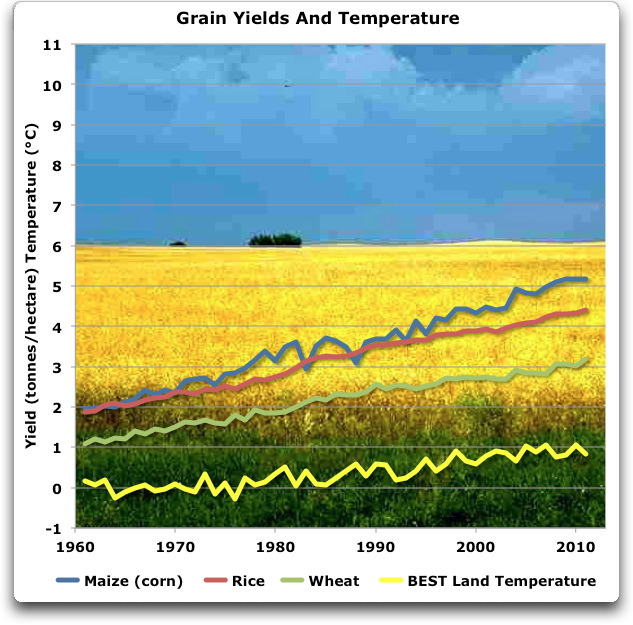
▶Biosphäre (Auswirkung auf Lebewelt)
⇧
39 Hopfen
en Hop
fr houblon
Mit folgenden Links wird von anderen Webseiten auf diese Seite verwiesen:
| de | en | fr |
|---|---|---|
|
Biosphäre der Erde Hopfen |
Biosphere Hop |
Biosphère Houblon |
-
EIKE Europäisches Institut für Klima und Energie
Helmut Kuntz
2016-08-24 de Wenn der Hopfen nicht stirbt, stirbt dann der Klimawandel?Der Hopfen - wohl eine Leitpflanze des Klimawandels - muss in den Vorhersagen regelmäßig sterben, aber er spielt die Klimahysterie nicht mit.
Aus einem unerfindlichen Grund haben sich Klimawandel-Jünger(-innen) auf Hopfen als eine "Leitpflanze" für den in Deutschland besonders schlimmen Klimawandel "eingeschossen".
Regelmäßig leidet er darunter und Prof. Harald Lesch als neuer Klimawandel-Guru Bayerns ging sogar so weit, die Hopfenpflanze deshalb in Deutschlands Zukunft ganz aussterben zu lassen.
⇧
40 Wein
en Wine
fr Vin
Mit folgenden Links wird von anderen Webseiten auf diese Seite verwiesen:
| de | en | fr |
|---|---|---|
|
Biosphäre der Erde Wein |
Biosphere Wine |
Biosphère Vin |
- Allgemein
- 2017
- en French winegrowers hope June bloom saves harvest after up to 90pc of vines were destroyed
- en Thus It Begins
- 2012
- de Die etwas andere Klimakatastrophe: Frostiger Mai bereitet den Winzern schlaflose Nächte
- de Klimawandel spielt Saar-Winzern in die Hände
- 2009
- fr Un Bordeaux d'exception ?
- en Global Wining: French wine "in danger", climate change "must be tackled"
- 2008
- de Weinbau und Klimageschichte in Britannien
- 1999
- en Veni, vidi, viticulture - remains of Roman vineyards found in UK
⇧ Allgemein
| de | en | fr |
|---|---|---|
|
Neue Kälteperiode Kaltzeit |
New Cold Period Cold Period |
Nouvelle periode froide Periode froide |
| Voraussagen | Predictions | Prédictions |
| Kälte: Warnungen | Cooling: Warnings | Refroidissement: Avertissements |
| Erwärmung: Entwarnung | Warming: All-Clear | Réchauffement: Fin de l'alerte |
| Eiszeiten | Ice Ages | Glaciations |
⇧ 2017
↑ en French winegrowers hope June bloom saves harvest after up to 90pc of vines were destroyed
-
The Telegraph
2017-05-27 en French winegrowers hope June bloom saves harvest after up to 90pc of vines were destroyed
↑ en Thus It Begins
-
Wattts Up With That? (Antony Watts)
David Archibald
2017-07-01 en Thus It BeginsThe F10.7 index
F10.7 flux 2014 - 2017

Relative to the climate of the last century,
an F10.7 flux above 100 causes warming
and below that level causes cooling.
As of today, the F10.7 flux is 71, not far above the activity floor of 64.
Solar minimum is three years away and then we are likely to have at least two years of activity below 100 as activity rises into Solar Cycle 25.
Thus some of the heat that built up in the second half of the 20th century due to the highest solar activity in 8,000 years will have a chance to radiate into space.
Late spring frosts will become more frequent.
NOAA NATIONAL OCEANIC AND ATMOSPHERIC ADMINISTRATION
SPACE WEATHER PREDICTION CENTER
F10.7 CM RADIO EMISSIONS
The solar radio flux at 10.7 cm (2800 MHz) is an excellent indicator of solar activity.
Often called the F10.7 index, it is one of the longest running records of solar activity.
The F10.7 radio emissions originates high in the chromosphere and low in the corona of the solar atmosphere.
The F10.7 correlates well with the sunspot number as well as a number of UltraViolet (UV) and visible solar irradiance records.
The F10.7 has been measured consistently since 1947, first at Ottawa, and then at the Penticton Radio Observatory in British Columbia.
Unlike many solar indices, the F10.7 radio flux can easily be measured reliably on a day-to-day basis from the Earth's surface, in all types of weather.
Reported in "solar flux units", (s.f.u.), the F10.7 can vary from below 50 s.f.u., to above 300 s.f.u., over the course of a solar cycle.
The F10.7 Index has proven very valuable in specifying and forecasting space weather.
Because it is a long record, it provides climatology of solar activity over six solar cycles.
Because it comes from the chromosphere and corona of the sun, it tracks other important emissions that form in the same regions of the solar atmosphere.
The Extreme UltraViolet (EUV) emissions that impact the ionosphere and modify the upper atmosphere track well with the F10.7 index.
Many Ultra-Violet emissions that affect the stratosphere and ozone also correlate with the F10.7 index.
And because this measurement can be made reliably and accurately from the ground in all weather conditions, it is a very robust data set with few gaps or calibration issues.
| de | en | fr |
|---|---|---|
|
Die Sonne Sonnenaktivität |
The Sun Solar Activity |
Le soleil Activité solaire |
⇧ 2012
↑ Die etwas andere Klimakatastrophe: Frostiger Mai bereitet den Winzern schlaflose Nächte
-
Die kalte Sonne (Fritz Vahrenholt & Sebastian Lüning)
2012-06-03 de Die etwas andere Klimakatastrophe: Frostiger Mai bereitet den Winzern schlaflose Nächte
↑ Klimawandel spielt Saar-Winzern in die Hände
-
Proplanta Das Informationszentrum für die Landwirtschaft
2012-02-15 de Klimawandel spielt Saar-Winzern in die Hände
⇧ 2009
↑ fr Un Bordeaux d'exception ?
-
Yannick Serrano
2009-10-10 fr Un Bordeaux d'exception ?Grâce aux conditions climatiques favorables, la cuvée 2009 devrait être d'une qualité inégalée depuis la fin des années 40.
↑ en Global Wining: French wine "in danger", climate change "must be tackled"

-
Watts UP With That? (Antony Watts)
2009-08-18 en Global Wining: French wine "in danger", climate change "must be tackled"Hmmm, maybe there's something to that "Wines grown in England during the Medieval Warm Period" after all.
I think maybe the French are upset that Scottish wine might be served with kippers rather than truffles. Oh the horror!
Quelle/Source:
de Aus der Panik-Küche en From the panic laboratory fr De la marmite des alarmistes
-
The Telegraph CO UK
2009-08-17 en Best wines will come from Scotland if climate change is not stopped, French chefs sayProminent French chefs have given warning that the country's wines will lose their complexity and the best produce will come from Scotland if the effects of climate change are not tackled.
⇧ 2008
↑ Weinbau und Klimageschichte in Britannien
-
Klimanews
2008-12-28 de Weinbau und Klimageschichte in BritannienÜber den Vorstoß und Rückzug der Weinbaugrenze in Großbritannien lassen sich recht genau die Klimaschwankungen der letzten 2.000 Jahre zurück verfolgen. Insgesamt an die 500 Weinberge, zurückreichend bis in die Besatzungszeit Britanniens durch die Römer, sind wissenschaftlich dokumentiert.
-
In Britannien wird Wein seit der römischen Zeit angebaut.
Die Römer haben die ersten Weinberge angelegt.In der römischen Provinz Britannien gehörte der Wein bereits zum Haushalt.
Das weiß man durch Funde von römischen Trinkgefäßen und Weinamphoren.
In Northamptonshire entdeckte man eine römische Villa mit ausgedehnten Weinbergen. Weitere Weinberge entdecke man in der Umgebung.
-
Historische Funde und Aufzeichnungen, sowie moderne Klimarekonstruktionen deuten darauf hin, dass es zur Römerzeit in Nordeuropa im Schnitt etwas wärmer war als heute.
-
Dem Klima-Optimum der Römerzeit folgte das sog. Klima-Pessimum der Völkerwanderungszeit und des Frühmittelalters.
Erst im Verlaufe des Mittelalters wurde es wieder wärmer.
-
Die Abkühlung während der Völkerwanderungszeit und des Frühmittelalters führte dazu, dass der Weinbau auf den Britischen Inseln für Jahrhunderte zum Erliegen kam.
Die Römer haben in dieser Zeit Britannien verlassen.
Erst die Normannen haben im Hochmittelalter weinbau betrieben und zwar in etwa so weit nördlich wie zur Römerzeit.
-
Im Mittelalter war der Weinbau in England wieder bedeutend geworden.
Man weiß, dass es im 11. Jahrhundert 38 Weinberge gab. Im Norden reichten sie bis Yorkshire.
Aber auch diese Hochzeit neigte sich dem Ende.
-
Mit Einzug des Spätmittelalters folgte die sog. kleine Eiszeit mit eisigen Wintern und es blieben nur noch ein paar Weinberge in Südengland übrig.
-
Am Vorstoß und Rückzug der Weinbaugrenze in Großbritannien lassen sich somit recht genau die Klimaschwankungen der letzten 2.000 Jahre zurück verfolgen.
Während des sog. Klima-Optimums der Römerzeit und rund tausend Jahre später, während der mittelalterlichen Warmphase, wurden in nördlichen Breiten Weinberge angelegt.
Während der Kältephasen der Völkerwanderungszeit und des frühen Mittelalters und besonders in der frühen Neuzeit - der sog. Kleinen Eiszeit - verschwanden viele dieser Weinberge.
Heute sind sie wieder auf dem Vormarsch.
-
Heute wird Weinbau vor allem im Süden Britanniens betrieben.
Mit viel Idealismus, in geschützter Lage, mit neunen Rebensorten und moderner Technik wird sogar ein kleiner Weinberg in Yorkshire betrieben (Leventhorpe Vineyard).
Damit reicht die Weinanbaugrenze ähnlich weit nach Norden wie im Mittelalter, bzw. wie zur Römerzeit. Der einzige Unterschied.
Damals war alles noch Handarbeit und man hatte keine große Auswahl an Rebsorten, keine Pflanzenschutzmittel und keinen Industriedünger.
⇧ 1999
↑ Veni, vidi, viticulture - remains of Roman vineyards found in UK
-
The Independent Science
1999-11-16 en Veni, vidi, viticulture - remains of Roman vineyards found in UKTo date the research has identified the remains of seven Romano-British vineyards - four in Northamptonshire, one in Cambridgeshire, one in Lincolnshire and one in Buckinghamshire.
-
Most of the wines produced at them were probably fruity, sweet and brownish in colour.
The grapes would have been harvested early, before they were fully ripe, in around late September.
After the treading, large amounts of honey would have been added for sweetness and to produce an alcohol content of about 10 to 12 per cent.
-
The wine would have continued to ferment inside storage amphorae or barrels and would have been drunk within six months.
Wine from fresh grapes - as opposed to raisins - was thus a drink for winter and spring.
-
One of the main wine-producing areas of Roman Britain seems to have been the Nene Valley, in what is now Northamptonshire.
In the valley, near the village of Wollaston, archaeologists have found ancient vineyards covering at least 30 acres, in which vines were grown in the Mediterranean Roman style, exactly as described by classical authors such as Pliny and Columella.
On one site, the remains of four miles of bedding trenches have been found.
Estimates suggest that the site contained 4,000 vines, producing 10,000 litres of wine a year.
-
In Roman times, Britain had a slightly warmer climate than now; and, with 500 to 600mm of rain a year, Northamptonshire is at the lower end of the British precipitation range, which would have meant fewer fungal problems.
The area would therefore have been suitable for grape production.